

Wood Pellet Pizza Oven
An opened pellet bag is where many good fires go wrong — not on the night you light them, but on the next weekend, after the sack has sat rolled on a garage slab. Pellets take on moisture, dust, and sometimes pests. Moving that open bag into a bin, with a liner if you want one, a lid, and a dry shelf, is the logistics habit that supports a clean fire later.
This supports wet-pellet diagnosis without duplicating it. For how damp fuel behaves in the fire, see fire control from dry fuel to a recovering stone. For a broader storage overview, see storing wood pellets for a pizza oven. Stay here for the opened-bag move between cooks.
The short answer: an open bag on a garage floor is how a good fire goes lazy next week
An open bag on a garage floor is how a good fire goes lazy next week. Move opened pellets into a lidded bin on a dry shelf, and do not rely on a rolled paper sack. Label the date you opened the bag, and discard musty pellets rather than blending them away.
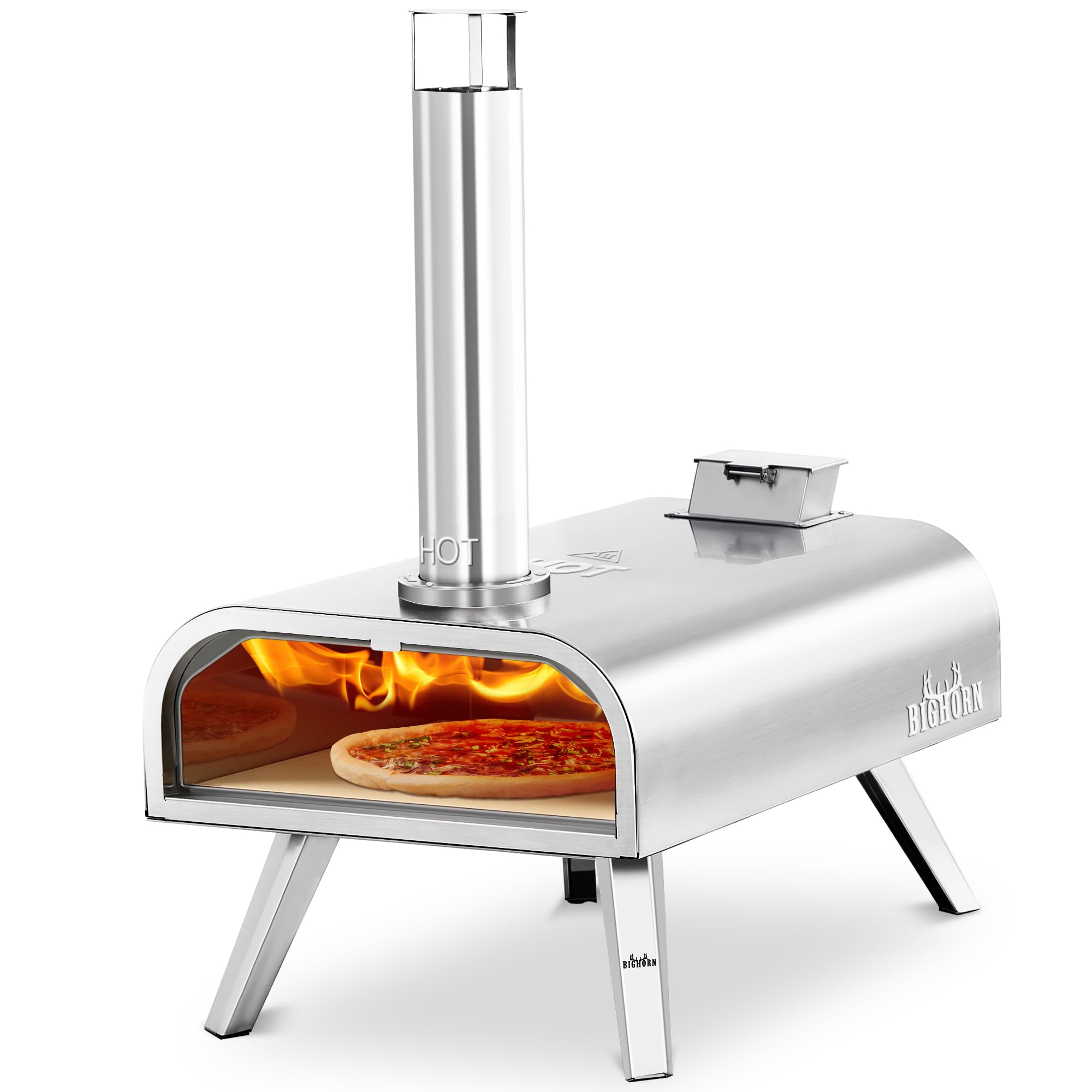
A 16-inch wood pellet pizza oven cannot rescue fuel that has already swollen in a damp corner. Neither can a 12-inch portable wood pellet pizza oven.
Bins, liners, original bags and a dry shelf
A lidded plastic or metal bin, large enough to hold what you actually open, is the basic tool. A clean liner can help if the bin is not food-housed exclusively for pellets, but the lid and the dry shelf matter more than the brand of tub. You can also keep pellets in the original bag if that bag sits inside the bin, upright, with the top closed. A rolled bag alone, on concrete, will wick moisture from the floor and from humid air. Keep the bin off the slab — a shelf, a pallet, or a dry interior room beats a garage floor.
A small table: storage place versus a moisture plan
| Where the opened bag lives | Moisture plan |
|---|---|
| A lidded bin on a dry indoor shelf | The usual best habit for weekly cooks |
| The original bag, closed, inside that bin | Fine, and easier to label |
| A rolled bag on a garage slab, or an open hopper through a wet week | A common way the next fire goes lazy |
How much to open at once for a household that cooks weekly
Open what you will burn in a week or two if your climate is humid, and keep the rest of the unopened bags sealed. This page will not invent a kilogram-per-week number. If you cook every Saturday, one manageable bin is better than three half-open sacks. If you cook rarely, open less, and do not leave a full hopper sitting through a rainy month.
Common failures: a rolled bag that still wicks moisture and a bin with no lid
A rolled top is not a seal. A lidless bin is just a wider bag. Both fail in humid weather or after a floor wash. Stay with the fire when you do cook; NFPA grilling safety and U.S. Fire Administration cooking-fire prevention still apply. Keep the oven outdoors; EPA carbon monoxide guidance is the official reason the “dry garage” is for storage, not for lighting.

Critters, dust and a scoop that stays dry
Mice and insects like a paper sack in a shed. A lidded bin helps. Keep a scoop in a dry place, not buried in the pellets where it collects damp fines. Brush dust off the rim of the bin so you are not pouring grit into the hopper. If you find nesting material, discard that fuel; do not sieve it and call it saved.
Label the bag or bin with the date you opened it
A date tells you whether last month’s leftover scoop is still a reasonable bet. You do not need a laboratory shelf life. You need to know which bin is the opened one, which bag was cracked in transit, and how long it has been sitting. A piece of tape and a marker are enough.
When leftover pellets should be discarded rather than “blended away”
Musty, moldy, swollen, or collapsing pellets do not become good fuel when mixed into a fresh bag. You just waste the dry ones. Discard the compromised fuel and start from a sealed bag sold for cooking, as the best wood pellets guide would have you buy in the first place. “Blending away” a wet scoop is how a whole hopper goes lazy.
A two-cook test after you change storage
After you move to a bin, cook twice with that fuel and notice the start, the ash, and the stone. If the fire cleans up, the storage was probably the problem. If it does not, look at the bag itself or at the oven. Confirm a current listing in the pellet pizza oven collection if you are still choosing a cooker; the storage habit will matter as much as the steel.
Leftover pizza: USDA leftover guidance, FDA safe food handling, and FoodSafety.gov — two hours or one hour above 90°F to chill, 165°F to reheat. CDC carbon monoxide information stays the official outdoor-fire reminder.
If opened pellets have been sitting in a rolled bag, confirm the current 16-inch wood pellet pizza oven listing, move the fuel into a lidded bin on a dry shelf, and discard anything that already smells musty.
FAQ
Do you put a pizza stone in the oven while it's preheating?
In a wood pellet pizza oven the stone is usually already in the cooker and should preheat with the fire, not be dropped in cold later. This page is about storing opened pellet bags between cooks, not about stone preheat. Keep the fuel dry so the next fire can actually heat that stone.
How long does a 10kg bag of wood pellets last?
There is no honest universal number for a 10 kg bag. Your oven, fire size, weather, and how dry you keep opened pellets all change the count. This page will not invent a cook number. Store what you open in a lidded bin, and log how far a bag actually goes.
How to burn wood pellets in a pizza oven?
Use dry cooking pellets, light a clean fire, and stay with it. Between cooks, do not leave the opened bag rolled on a damp slab. Moisture in leftover pellets is a common reason the next fire goes lazy even when the oven itself is fine.
How to keep pizza dough until ready to use?
Keep dough cold and covered until you temper it for a launch, and follow ordinary food-safety habits for anything perishable. This page will not invent a dough-hour chart. The fuel habit is separate: opened pellets belong in a dry, lidded bin, not on the floor next to the dough tub.
More to Read
Using the Height Crank Through One Asado: A Raise-and-Lower Timeline
Use a parrilla height crank through one asado: start high, lower for color, raise to hold, and refresh the fire when height alone cannot help.
Lighting a Parrilla From a Brasero or Fire Basket Instead of Under the Grate
Light an Argentine parrilla in a brasero or fire basket, then move ready coals under the grate so the starting fire does not sit under the meat.
Gift-Day Unboxing a Wood Pellet Pizza Oven: Parts Photos and a First-Burn Plan
Unbox a gift wood pellet pizza oven by photographing the parts, saving the manual, and planning a two-pie first burn — not a same-hour party.