







Accessories
Picture two kitchens after the same wet week. In one, a lidded bin in a cool pantry holds a sealed bag of pizza-oven pellets, and a small working pail sits beside it. In the other, an open bag slumps on a garage floor where the door sweats. The second bag can feel heavy, smell sour, or crumble in your hand long before anyone would call it "expired." How to store wood pellets for a pizza oven is a moisture problem first, not a calendar problem.
Pellets fail from moisture long before they “expire”
Pellets fail from moisture long before they expire. Store wood pellets for a pizza oven in a dry, sealed container, off damp floors and away from steam. If a handful feels soft, swollen, or will not break cleanly, do not use that fuel. A printed date mark is not a substitute for a dry bin.
Dry pellets should feel hard and uniform. Damp pellets can swell, crumble, and burn poorly, which then becomes a fire-control problem on the oven. Fire building belongs on wood-pellet fire control, from dry fuel to a recovering stone and how to build and keep a stable pellet fire. This page stays with storage, so the fuel you open on cook day is still dry.
Bins, original bags and a garage vs kitchen setup
A practical home setup is the original bag, folded closed, inside a lidded bin, or a clean food-safe container reserved for pellets. The bin does not have to be large. It has to close, stay dry, and live in a place that does not swing from damp to steamy. A kitchen pantry, a dry mudroom closet, or an interior cupboard away from the dishwasher's steam is usually easier to manage than a garage that wets the floor every time it rains.
A garage can work if it stays dry, the bin is off the concrete, and you are honest about seasonal humidity. A garage that smells musty, ponds water, or bakes and then sweats is a poor pantry. EPA guidance on mold and moisture in the home is about buildings, but the same moisture logic applies to a bag of fuel you will later put near food. FDA advice on storing food safely and FDA kitchen food-safety guidance are useful for the kitchen-safe habit: clean containers, no chemical leftovers, and no open bags beside the trash.
The table below is a storage derivation, not a building code. If two rows could apply, pick the drier one.
| Setup | When it can work | Usual failure |
|---|---|---|
| Original bag inside a lidded bin, in a dry kitchen or pantry | The room stays dry, the lid closes, and you scoop from a working pail. | Leaving the bag open beside a steamy sink or dishwasher. |
| Sealed bin in a dry garage, off the concrete | The garage does not wet the floor or swing from damp to steamy. | A musty, sweating, or leaking garage that wicks water into the bag. |
| Open bag, or any bin left outdoors | Almost never, except a truly weatherproof sealed container off the ground. | Rain, dew, and ponding on the lid, which ruin the fuel quickly. |
Signs of damp pellets and a small test handful
Before a cook, take a small handful from the working supply, not only from the top dust. Dry pellets are hard and break cleanly. Damp pellets may feel cool or spongy, look swollen, leave a wet dust, or show white or dark discoloration. A sour or musty smell is a stop. Do not try to "dry them on the oven" as a regular fix.
If only the top of an open bag is suspect, that is already a storage failure; do not assume the bottom is fine without checking. When in doubt, discard the damp fuel and open a sealed, dry bag. This is a quality check, not a lab moisture reading, and this page will not invent a percentage.
Pests, dust and a food-safe storage habit
Pellets are wood, and they sit near a food appliance, so treat storage like a dry-goods habit. Use a clean, lidded container. Do not reuse a pail that held solvents, fertilizers, or cleaners. Keep the bin closed so pests and pet food odors stay out, and brush loose dust off the rim before you scoop.
Scoop with a dry cup that is only for fuel, not with a kitchen measuring cup you return to flour. Wash your hands after handling fuel and before stretching dough. FDA safe food-handling guidance is the official reminder that fuel and food need a clean divide, even when both live in the same kitchen.
How this differs from which-pellets-to-buy pages
Which pellets to buy — food-grade, dry, and a wood type that suits pizza — is already owned by the wood-pellet buying page for pizza ovens. Oven care and ash routines live on how to maintain a wood-pellet pizza oven, and tools belong on pellet pizza oven accessories you actually need.
This article does not re-rank brands or woods. It asks where the bag lives after you bring it home, and how you keep that bag dry enough to use.
A monthly check
Once a month, or before a weekend cook if you use the oven less often, open the bin. Look at the lid seal, the floor under the bin, and a handful of pellets. Check for dampness, pests, and a bag that has wicked water from concrete. Wipe the bin if dust has built up, and replace a cracked lid.
A monthly check is also when you rotate fuel: use the older dry bag first, and do not bury a half-open bag under a new one. Ready.gov food-and-emergency guidance is not a pellet manual, but it supports the same household habit of inspecting stored supplies before you need them.

A small working pail so the main bin is not opened in damp weather
The practical derivation is amount versus exposure. The main bin should open in a dry room. The oven, in a humid yard or a light drizzle, should see only a small working pail with a lid. Fill that pail in the kitchen, close the main bin, and take the pail outside. You are not "airing the whole bag" every time you start a fire.
Bring leftover dry pellets back into the sealed bin if they stayed dry. If the pail sat open in rain or heavy dew, do not dump that fuel back into the main supply. National Park Service campfire guidance is a reminder that fuel handling stays deliberate outdoors; the same care applies to a backyard pellet pail.
A recap of who this method is for, and who should use a different cooker
This method is for someone who already owns a pellet pizza oven and needs a dry, kitchen-safe place for the fuel. It is a moisture, bin, and inspection habit, not a buying guide and not a fire-building lesson. If you cannot keep pellets dry, you will fight the oven every cook.
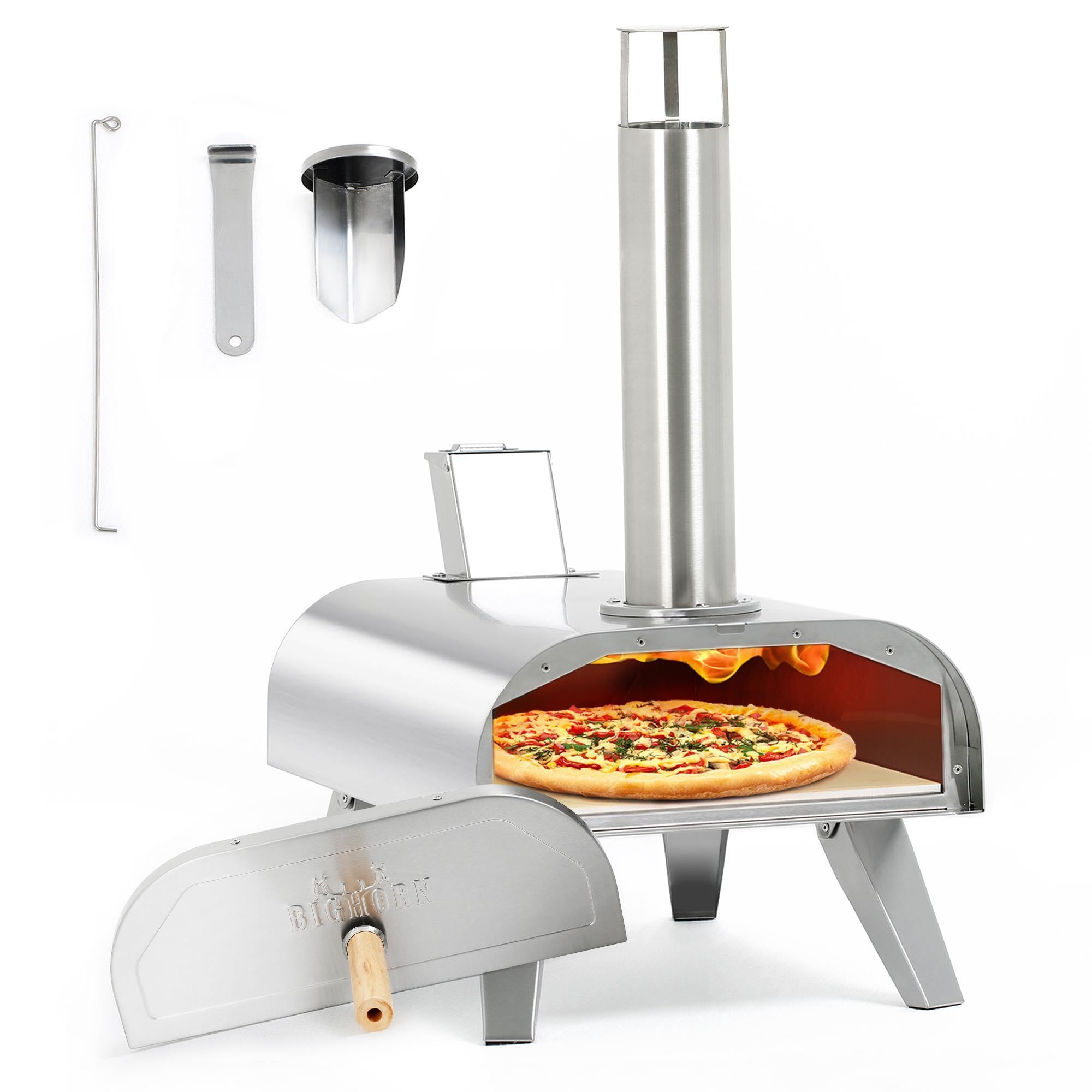
If your only storage is a wet garage and you are not willing to move a sealed bin indoors, this fuel type will keep disappointing you. Fix the storage, or cook on an appliance whose fuel does not rely on a dry bag. The oven in the photos is only the reason the pellets exist in the house. The bin is the part that decides whether they are still usable.
If you cook on a 12-inch wood-pellet pizza oven, keep the main pellet supply sealed and dry, and take only a small working pail to the oven.
FAQ
What is the best way to store wood pellets?
Keep them dry, sealed, and off damp floors, in the original bag inside a lidded bin or in a clean, food-safe container the pellets were meant to go into. Avoid open bags, humid garages, and sheds that leak. This page will not crown a single brand of bin. The test is whether the pellets stay dry, clean, and easy to inspect.
Can you store pellets in a 5 gallon bucket?
A clean, food-safe bucket with a tight lid can work for a small working supply if the pellets go in dry and the bucket itself stays dry and off a wet floor. It is a poor choice if the lid does not seal, the bucket previously held chemicals, or you leave it outdoors in rain. Do not treat any unmarked pail as automatically food-safe.
Is it okay to leave pellets in a hopper?
A hopper on an oven or a heater is a working chamber, not a long-term pantry. Residual pellets can pick up moisture from air and from the appliance between cooks. For a pizza oven, empty or cover the working supply as the maker says, and keep the main bag sealed. Do not leave a week of fuel sitting open in a hopper in humid weather.
Is it okay to store wood pellets outside?
Outdoor storage is risky unless the pellets are in a truly weatherproof, sealed container, off the ground, and out of standing water and direct rain. An open bag on a patio, or a bin that ponds water on the lid, is a common way to ruin a bag. A dry indoor or kitchen-adjacent setup is easier to trust than a yard corner.
More to Read
Leftover Holiday Turkey on the Grill or in the Pizza Oven: Sandwiches, Tostadas and a White Pie
Give leftover turkey a second heat, not another roast: grill sandwiches or tostadas, or bake a white pie, after a safe leftover inventory the night...
Parrilla Taco Night: Carne, Salsas and Grate Space for a Crowd
Run taco night on a parrilla as a grate-space plan: carne, a second protein, a salsa station, and tortillas held soft, without one crowded fire.
Bone-In Lamb Leg or Shoulder on a Santa Maria or Gas Grill
Grill a bone-in lamb leg or shoulder as a roast: Santa Maria height or a gas two-zone fire, a USDA safety floor, and a probe that does not touch bone.
