







Pizza Dough & Fermentation
An overnight weeknight dough is mixed the night before, chilled, then warmed and stretched after work while the oven heats. This is a scheduling guide, not a best-dough recipe. Follow a readiness test, and do not treat a fridge hour count as a guaranteed crumb.
Night-before mix
The night-before job is simply this: mix a dough you already trust, divide it if you will bake more than one pie, and get it into the fridge in a covered container before you go to bed. This page will not invent a single official baker's percentage. Use the dough formula you already like, or start from the live pizza dough recipe, and confirm any calculator math on the current pizza calculator page rather than copying a remembered gram count from a photo.
A slightly stiffer dough is often easier to handle after work than a very wet dough you have never stretched on a Tuesday. That is a handling observation, not a law. Oil the container lightly, label the time, and leave room for the dough to rise in the cold. If the dough is still a shaggy mess at midnight, you mixed too late; finish a calm mix, or switch to a simpler same-day plan rather than forcing a cold ferment that never started.
Morning optional degas
Some cooks like a brief morning degas: open the container, press the dough down gently, and close it again. Some skip it. Neither habit is required, and this article will not invent a morning minute count. If the dough has climbed the lid, a gentle press can keep it from sticking, but a rough punch can make it tighter later. If you will be gone all day, just confirm the lid is secure and the fridge is cold.
For the difference between a cold dough and a dough that is actually ready to stretch, keep cold dough vs room temperature pizza dough a readiness test nearby. That page is the feel test; this one is the calendar.
After-work stretch
When you walk in, take the dough out first, then light the oven, not the other way around. A fridge-cold ball will usually need a warm-up on the counter before it will stretch without snapping back. How long that takes depends on the room and the dough, and this article will not invent a guaranteed wait. Use a readiness feel: the dough should be relaxed enough to open, not icy in the center and not a sticky puddle.
If the dough tears or fights you, give it another short rest rather than forcing a thin round. Sticky or tight dough already has a home at pizza dough troubleshooting for sticky, tight, or overproofed dough; this schedule will not redo that diagnosis.
Heat the oven while the dough warms
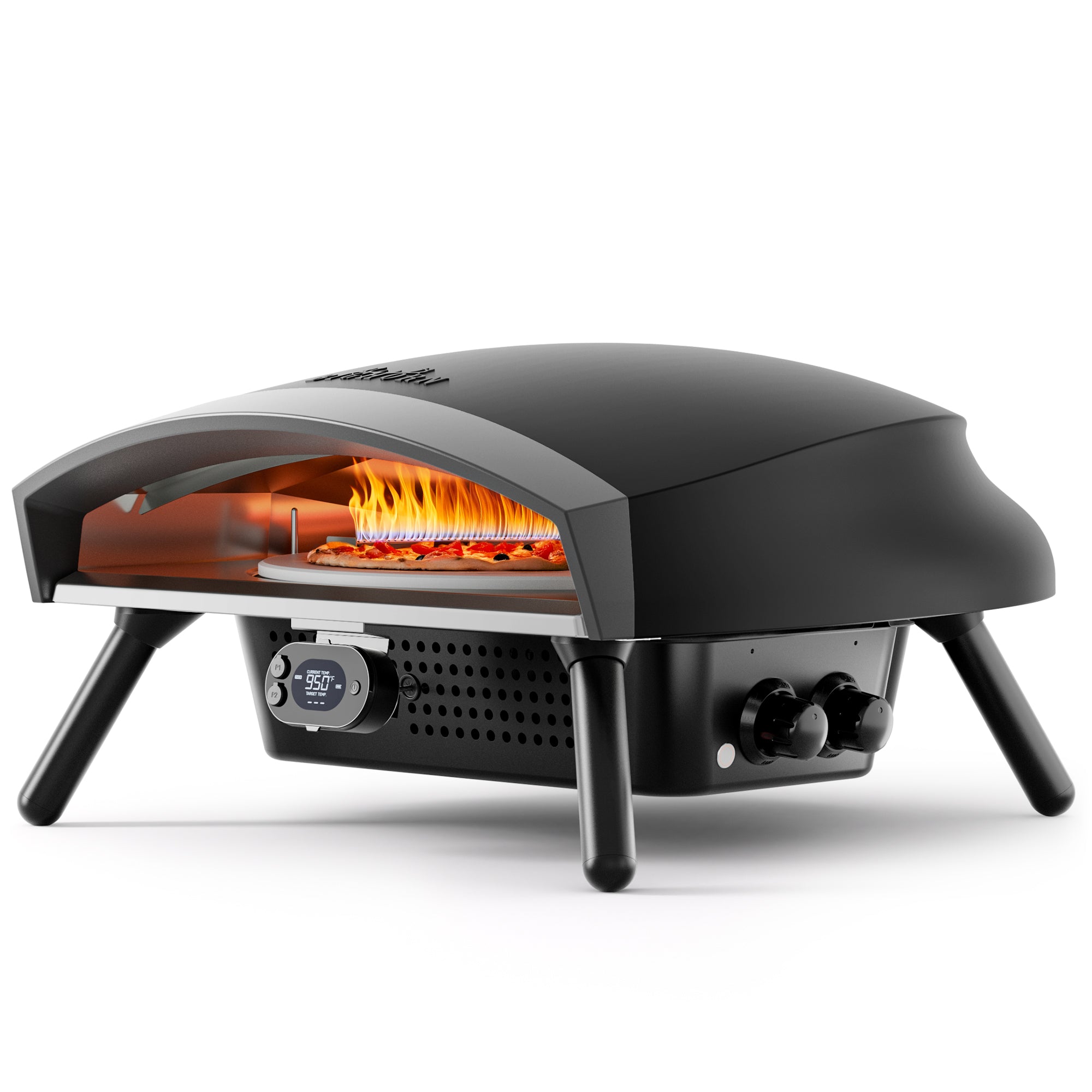
The useful overlap is the whole point of a weeknight hybrid: the chamber can preheat while the dough relaxes. A gas oven is often the calmer weeknight path because lighting and shutdown are usually shorter when the cylinder and weather cooperate. Browse the gas pizza oven collection or the wider pizza oven collection if you are still matching a chamber to the evening. Confirm published output and any heat-up window on the current listing; those figures are not a guaranteed after-work timer.
Keep combustion ovens fully outdoors. NFPA grilling safety and U.S. Fire Administration cooking-fire prevention still apply: an attended appliance and a clear area. National Weather Service wind safety will steal heat from a shy preheat faster than a late stretch will. If the pie will carry meat, official temperatures from FDA safe food handling and FDA food safety in your kitchen still apply: 145°F with a three-minute rest for steak or whole-muscle pork, 160°F for ground meat, and 165°F for poultry. Leftovers follow Ready.gov food guidance and National Center for Home Food Preservation storage guidance, not a warm hold in the oven.
Dense crumb fixes
A dense weeknight crumb is often a dough that never relaxed, a stone that was still shy, or a ball that was over-handled after a long, cold sleep. It is not automatically a failed recipe. Next time, give the dough a longer counter warm-up, open it more gently, and wait until the deck is honestly ready before you launch. A dough that was mixed too dry, or baked too soon from the fridge, will also sit tight in the center.
Do not try to "fix" a dense pie by turning the oven into a blast furnace for a second, wetter dough you just mixed. Finish the pies you have, and adjust the schedule tomorrow. A same-day emergency dough can work in a pinch, but it is a different method, and it will not retroactively ferment tonight's cold balls.
The table below is a weeknight timeline, not a guaranteed clock.
| When | What to do | What not to invent |
|---|---|---|
| Night before | Mix, divide, cover, and refrigerate a dough you already trust | A single official hydration or a gram count copied from a photo |
| Morning, optional | A gentle degas only if the dough needs it | A required morning ritual or a fixed minute count |
| After work | Warm the dough, heat the oven, and stretch only when it is relaxed | A guaranteed counter time that ignores the room and the dough |
| If the crumb is dense | Look at warm-up, handling, and deck readiness | A claim that the fridge always failed you |
A weeknight schedule at a glance
Write the plan on a note if it helps: mix tonight, fridge, dough out first tomorrow, oven on while it warms, stretch when it is ready, bake, cool the oven, and put leftovers away on official leftover guidance. If that still feels like too many steps for a Tuesday, mix a smaller batch, or keep a simpler same-day dough for the nights you walk in late. The hybrid is a tool, not a badge.
Key takeaways
- Mix the night before, chill, and warm the dough after work while the oven heats; this is a schedule, not a best-dough recipe.
- Use a readiness feel rather than a guaranteed fridge or counter hour count.
- Confirm calculator math and any published oven heat-up notes on the live pages.
- Keep combustion ovens outdoors, and cook meat toppings to official FDA temperatures.
Start from the live pizza dough recipe and the pizza calculator, and use cold dough vs room temperature pizza dough a readiness test when the feel of the dough, not the calendar, is the open question.
FAQ
Can I mix pizza dough the night before for a weeknight bake?
Yes. Mix a dough you already trust, chill it covered, then warm it after work until it is relaxed enough to stretch. This article will not invent a guaranteed fridge or counter hour count.
Do I have to degas the dough in the morning?
No. A gentle morning press is optional if the dough has climbed the lid. It is not a required ritual, and a rough punch can make the dough tighter later.
Why is my weeknight crumb dense?
The dough may still have been cold, over-handled, or launched on a shy stone. Give it a longer counter warm-up, open it gently, and wait until the deck is honestly ready.
Is this the official Big Horn dough recipe?
No. This is a scheduling guide. Use the live pizza dough recipe and the pizza calculator for a formula, and confirm any math on those current pages.
More to Read
Leftover Holiday Turkey on the Grill or in the Pizza Oven: Sandwiches, Tostadas and a White Pie
Give leftover turkey a second heat, not another roast: grill sandwiches or tostadas, or bake a white pie, after a safe leftover inventory the night...
Parrilla Taco Night: Carne, Salsas and Grate Space for a Crowd
Run taco night on a parrilla as a grate-space plan: carne, a second protein, a salsa station, and tortillas held soft, without one crowded fire.
Bone-In Lamb Leg or Shoulder on a Santa Maria or Gas Grill
Grill a bone-in lamb leg or shoulder as a roast: Santa Maria height or a gas two-zone fire, a USDA safety floor, and a probe that does not touch bone.
