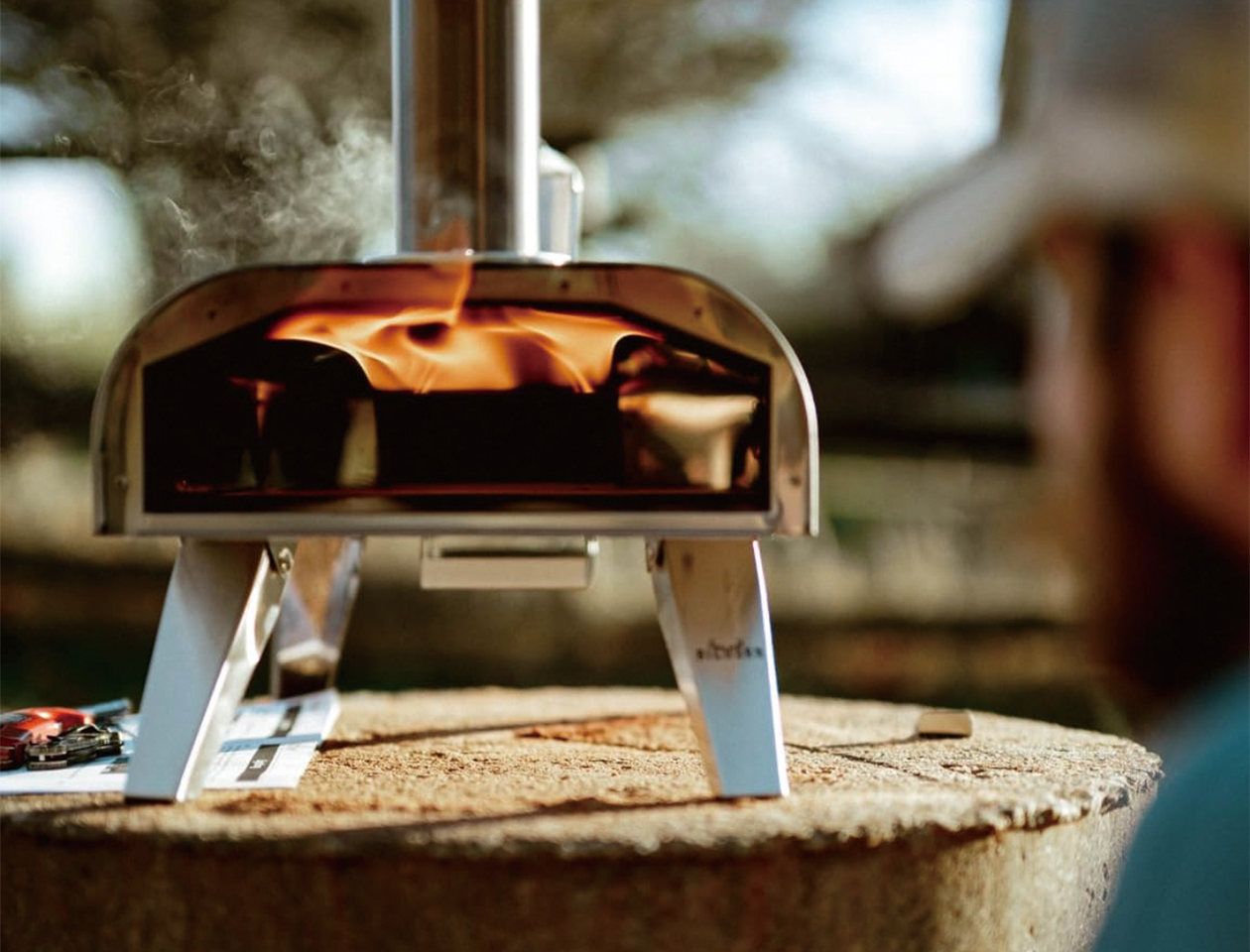
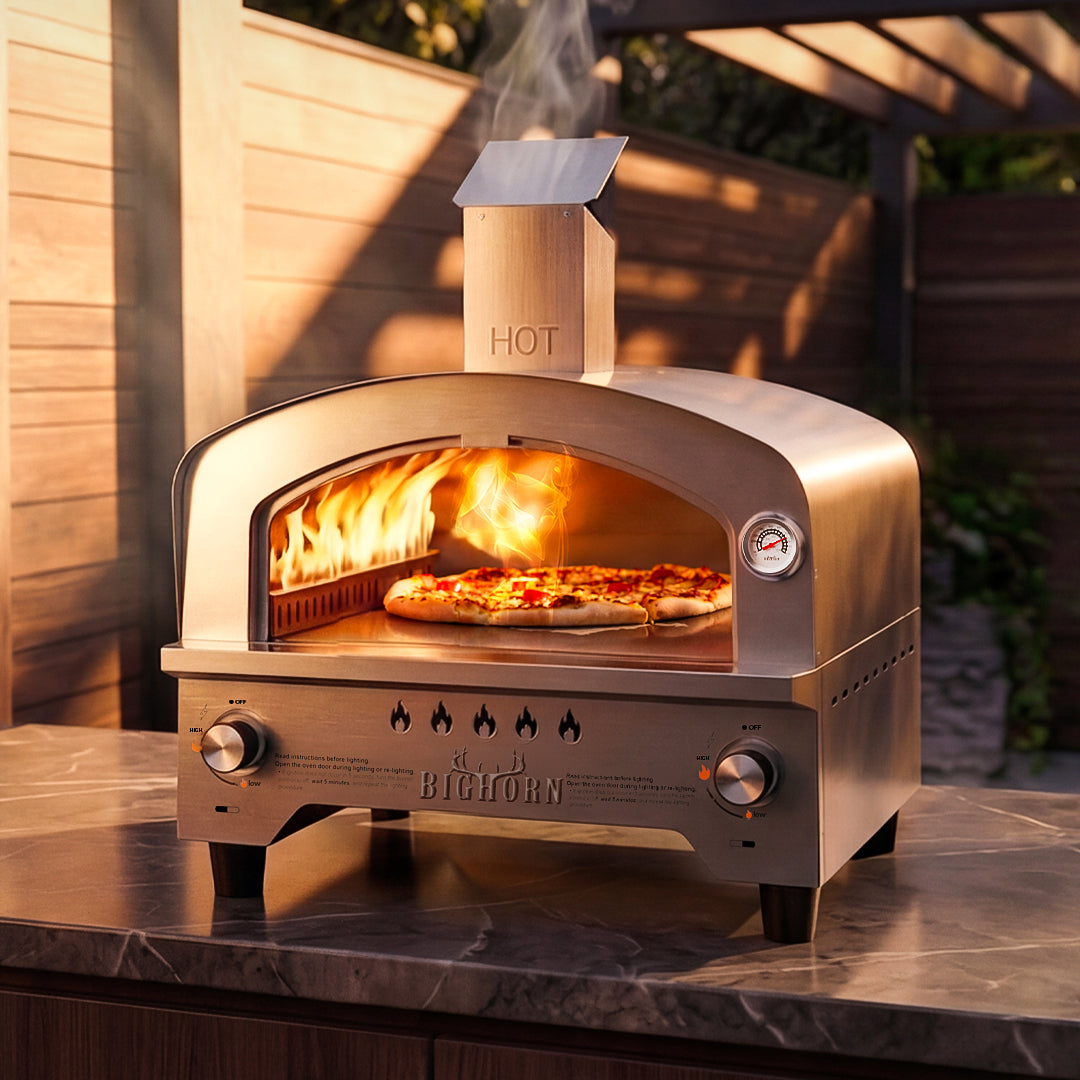
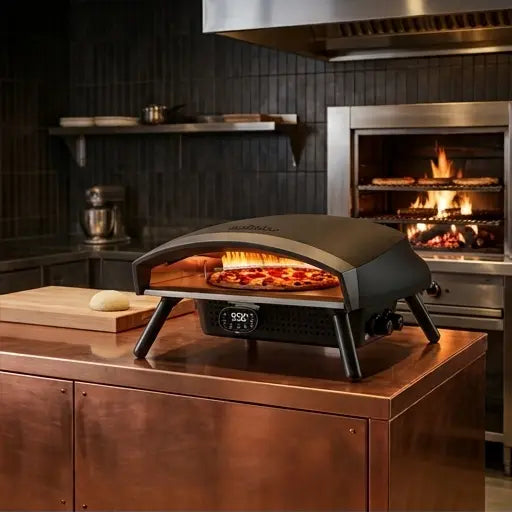
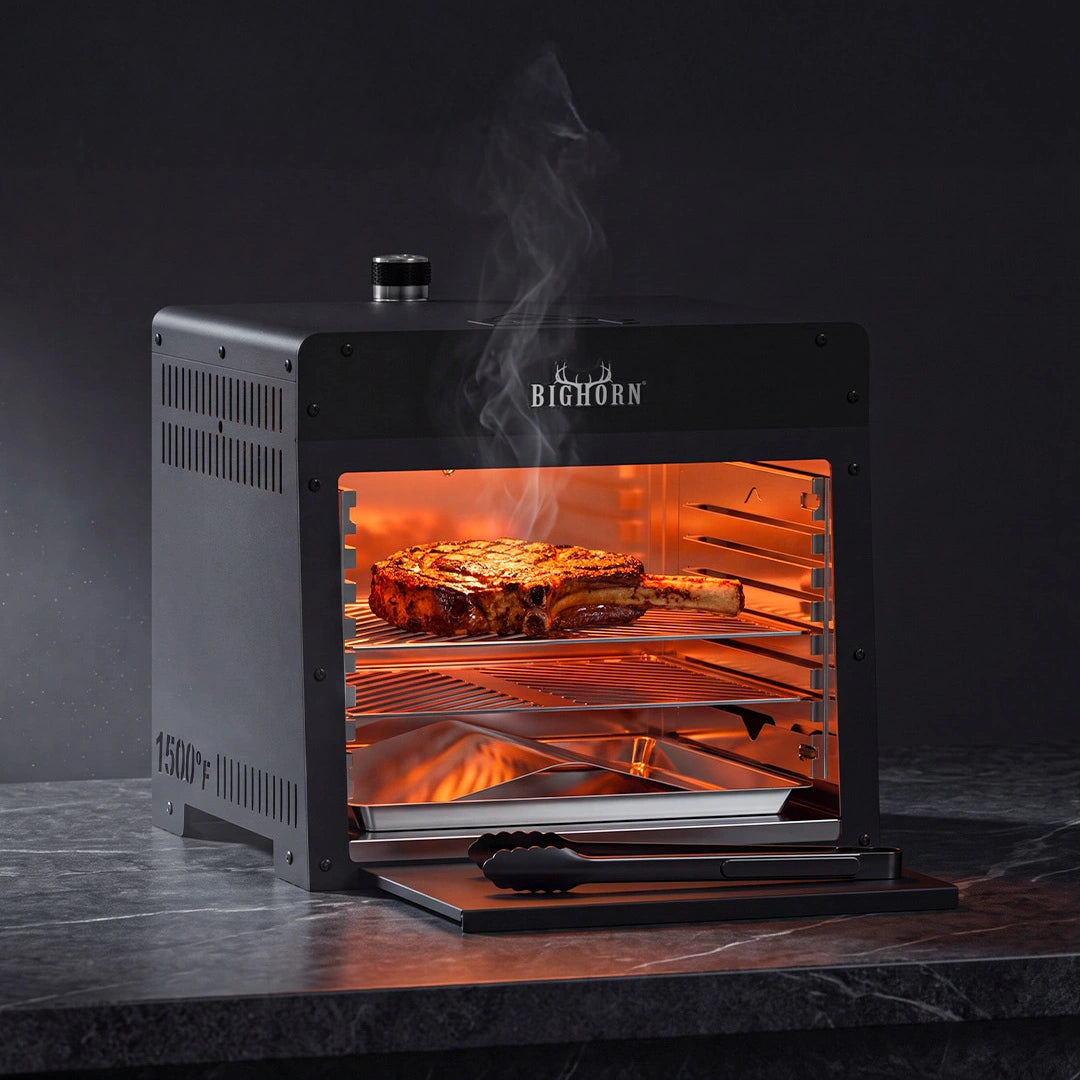
A pellet pizza oven changes your shopping list compared with gas or electric models, because you are managing fuel, fire and ash in addition to dough and heat. The accessories that matter most are the ones that keep pellets dry, protect the oven from weather, and make the high-heat bake manageable: a well-fitted cover, a reliable way to light and feed the fire, a peel that slides under a fast-cooking pizza, heat-resistant gloves, and a thermometer you trust. This guide separates the must-haves from the nice-to-haves and explains what to check before you buy each one.
Why pellet accessories differ from gas or electric
Gas and electric ovens need covers and peels too, but pellet ovens add three jobs: keeping fuel dry, starting and feeding a wood fire, and managing ash. That changes the accessory list in practical ways. Pellets that absorb moisture burn poorly, so storage matters before the oven even lights. Fire-starting tools and a safe way to add fuel mid-cook matter more than they do with a gas dial. And because pellet fires produce ash, cleaning tools earn their place in the kit faster than they would on an electric countertop model.
Cover and base protection
A cover is the first accessory most pellet oven owners should buy, because the oven lives outdoors and the steel, chimney and pellet components all face weather when they are not cooking. Match the cover to your oven model using the product listing rather than guessing by eye — a cover that is too large flaps in wind and lets rain in, and one that is too small strains the seams. Big Horn's pizza oven cover is labeled for 12-inch ovens, so check the size note against your model before ordering. If the oven sits on a wood table or deck, also confirm the surface can handle the oven's heat and weight; a heat-rated mat or a dedicated stand can protect the surface underneath.
Only cover a completely cool, dry oven, and let the cover itself dry before you fold it for storage. A cover trapped between the oven and a wet tarp can hold moisture against the steel longer than no cover at all, which is the opposite of what you want. Wipe the oven down after a cook that left ash or grease on the exterior, then cover it once it is cool.

Pellets, starters and fuel tools
Use food-grade hardwood pellets and keep them dry. Pellets are the one consumable you cannot substitute casually; a damp bag burns unevenly, smokes and can stall the fire. Store opened bags in a sealed container rather than trusting the bag closure, and keep the container off the ground.
For starting, a long-reach butane lighter or a purpose-built fire starter is far safer than leaning over the hopper with a match. You will also want a small metal scoop or cup dedicated to adding pellets, so you are not reaching into the hopper with damp or greasy hands. Some pellet ovens accept a gas-burner starter accessory; check your model's manual for what it supports before buying add-ons.
Pellet storage deserves its own rule: keep the bag sealed between cooks, store it in a dry place, and never leave an open bag outside overnight. Humidity is the quiet killer of pellet fires — pellets that look fine can absorb enough moisture to burn unevenly and produce heavy smoke. If you buy pellets in bulk, transfer them to a sealed container and mark the date; use older stock first.
Peels, gloves and thermometers
A peel is non-negotiable for pellet ovens because the bake is fast and the stone is hot. You need a launching peel to slide the pizza in and, for larger pies, a turning peel to rotate it without pulling it out of the oven. A stainless steel pizza peel slides more reliably than wood once the dough is dusted, and it is easier to keep clean.
Heat-resistant gloves protect your hands when you adjust the chimney, move a hot tray or handle the fuel cup near the fire. Choose gloves that fit and cover your wrists rather than chasing the highest number on the label; the rating only matters if the gloves are actually on your hands at the moment you need them.
A thermometer closes the loop between the fire and the dough. Many pellet ovens include a built-in gauge, but an instant-read or infrared thermometer lets you check the stone temperature directly, which is the number that decides whether your crust sets before it burns. If you only buy one measuring tool, make it one that reads the stone, not just the air.
A few habits make these tools last. Dust the peel before every launch and wipe it clean after each pizza; flour that bakes onto the blade builds up and causes sticking. Store gloves where they stay dry and inspect them for wear before each season — a worn glove is worse than none because it feels protective. And calibrate your thermometer's expectations: an infrared thermometer reads surface temperature, so point it at the stone, not the flames, and take the reading where the pizza will actually sit.

Replacement parts worth knowing
Two parts wear out or get damaged before the oven does, and knowing them in advance saves a stalled pizza night. The first is the pizza stone: thermal cycling and the occasional dropped peel can crack it. Match a replacement to your model; Big Horn sells a 12-inch cordierite pizza stone that suits ovens using that size. The second is the fire-management hardware — the grate or burner grid inside the firebox, and on some models the hopper or ignition parts. Keep your manual and note the model number, because replacement parts are ordered by model, not by guess.
Stone care is mostly about avoiding thermal shock. Let the stone heat and cool with the oven instead of cranking it from cold to full fire, and never pour water on a hot stone. When ash or char builds up, brush it off a cool stone with a soft brush; the stone is porous, so soap and water belong only in the rare deep clean your manual describes.

Building a starter kit
You do not need everything at once. A sensible order is:
- First cook: food-grade pellets, a starter, a peel, heat-resistant gloves.
- Within the first month: a correctly sized cover, an instant-read or infrared thermometer, a storage container for pellets.
- When something wears: a model-matched replacement stone and any firebox parts from your manual.
Browse the accessories collection for the tools above and the pellet pizza oven collection to confirm your oven model before ordering fit-specific items. Buy the accessories that solve your actual workflow — the cover you will use every week matters more than the gadget you will use once.
Pellet oven accessories to skip
The accessory market is full of tempting extras that rarely earn their place next to a pellet oven. Skip decorative pizza cutters and themed boards until the basics are in place; skip hopper extensions and automatic feeders unless your model explicitly supports them and you cook long enough to need them; and be careful with generic "universal" covers and stones — fit is a safety and performance issue, not a cosmetic one. If an accessory's product page cannot tell you which models it fits and how it attaches, treat that as a red flag rather than a detail to ignore. The equipment that changes your pizza is the equipment you use every cook; everything else belongs on a wish list, not in the cart.
A short seasonal checklist
- Before first use of the season: inspect the chimney, firebox grate and hopper; clear any ash or nests; confirm the cover fits and has no tears.
- During the season: empty ash when it builds up, wipe the exterior after cooks, and keep pellets sealed between sessions.
- Before storage: deep-clean the stone per the manual, dry everything completely, and store pellets indoors or in a sealed container.
A pellet oven is a system, not just a firebox: fuel, tools and protection all have to work together. Start with the kit above, add what your cooking pattern proves you need, and skip the rest — most pellet ovens run beautifully on surprisingly little.
Product details and prices in this guide were verified against official Big Horn Outdoors listings during the September 5, 2026 review; re-check prices and availability at checkout.