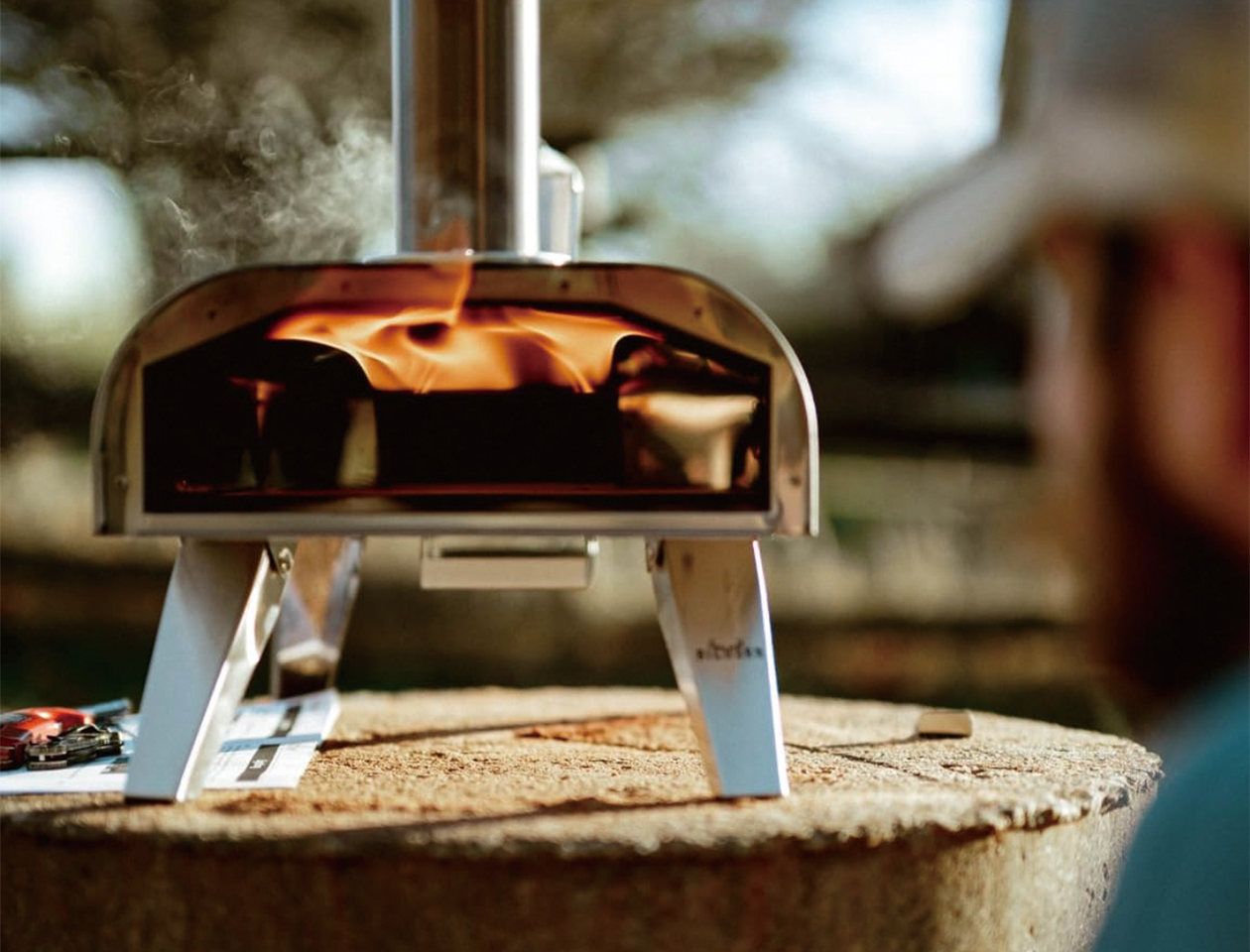
An auto-rotating gas pizza oven does one job for you that every pizza cook normally does by hand: it turns the pizza while it bakes, so the crust blisters evenly without you opening the oven and rotating the pie with a peel. The setup, preheat and launch follow the same rhythm as any gas pizza oven — connect and leak-test the propane, preheat until the stone is ready, and launch the pizza onto the rotating surface. This guide walks through that workflow for a 16-inch auto-rotating model, explains what to watch during the bake, and covers the care that keeps the rotation mechanism running smoothly.
How auto-rotation changes the bake
The benefit of auto-rotation is consistency. In a stationary oven, the side nearest the burner gets more heat, so the cook rotates the pizza every twenty to thirty seconds to even out the blistering. A rotating stone or turntable does that continuously, which means more even browning, fewer burnt edges and less heat loss from opening the door. It does not remove the need to watch the bake — the first pizza still tells you how your dough and toppings behave at your oven's heat — but it removes the most error-prone manual step for every pizza after that.
Setup and safety first
Set up the oven outdoors on a stable, level, non-combustible surface, following the same propane rules as any gas oven: connect the regulator and hose, run a soapy-water leak test on every joint, and light the burner per the manual. Before the first cook, confirm the rotating surface moves freely and is seated correctly — a turntable that is misaligned can scrape or stall, which shows up as uneven bakes. Keep the area around the oven clear, and never move the oven or disconnect the tank while it is hot or lit.

Preheating the stone
Auto-rotation does not change the most important rule: the stone must be fully preheated before the first pizza. Give the oven the warm-up the manual specifies, and use the built-in thermometer or an infrared reading of the stone to confirm it holds the temperature your dough needs. The rotating mechanism does not speed up heat-up — the stone still needs time to soak. Plan the preheat into the session, and resist the urge to launch as soon as the air feels hot; the stone is the surface that finishes the bottom crust.
Launching onto a moving surface
Launching onto a rotating surface is slightly different from a static stone, because the surface moves as you slide the pizza in. Use a well-dusted peel, give it a shake to confirm the pizza slides, and launch in one smooth motion so the pizza lands cleanly rather than folding. If the turntable rotates slowly, a clean launch is easy; if it moves faster, aim your slide with the rotation so the pizza does not catch and wrinkle. Watch the first launch closely — it will tell you whether you need to adjust your slide speed or the peel angle for your particular oven.
Watching the bake
With the pizza rotating, your job shifts from turning to watching. Look through the door or window at the rim color: the pizza should blister evenly as it rotates, and the base should set quickly on the hot stone. If one side still chars despite rotation, the stone or burner may have a hot spot, or the rotation may be uneven — check both. Most bakes finish in roughly the same time as a manual oven, so rely on the visual doneness signals — puffed, spotted rim and set base — rather than a fixed timer. The digital thermometer on models that include one helps you confirm the oven is holding temperature through the session.
Troubleshooting rotation and stone
If the rotation stops or sounds wrong mid-bake, turn off the gas and let the oven cool before investigating. Common causes are debris under the turntable, a misaligned stone, or a mechanism that needs cleaning after heavy use; your manual describes how to access and clean the rotating assembly safely. Never force a stuck turntable while the oven is hot. If the stone itself cracks or warps, replace it with the part sized for your model rather than continuing to bake on a damaged surface. Rotation problems are usually maintenance problems, and a clean, aligned mechanism runs quietly for years.
Care after the cook
After each session, let the oven cool, brush crumbs and flour off the stone, and wipe the interior and the area around the rotating mechanism. Debris is the main enemy of the turntable, so keep the surface around it clean and check it periodically for buildup. Cover the oven when cool and dry, and follow the gas-oven cleaning guide for the burner and body. An auto-rotating oven rewards the same maintenance as any pizza oven, with one extra item — the mechanism that makes rotation effortless — kept free of crumbs and grit.
Dough and toppings that suit rotation
Auto-rotation works best with dough that holds its shape and toppings that stay put. Use a dough that is not overly wet at the edges, because a slack rim can slump and drag as the surface rotates; the hydration guidance from the signature dough recipe is a good starting point. Keep toppings inside the sauce line and avoid heavy piles at the center, which can slide as the pizza turns. If you are new to the oven, bake the first few pizzas with simple, dry toppings so you can learn how the rotation behaves before you test a loaded supreme. A pizza that is built to rotate evenly bakes evenly.
Running a session of multiple pizzas
Auto-rotation shines during back-to-back bakes, because every pizza gets the same even rotation without you juggling a peel between pies. Plan the session like a production line: shape and top the next pizza while the current one bakes, launch as soon as the stone has recovered, and let the rotation do its job while you watch the rim. Check the stone temperature between pizzas with the built-in thermometer or an infrared reading, and pause if the stone drops below your target — launching into a cool stone gives pale bottoms no matter how evenly the top rotates. With the mechanism handling the turning, the cook's job becomes timing and dough, which is exactly where attention belongs.
Using the thermometer to confirm readiness
A digital thermometer on the oven is a readiness tool, not just a display. Use it to confirm the oven has reached and is holding the temperature your dough needs, and to notice when the chamber drifts during a long session. Because the thermometer reads the oven environment, pair it with an occasional infrared check of the stone itself — the stone is the surface that finishes the crust, and it can lag the air reading. If the two disagree consistently, note the difference and build it into your preheat routine; knowing your oven's thermometer-to-stone relationship removes most of the guesswork from launch timing.
First-cook calibration matters more with an auto-rotating oven than it seems, because the mechanism adds a variable you have not cooked with before. Bake one plain margherita on the first session, watch how the rotation moves the pizza and where the heat sits, and adjust the dough, launch and heat based on that single pie. Record what you changed — slide speed, peel angle, stone temperature, bake time — and the second session will feel like the oven's normal rhythm rather than a new experiment. The rotation handles the turning; the first-pizza calibration handles everything else.
The gas pizza oven collection includes the 16-inch auto-rotating model shown here, and the product page lists the exact specifications and manual notes for your model. Pair this guide with the setup article for the propane connection details and the cleaning guide for the burner and body, and the auto-rotating oven will deliver even, blistered pizzas with less hands-on work every time.
These steps are general guidance, and models vary: follow the manual for your specific unit, and verify temperatures with a clean thermometer where the text calls for one. Product details reflect official Big Horn Outdoors listings reviewed September 5, 2026; re-check prices and availability at checkout.