You need surprisingly little to start making good pizza in a pizza oven: a launching peel, a turning peel, and a way to protect your hands and your oven are the core kit. Everything else is an upgrade you can add as your cooking proves you need it. This guide lays out the accessories in three tiers — minimum, recommended and nice-to-have — with fit notes by oven fuel and size, so you can build a starter kit without buying gear you will never use.
Start with the minimum
The minimum kit is three items. A launching peel sized to your pizza carries the assembled pie into the oven. A turning peel rotates the pizza while it bakes so the crust blisters evenly. And heat-resistant gloves protect your hands when you handle hot trays, the peel or the oven body. With those three, you can bake, turn and retrieve a pizza safely — which is the entire job. If you only buy three accessories, buy these.

Tier 1: launch, turn, protect
Choosing the Tier 1 items well matters more than buying more items. The launching peel should be at least as wide as your largest regular pizza — a 12-inch pizza is comfortable on a 13- to 14-inch blade — and made of a material that slides under dough reliably; stainless steel is the most common recommendation for high-heat ovens. The turning peel should be small enough to maneuver inside the oven; a 7-inch blade handles most 12-inch pies. Gloves should fit snugly and cover your wrists; a rating number on the label matters less than actually wearing them when you reach toward the fire.


Tier 2: heat and dough tools
Once the minimum kit works, the next upgrades solve real problems rather than adding novelty. A thermometer — infrared for the stone or instant-read for the bake — removes the guesswork from preheat and doneness. A cover protects an outdoor oven from weather and is the cheapest maintenance tool you own. A stone brush keeps the baking surface clean between pizzas. And a dough scraper or bench knife makes portioning and handling dough easier than using your hands. These four are the upgrades that most home bakers notice within the first few sessions.
Tier 3: convenience extras
Beyond Tier 2, accessories become preference items: a perforated peel that sheds excess flour, a pizza cutter or rocker blade, a proofing box or trays for dough balls, a serving board, and specialized brushes. None of these are required, and most are worth buying only when a specific cook proves the need — the perforated peel for a baker who fights sticking, the proofing trays for someone who cold-ferments regularly, the serving board for someone who hosts. Buying Tier 3 items before the first cook is how accessory drawers fill with gear that never gets used.
Building a kit for your oven
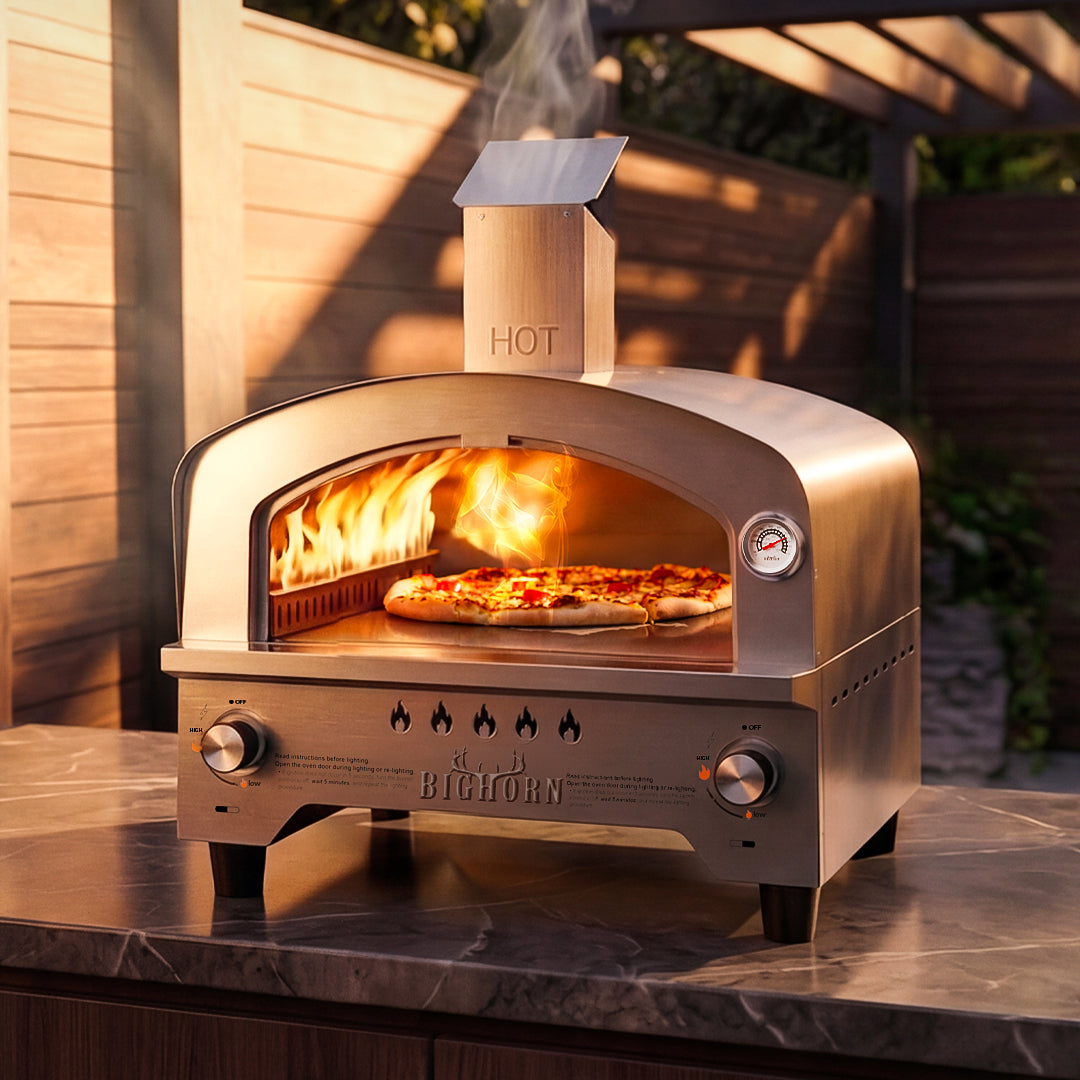
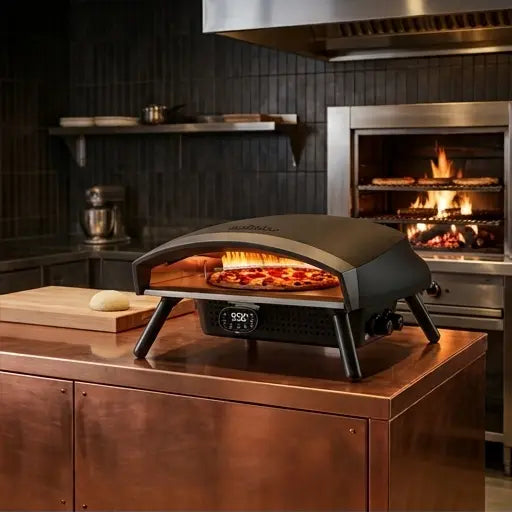
Your oven's fuel and size change a few fit notes. Outdoor gas and pellet ovens need a weatherproof cover sized to the model; countertop electric ovens need less protection but may have a smaller opening that limits peel size. Check the oven's opening and stone size before choosing a peel blade, and confirm any cover listing matches your model's dimensions. If an accessory page does not state which ovens it fits, treat that as a warning rather than a detail to ignore — fit is a safety and performance issue for covers, stones and peels alike.
Choosing the tier items that fit your oven
A few fit details turn a good accessory list into the right accessory list. For the launching peel, measure both the pizza diameter and the oven opening; a peel blade that fits the pizza but not the oven door is useless. For the turning peel, choose a blade small enough to spin inside the chamber without hitting the walls. For gloves, buy for fit and wrist coverage, not just the highest rating on the label. For a cover, match the model and size exactly — a cover listed for a 12-inch oven will not protect a 16-inch model, and a stretched cover fails at its seams in the first windy season. When the accessory page lists dimensions, compare them to your oven before you add to cart.
Tier 2 tools in practice
The Tier 2 upgrades each solve a measurable problem. An infrared thermometer aimed at the stone tells you when the oven is truly ready, which prevents the pale-bottomed pizzas that come from launching early. An instant-read thermometer settles doneness questions for anything you cook beyond pizza. A cover extends the life of an outdoor oven more than any cleaning product, because it stops rain and UV from reaching the steel in the first place. And a stone brush keeps the baking surface clean between pizzas, which matters more in a high-heat oven where residue burns on quickly. Buy these when you notice the problem, and they will feel like obvious upgrades rather than impulse purchases.
| Oven type | Starter kit emphasis |
|---|---|
| Countertop electric | Peels sized to a smaller opening; thermometer; crumb-tray care tools |
| Outdoor gas | Peels, gloves, fitted weatherproof cover, stone brush |
| Outdoor pellet | Everything for gas plus pellet fuel tools, ash care and model-matched cover |
| Multi-fuel | Peels, gloves, thermometer and fuel-specific extras for each fuel type |
Use the table as a starting point, then adjust for how you cook. A baker who only makes pizza needs fewer extras than one who roasts vegetables and breads in the same oven; a host who cooks for crowds values a second peel and a larger serving board earlier than a solo cook does.
Gadgets that won't fix your pizza technique
Skip the gadgets that promise to fix technique: pizza scissors, docking tools, rotating trays for ovens that do not support them, and novelty cutters all sit in drawers after the first cook. Skip "universal" covers and stones unless the listing names your model. And skip buying a full Tier 3 kit before your first pizza — the fastest way to learn what you need is to cook with the minimum kit and note what frustrates you. Accessory purchases should follow problems, not precede them.
Big Horn's accessories collection groups the tiers together, with the stainless steel peel, the turning peel and the heat-resistant gloves as the starting three, and the deeper guides — the peel guide and the pellet-specific accessory guide — covering the fit details for each tool.
Know when to add an accessory: buy something new only when a specific cook proves you need it. If pizzas stick on launch twice in a row, that is a dough or technique problem first — fix the dough hydration and dusting before buying a different peel. If the bottom crust keeps coming out pale, buy the thermometer before anything else, because the problem is heat you cannot see. If the oven sits outdoors and you notice rain pooling on the body, the cover is the priority purchase. Accessories that follow observed problems earn their place; accessories bought on a shopping impulse usually do not.
Finally, care for the kit so it lasts. Wipe metal peels after use and dry them; keep gloves dry and inspect them for wear; clean the thermometer lens per its manual; and check the cover for tears each season. A small kit cared for properly outlasts a large kit that is neglected, and it keeps every cook safe and smooth — which is the entire point of buying the accessories in the first place.
A sensible budget approach is to start with the Tier 1 trio, cook three or four sessions, and then spend on Tier 2 only for the problems those sessions exposed. Most bakers find their first real upgrade is a thermometer or a better-fitting cover rather than a third peel, because those are the tools that fix the actual failure points of early pizza making: inconsistent heat and unprotected outdoor gear. Building the kit in that order keeps the spending aligned with the cooking, and it means every accessory you own has already earned its place on the counter.
Product details and prices in this guide were verified against official Big Horn Outdoors listings during the September 5, 2026 review; re-check prices and availability at checkout.
Explore more in the Pizza Oven Cooking Guides.