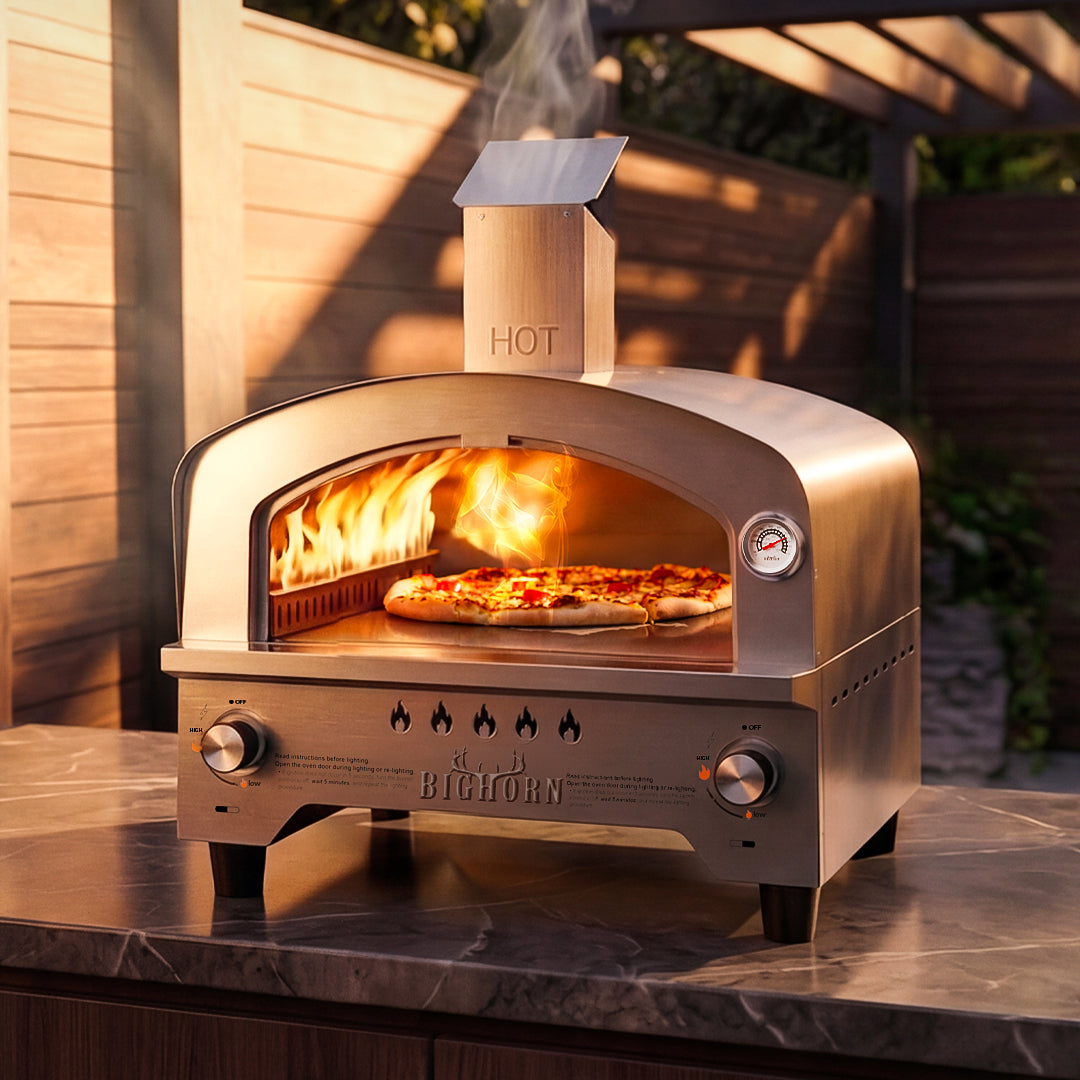
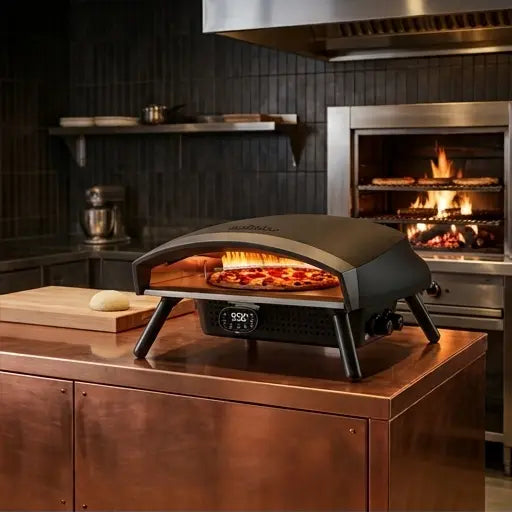

Before your first pizza, a new pizza oven needs two things: a burn-in (a low, slow first fire that cures the stone and burns off factory residue) and a full preheat (so the stone reaches baking temperature, typically 750–850°F / 400–450°C). Do both, and the first pizzas come out right; skip them and the stone steams instead of bakes. This guide walks through the burn-in, the preheat, the launch, and the mistakes that mark a first session.
These are the general first-use steps for a portable pizza oven like the Big Horn lineup; for model-specific cure times and settings, follow the manual that came with your oven.
What you need before you start
- A stable, level, fire-safe outdoor surface away from wind and overhangs.
- Fuel per your model — pellets for a pellet oven, a connected and leak-tested propane tank for a gas oven.
- An infrared thermometer (or the oven’s built-in check) to confirm the stone is ready.
- A pizza peel dusted with flour or semolina for a clean launch.
- Patience with the first burn-in — it is not a cooking session.
Understanding heat mapping before you decide
A pizza oven heats unevenly by design: the back near the flame or emitter gets hotter, the front stays cooler, and the stone stores heat for the base. The first sessions teach you the hot and cool spots of your particular oven. That map is why you rotate the pizza once during a 60–90 second bake and why you launch with the rim slightly toward the cooler side, then turn it into the hot zone.
The setup that makes or breaks the result
Two things decide a good first session before any dough is stretched: a proper burn-in and a fully preheated stone. The burn-in cures a new stone and removes factory residue; a stone that is never burn-in’d can absorb moisture and steam instead of bake. The preheat gets the stone to 750–850°F — not just the air hot, but the stone soaked. Both are the difference between a crisp base and a pale, chewy one.
Step 1: The burn-in
Set up the oven outdoors, then run it on a low-to-medium flame or small fire for about 30–40 minutes on the very first session. This cures the stone — driving out factory moisture and residue — and burns off any oils left from manufacturing. Let the oven cool completely, then wipe the inside clean with a dry paper towel. The burn-in is not for cooking; it is the oven’s first conditioning.
Step 2: Preheat for baking
After the burn-in and cool-down, light the oven again and preheat at maximum. Allow the full preheat time for your model — the Big Horn 12-inch pellet oven reaches about 887°F (475°C) after an 18–20 minute warm-up, and gas models preheat faster. Confirm the stone with an infrared thermometer aimed at the center; wait until it holds 750–850°F before the first launch.
Step 3: Launch and bake your first pies
First-session flow: burn-in (30–40 min low) → cool and wipe → preheat fully to 750–850°F stone → launch on a floured peel → bake 60–90 s, rotating once → let the stone recover between pies.
Dust the peel with flour or semolina, assemble the pizza quickly with light toppings, and launch with a fast, confident slide. If the oven is gas, turn the flame down right after the launch to avoid burning the top, then back up between pies to reheat the stone. Bake 60–90 seconds, rotating once for even blistering, and pull when the rim puffs and the base is crisp. Let the stone recover about a minute before the next pie.
Common mistakes and how to avoid them
- Skipping the burn-in. A first fire that is too hot too fast can shock a new stone; cure it low first.
- Launching on a cold stone. The stone must hold 750–850°F or the base steams.
- Judging by air temperature alone. Check the stone with an infrared thermometer, not just the air.
- Over-topping the first pies. Heavy toppings slow the bake; keep the first pies simple.
- Leaving the door open. Heat escapes fast; keep the opening covered between launches.
What to do when it does not go right
If the base is pale and chewy, the stone was not hot enough — add preheat time and check the stone temperature, not the air. If the top burns before the base sets, the flame was too high for the stone — turn it down after the launch. If the first pie sticks to the peel, use more flour or semolina and launch faster. Every first-session issue traces back to preheat, launch, or heat management.
Pro tips for better results
- Learn the hot spots. Watch where the rim blisters first and use that map for later launches.
- Keep the first session small. One or two simple pizzas, not a party — the goal is learning the oven.
- Log the preheat. Note how long your model takes to a hot stone; it will vary with weather.

See the oven and the setup/first-use resources. 12-inch pellet pizza oven · first-time setup guide
FAQ
How long to heat a pizza oven before use?
For a proper first bake, preheat until the stone holds 750–850°F — on the Big Horn 12-inch pellet oven that is about 18–20 minutes after the burn-in. Use an infrared thermometer aimed at the stone center rather than trusting the air temperature.
What is the 55 rule for pizza?
The “55 rule” is loose shorthand that varies by recipe — it often refers to a 55–65% hydration window or a balanced time-and-temperature combination. For a high-heat pizza oven, the reliable numbers are a fully preheated 750–850°F stone and a 60–90 second bake.
Do you oil a pizza stone before using it?
No — do not oil a new pizza stone. Oil soaks into the porous stone, never polymerizes properly, and then smokes and turns sticky the next time the stone heats. The correct first step is a low burn-in to cure the stone, then dry preheat; no oil.
Do you have to do anything to an oven before you use it for the first time?
Yes: run a low-to-medium burn-in for about 30–40 minutes to cure the new stone and burn off factory residue, let it cool completely, and wipe the inside clean. Then preheat fully to baking temperature before the first pizza. The manual for your model is the final authority.