
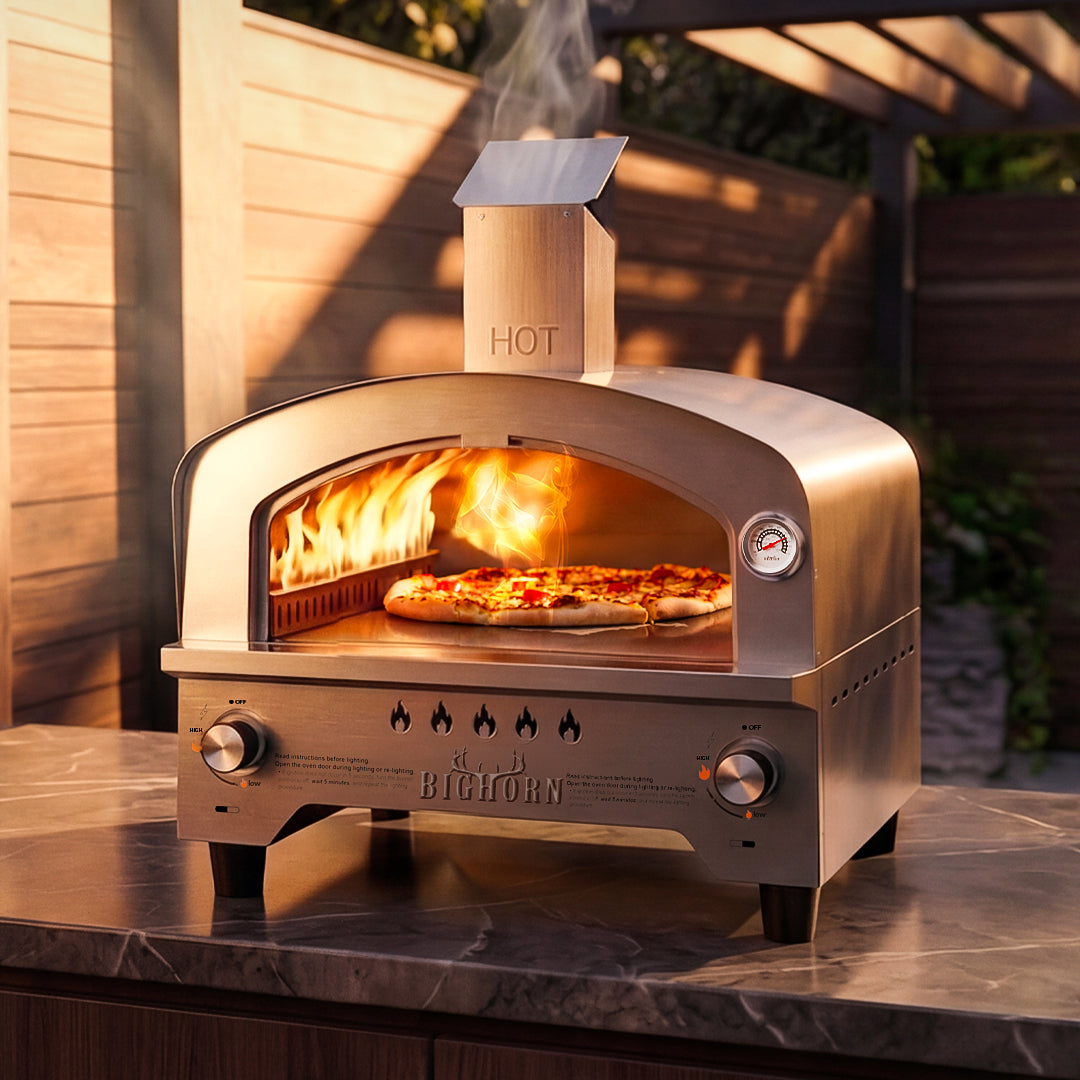



Maintaining a pizza oven comes down to four jobs done on a rhythm: clean the stone after every cook, keep the burner and body clear (on fuel models), protect everything from weather, and inspect before each season. Done consistently, a pizza oven keeps baking evenly for years; skipped, the stone absorbs odors, the burner clogs, and weather undoes the body. This guide covers the maintenance routine, the stone-care rules that prevent damage, and the seasonal checks that decide an oven’s lifespan.
These are the general maintenance steps for a portable pizza oven like the Big Horn lineup; for model-specific care, follow the manual that came with your oven.
What you need before you start
- An approved stone brush or scraper — never metal tools that score the stone.
- A soft brush for the burner surface and a vacuum nozzle for crumbs and ash.
- Warm soapy water and a dry cloth for the body.
- A fitted cover sized to your model for weather protection.
- A leak-test solution for gas models and dry storage for pellet fuel.
Understanding heat mapping before you decide
A pizza oven’s stone and burner work as a system: the stone stores heat and bakes the base, while the burner or fire provides the heat and roasts the top. Uneven bakes usually trace to one part of that system — a stone with burned-on residue, a burner with clogged ports, or a body letting heat escape. Maintenance is how you keep the system even: a clean stone bakes evenly, a clear burner lights evenly, and a covered body holds heat.
The setup that makes or breaks the result
Two habits decide whether maintenance is easy or a fight: clean after every cook, and protect from weather. Residue sets fast at high heat — at 1500°F-class temperatures it bakes on in minutes — so a clean after each session beats a deep clean later. Weather is the second silent enemy: rain and humidity find their way into stones, hoppers, gas connections, and steel. A clean, dry, covered oven shrugs off a season; a dirty, wet one declines.
Step 1: Stone care after every cook
Brush the stone after it cools using an approved brush; remove crumbs and loose residue while they are easy to move. Do not soak a porous stone unless the manual says otherwise, and never use soap on a stone that the manual warns against — absorbed detergent can flavor the next bake and cause smoke. A clean, dry stone is the base of consistent pizzas.
Step 2: Burner and body care
On gas and pellet models, keep the burner area clear. When the oven is cool, brush loose soot and debris off the burner and clear the ports with the manual’s tool; empty ash from a pellet tray after each session. Wipe the interior walls and the exterior body, empty any drip tray, and check the propane connection (gas models) or pellet dryness (pellet models). These are the parts that make a fuel oven different from an electric one, and they are the first to fail when ignored.
Step 3: Seasonal checks
| Check | When | What it prevents |
|---|---|---|
| Stone clean and dry | Each session | Odors, stuck residue, uneven bakes |
| Burner ports clear | Weekly / after heavy use | Uneven flames, hot spots |
| Cover fitted | Between sessions | Rain and UV damage to steel and stone |
| Leak test (gas) | Each season | Hose and fitting failures |
| Pellet storage dry | Ongoing | Moisture-clogged feed |
Run the seasonal deeper pass once a year: remove and wash detachable parts, inspect the stone for cracks (thermal-shock cracks happen from cold or water on a hot stone), check the burner and connections, and confirm the cover and storage are sound.
Common mistakes and how to avoid them
- Soaping a porous stone. Follow the manual; many stones should be brushed dry, never washed with dish soap.
- Cleaning while hot. A warm stone cracks easily; a warm burner can ignite residue. Cool fully first.
- Ignoring the burner. Clogged ports create hot spots; brush and clear them on a rhythm.
- Storing it wet or dirty. Moisture and residue are what winter damage is made of.
- Skipping the leak test. A gas oven that sat a season deserves a soapy-water check before the first light.
What to do when it does not go right
If a stone develops a smell, it has absorbed grease or moisture — run a hot burn-off according to the manual, then keep it dry. If flames are uneven, clear the burner ports and confirm the gas connection. If the oven smokes on preheat, the stone or tray has residue — brush it and run the preheat again. Most maintenance issues trace back to residue, moisture, or a clogged burner; fix that variable and the oven returns to form.
Pro tips for better results
- Clean the drip tray before it builds up. A quick empty after each session prevents smoke on the next preheat.
- Store the stone dry. Never leave a stone wet; moisture is how it cracks and smells.
- Keep a fitted cover. Sized to your model, it protects the stone, burner, and body from the weather that ages ovens.

See the oven and the care and cleaning resources. 12-inch pellet pizza oven · accessories collection
FAQ
What is the lifespan of a pizza oven?
With care, a portable pizza oven lasts many years — the main unit and stainless body hold up, while the stone is the wear item most likely to crack from thermal shock or shipping damage. Lifespan depends on cleaning, weather protection, and dry storage more than on the brand.
Should I oil or flour my pizza stone?
Neither is a stone treatment. Oiling soaks into the porous stone and can smoke or turn sticky; flour is only for the peel to help the dough launch. The stone itself should be brushed dry, never oiled or washed with dish soap (unless the manual says otherwise).
Can you use Dawn dish soap on a pizza stone?
Generally no — a porous pizza stone absorbs soap and moisture, which can flavor the next bake and cause smoking. Brush the stone dry with an approved brush and follow the manual for deep cleaning; reserve dish soap for non-porous body parts.
Should you wash a pizza oven stone?
Most pizza oven stones should not be washed with water and soap — brush them dry after they cool. If the manual allows a deeper clean, follow its exact guidance; never soak or wash a stone the manual warns against, and never clean a warm stone.