
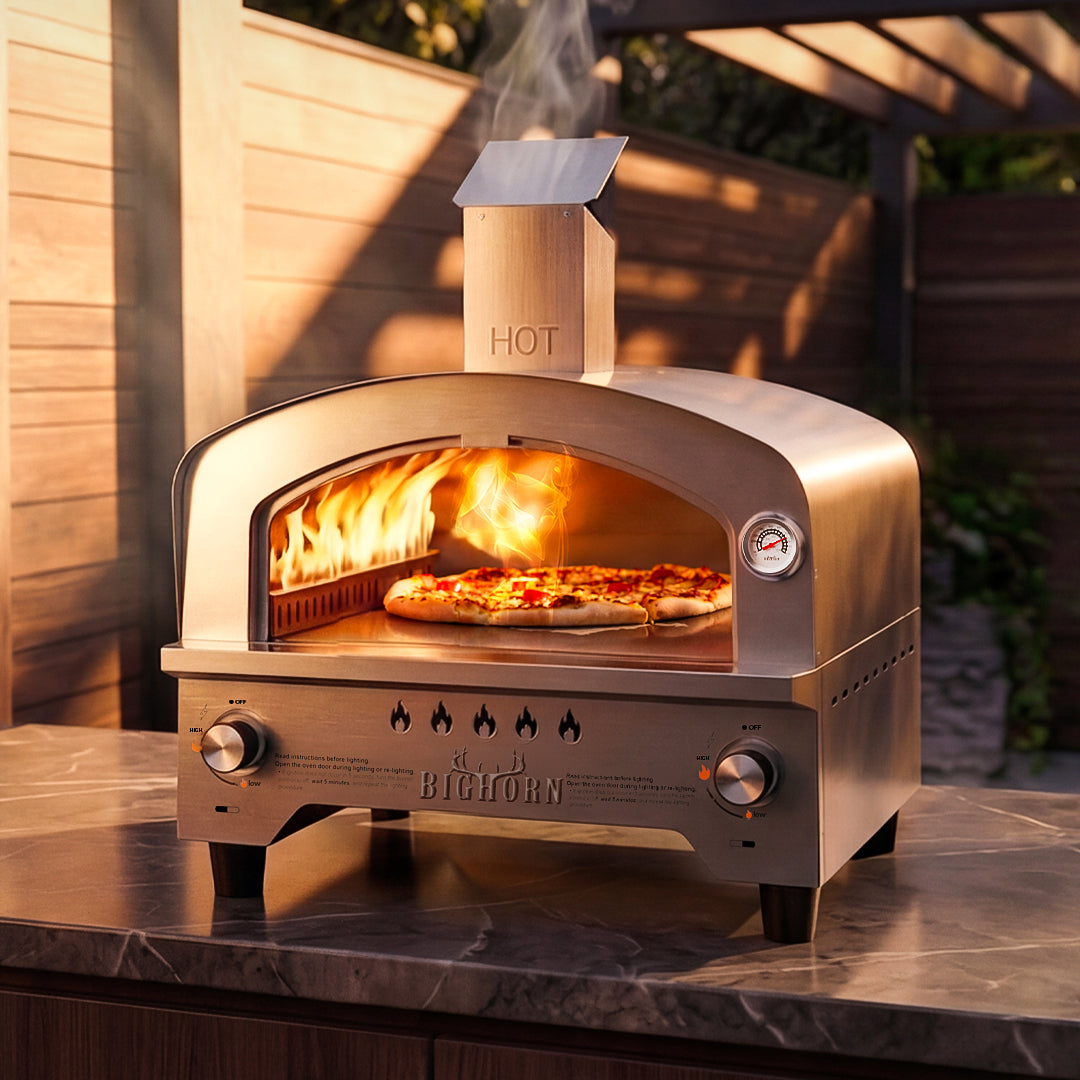
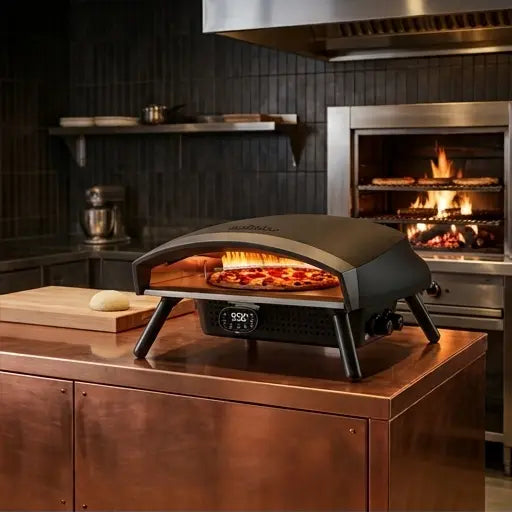
Putting a pizza oven on a balcony works only if three things line up: your building rules allow a fuel-fired appliance, you have a stable, fire-safe outdoor surface with clearance, and the oven size fits the space. Propane and pellet pizza ovens are outdoor appliances, so the first question is always whether your lease and building allow them on the balcony at all. This guide covers the rules, the clearance and setup essentials, and the size and fuel choices that fit a balcony.
This is general guidance, not legal or building-code advice; check your lease, building rules, and local regulations before buying.
What actually matters for this decision
- Building rules. Many buildings restrict or ban propane and open-flame appliances on balconies. This is the first filter.
- Outdoor use only. Pellet and gas pizza ovens must be used outdoors with clearance; never indoors or in an enclosed space.
- Stable, fire-safe surface. A level, non-combustible table or stand with the stone overhanging nothing.
- Clearance. Space around the oven and away from walls, railings, and overhangs, per the manual.
- Size. A compact portable oven fits a balcony; a large rig does not.
Understanding heat and clearance before you decide
A pizza oven at about 750–900°F (400–480°C) radiates intense heat from its opening and body. That means clearance is a safety feature, not a suggestion: the manual’s distances to walls, railings, and combustible materials decide whether the oven is safe on a particular balcony. Also plan where smoke and heat will go — an enclosed balcony with poor airflow is a different safety picture than an open one.
The key factors, ranked
| Factor | Why it matters | What to check |
|---|---|---|
| Building rules | Decides the whole question | Propane / open flame allowed? |
| Clearance | Prevents fire risk | Manual distances to walls and railings |
| Stable surface | Prevents tipping | Level, non-combustible table or stand |
| Size | Fits the space | Oven footprint vs balcony area |
| Fuel | Shapes storage and use | Pellet supply vs propane tank storage rules |
Matching the choice to your situation
If your building allows it and your balcony has a stable, fire-safe surface with clearance, a compact portable pizza oven is a great fit — a 12-inch pellet or gas model bakes real high-heat pizza in a small footprint. If your building restricts fuel-fired appliances, the honest answer is an indoor electric option or a community/rooftop grill, not a propane or pellet oven. Match the appliance to the rules first, then to the space.
What the experts look for
Anyone who runs an oven on a balcony checks the same list before the first bake: the building rules (in writing), the manual’s clearance distances, a stable non-combustible table, and a plan for smoke and heat direction. They also keep a fire extinguisher or bucket of sand nearby and never leave a hot oven unattended. The setup is simple once the rules and clearances are confirmed.
Common mistakes and how to avoid them
- Buying before checking the rules. Confirm fuel-fired appliances are allowed on your balcony before you spend.
- Using an oven in an enclosed space. Pellet and gas ovens need outdoor airflow; never run them in an enclosed balcony or indoors.
- Skipping the clearance. Intense heat needs space; follow the manual’s distances to walls and railings.
- Setting up on a wobbly or combustible table. Use a level, stable, non-combustible surface.
- Storing fuel improperly. Follow local rules for propane tanks and keep pellets dry in a sealed container.
Realistic expectations and results
A pizza oven on a permitted balcony delivers the same high-heat bakes as a backyard — a fully preheated stone around 750–900°F and 60–90 second pizzas — in a compact footprint. Expect to manage smoke direction, keep clearances, and store fuel per your rules. It is a real outdoor pizza setup, scaled to a balcony, as long as the building rules and safety basics are met.
The takeaway in one paragraph
Putting a pizza oven on a balcony is about the rules before the specs: confirm fuel-fired appliances are allowed, use the oven outdoors with proper clearance on a stable non-combustible surface, and choose a compact portable model that fits the space. A 12-inch pellet or gas oven delivers real high-heat pizza in a small footprint. If the rules do not allow it, choose an indoor electric option instead.
See the compact portable ovens that fit small spaces. 12-inch pellet pizza oven · portable pizza oven collection
FAQ
Am I allowed to have a grill on my apartment balcony?
It depends on your building rules and local codes. Many buildings ban or restrict propane and open-flame grills and ovens on balconies; some allow electric only. Check your lease and building rules in writing before buying. If fuel-fired appliances are banned, an electric option is the allowed path.
What can I put my pizza oven on outside?
Put the oven on a stable, level, non-combustible surface — a dedicated grill table, a metal or stone stand, or a heat-rated cart — with clearance around it per the manual. Never set it on a combustible deck board, plastic table, or uneven surface, and keep the stone and oven body from overhanging the edge.
How close can a pizza oven be to a house?
Follow the manual’s clearance distances — typically at least several feet from walls, railings, and combustible materials, with more distance near openings on the oven. On a balcony, confirm the distances to your walls and railings before the first use; the intense heat makes clearance a safety requirement, not a suggestion.
Can a pizza oven stay outside?
Most portable pizza ovens can live outdoors if covered with a fitted, weatherproof cover and stored clean and dry, but check the manual and your building rules. Long exposure to rain and humidity ages steel and stones; a cover and dry storage between sessions extend the oven’s life.