
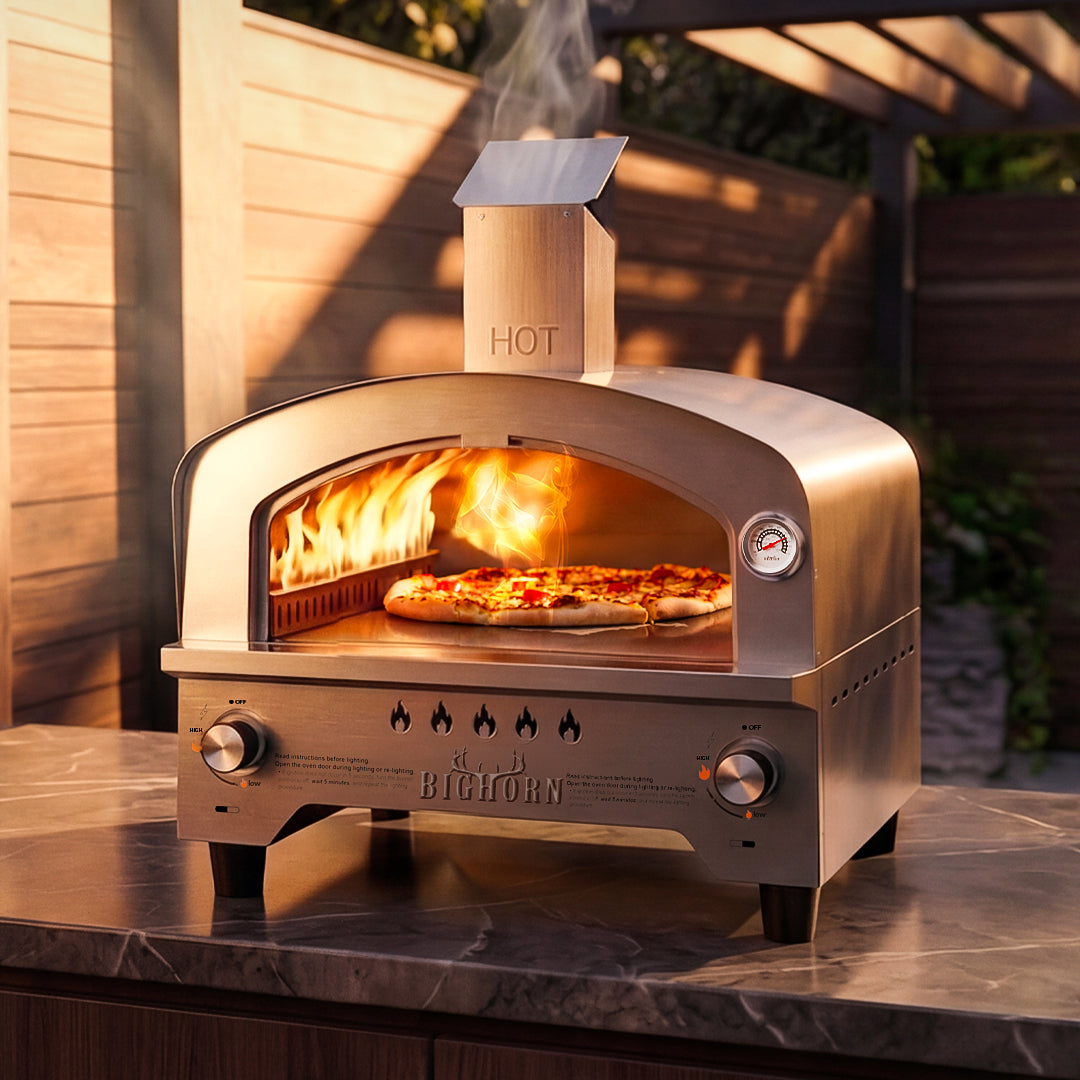
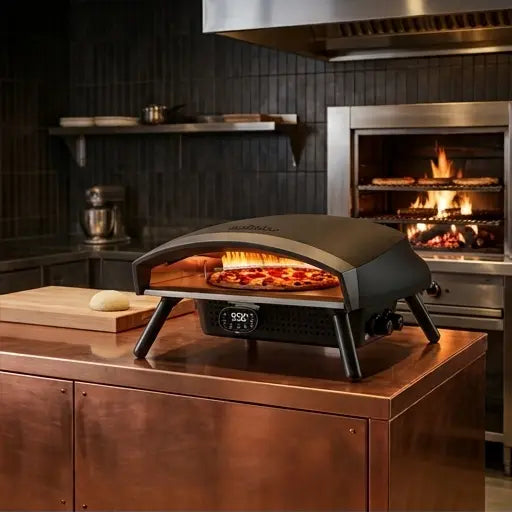
A portable gas pizza oven earns its place by being ready when you are: it preheats in minutes, runs on propane instead of a fire you have to feed, and fits in the car for the backyard, the campsite or the tailgate. The trade-offs are the ones you have to plan for — fuel logistics, cool-down time, transport protection and a level, heat-safe spot to cook. This guide covers what to compare before buying, how the portable gas format works at a campsite or tailgate, and the packing and safety routine that keeps the oven working trip after trip. It is deliberately gas-specific — tank hookup, regulator and outdoor flame behavior — while the general portable-pizza-oven guide compares all fuel types and travel scenarios at the category level.
Why portable gas ovens sell on convenience
Gas removes the two obstacles that keep people from cooking pizza outdoors: the wait and the fire management. A gas oven lights with a knob and preheats far faster than a wood or pellet fire builds, so pizza can happen on a Tuesday night or between ball games rather than only on a slow weekend. The heat is steady and adjustable, which means the stone reaches the same temperature for the first pizza as it does for the sixth, and there is no ash to clear, no hopper to feed and no flame to nurse while the dough proofs.
Portability is the second half of the appeal. A self-contained gas oven with legs or a compact body can travel from the patio to the driveway to the campsite in the same trip as the cooler, and it does not need a chimney or a permanent counter. The realistic limit is not the oven — it is the fuel and the packing. A gas oven needs a propane supply, a stable surface and a cool, clean way to travel, and the campers who love their portable ovens are the ones who built those three things into the routine from the start.
What to compare before buying
Start with the pizza size the oven actually bakes. Ovens in the portable class typically handle 12- to 16-inch pizzas, and the listed size refers to the stone's diameter, not the dough you should stretch to the edge — leave a margin so the pizza launches and rotates without hitting the sides. The second comparison is fuel connection: some portable gas ovens take a 1-pound disposable cylinder directly, while others run from a larger tank through a hose and regulator. Direct-cylinder models are simpler at a campsite; hose models let you cook for hours without swapping canisters, and the connection style changes what you pack.
The third comparison is heat control. Look for an adjustable burner or burners with a clear high-to-low range, because pizza needs a hot stone for the bottom crust and controlled top heat for the toppings — a single fixed flame makes that balance harder. Compare warm-up time, the stone's thickness, and whether the oven has a thermometer or relies on your own. Finally, weigh the physical package: folded size, packed weight, leg stability and how the oven is meant to be carried. The product page should state all of these; if a spec is missing, ask before you buy rather than assuming the oven fits the cooler space you have.
| What to compare | Why it matters | What to look for |
|---|---|---|
| Baking size | Sets the dough size and group capacity | 12–16 inch stone with launch margin |
| Fuel connection | Determines what you pack and how long you cook | 1-lb cylinder direct, or tank + hose/regulator |
| Heat control | Balances bottom crust and top browning | Adjustable burner, steady low range |
| Warm-up and stone | Affects cook time and crust quality | Stone thickness and stated preheat time |
| Pack size and weight | Decides whether it travels well | Published dimensions and packed weight |

Big Horn and the portable category
Big Horn's portable gas offering sits at the practical end of the category. The 15-inch dual burner gas pizza oven runs on gas with separate heat for the stone and the top, which gives the cook the two controls that matter most: a hot floor for the crust and adjustable ceiling heat for the toppings. It shares the portable premise — set it on a table or stand, connect fuel, preheat and bake — while the portable pizza oven collection groups it with the formats that travel. The 15-inch stone size sits between the compact 12-inch ovens and the larger patio models, which is the sweet spot for a family that wants real pizza at the campsite without hauling a full outdoor kitchen.
Check the product page for the packed weight, dimensions and fuel connection before you commit, and compare the included accessories — some portable ovens ship with a stone, a peel or a stand, and that changes the true cost of getting started. Big Horn's 15-inch model lists at US$359.99 at the time of writing, with the oven's stone and dual-burner controls as the value story; verify the current price and any bundle at checkout, because the category runs frequent promotions.
Build the pizza kit around the oven before the first trip: a peel sized to the stone, a cutting board or pan for finished pies, a brush for the hot stone, flour or semolina for launching, and a thermometer if the oven does not have one. Add a small table or stand rated for the oven's weight, a cover or padded bag for transport, and fuel in the format the oven takes. Pack the kit as one labeled tote so the campsite setup is unpack-the-tote, connect, preheat — not a hunt through the cooler box for the peel. The oven does the cooking; the kit is what makes the cook feel as easy as it looks.
Setting up at a campsite or tailgate
The setup routine has four steps, in order: find a level, heat-safe surface; connect the fuel; preheat with the lid closed; and only then start stretching dough. A folding camp table works if it is sturdy and rated for the weight, but a tabletop oven needs a table that does not flex — check the table's rating and the oven's weight together. On the ground, use a level spot away from dry grass, tent walls and vehicle paint, and set the oven where the wind will not push the flame sideways or blow heat at people walking past.
At a tailgate, give the oven its own corner of the setup rather than crowding it against coolers and chairs. Preheat fully before the first launch — a stone that looks ready but is not fully soaked with heat will stick and undercook the bottom — and keep a covered landing spot for finished pizzas so the next one can start immediately. Cook in a rhythm: stretch, launch, turn, pull, slice, serve, repeat. With gas, the oven holds its temperature between pizzas, which is the whole advantage over a wood fire that needs attention between every pie.
Packing, transport and safety
Pack a portable gas oven only when it is fully cool — not warm, not just off. The stone holds heat for a long time, and a hot oven packed into a case or car can damage the case, the vehicle and anything it touches. After the oven cools, brush the stone clean, wipe the body, and make sure no grease or food sits in the burner area, then pack the oven in its case or a padded bag with the stone protected from knocks. Never stack heavy gear on the oven, and check the stone for cracks before the first cook of each trip.
Fuel safety follows the same rules as any gas appliance. Connect the cylinder or tank outdoors, check the connection, and light per the manual; if the oven does not light, turn it off, wait for gas to clear and try again rather than clicking with fuel flowing. Carry 1-pound cylinders upright in a ventilated spot, never in the passenger cabin, and store spare fuel away from the oven's heat. Cook outdoors only — a gas oven produces exhaust and must never run in a tent, trailer, garage or enclosed tailgate — and follow the manual's clearances from walls, ceilings and vehicles. The oven's portability ends at the fuel connection: it travels because you pack it right, not because it is safe to run anywhere.
A portable gas pizza oven is the answer for cooks who want restaurant-style pizza wherever the car can reach, as long as the fuel, the table and the cool-down are part of the plan. Match the size to the group, verify the weight and connection on the product page, and build the setup routine once — then the oven goes from novelty to the most-used piece of gear in the trunk.
Product details and prices in this guide were verified against official Big Horn Outdoors listings during the September 5, 2026 review; re-check prices and availability at checkout.