







Buying & Comparisons
A four cheese pizza melts cleanly when the blend is drier than a soup of fresh cheese, and when the oven is honestly ready. This is a ratio and melt guide, not a clone of a full recipe page. Treat any blend as a starting pattern, and do not invent a bake clock.
Classic four cheeses and melt behavior
A classic quattro formaggi blend often includes a stretchy cheese such as mozzarella, a blue such as gorgonzola, a nutty melting cheese such as fontina, and a hard, aged cheese such as Parmigiano or pecorino. Houses vary, and this article will not declare a single official quartet. What matters at high heat is moisture and salt: wet fresh mozzarella weeps, blue cheese can go harsh if you use too much, and a hard cheese browns and seasons more than it puddles.
A full recipe already lives at the four-cheese pizza recipe. Use that page when you want a complete pie formula. Use this page for the blend and the high-heat melt. A moisture test for pizza cheese already lives at pizza cheese moisture for high-heat ovens; this guide will not redo that test.
Ratios that avoid soup
A starting pattern, not a laboratory law, is to let a drier or lower-moisture mozzarella (or a well-drained fresh mozzarella) carry most of the stretch, then add smaller amounts of blue and of a rich melting cheese, and finish with a modest shower of hard cheese. If the pie puddles, you used too much wet cheese, or the cheese was too cold and wet going on, or the deck was shy. If the pie is harsh and oily, the blue or the rich cheese was too heavy.
Weigh or portion the blend once so you can repeat it, but do not treat a neighbor's gram sheet as official. Taste salt before you add more; four cheeses can already be salty. A three-cheese pie follows the same logic with one cheese dropped, often the blue or the richest melt, and still wants moisture control.
High-heat timing
Get the stone honestly ready, then launch a moderately dressed pie and watch the melt. High heat will brown a hard cheese and blister mozzarella faster than a conventional oven will. Pull the pie when the cheese has melted cleanly and the crust is set, not when a remembered timer beeps. This article will not invent a high-heat minute count, and it will not invent a bake time at 200°C. 200°C is a moderate conventional-oven range, not a typical high-heat pizza-oven setting, and a recipe written for that method should be followed as a conventional bake.
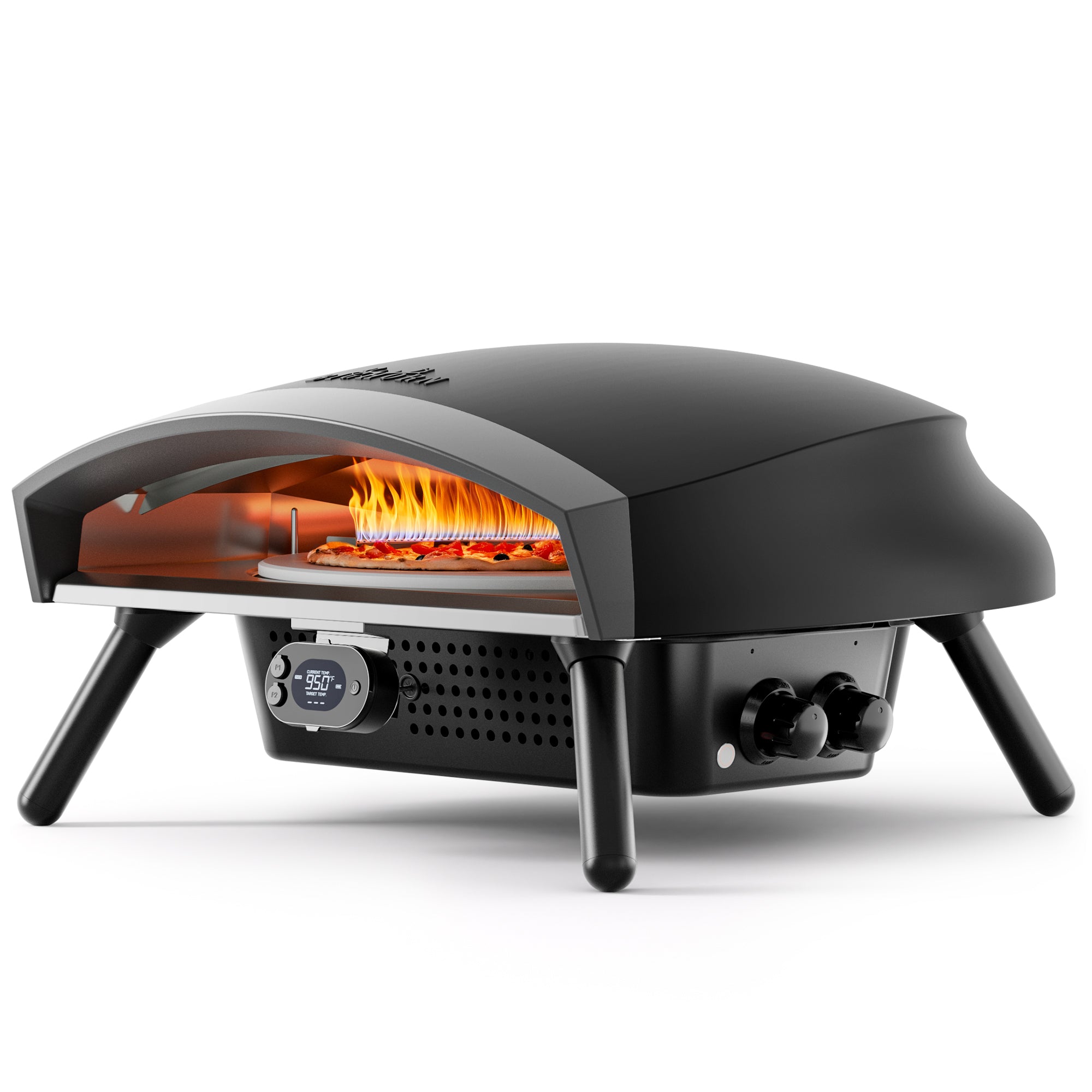
A gas chamber and an electric chamber will not behave identically. Browse the gas pizza oven collection or the electric pizza oven collection if you are still matching a tool to the pie, and confirm any published temperature range or bake window on the live listing. The wider pizza oven collection is the browsing path when the fuel is still open. Keep combustion ovens fully outdoors. U.S. Fire Administration cooking-fire prevention and Ready.gov home fire guidance still apply around a hot oven.

How this sits beside a full recipe
If you already have a four-cheese recipe you like, keep the dough and the bake method from that page, and only adjust the blend here: drain wet cheese, reduce the blue, and avoid a single heavy cap of fresh mozzarella. If you are starting from scratch, use the live recipe page for the pie, then come back to this ratio note when the first bake turns soupy or harsh. Do not stack two complete formulas on top of each other and call the mess a quattro.
Leftovers follow FDA safe food handling, FDA food safety in your kitchen, Ready.gov food guidance, and National Center for Home Food Preservation storage guidance. A cheese pie still belongs in official leftover guidance, not on a warm stone used as a cabinet. If you add meat later, official meat temperatures still apply.
The table below is a starting blend check, not an official recipe and not a bake clock.
| Cheese role | What it usually does | A starting habit |
|---|---|---|
| Stretchy mozzarella | Melt and pull | Use the largest share, and drain wet fresh cheese |
| Blue, such as gorgonzola | Flavor and salt | A smaller share; too much turns harsh at high heat |
| Rich melting cheese, such as fontina | Cream and flow | A moderate share, or the pie can go soupy |
| Hard aged cheese | Browning and seasoning | A modest finish, not a thick wet layer |
What a 200 C bake is not
If you bake on a conventional kitchen oven at about 200°C, follow a conventional recipe and a stone or steel if you use one, and do not copy a high-heat pizza-oven habit onto that method. If you bake in a dedicated pizza oven, follow that oven's ready cues instead of a 200°C clock. The two tools do not share a guaranteed minute count, and this page will not invent one for either.
A first quattro bake
Drain or blot wet cheese, mix a modest board of the four roles, dress a simple dough more lightly than a weekday mozzarella pie, and launch onto an honestly ready deck. Watch the melt, and pull when it is clean. If the first pie weeps, reduce the wet cheese and give the stone a fuller preheat. If it tastes too sharp, cut the blue, not the bake time you invented.
People also ask what sits on a quattro pizza, and what other pizza types exist. A quattro is a cheese-forward pie, not a universal topping list, and this article will not tour every pizza style. Keep the blend clean, and save pepperoni or a wet vegetable for a different pie so the four cheeses can actually be tasted.
Key takeaways
- Use a drier, balanced four-cheese blend as a starting pattern, not as a laboratory law.
- Drain wet mozzarella, keep blue and rich cheeses in smaller shares, and finish with a modest hard cheese.
- Do not invent a 200°C bake time; that range is a conventional-oven method, not a typical high-heat pizza-oven setting.
- Use the existing four-cheese recipe and cheese-moisture pages for those jobs; this page is the ratio and melt guide.
Keep the four-cheese pizza recipe nearby for a complete pie formula, and use pizza cheese moisture for high-heat ovens when the melt test itself, not the ratio pattern, is the open question.
FAQ
How do I make a three-cheese pizza with the same logic?
Use the same moisture control and drop one cheese, often the blue or the richest melt. A three-cheese pie still wants a drier stretchy cheese in the lead, and this article will not invent an official trio.
What's on a quattro pizza?
A quattro formaggi is a cheese-forward pie. A classic set often includes a stretchy mozzarella, a blue, a rich melting cheese, and a hard aged cheese, but houses vary. It is not a universal topping list.
How long should I bake pizza at 200°C?
This article will not invent that minute count. 200°C is a moderate conventional-oven range, not a typical high-heat pizza-oven setting. Follow the method you are actually using.
What are some different types of pizza?
This page will not tour every pizza style. A quattro is one cheese-forward pie. Keep the blend clean, and save pepperoni or a wet vegetable for a different pizza so the four cheeses can be tasted.
More to Read
Leftover Holiday Turkey on the Grill or in the Pizza Oven: Sandwiches, Tostadas and a White Pie
Give leftover turkey a second heat, not another roast: grill sandwiches or tostadas, or bake a white pie, after a safe leftover inventory the night...
Parrilla Taco Night: Carne, Salsas and Grate Space for a Crowd
Run taco night on a parrilla as a grate-space plan: carne, a second protein, a salsa station, and tortillas held soft, without one crowded fire.
Bone-In Lamb Leg or Shoulder on a Santa Maria or Gas Grill
Grill a bone-in lamb leg or shoulder as a roast: Santa Maria height or a gas two-zone fire, a USDA safety floor, and a probe that does not touch bone.
