


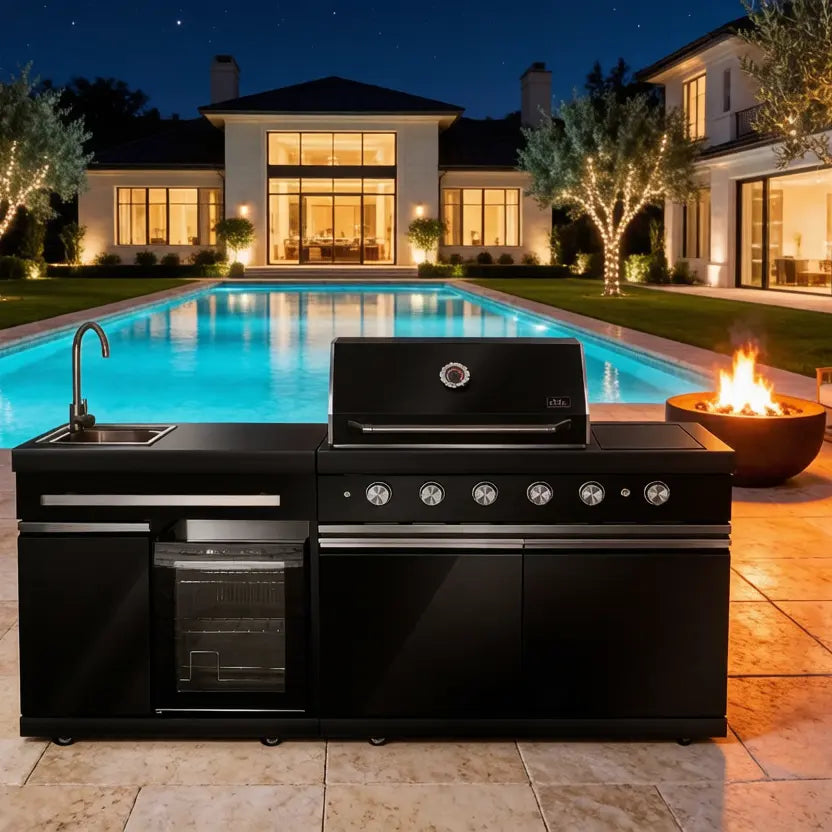
A whole tri-tip is a small roast with a grain that changes direction, not a one-inch steak you can blast on infrared from start to finish. The useful hybrid is simple: bring the center up gently in an oven or on a gas-grill indirect side, dry the surface, then use the infrared grill only for the crust. If you ask the emitter to do both jobs, you often get a grey band and an uneven middle.
This is a tri-tip-specific hybrid. The site already has a general reverse-sear steak method on an infrared grill and a cast-iron reverse-sear with an infrared finish. Use those for steaks. Stay here for the roast, the grain, and the Santa Maria alternative.
The short answer: roast the tri-tip gently first, then use infrared only for the crust
Roast the tri-tip gently first in an oven or on a gas-grill indirect side, then use infrared only for the crust. Dry the surface before the sear, and stop once the crust is set. Rest, then split the roast where the grain changes and slice each half against its own fibers.
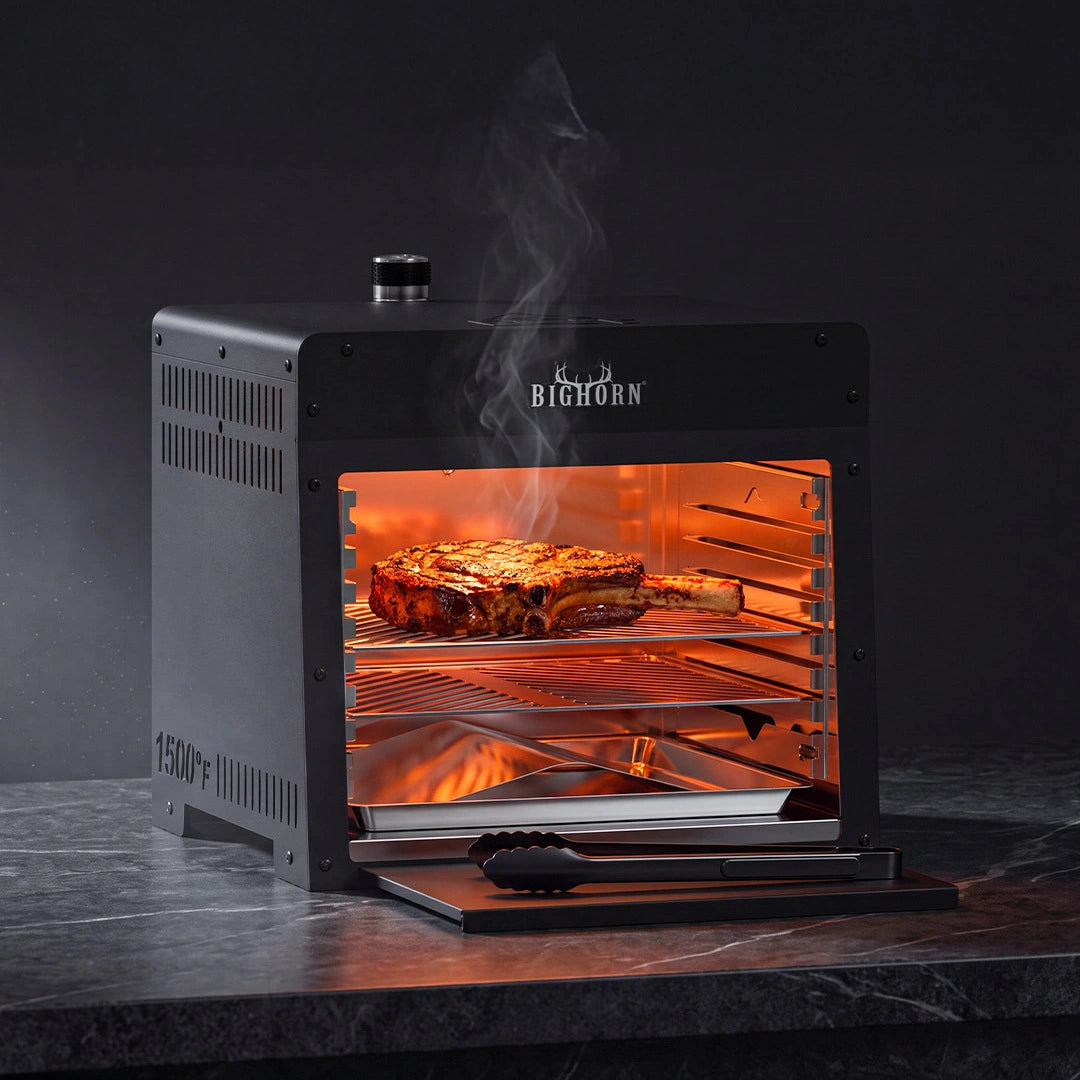
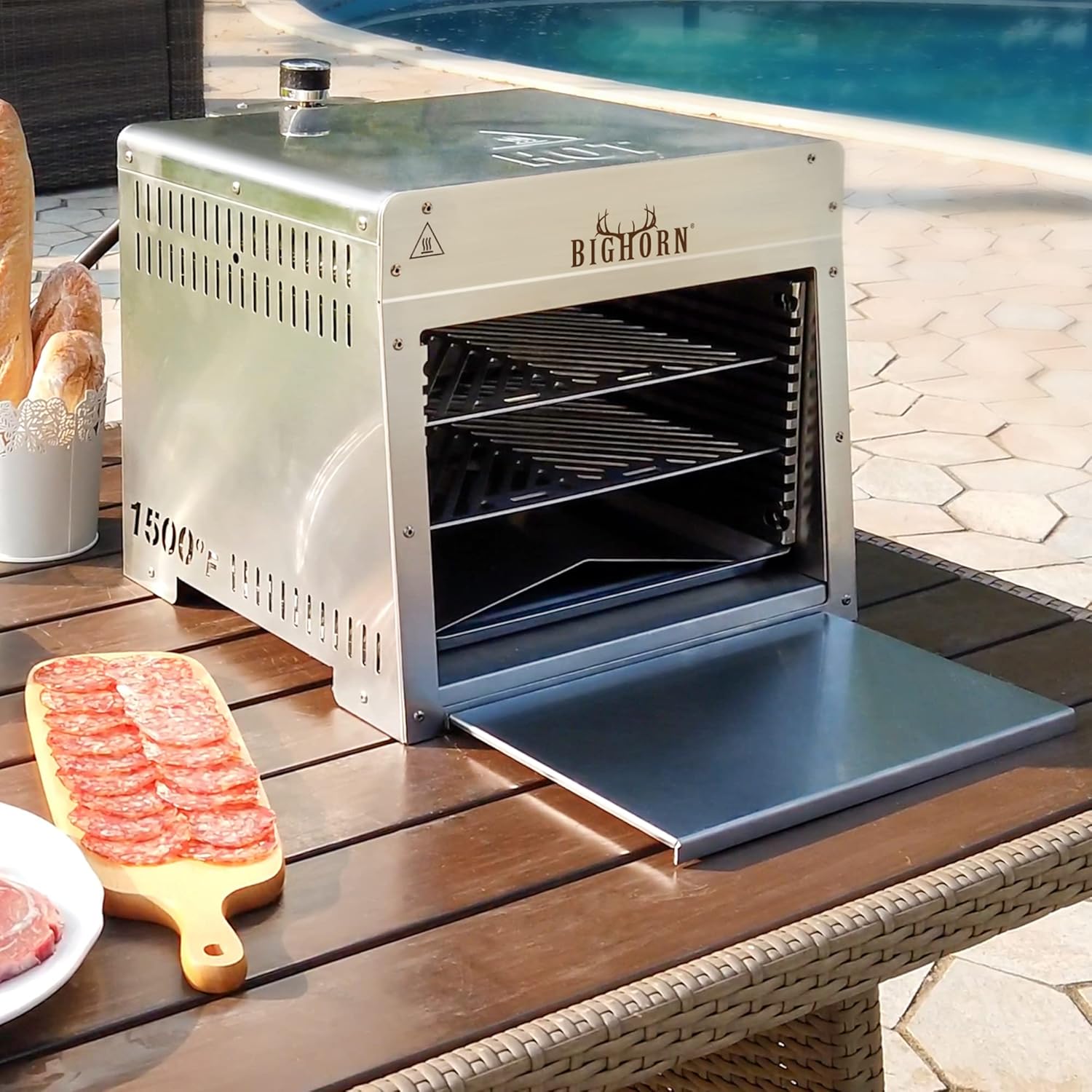
A portable 16-inch infrared steak grill is a sharp finishing tool here. It is a poor all-in-one cooker for a thick, boomerang-shaped roast.
Why a whole tri-tip is a poor candidate for an all-infrared blast
Tri-tip is thicker in the middle and thinner at the points. Infrared heat is close and intense. If you start the raw roast on that face, the thin ends can overcook and the crust can darken while the center is still cold. You also get a wider grey band than you would from a gentle first stage and a short sear. That is the same reason a thick roast often does badly as a “just sear it longer” steak.
An oven or a gas-grill indirect first stage: what you are trying to achieve
The first stage is not a smoke show unless you want smoke. It is even heat around the roast so the center climbs without a hard crust. An oven set to a moderate, steady temperature, or a gas grill with a true cool side and a closed lid, will do that work. Probe the thickest part, away from a hard seam of fat. Pull the roast a little shy of your final target so the infrared sear and the rest can finish the last bit of heat.
Quality cooks often aim for a pink center. That is a preference. FoodSafety.gov's chart lists 145°F with a three-minute rest for beef steaks and roasts. Do not treat a restaurant-rare number as the official safety floor.
The infrared finish: dry the surface, sear, and stop
Pat the roast dry. A wet surface will steam on infrared and dull the crust you waited for. Preheat the infrared cooker fully. Sear the faces and the edges just long enough to brown, then get the roast off the emitter. This is a finish, not a second roast. If one thin point colors too fast, shield it or keep it off the hottest face.
A small table: roast weight versus a two-stage plan
Weights vary, and so do ovens. Use the table as a sequence, then cook to temperature.
| Tri-tip, roughly | First stage | Infrared finish |
|---|---|---|
| A smaller roast, thinner at the ends | A shorter gentle roast; watch the thin points | A very short sear; shield the tips if they darken first |
| A typical 2 to 3 pound roast | Oven or gas-grill indirect until the center approaches your target | Dry, sear all faces, stop |
| A larger, thicker roast | A longer gentle stage; do not rush it on infrared | Still a short crust only |
Grain in a tri-tip changes direction — how to slice it
Look at the raw roast before you season it. The fibers run one way on the long end and a different way on the wider end, often changing near the middle crook. After the rest, cut the roast in two at that change, then slice each half thinly across its own grain, slightly on a bias if it helps you keep the slices even. If you slice straight across the whole roast, one half will be tender and the other will chew like long strings.

Common failures: a grey band from a long infrared cook and an uneven roast
A grey band usually means the infrared stage ran too long, or the roast went on wet. An uneven roast usually means you treated it like a steak and never gave the thick center a gentle first stage. If you probe against the board or into a thin point, you will also get a false reading. NFPA grilling safety still applies to the finishing cooker: keep it away from the house and stay with it. CPSC gas-grill advice says not to use a gas grill in a garage, breezeway, carport, or porch — including the first-stage gas grill, if that is what you use.
Rest, carve and leftover sandwiches the next day
Rest the roast before you split and slice it. Serve it as a board of thin slices, or hold leftover slices for sandwiches the next day. Leftovers must be chilled promptly: USDA FSIS leftover guidance and FDA safe food handling say to refrigerate within two hours — one hour if it is over 90°F — keep the refrigerator at 40°F or below, and reheat leftovers to 165°F. Sliced tri-tip dries out if you blast it on infrared again; a gentle reheat is enough.
When a Santa Maria grate height is the better traditional path
If you want one fire and a rising-and-lowering grate, a portable Santa Maria-style charcoal grill is the older California path for tri-tip: start higher to roast, then drop for a finish. That is a different tool, and a good one, when you do not want to run an oven plus an infrared cooker. Use the hybrid on this page when you already have indoor heat and a compact searing grill from the infrared steak grill collection, and you want a crust without turning the roast into a steak-minute experiment.
If you are finishing a gently roasted tri-tip on a compact searing cooker, confirm the current 16-inch 1500°F portable infrared steak grill with pizza stone listing, keep the infrared stage short, and split the roast where the grain changes before you slice.
FAQ
How long to cook a steak on an infrared grill?
A whole tri-tip is not a steak-minute cook. The infrared stage is a short crust after a gentle roast, not an all-heat blast. Use a thermometer in the thickest part. FoodSafety.gov lists 145°F with a three-minute rest as the safe minimum for beef roasts.
What is the 3-3-3 rule for cooking ribeye steak?
The “3-3-3 rule” is a timing slogan, not a safety standard, and it does not transfer to a whole tri-tip or to an infrared finish. Thickness and cooker heat change the clock. Use a thermometer, and treat 145°F with a three-minute rest as the official safe minimum for beef roasts.
Do you grill steaks on a gas grill with the lid open or closed?
For the first stage of this hybrid, a closed lid on a gas-grill indirect zone — or an oven — is the usual way to roast the tri-tip gently. The infrared finish is a short, close sear; follow the cooker’s design. There is no universal lid rule that covers both stages.
How long to grill a tri-tip to medium?
Time depends on weight, starting temperature, and how hot the first stage runs. Do not copy a single minute count from a steak chart. Roast gently until the center is approaching your target, sear briefly on infrared, then rest. For safety, use 145°F with a three-minute rest as the USDA minimum.