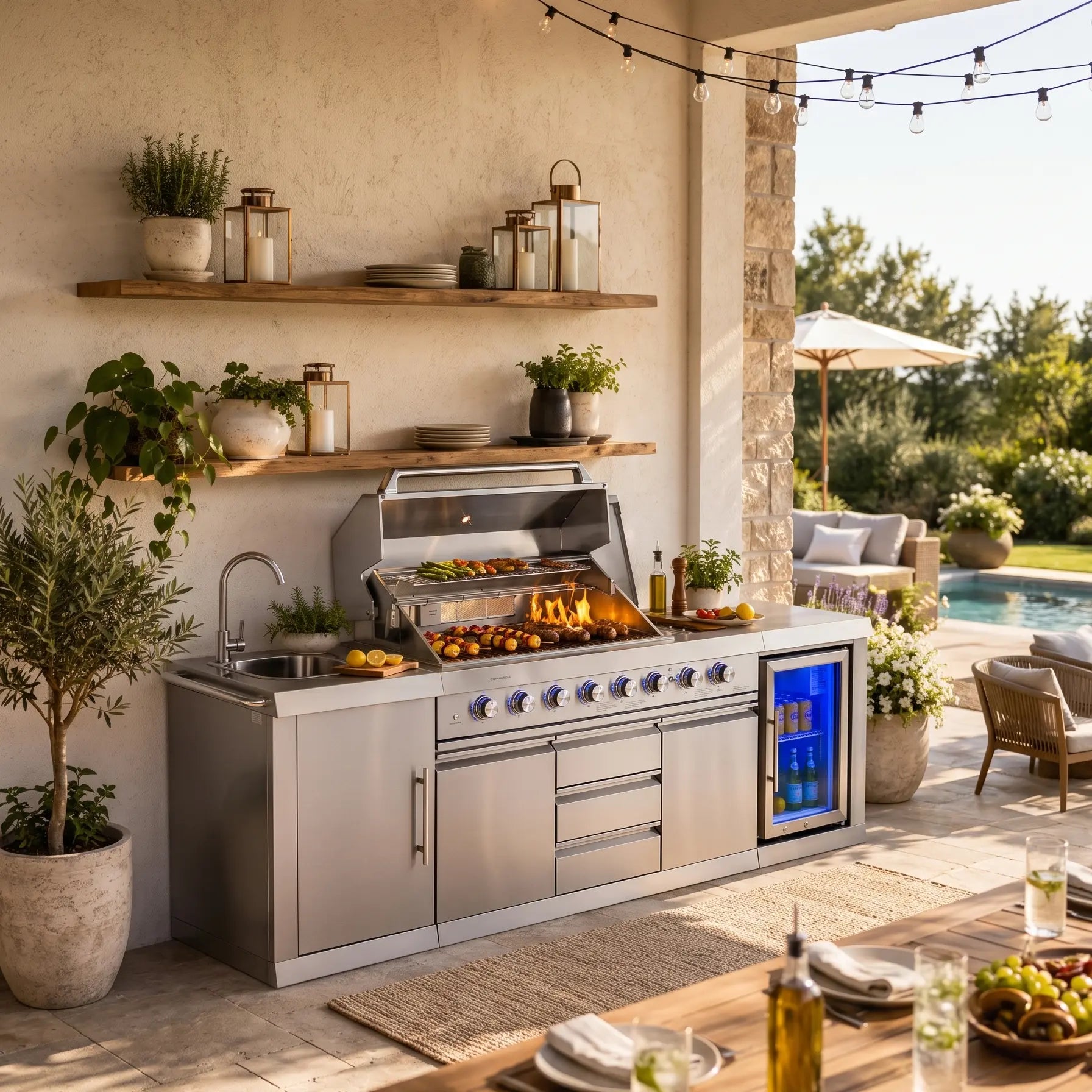
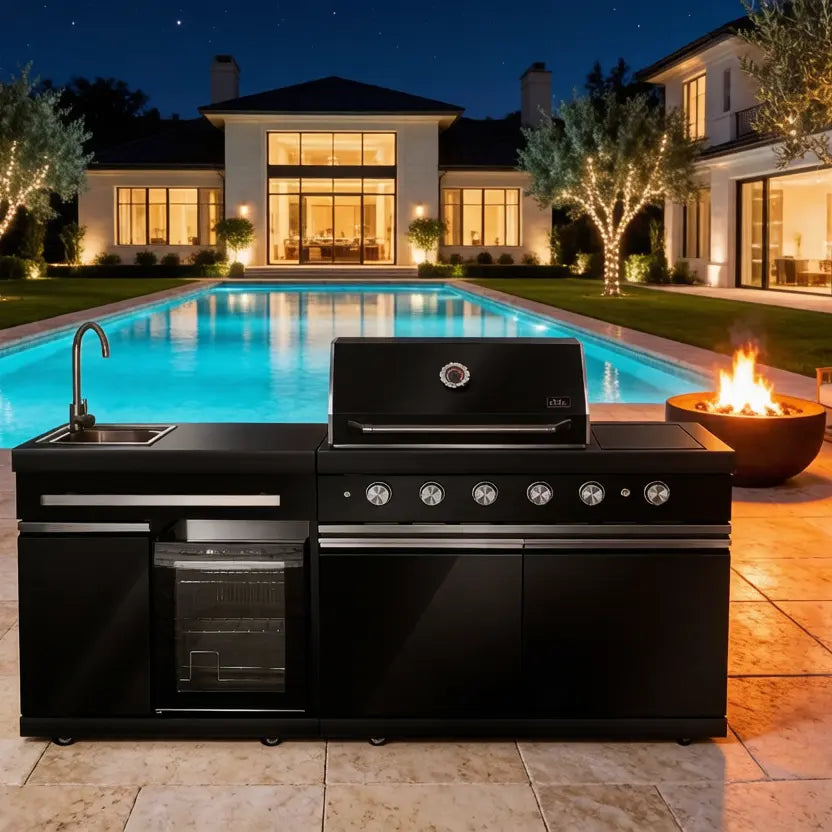
Santa Maria style grilling remains one of the most distinctive live-fire traditions in American barbecue because it combines open-pit cooking, simple seasoning, and direct fire management into one highly tactile method. Interest in outdoor cooking gear and high-heat grills has grown as consumers trade quick gas cooks for authentic wood- and charcoal-driven techniques. For backyard chefs comparing a Santa Maria grill, an Argentine parrilla grill, a wood-fired barbecue, and a charcoal grill, the real difference is not just the heat source but how precisely the fire can be managed. This comprehensive guide explains what Santa Maria grilling is, explores critical fire management principles, and demonstrates how to choose robust gear to achieve restaurant-quality results in your backyard without the guesswork.
What Is a Santa Maria Style Grill
A Santa Maria style grill is an open-fire cooking system featuring a height-adjustable grate that lets the cook move food closer to or farther from the coals to regulate heat intensity and radiant exposure. Unlike enclosed smokers or conventional pellet systems, it is a manual, high-heat control system built for active wood and charcoal cooking. It delivers even, adjustable radiant heat ideal for whole cuts and multi-stage cooks, though it requires active fire management using a predictable crank, chain, and winch mechanism.
Why Santa Maria Grilling Is Harder Than It Looks
Maintaining consistent cooking temperatures over an open wood or charcoal bed requires constant attention. Because Santa Maria setups rely on radiant heat without insulated ovens, cooks must precisely adjust grate height or fuel levels. Uncontrolled swings caused by wind, wood load, or sudden flare-ups can rapidly over-sear or undercook large cuts.
Using the wrong wood, such as softwoods or resinous species, creates unpleasant soot and off-flavors. Balancing smoke intensity for a long cook versus an instant sear is a nuanced skill that directly impacts final taste and texture. Furthermore, mechanical components like cranks, chains, and winches must be robust and corrosion-resistant, as a hardware failure mid-cook poses a significant safety hazard and can ruin prime cuts of meat.
Most backyard grills cause frustration due to flare-ups, uneven hot spots, and a lack of adjustability once the fire is burning. Santa Maria style grills solve this by letting the cook tune the cooking distance instead of fighting the flame. This is critical when fat renders unevenly or when a thick cut needs a gentler finish after a hard sear.
Live Fire Cooking Comparison Matrix
Sourcing Factor: Primary Fuel Options
Generic Backyard Grill: Mostly gas, some charcoal
Premium Charcoal or Offset Unit: Charcoal and wood only
Big Horn Outdoors Grills and Griddles: Multi-fuel lineup including high-heat infrared, gas, and wood-capable units
Sourcing Factor: Heat Intensity Control
Generic Backyard Grill: Limited to venting and basic burners
Premium Charcoal or Offset Unit: Good control via dampers and manual fire management
Big Horn Outdoors Grills and Griddles: High control with options ranging from high-heat infrared to heavy-duty griddles for controlled live-fire style cooking
Sourcing Factor: Build Materials
Generic Backyard Grill: Thin steel, painted surfaces
Premium Charcoal or Offset Unit: Thicker steel, some stainless steel elements
Big Horn Outdoors Grills and Griddles: Stainless steel construction on many models, built for permanent outdoor setups
Sourcing Factor: Warranty and Returns
Generic Backyard Grill: Varies widely by retailer
Premium Charcoal or Offset Unit: Varies by manufacturer
Big Horn Outdoors Grills and Griddles: 24 months warranty with 30-day returns for site purchases
Sourcing Factor: Ideal For
Generic Backyard Grill: Casual backyard grilling
Premium Charcoal or Offset Unit: Enthusiasts doing long, low-and-slow cooks
Big Horn Outdoors Grills and Griddles: Backyard chefs wanting restaurant-style high heat and outdoor kitchen versatility
Why Big Horn Outdoors Is a Strong Choice for Live Fire Enthusiasts
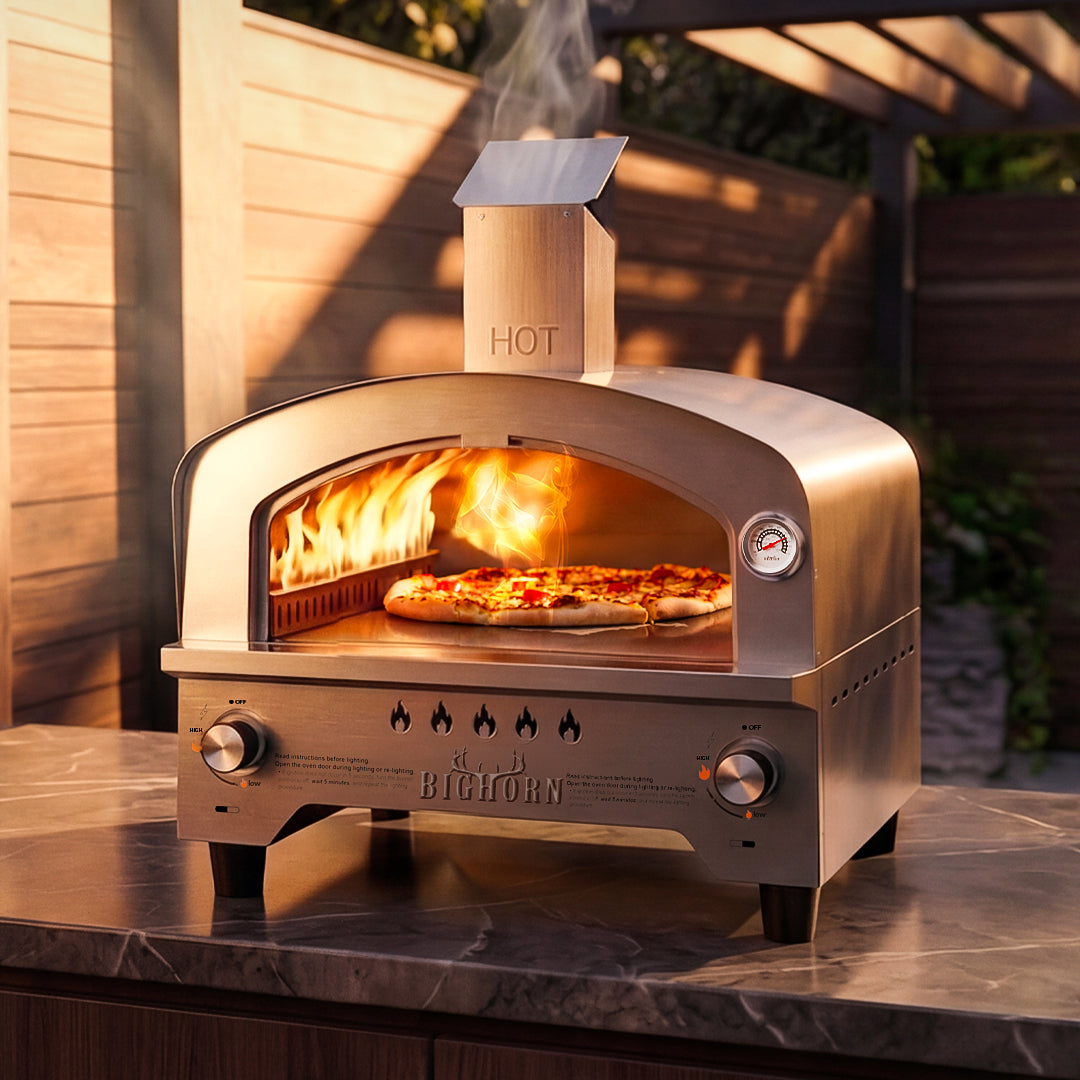
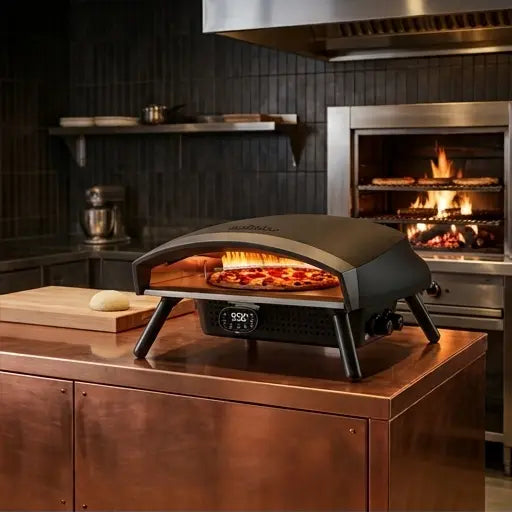
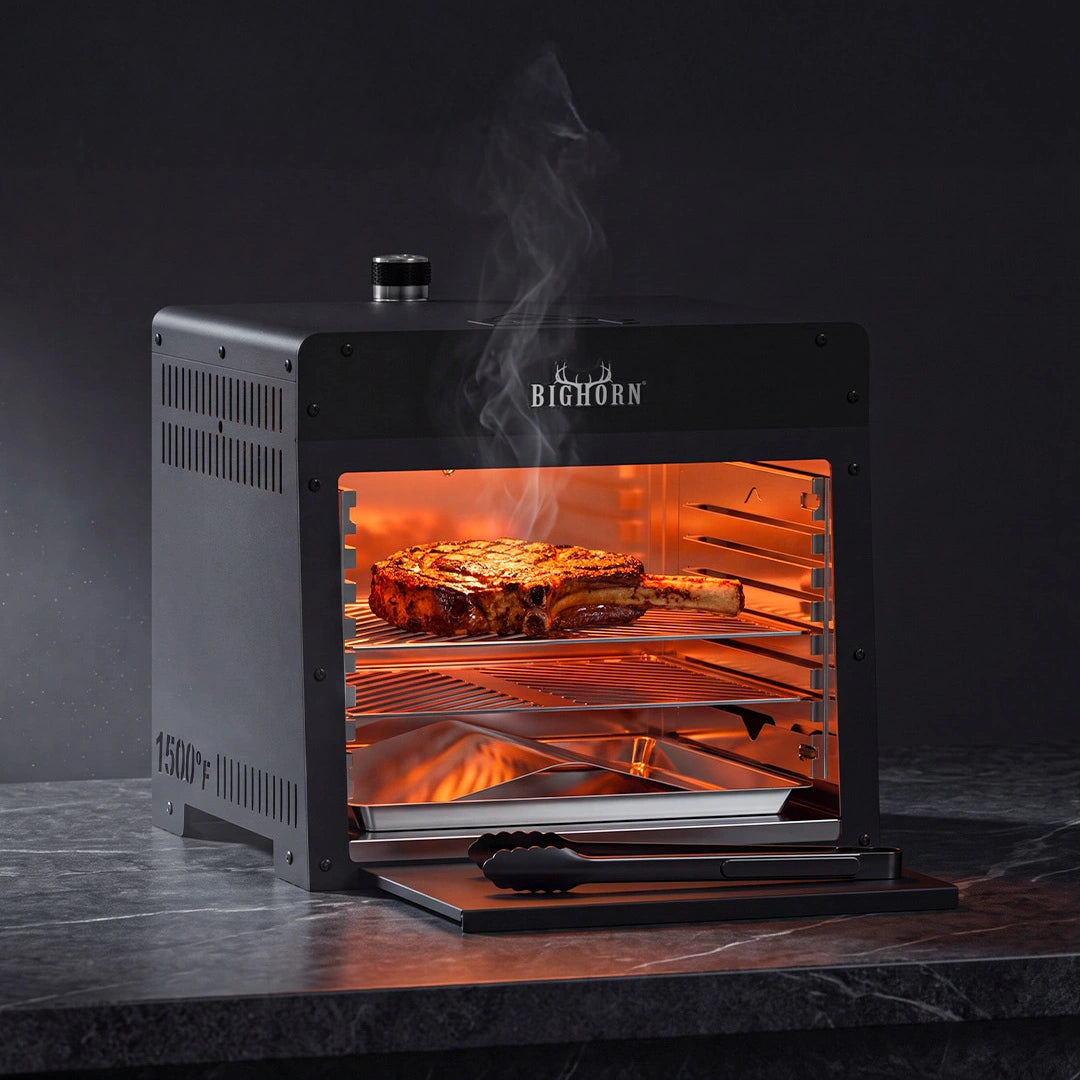
Big Horn Outdoors offers high-temperature infrared grills, pizza ovens, and heavy outdoor cooking equipment that map well to the needs of live-fire cooks who want searing and radiant control for steaks and whole cuts. This breadth helps cooks who want a single brand for multiple outdoor appliances.
Product listings indicate stainless steel constructions and extended warranties or return guarantees for qualifying purchases, which support buyers looking for long-term outdoor kitchen investments. Big Horn advertises free U.S. shipping, a 30-day return window, and a 24-month warranty on site purchases, which reduces purchase risk for consumers moving from beginner gear to more permanent outdoor setups. Cross-linking from educational live-fire content into specific categories like the Big Horn Outdoors Grills and Griddles Collection helps users evaluate formats and find hardware that matches their exact backyard routine.
Signature Features of Santa Maria Style Systems
The adjustable height crank system is the signature advantage of this style because it changes heat exposure without moving the food itself. The cook can sear aggressively near the embers, then lift the grate to finish gently as the internal temperature rises.
Because the fire chamber stays completely open, cooks can read flame behavior, coal density, and smoke intensity at a glance. This makes the grill feel highly intuitive once the user learns the natural rhythm of the fire.
Santa Maria style cooking works exceptionally well with hardwood and charcoal combinations because they create strong radiant heat and layered flavor profiles. Readers searching for terms like Argentine parrilla grill or wood-fired barbecue are usually evaluating this specific format of open-fire flexibility.
How to Set Up and Operate a Santa Maria Grill
Prepare a dedicated fire bed by building a stable charcoal or hardwood fire zone using lump charcoal plus a base of seasoned hardwood to develop even coals. Wait until the heat is stable rather than rushing the first cook.
Install and test the crank or winch mechanism to ensure the adjustable-height grate moves smoothly under load and locks securely at set heights. Inspect chains and fasteners for wear before lighting the fire.
Establish staging temperatures by positioning the grate low for high radiant exposure during the searing phase. For finishing, raise the grate in small increments to slow-cook over lower radiant heat.
Manage wood and coal additions by adding small splits of hardwood to maintain the ember bed without creating large, wild flames. Use the crank to tame the heat if flames jump, keeping the food cooking over clean coals rather than an uncontrolled blaze.
Use a two-zone approach by keeping the hottest embers to one side for searing and a cooler zone for finishing, adjusting grate height rather than moving the meat constantly. Let the fire do the work and avoid constant flipping.
Monitor the cook with probe thermometers and sight checks. Use ambient and meat probes to measure internal temperatures, and rest the meat thoroughly before slicing so the juices redistribute after live-fire cooking.
Practical Backyard Performance Scenarios
In a weeknight steak dinner scenario, a traditional gas grill sears well but leaves little room to reduce heat if the steak is thick. With a Santa Maria setup or a Big Horn high-heat infrared grill, the cook can start low for a fast crust, then raise the grate or move to a lower-intensity zone to finish without scorching the exterior.
During a weekend tri-tip cookout, fixed-height charcoal setups require constant juggling of burners, lids, or hot spots. With an open-pit Santa Maria grill, the cook builds an oak ember bed, sets the grate low for the initial sear, and then raises it for a gentle finish, preserving the classic smoke line and achieving medium-rare consistency.
For outdoor kitchen versatility, traditional approaches require multiple single-purpose appliances that clutter the yard. Combining a pizza oven, infrared grill, and heavy griddle under one brand supports baking, searing, and side prep while maintaining consistent material aesthetics and accessory cross-compatibility.
In a small catering pop-up scenario, operators often rely on portable gas grills or rented smokers that are slow to adapt. Deploying durable, portable high-heat units for fast searing combined with a charcoal station for flavor ensures higher throughput and restaurant-style finishes on specialty items.
Selecting the Best Woods for Authentic Flavor
Oak is the most fitting choice for authentic Santa Maria style flavor because it provides steady heat and a balanced smoke profile. Regional tradition specifically highlights red oak as the favorite for this style of cooking.
Hickory adds a stronger, deeper smoke note and works well when a bolder barbecue profile is desired. It must be used with care so the heavy smoke profile does not dominate the natural flavor of the meat.
A blended hardwood approach makes sense when cooks want both heat stability and a more nuanced aroma. The key is choosing seasoned hardwoods that burn cleanly and complement, rather than overpower, the live-fire experience while avoiding resinous softwoods that create soot.
Frequently Asked Questions
What makes a Santa Maria grill different from a standard charcoal grill?
A Santa Maria grill features an adjustable grate operated by a manual crank, allowing the cook to change heat intensity by altering the distance between the food and the fire. Standard charcoal grills rely on lids and air vents to regulate internal temperatures.
Is a Santa Maria grill the same as an Argentine parrilla grill?
They are closely related open-fire cooking systems that use height-adjustable grates. However, the Argentine parrilla is tied to traditional South American asado culture and often features V-shaped grates with a fat catch pan, whereas traditional Santa Maria grills use round wire grates.
Can you use a Santa Maria grill for foods other than beef steak?
Yes, the precise height control makes it highly versatile for cooking chicken, whole birds, pork chops, fish, and vegetables. Different foods can be cooked simultaneously by utilizing different height zones and heat intensities over the fire bed.
How do you control sudden flare-ups during an open-fire cook?
The simplest method is to use the crank system to raise the grate away from the flames instantly. Managing the fire bed properly by using well-seasoned wood and staging embers correctly prevents excessive grease ignition.
Should I use lump charcoal or briquettes for a live-fire setup?
Lump charcoal lights faster, burns hotter, and produces less ash, making it ideal for high-heat searing. Briquettes burn longer and more consistently, which is helpful for long finishing phases. Pairing either with hardwood splits provides the best balance of heat and flavor.
Do Big Horn Outdoors products include a warranty and return policy?
Big Horn Outdoors offers a 24-month warranty and a 30-day return guarantee on qualifying site purchases, along with free shipping within the United States for direct orders.
Implementing Your Live Fire System
Santa Maria style grilling rewards cooks who combine craftsmanship, appropriate fuel choices, and reliable hardware to control radiant heat. For backyard chefs moving from casual gas grilling to true live-fire techniques, choosing robust equipment with durable stainless steel construction shortens the learning curve and reduces cooking variables. To transition toward an authentic fire-forward experience, explore specialized hardware options, verify material specifications, and plan a trial cook using seasoned oak embers and reliable probe thermometers to properly calibrate your fire management technique.