
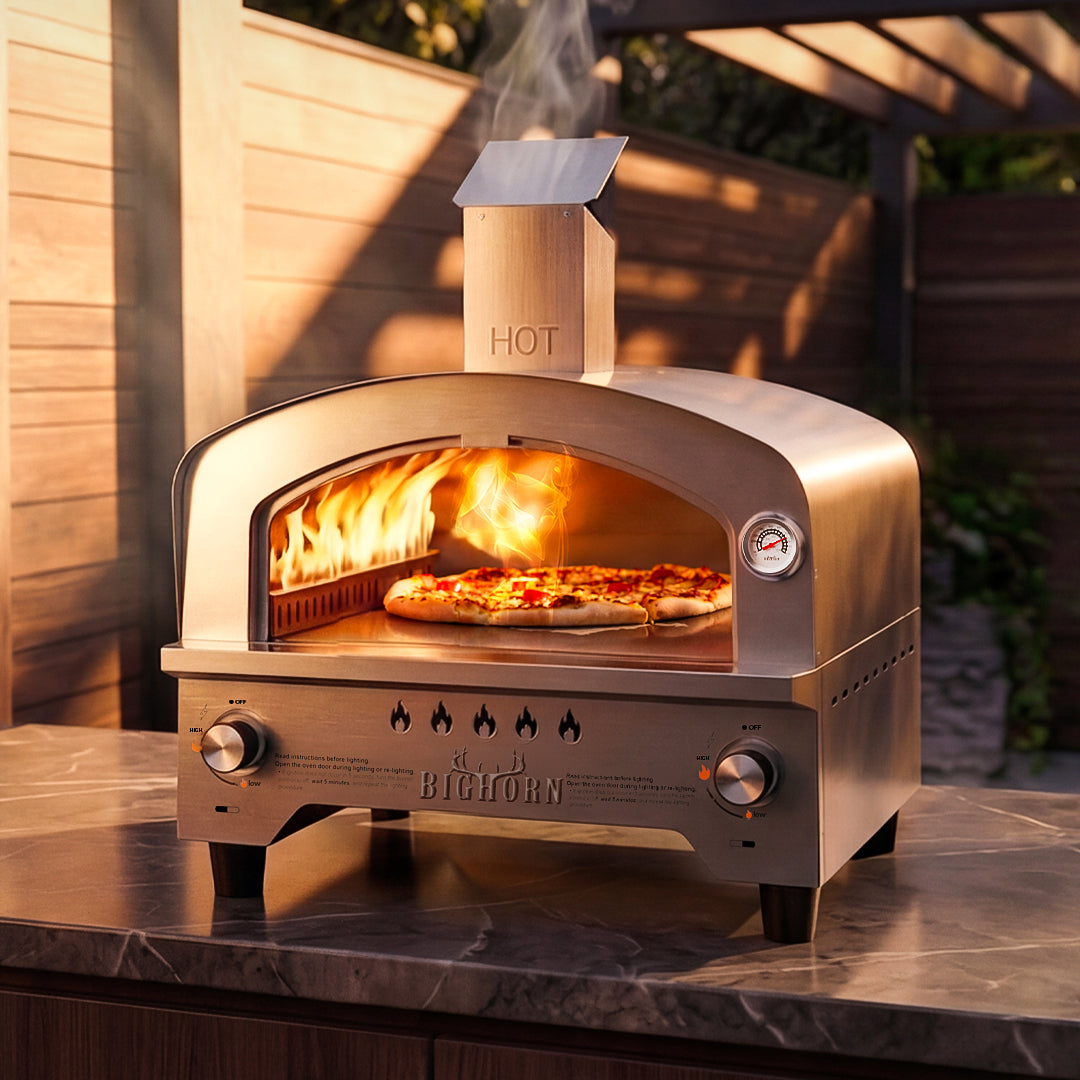
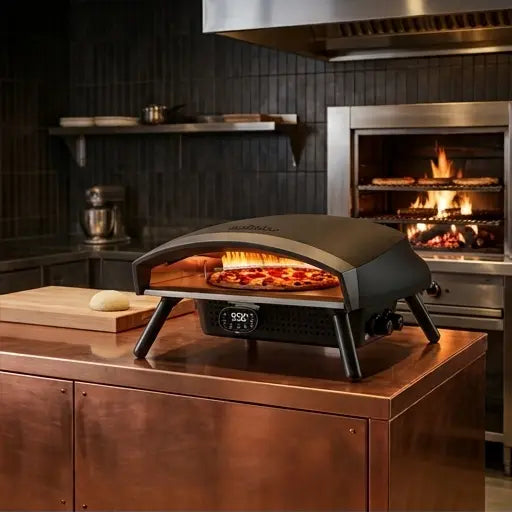
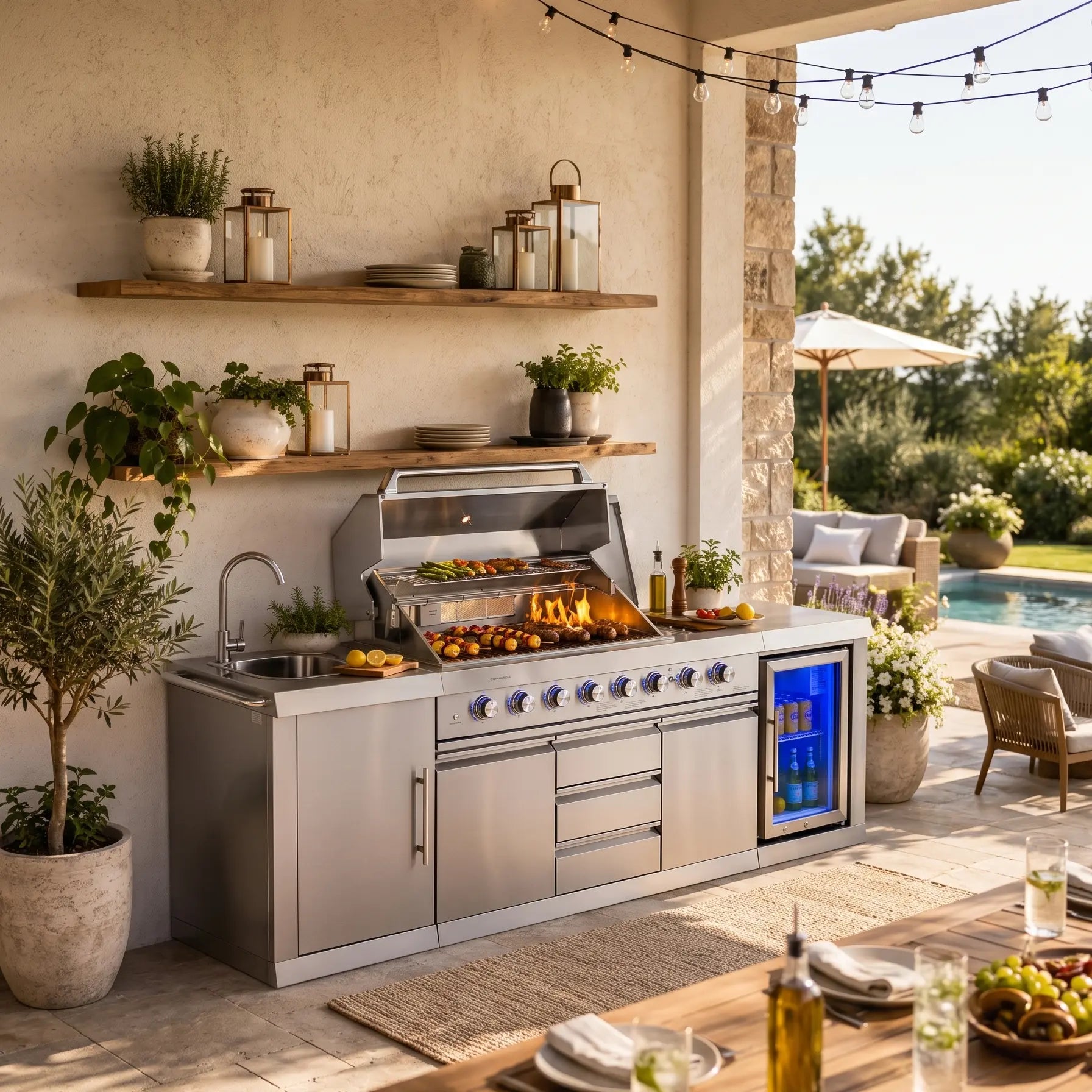
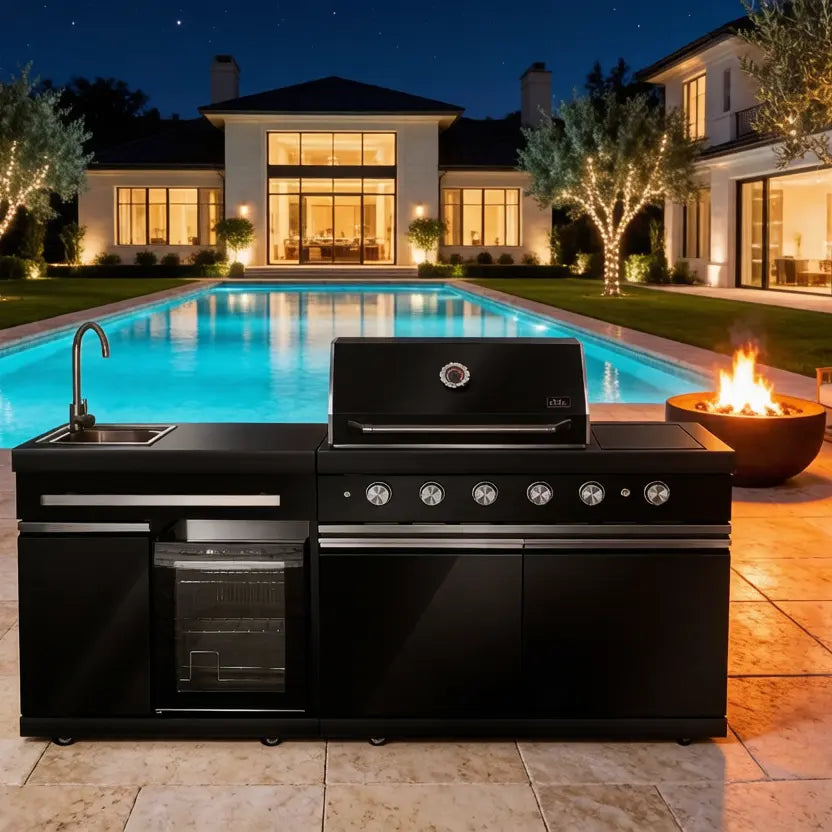
Outdoor grilling is still one of the most practical ways to cook for a crowd, but buyers now expect more than just heat and a lid. They want faster preheat, cleaner searing, better grease control, and a setup that fits how they actually cook at home or on the patio. Top outdoor cooking collections position modern hardware around backyard convenience, offering specialized infrared models alongside highly flexible traditional cooking formats to match diverse chef preferences.
What Is An Infrared Grill
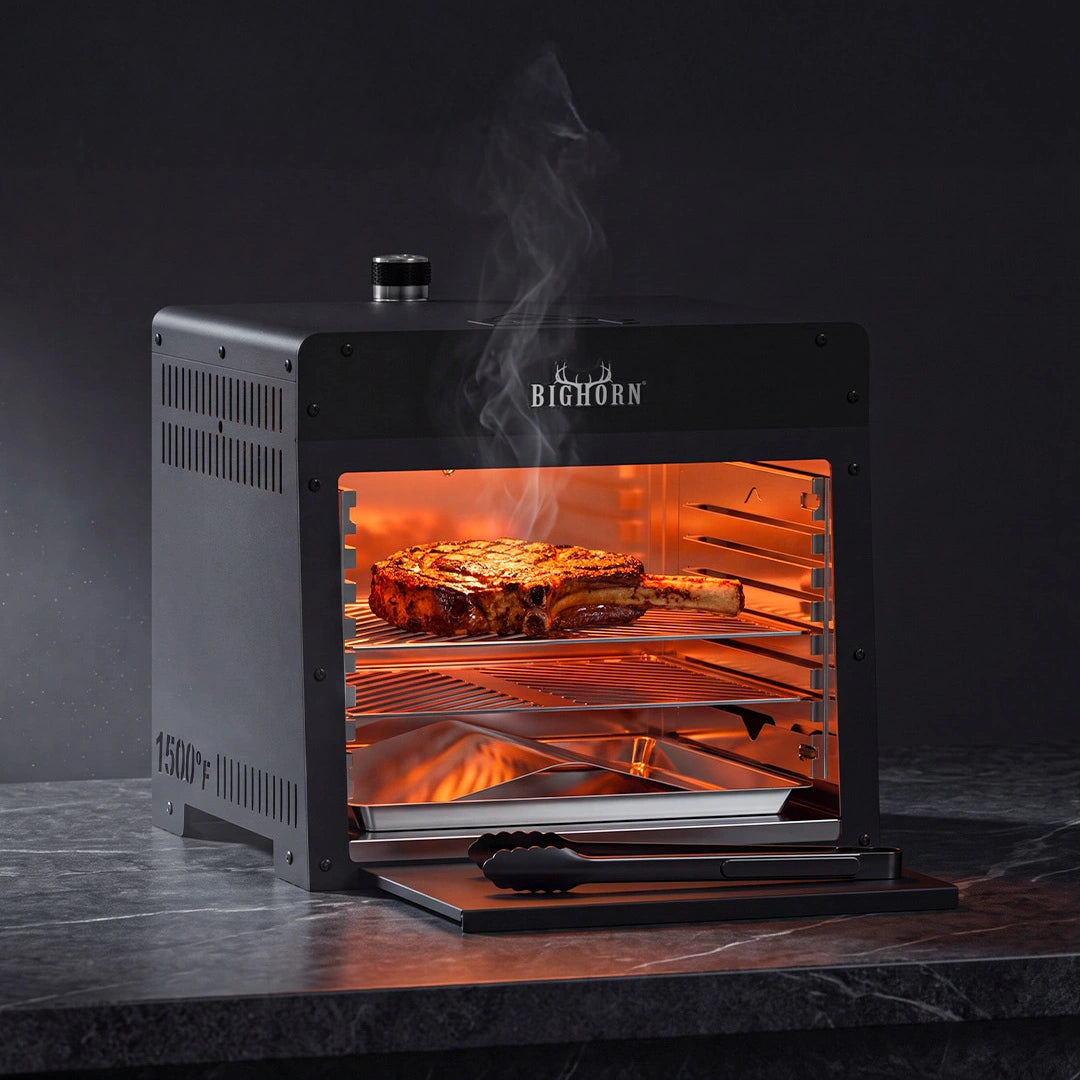
An infrared grill uses radiant heat from a specialized infrared burner to cook food more intensely and directly than a standard open flame gas grill. In practical terms, that usually means faster searing, less direct flame contact with dripping fat, and a stronger fit for steak focused cooking, while a traditional gas grill remains better suited to broader, slower, more flexible backyard meals.
Infrared heat is designed for high heat searing and quicker surface browning.
Traditional gas grills are usually easier to use for mixed cooking styles, especially when you want to move between direct and indirect heat.
Buyers often compare them based on preheat time, temperature control, fuel use, and flare up management rather than just brand or price.
The right choice depends on whether you cook steaks and chops fast, or prefer a wider range of backyard BBQ use cases.
Why The Choice Is Harder Than It Looks
Preheat speed affects real world convenience
A fast preheat matters when you grill on weeknights, but speed alone does not tell the full story. Infrared units can feel more efficient because they concentrate heat quickly, while traditional gas grills often give you a gentler ramp up and a wider usable cooking zone. If buyers choose only by advertised heat intensity, they may end up with a grill that is too specialized for their everyday meals.
Temperature control changes the cooking outcome
High heat is great for crust, but it is not always ideal for thicker cuts, vegetables, or foods that need a more forgiving cook. Standard gas grills usually offer simpler zone control for slow grilling, whereas infrared burners are better when you want a focused blast of heat for flash searing. If the control range does not match the food, the result can be overcooked edges and underdone centers.
Fuel consumption is tied to usage style
Fuel efficiency depends on how long the grill runs, how hot it is set, and whether you are cooking quickly or holding a lower temperature. Infrared grilling can reduce wasted heat during short, intense sessions, but a traditional gas grill may be more practical for longer family cooks where flexibility matters more than peak intensity. Picking the wrong format can raise operating cost without improving the food.
Flare ups are a safety and quality issue
Grease flare ups can char food, disrupt cook times, and make outdoor cooking less predictable. Modern infrared collection data and safety guidance from NFPA and CPSC stress keeping grills clean, using them outdoors, and controlling grease buildup to reduce fire risk. If buyers ignore flare up behavior, they may create uneven results and a harder to manage cooking environment.
Comprehensive Outdoor Grilling Comparison Matrix
| Buying Factor | Generic Product | Premium Alternative | High Performance Systems |
| Heat style | Basic gas cooking with moderate output | Broader feature set with stronger construction or added accessories | Infrared grill options plus gas grills, griddles, and smokers in one collection |
| Best use case | Casual grilling with limited performance expectations | Multi purpose outdoor cooking with more room to compare features | Backyard steak searing, compact infrared cooking, and general outdoor meal prep |
| Price entry point | Often lower, but with fewer visible service signals | Higher, usually with more brand support | Accessible infrared grill options starting from competitive mid tier price points |
| Ownership support | Support varies widely by seller | Usually clearer service and return terms | Free shipping, clear return guarantees, and fast customer service response times |
| Buying confidence | Specs may be unclear or inconsistent | Better documentation, but not always focused on backyard value | Product pages and collection pages give clear shopper facing information for comparison |
| Cooking style fit | General purpose but less specialized | Better for buyers who want multiple cooking modes | Strong fit for buyers prioritizing fast searing and compact outdoor grilling |
Why High Performance Infrared Systems Are A Strong Choice
Clear product positioning
Advanced collections separate infrared grills from broader grills, griddles, and smokers, which helps shoppers quickly match the product type to their cooking style. That is useful for buyers who already know they want a specialized steak searing tool instead of a general patio grill.
Accessible entry pricing
Defined product listings give shoppers a clear entry point without forcing them into a massive outdoor kitchen purchase. That price structure is helpful for buyers who want to test intensive infrared grilling before moving to a larger setup. It also makes the category easier to compare against standard gas grill purchases.
Support signals reduce hesitation
Clear transaction terms show free shipping on target orders, reliable return guarantees, secure payment, and direct customer support availability. Those details matter because outdoor cooking products often raise concerns about fit, shipping condition, and post purchase service. For many buyers, those signals can be as persuasive as the grill design itself.
Useful for fast searing
The infrared collection is clearly built around high heat outdoor cooking, which makes it appealing to steak buyers and anyone who wants intense surface browning. That is especially relevant for shoppers comparing infrared burners against standard open flame gas models and trying to reduce flare up disruption during quick cooks.
Related Products Services Or Resources
Grills and Griddles Collection — This is the best starting point if you want to compare gas grills, griddles, and smokers in one place. It also shows the brand warranty, returns, and shipping support.
Infrared Grill Collection — This is the most relevant collection for buyers focused on infrared searing performance and compact grill formats. It is the clearest internal path for this topic.
Main Navigation Home — Use the main site for broader brand navigation and additional outdoor cooking categories if you are not yet sure which grill format fits your setup.
How It Works
Define your cooking priority before comparing models. If you mostly sear steaks, infrared is the better starting point; if you cook a wider variety of foods, a traditional gas grill may fit better.
Check the heat source and burner design. Infrared units are built for concentrated radiant heat, while traditional gas grills rely on open flame burner layouts.
Compare preheat behavior and cooking zone control. Fast heat is useful, but longer cooks usually need more flexibility than a single hot zone can provide.
Review grease management and flare up risk. A cleaner grill setup and better heat control can improve both food quality and outdoor safety.
Match grill size to your space and usage frequency. A compact infrared grill is easier to position for fast cookouts, while a larger gas setup can better serve frequent family meals.
Confirm service terms before buying. Shipping, returns, and support responsiveness matter when the grill is part of a seasonal purchase.
Practical Grilling Scenarios
Scenario Weeknight steak searing
Traditional approach A standard gas grill is preheated and used for direct flame cooking, but it may take longer to build the crust you want.
Modern system solution An infrared grill gives you a focused high heat option for quick steak searing.
Result Faster browning and a more steak centric cooking workflow.
Scenario Mixed backyard meal prep
Traditional approach One grill handles everything, but heat zones may be inconsistent for vegetables, chicken, and burgers at the same time.
Modern system solution A traditional gas grill from the collection gives you a more flexible setup for mixed foods.
Result Easier temperature management across different ingredients.
Scenario Small patio or limited outdoor space
Traditional approach A full size outdoor cooking station can be too bulky for casual use.
Modern system solution A compact infrared grill provides a smaller footprint with strong heat output.
Result Better fit for apartments, patios, or smaller backyard setups.
Scenario Buyers worried about flare ups
Traditional approach Open flame grilling can create sudden grease flare ups that interrupt cooking.
Modern system solution Infrared focused cooking reduces direct flame contact at the food surface and pairs better with cleaner grill management.
Result More predictable searing and less food charring.
Scenario First time outdoor grill buyer
Traditional approach It is hard to judge which grill style is worth the money without knowing your cooking habits.
Modern system solution The separated infrared and general grill collections make it easier to narrow the choice.
Result Faster product selection with less buyer confusion.
Frequently Asked Questions
Is an infrared grill better than a gas grill for everyday cooking
Not always. Infrared grills are usually better for fast searing, while traditional gas grills are often more versatile for mixed backyard cooking and longer meals.
How does an infrared burner help with flare ups
Infrared cooking is useful because it delivers intense radiant heat without relying as heavily on direct open flame at the food surface. That can help reduce the effect of fat drips causing sudden flare ups, though grill cleanliness still matters.
Which grill heats up faster infrared or traditional gas
Infrared grills are generally chosen for quick, concentrated heat, so they are often the better option when preheat speed matters most. Traditional gas grills can still be practical, but they are usually less specialized for immediate searing performance.
What type of buyer should choose infrared grilling
Infrared grilling is a strong fit for buyers who mainly cook steaks, chops, or foods that benefit from intense surface browning. It is especially appealing if you want a compact outdoor grill with a sharper performance focus.
What should I check before buying a backyard grill
Check the heat style, cooking size, support terms, shipping policy, and return window. It is also smart to review how the grill handles flare ups and whether the format matches your most common recipes.
Are gas grills still safer or easier for some users
A traditional gas grill can be easier for users who want a broad cooking range and a more familiar setup. Safety still depends on correct use, cleaning, outdoor placement, and following manufacturer instructions.
Do top outdoor brands list portable infrared options
Yes, leading outdoor manufacturers offer dedicated infrared grill lines featuring portable high temperature steak grills alongside their main gas grill and griddle catalogs. This allows buyers to access specialized equipment easily.
What kind of commercial support reduces online buying friction
Clear terms such as free continental shipping, a standard thirty day return window, protected checkout, and quick customer support resolution times help buyers feel secure ordering large outdoor hardware online.
Conclusion
Infrared grills and traditional gas grills solve different outdoor cooking problems, and the best choice depends on whether you value flash searing or flexible everyday grilling. Top outdoor systems present a credible solution for buyers who want clearly positioned options, direct customer support policies, and a diverse backyard setup that ranges from standard open flames to advanced high temperature radiant heat. For shoppers comparing grill styles, the next practical step is to review the available infrared configurations and decide whether your cooking habits favor immediate high heat precision or all around versatility.