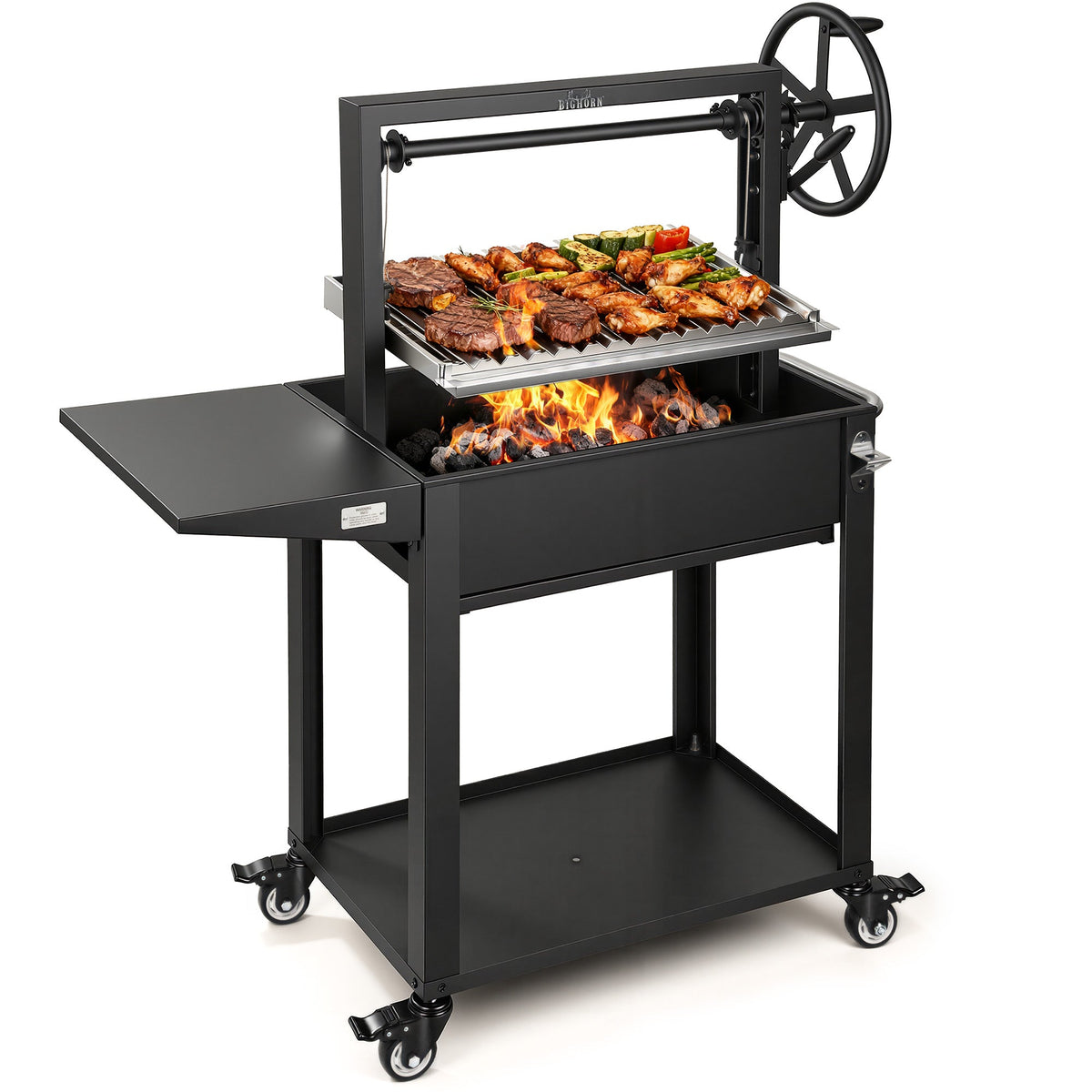
Santa Maria style grilling is cooking meat over a live oak or charcoal fire on an adjustable grate that raises and lowers to control heat. The format is famous for one technique: sear the meat close to the coals for a crust, then raise it to finish gently over the same fire. It turns a single fire into a roasting-and-searing system, and it is built for generous, social cooking.
What makes it distinct
The defining feature is the adjustable grate: a hand wheel and cable move the cooking surface up and down over a fixed fire, so a cook controls heat by changing the distance between food and coals rather than by moving fuel. That design came from California’s ranch tradition, where cooks lowered the grate to sear and raised it to roast over oak coals. It is live-fire cooking with a precise, physical heat control.
Choosing the meat
Tri-tip is the signature cut, but the format handles beef ribs, steaks, sausages, chicken, and vegetables. Because different cuts finish at different times, a mix is natural — sear some low while others roast higher. Season simply with salt, pepper, and a little garlic; the smoke and fire carry the flavor.

Building the fire
Build a charcoal or hardwood fire and let it settle to a steady coal bed before cooking. Arrange the coals to create hotter and cooler zones, then use the grate height to fine-tune within them. A settled fire and a patient preheat are the foundation of the technique; rushing the coals is the most common mistake.
The sear-and-rise rhythm
Sear the meat low for a few minutes per side to build the crust, then raise the grate and finish gently to temperature. Different cuts move between the zones as they finish, and the adjustable grate holds finished pieces at a higher, cooler position while the rest cooks. The rhythm is simple once the fire is steady: low to sear, high to finish, and hold at the top.
How do you manage a long cook?
Keep the fire steady by adding fuel in small amounts rather than big dumps, and use the grate height to control heat in the moment. Raise finished cuts to a higher, cooler position to hold them warm while the rest cooks, and keep a two-zone coal bed so you have a hot side and a gentle side. The adjustable grate is what makes staged cooking practical over one fire.
What sides and sauces pair best?
Grilled vegetables, bread, and a simple salad round out the meal, with a chimichurri or salsa to finish. The smoke and char carry the meat, so keep sides simple and sauces fresh. Because the fire is already going, vegetables make a natural second course.
Can a beginner handle the method?
Yes — the technique is simple once the fire settles: sear low, finish high, and adjust the grate as you go. Start with a tri-tip or a thick steak, watch how the grate changes the heat, and the rhythm becomes natural within a few cooks.
What firewood works best?
Oak is traditional for its steady, hot coals, but any seasoned hardwood — hickory, mesquite, or apple — works well and adds its own character. Avoid softwoods like pine, which burn fast and can leave a resinous taste. Use seasoned hardwood, and let it burn down to a settled coal bed before cooking.
How do you know when the food is done?
Use a thermometer for doneness — tri-tip at about 130–135 °F for medium-rare — and let it rest before slicing. The crust tells you the surface is set; only temperature tells you the center is right. Because the fire and grate control the outside, the thermometer settles the inside.
What is the traditional seasoning?
The classic Santa Maria rub is salt, coarse black pepper, and often a little garlic, applied before the meat hits the fire. Some versions add paprika or cayenne for depth, but restraint is the tradition — the live-fire smoke is the flavor base. Rub evenly so the seasoning stays during the sear.
How many people does one grill feed?
A full-size Santa Maria grill with a large adjustable grate comfortably serves a small gathering of eight to twelve, cooked in stages. The limiting factor is grate space per round, not the total — plan the cuts so they finish sequentially and keep raising finished pieces to hold them warm.
What equipment do you need beyond the grill?
A pair of long tongs, a thermometer, and a brush for sauces are the practical minimums. The adjustable grate does the heavy lifting; you do not need specialty tools. A platter to pull finished pieces and a cutting board round out the setup.
How do you handle a windy day?
Shelter the fire from the direct wind and give the coal bed time to settle before cooking. Wind steals heat and can make the fire uneven, so a windbreak or a sheltered corner keeps the coals steady. The adjustable grate handles the heat once the fire is stable.
Whether you cook for two or a dozen, the Santa Maria method rewards the same discipline: a settled fire, simple seasoning, and the grate as your heat control. Master the sear-and-rise rhythm and the live-fire format becomes one of the most rewarding ways to cook outdoors.
The final tip is to keep the session relaxed — Santa Maria cooking is as much about gathering around the fire as it is about the food, and patience with the coals is the whole technique.
Santa Maria grilling FAQs
What meat should I start with?
Tri-tip or a thick steak is the classic first cook — flavorful, fast, and teaches the sear-and-rise rhythm. Sausages and vegetables follow easily once the fire feels natural.
Do I need oak wood?
Oak is traditional, but any settled hardwood or charcoal gives the direct heat the style needs. Use what your setup and local fuel allow.
Can I use it for a crowd?
Yes — the large adjustable grate and staged cuts feed a gathering well. Cook in rounds and use the grate height to hold food at a warm, gentle distance while the next cut sears.
To see the current specs, review the Argentine Santa Maria grill product page.