
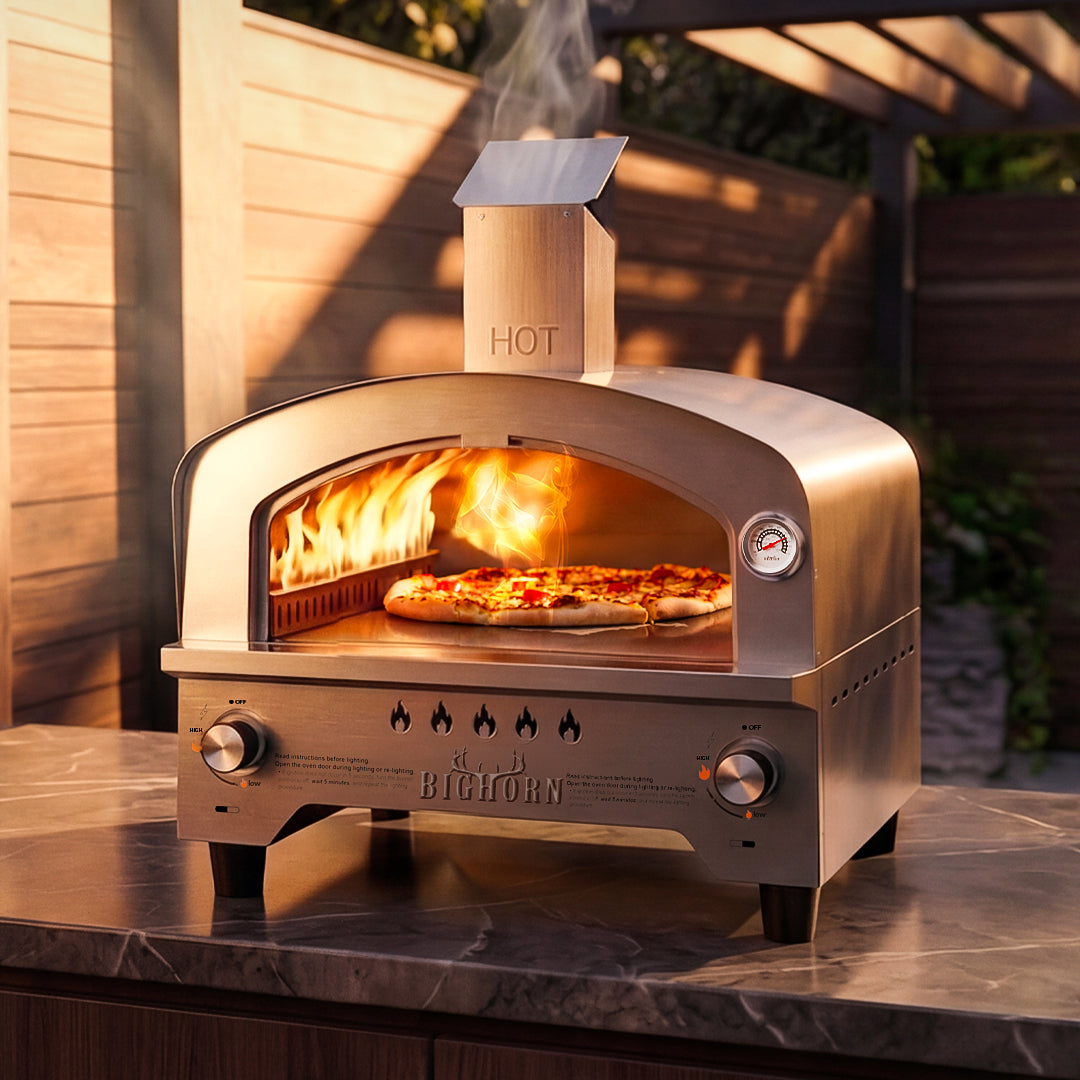
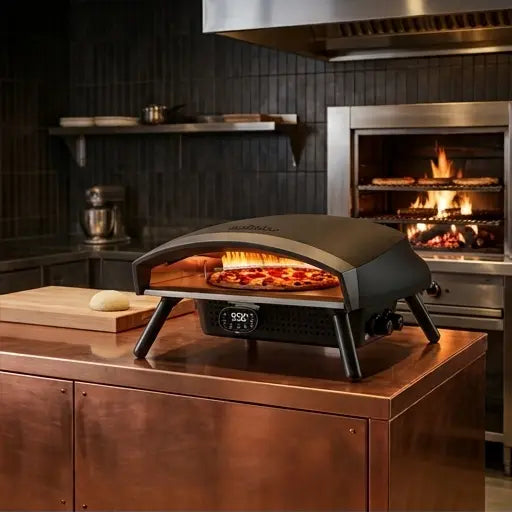
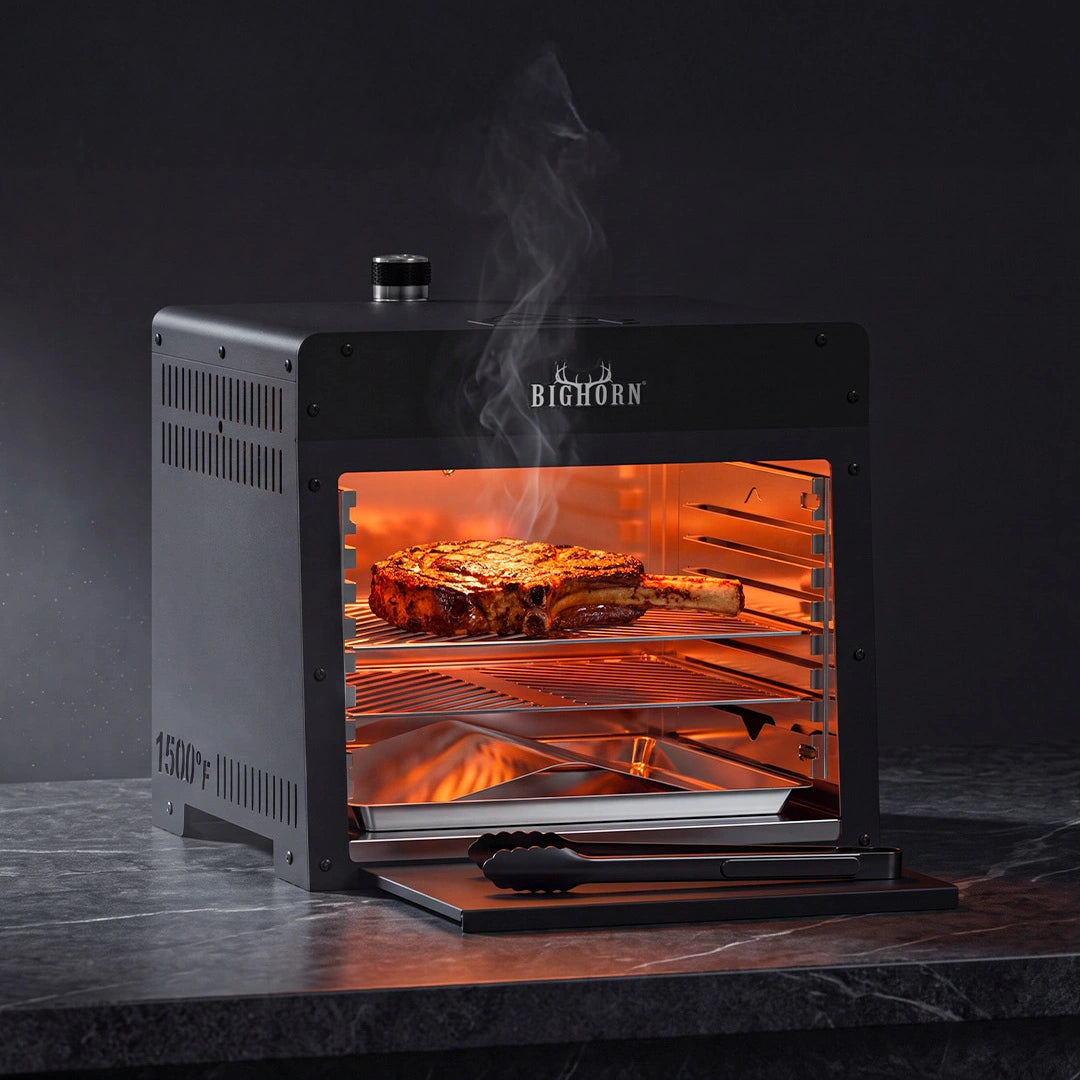
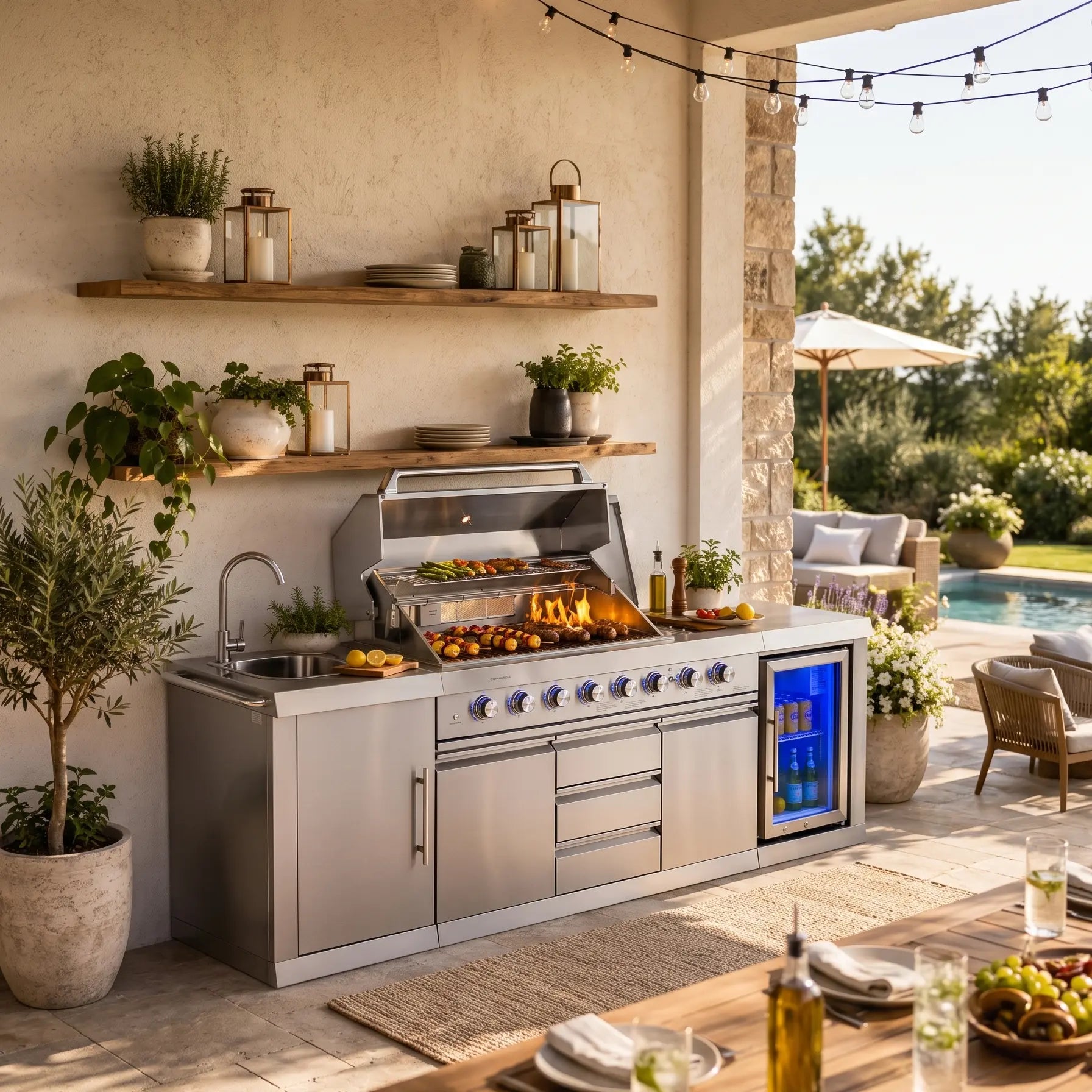
An infrared steak grill is an outdoor cooker that uses a ceramic or metal emitter to radiate intense heat directly onto food, reaching searing temperatures around 1500 °F. Unlike a conventional gas grill that warms the air, an infrared grill transfers heat straight to the surface, which produces a deep crust in minutes, locks in moisture, and cuts flare-ups because the flame never touches the meat. The mechanism mimics a commercial salamander broiler in a compact, propane-powered form.
How infrared grilling differs from conventional grilling
Conventional grills use convection: the burner warms air inside the chamber, and that air slowly transfers heat to the food. Infrared grills bypass the air entirely — the emitter converts gas flame energy into infrared radiation that hits the food’s surface directly. The differences are practical: faster preheat, higher surface temperature, less fuel to reach heat, and dramatic reduction in flare-ups because the flame is shielded by the ceramic emitter.
Why the technology suits steak in particular
Steak wants an intense, direct heat that sears the surface before the interior overcooks. Infrared delivers exactly that: rapid high-heat searing triggers browning on the outside while the interior stays pink and juicy. Because the heat is concentrated on the surface, steaks finish in a fraction of the time of a conventional grill, and moisture loss is lower — the combination that produces a steakhouse-style crust and a tender center.
Choosing the right infrared format
The format should match how and where you cook. A standalone broiler is the easiest path to serious searing on a patio or at a tailgate, because it is self-contained and propane-powered. A side-mount sear station makes sense if you already own a gas grill and only want to add high-heat power. A rear rotisserie burner is a specialty addition for whole-meat roasting rather than a primary searing tool.
For most home cooks the deciding factors are portability, fuel you already keep, and whether you want one unit or an add-on. A standalone unit avoids the installation and plumbing questions of an integrated setup, which is why it is the common starting point.
How rack height changes the cook
Peak temperature is only half the story; distance from the emitter is the control surface. The Big Horn model’s adjustable rack positions let you sear close for a fast crust, then raise the grate for a gentler cook or to finish thicker cuts without burning the surface. Think of the rack as a temperature dial between searing and finishing rather than as a fixed cooking level.
This is why infrared grills reward a little practice: you control browning speed by height, not by waiting for the grill to cool down. Once you learn the positions, the same burner handles a hard sear and a slower roast.
The types of infrared steak grills available
Infrared steak grills come in a few configurations, and the format affects where and how you use them:
| Type | Best for |
|---|---|
| Standalone infrared broiler | Dedicated steak searing; compact, portable, up to 1500°F |
| Side-mount infrared sear station | Adding high-heat searing to an existing gas grill |
| Rear infrared rotisserie burner | Whole-meat roasting, paired with a rotisserie kit |
| Multi-fuel infrared oven | Versatile outdoor cooking across fuels |
A standalone unit like the Big Horn 16-inch infrared steak grill suits patios, RVs, and tailgating because it packs high searing power into a portable, propane-powered format.
How hot does an infrared steak grill get?
Infrared steak grills typically reach 1200–1500 °F within a few minutes of ignition. The Big Horn model reaches about 1500 °F in 3–5 minutes on a 19,000 BTU burner. The heat is concentrated on the food rather than the surrounding air, which is why a surface crust forms quickly while the interior stays controlled — and why rack height matters as much as peak temperature.

Where an infrared grill fits into a kitchen setup
An infrared grill is a specialist complement to a regular grill or a full-size oven, not a replacement. It fills the high-heat searing and broiling gap that a conventional grill and oven do poorly: thin steaks, fast burgers, hard sears, and char on vegetables and seafood. You pair it with a lower-heat tool for slow cooking and baking, which is why it makes sense on a patio alongside a smoker or offset grill rather than instead of one.
For apartment dwellers or small patios, portability is a real advantage — the unit stows compactly and runs on propane without permanent installation. That combination of concentrated power and small footprint is what has made standalone infrared broilers a staple for tailgating, RV trips, and space-constrained cooks.
Can you cook more than steak on it?
Yes. Infrared grills sear burgers, chicken, pork chops, seafood, and vegetables well, and the Big Horn model includes a pizza stone for 60–90 second pizzas. The principle is the same: high, direct heat builds a crust fast. Foods that benefit from browning or charring work best; low-and-slow smoking is beyond the tool.
The right buy for the right cook
Match the format to who you are, not just what looks impressive. A standalone broiler fits a cook who wants serious searing without overhauling their grill. The 16-inch Big Horn model pairs portability with focused high heat, which suits patio and tailgate cooks who also want the pizza-stone add-on. If searing is only an occasional use on an existing grill, a side-mount station might be the more efficient purchase.
Above all, confirm the specs you need ahead of time — max temperature, preheat time, rack positions, and included accessories — so the unit meets the cooking style you actually have rather than a marketing headline.
Pairing it with what you already own
Infrared shines as a specialist, so it earns its place when paired with a tool that handles the low-and-slow work. A separate smoker or offset grill manages barbecue while the infrared handles the sear-and-finish — the division that makes a patio setup truly flexible. Even alongside a standard gas grill, the infrared adds a higher-heat capability the gas grill cannot reach.
If you only want one outdoor cooker, be honest about the trade: the infrared is exceptional at high heat and limited at low-and-slow. Buy it to fill a gap your current setup has, not to replace everything.
Infrared steak grill FAQs
Is infrared grilling safe?
Yes when used properly outdoors on a stable, non-combustible surface with proper clearance. Always follow propane connection and ventilation rules, and never operate it indoors.
Does it use more propane than a regular grill?
Not necessarily — the heat is so efficient at the surface that it reaches temperature fast. Fuel use depends on setting and cook time; high-heat searing sessions are short.
What makes the crust better than a gas grill?
Do infrared grills need maintenance?
Modest and regular: keep the ceramic emitter clean and unblocked, check the propane connection before each use, and store the unit covered. The stainless-shell and drip tray clean easily, and the emitter should only be brushed when cool.
Is a 1-pound tank enough for a portable model?
Yes for short sessions; longer cooks use more. Portable models typically run on 1-pound cylinders or adapt to a larger tank, so match the setup to how long you cook.
Infrared radiates heat directly onto the surface and reaches higher temperatures than convective air, so browning happens faster and more evenly, creating a deeper, crispier crust.
To see the specifications and included accessories, review the 16-inch Big Horn infrared steak grill product page before deciding.