
The best portable camping stove delivers reliable heat, stable setup, and fuel you can find on the road. For most U.S. campers, a compact two-burner propane stove around 15,000–20,000 BTU per burner offers the best balance of power, simmer control, and everyday usability.
What Is a Portable Camping Stove and How Does It Work?
A portable camping stove is a lightweight, transportable burner designed for outdoor cooking. It works by regulating pressurized fuel through a valve and burner to produce a controlled flame for boiling, frying, and simmering.
Portable camping stoves condense the core functions of a kitchen range into a compact, travel-ready format. Most models use disposable canisters (butane, isobutane, or propane blends) or refillable propane tanks, with a regulator or valve controlling gas flow to one or two burners. The flame is ignited by piezo spark or manual lighter, then adjusted via a knob that changes the gas-to-air mix.
Key components include:
-
Fuel source: Canister or tank matched to the stove's connector and regulator.
-
Burner and grate: Determines heat distribution and pot stability.
-
Windscreen or wind guards: Protects the flame to maintain efficiency in breezy conditions.
-
Control knobs and ignition: Provide flame adjustment and reliable lighting.
Big Horn Outdoors offers both single-burner butane stoves and folding two-burner propane designs aimed at this balance of portability and power, with specs that vary by exact model.
Which Fuel Types Are Best for Portable Camping Stoves?
Propane and butane/isobutane canisters are best for most campers; white-gas liquid fuel is best for extreme cold or long expeditions. Choose based on temperature, trip length, and fuel availability at your destination.
Canister fuels (propane, butane, isobutane, blends)
-
Propane: High vapor pressure, strong performance in cold weather, widely available in the U.S. in 1 lb cylinders or larger tanks. Slightly heavier per unit of energy than butane.
-
Butane: Compact and efficient in moderate temperatures; performance drops in near-freezing conditions. Common in small single-burner stoves.
-
Isobutane/propane blends: Improve cold-weather behavior versus pure butane while keeping canisters light and simple.
Liquid fuels (white gas, multi-fuel)
-
White gas: Burns hot and clean, maintains performance well below freezing, and is refillable. Requires priming and more maintenance; best for mountaineering, winter camping, and long trips where canisters are impractical.
-
Multi-fuel stoves: Can run on white gas, kerosene, or unleaded gasoline, useful for international travel where canister availability varies.
For typical weekend trips, tailgates, and summer/fall camping, a propane two-burner stove gives consistent heat, easy fuel sourcing, and simple operation. For ultralight backpacking, a small canister stove with an isobutane blend is often preferred. Big Horn Outdoors' lineup reflects this split, with compact butane options for minimalists and folding propane stoves for higher-output camp cooking.
How Do BTU Ratings Affect Portable Camping Stove Performance?
BTU ratings indicate maximum heat output per burner; higher BTUs boil water faster but do not guarantee better simmering or wind resistance. Balance BTUs with burner design, wind protection, and control range.
A BTU (British Thermal Unit) is the energy needed to raise 1 pound of water by 1°F. In camping stoves, higher BTU per burner generally means:
-
Faster boiling and searing capability.
-
Better performance when cooking large volumes or in windy conditions.
However, BTU alone is incomplete. Two stoves with the same BTU can perform differently due to:
-
Burner design: Shape and port configuration affect heat concentration and distribution.
-
Wind resistance: Integrated windscreens or deep burner wells preserve flame stability.
-
Regulator quality: Maintains steady pressure as the canister cools or fuel level drops.
-
Simmer range: A wide control range lets you go from rolling boil to low simmer without flare-ups.
Typical portable camping stove outputs:
Big Horn Outdoors' two-burner folding propane models are commonly rated around 17,000 BTU total, aiming for efficient cooking with reduced fuel consumption compared to bulkier designs.
What Features Matter Most When Choosing a Portable Camping Stove?
Focus on burner count, BTU output, wind protection, stability, ignition type, and pack size. Match these to your group size, cooking style, and transport constraints.
Critical features to evaluate:
-
Number of burners:
-
One burner: Lightweight, ideal for solo or duo trips.
-
Two burners: Lets you boil water while sautéing or keep food warm—best for families and more complex meals.
-
-
BTU output and control: Look for enough power to boil quickly, plus a knob that can reliably dial down to a low simmer.
-
Wind resistance: Integrated windscreens, deep burner wells, or detachable wind guards dramatically improve real-world performance.
-
Stability and pot support: Wide footprint, sturdy grates, and low center of gravity reduce tipping risk with larger pots.
-
Ignition: Piezo ignition is convenient; always carry a backup lighter or matches.
-
Portability: Foldable legs, compact dimensions, and included carry case matter for backpacking or tight storage in a car or RV.
-
Fuel compatibility: Ensure the stove matches widely available fuel types for your typical destinations.
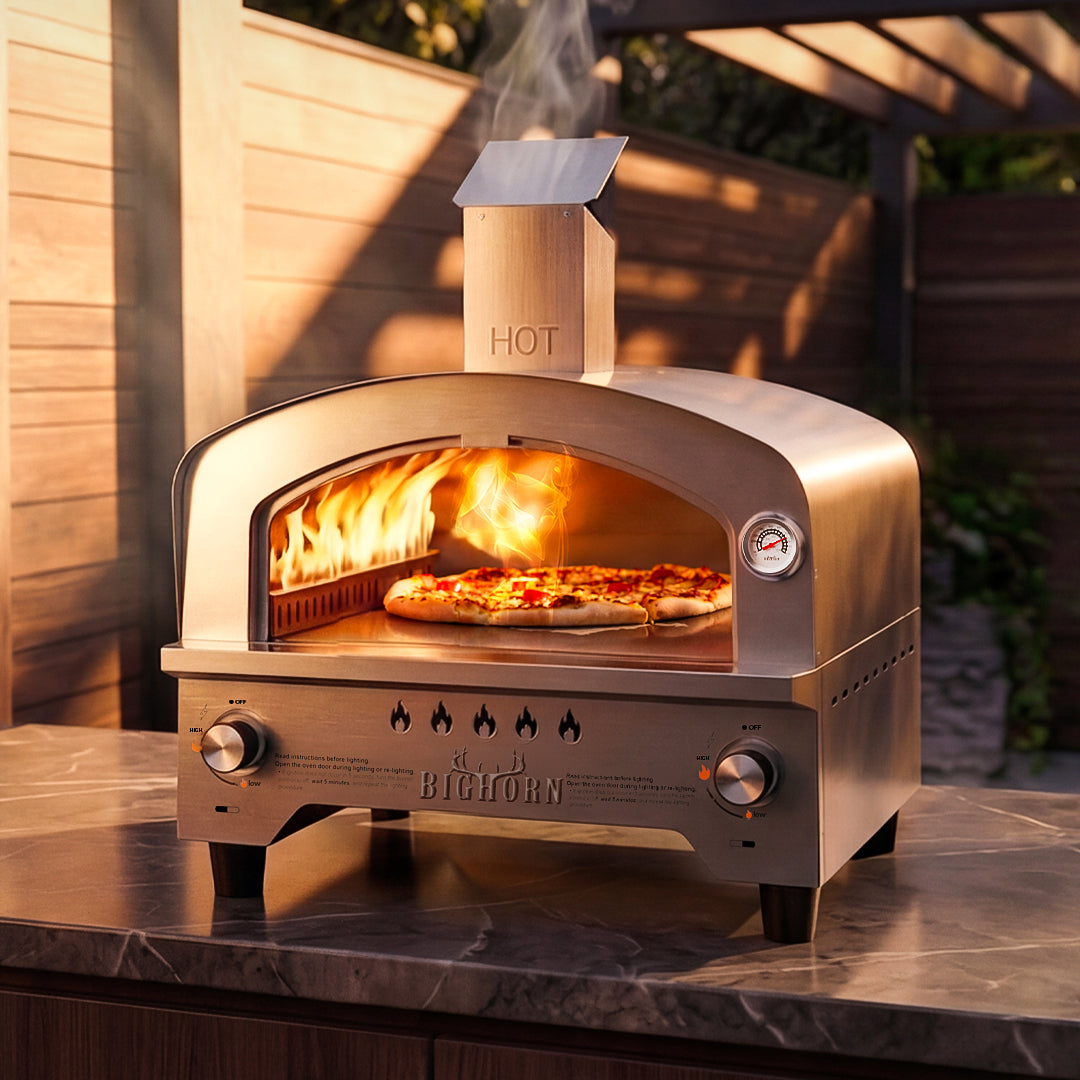
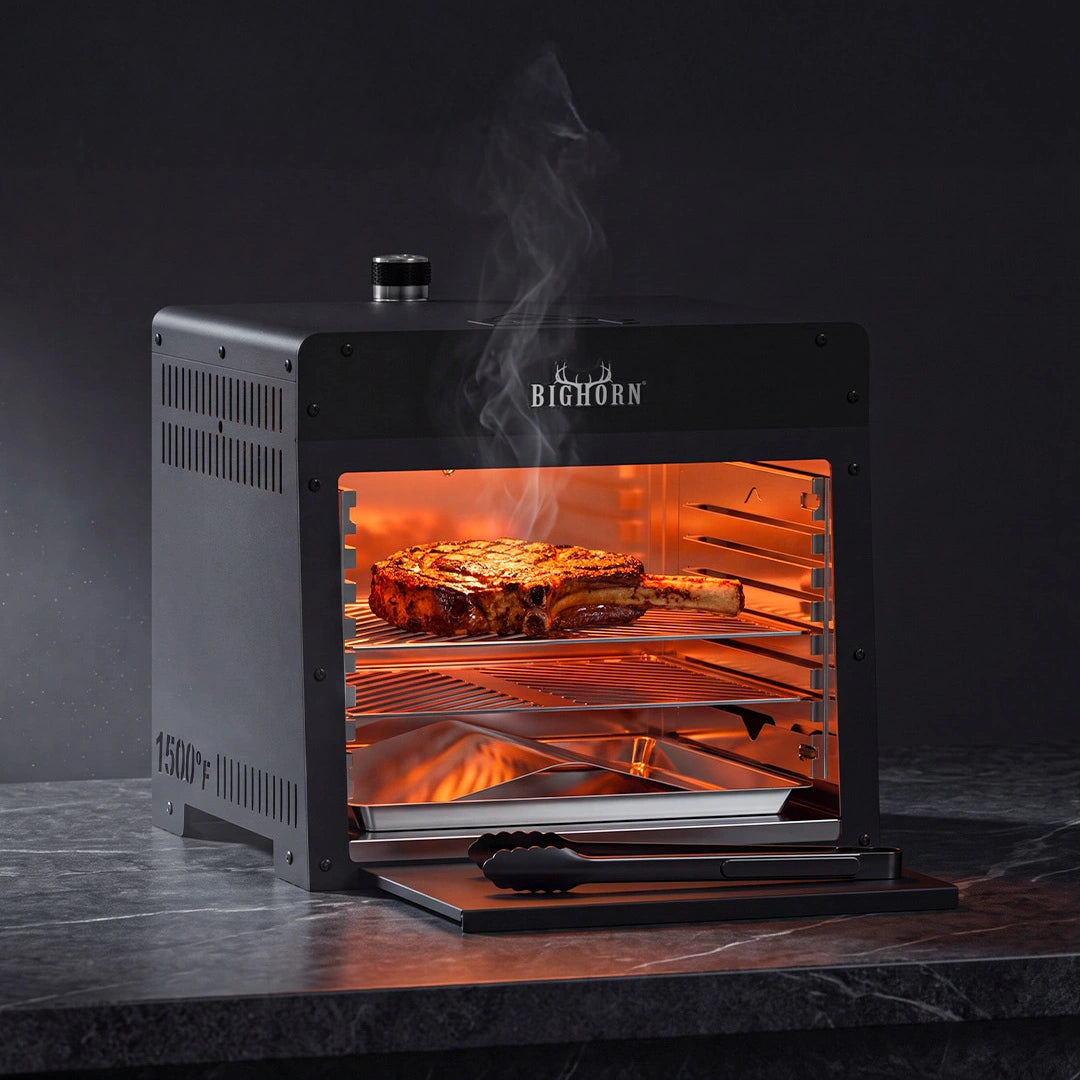
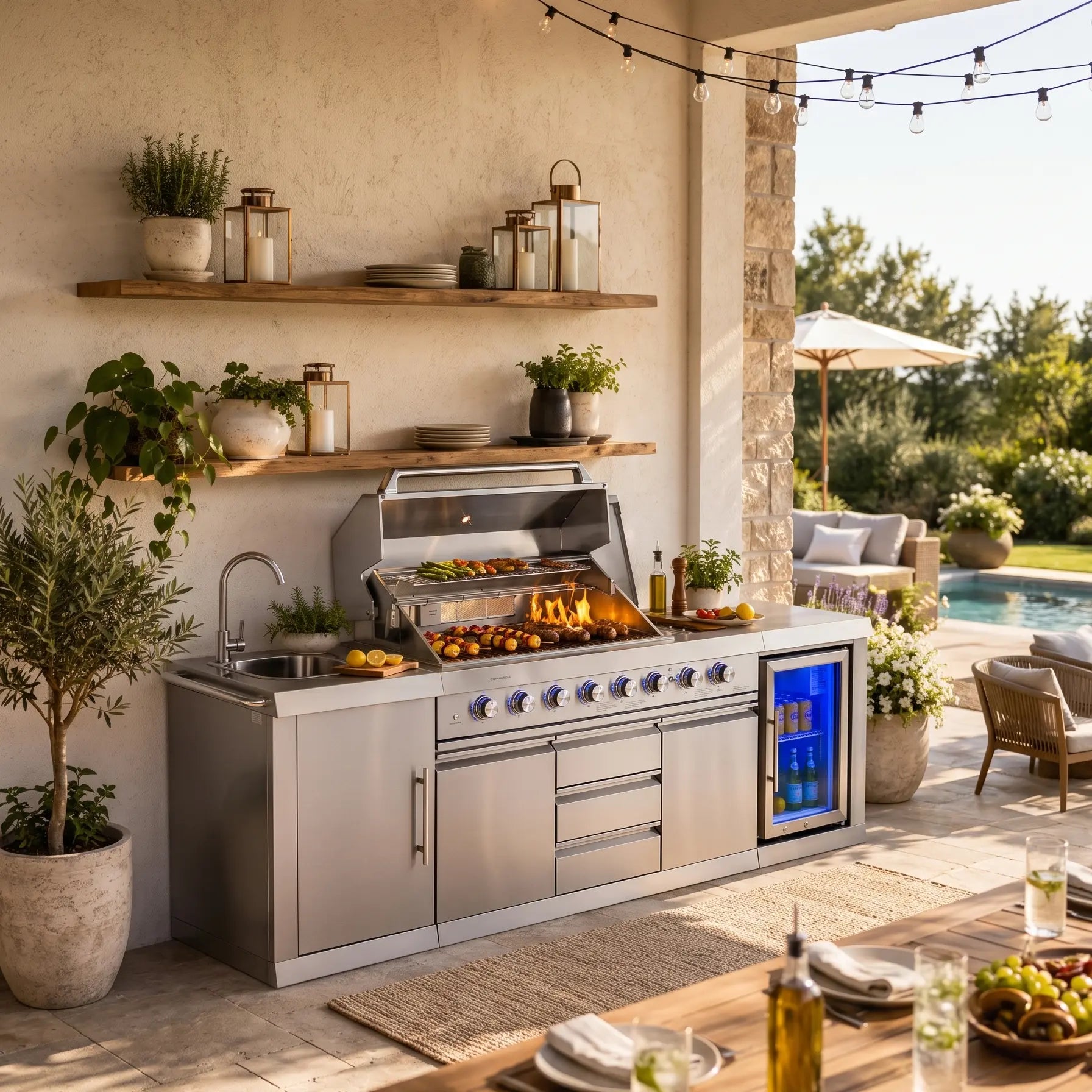
For campers who also use pizza ovens or grills from brands like Big Horn Outdoors, a portable camping stove can serve as a versatile side burner for sauces, sides, and quick meals while the main unit handles high-heat roasting or grilling.
How Do You Set Up and Use a Portable Camping Stove Safely?
Set up on a level, non-flammable surface in a well-ventilated area, connect fuel securely, check for leaks, and never leave the stove unattended while lit.
Follow these core safety steps every time:
-
Site selection:
-
Use a flat, stable surface away from tent walls, overhanging branches, and flammable materials.
-
Maintain good ventilation to prevent carbon monoxide buildup; never use inside tents, vehicles, or enclosed spaces.
-
-
Fuel connection:
-
Ensure valves are off before attaching canisters or tanks.
-
Screw connections firmly but avoid cross-threading.
-
Smell for gas and listen for hissing after connection; if detected, turn off and reseat or replace the connector.
-
-
Lighting and operation:
-
Use piezo ignition or a long-reach lighter; keep hands and loose clothing away from the flame.
-
Adjust flame gradually; avoid maximum heat unless needed.
-
Keep a fire extinguisher or water source nearby.
-
-
Shutdown and cooling:
-
Turn off the burner and fuel valve; allow the stove to cool completely before moving or storing.
-
Disconnect fuel and store canisters away from heat and direct sunlight.
-
Portable camping stoves from Big Horn Outdoors and similar brands typically include basic safety features like flame guards and stable grates, but safe operation still depends on correct setup and attentive use.
How Do You Clean and Maintain a Portable Camping Stove?
Clean after each use by wiping grates and cooktops, removing food debris from burners, and checking for clogs; periodically inspect seals, knobs, and fuel connections.
After each trip:
-
Let the stove cool completely and disconnect fuel.
-
Remove grates and wash with warm, soapy water; rinse and dry thoroughly.
-
Wipe the cooktop and windscreen with a damp cloth; avoid soaking ignition components.
-
Tap or brush burners to clear food particles; use a soft brush or toothbrush for stubborn residue.
Periodic maintenance:
-
Inspect fuel lines, connectors, and regulator for cracks, corrosion, or wear.
-
Check that knobs turn smoothly and flames remain blue and even; orange or uneven flames can indicate clogged ports.
-
For liquid-fuel stoves, follow manufacturer guidance on pump maintenance and line cleaning.
Store the stove dry in a protective case. Avoid harsh degreasers or abrasive pads that can damage finishes or burner ports. Proper cleaning and inspection extend the life of portable camping stoves from Big Horn Outdoors and other manufacturers while preserving safe, efficient performance.
When Should You Choose a Single-Burner Versus a Two-Burner Portable Camping Stove?
Choose a single-burner stove for solo or ultralight trips where weight and size are critical; choose a two-burner stove for family camping, tailgating, or any scenario where you need to cook multiple items at once.
Single-burner stoves
-
Pros: Lighter, more compact, simpler setup, often cheaper.
-
Cons: Limited to one pot or pan at a time; slower for multi-course meals.
Best for:
-
Backpacking, bikepacking, or minimalist car camping.
-
Emergency kits and small RV kitchens as a supplemental burner.
-
Users prioritizing minimal pack weight over cooking versatility.
Two-burner stoves
-
Pros: Cook two items simultaneously (e.g., boil water while frying), better for groups and varied menus.
-
Cons: Heavier, larger footprint, higher fuel consumption.
Best for:
-
Family camping, overlanding, and tailgating.
-
Camp setups where the stove serves as a primary outdoor kitchen.
-
Campers who pair the stove with a grill or pizza oven for full outdoor meal prep.
Your decision should align with how many people you cook for, the complexity of meals you prepare, and how much space and weight you can allocate in your gear.
Big Horn Outdoors Expert Views
"For most campers, the right portable camping stove is the one you'll actually use consistently: stable on uneven ground, easy to light in wind, and matched to fuel you can find wherever you go. We design our folding propane stoves to balance compact storage with enough BTU output to handle real camp meals—boiling water quickly while still offering decent simmer control. Pair that with basic safety habits—level setup, good ventilation, and regular cleaning—and you get reliable performance season after season. If you also run a high-heat oven or grill, think of the stove as your versatile side burner for sauces, sides, and quick weekday dinners outdoors."
How Do Wind and Weather Impact Portable Camping Stove Performance?
Wind and cold reduce flame efficiency and can cause unstable burning; choose stoves with wind protection and appropriate fuel for your typical conditions.
-
Wind:
-
Disperses heat, increases boil times, and can extinguish small flames.
-
Integrated windscreens, deep burner recesses, and low-profile designs help maintain consistent heat.
-
In very windy sites, position the stove behind natural windbreaks (rocks, logs) while maintaining safe distances from flammable materials.
-
-
Cold temperatures:
-
Reduce vapor pressure in canister fuels, especially butane, leading to weaker flames.
-
Propane and isobutane/propane blends perform better in cold weather.
-
Keep canisters insulated (inside a jacket or sleeping bag until use) and avoid leaving them in freezing vehicles for extended periods.
-
For frequent cold-weather or high-altitude camping, consider liquid-fuel stoves or high-quality canister stoves specifically rated for four-season use.
What Are Common Mistakes to Avoid With Portable Camping Stoves?
Common mistakes include using stoves in enclosed spaces, ignoring leak checks, overloading burners with oversized pots, and skipping regular cleaning.
Avoid these pitfalls:
-
Using stoves in tents, vehicles, or enclosed spaces: Risk of carbon monoxide poisoning and fire.
-
Skipping leak checks: Always smell and listen for gas after connecting fuel.
-
Overloading with oversized or unstable cookware: Increases tipping risk and uneven heating.
-
Running at full blast unnecessarily: Wastes fuel and can scorch food; use the lowest effective flame.
-
Neglecting cleaning and inspection: Leads to clogged burners, uneven flames, and reduced safety.
-
Storing fuel canisters in hot vehicles: Can cause pressure buildup and potential rupture.
Following manufacturer instructions and basic safety habits significantly reduces risk and improves cooking performance.
Which Portable Camping Stove Should You Buy Based on Your Needs?
Match your stove to your typical trip type: solo backpackers benefit from ultralight canister stoves; families and overlanders are better served by stable two-burner propane models.
Recommended by scenario:
-
Solo/ultralight backpacking: Compact canister stove (isobutane blend), 7,000–11,000 BTU, minimal weight.
-
Weekend car camping (2–4 people): Two-burner propane stove, 10,000–17,000 BTU per burner, with wind guards and sturdy grates.
-
Group camping, tailgating, overlanding: High-output two-burner propane stove, 20,000+ BTU per burner, robust construction.
-
Cold-weather or high-altitude trips: Liquid-fuel stove or cold-rated canister stove with strong wind protection.
Big Horn Outdoors' portable options fit primarily into the compact single-burner and folding two-burner categories, targeting car campers, RV users, and emergency-preparedness kits where reliability and straightforward operation matter most.
Conclusion
For most U.S. campers, a two-burner propane portable camping stove in the 15,000–20,000 BTU per burner range delivers the best balance of speed, control, and practicality. Solo and ultralight travelers should prioritize compact canister stoves with good wind resistance, while cold-weather or expedition users may need liquid-fuel systems. Focus on stable setup, proper fuel selection, safe operation, and regular maintenance to get consistent, safe performance from any portable camping stove, including models from Big Horn Outdoors.
FAQs
Can I use a portable camping stove inside my tent or RV?
No. Portable camping stoves must be used only in well-ventilated outdoor areas. Using them inside tents, enclosed RV spaces, or vehicles creates serious risks of carbon monoxide poisoning and fire.
How long does a standard propane canister last on a portable camping stove?
Burn time depends on BTU output and usage. A typical 1 lb propane cylinder might last 1–2 hours on a single burner at medium-high heat. Two-burner stoves connected to larger tanks will vary based on total BTU use and cooking habits.
Are butane or propane stoves better for cold weather?
Propane and isobutane/propane blends generally perform better in cold weather than pure butane. For frequent sub-freezing use, consider a cold-rated canister stove or a liquid-fuel stove designed for winter conditions.
How often should I clean my portable camping stove?
Clean after each trip by wiping surfaces and clearing burner debris. Perform a more thorough cleaning and inspection periodically, especially if you notice uneven flames, difficulty lighting, or visible buildup on burners and grates.
Can I use cast iron cookware on a portable camping stove?
Yes, if the stove's grates and frame are sturdy enough to support the weight. Ensure the stove is on a stable surface, avoid overloading one side, and use moderate heat to prevent warping thin components over time.