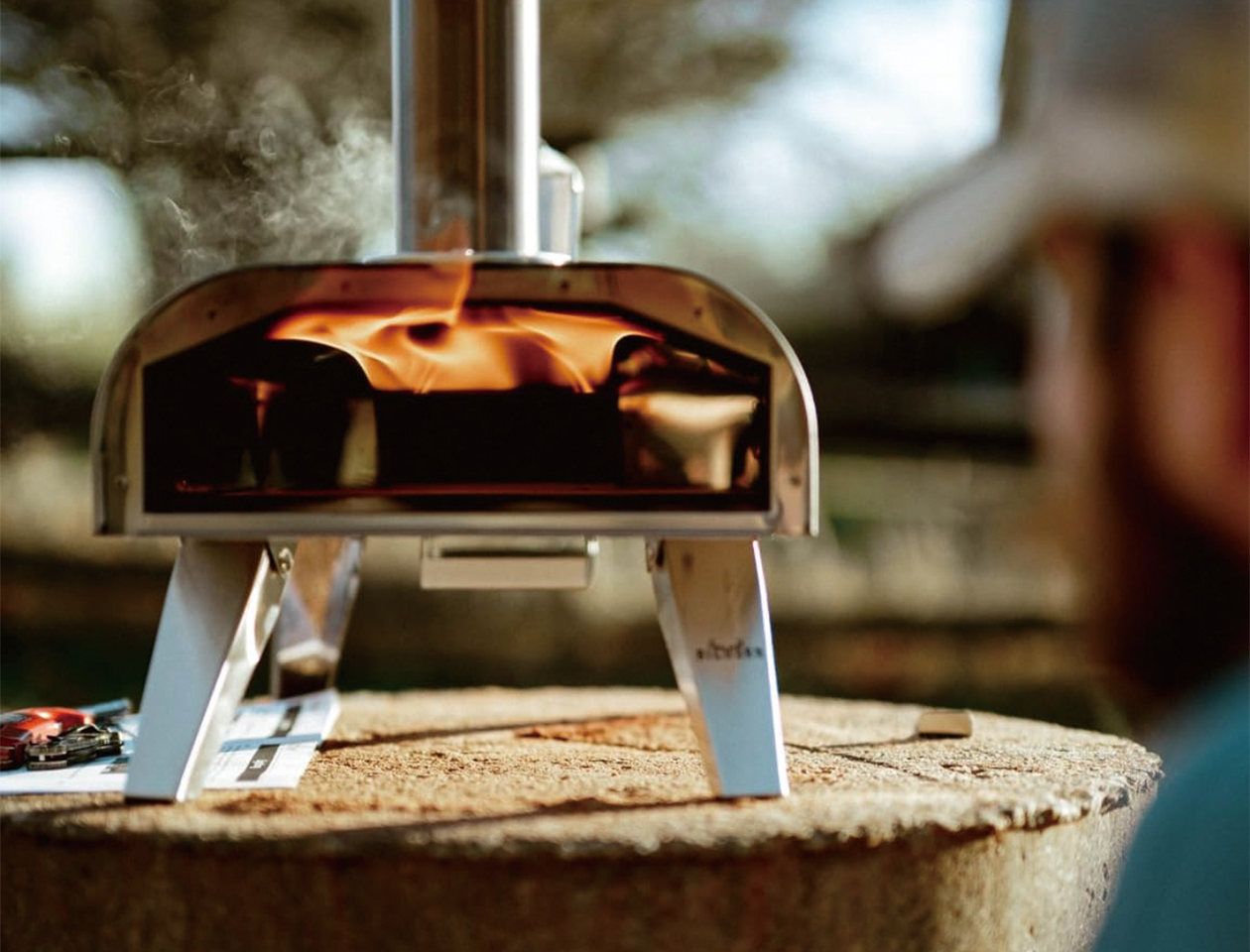
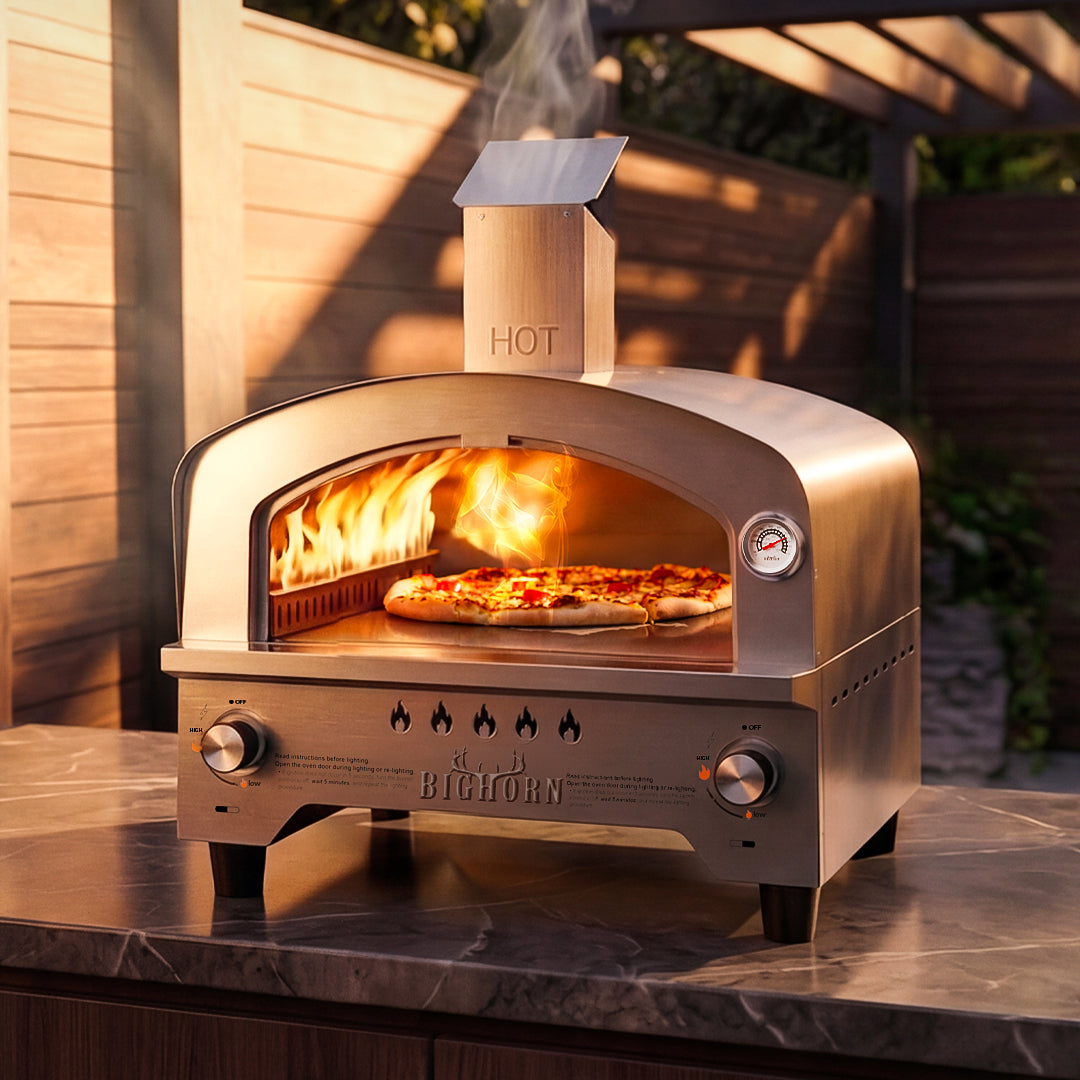



The Big Horn signature pizza dough is four ingredients and time: flour, water, salt, and yeast, mixed at roughly 60–65 percent hydration and fermented slowly. Blended and rested well, that dough produces the puffy, blistered crust the style is known for when it hits high heat — the Big Horn 12-inch pellet oven reaches about 887 °F (475 °C), which turns a properly fermented ball into a 60–90 second bake.
The ingredients
You need flour, water, salt, and yeast — nothing more. A high-protein flour such as “00” gives the best result because it develops the gluten structure that lets dough stretch thin and still hold its rim. The short ingredient list is intentional: the fewer variables, the more the dough’s fermentation and the oven’s heat do the work.
The baker’s percentages
Use about 60–65 percent water, 2–3 percent salt, and a small amount of yeast, all relative to the flour by weight. Hydration at this level balances easy handling with a light, airy crumb; salt controls fermentation and flavor; and a small yeast dose with a long rise develops more complexity than a quick, warm proof. Weighing the ingredients makes the result repeatable from one bake to the next.
| Ingredient | Baker’s % (vs flour) |
|---|---|
| Water | 60–65% |
| Salt | 2–3% |
| Yeast | Small amount |
Mixing and kneading
Mix the flour, water, salt, and yeast until no dry flour remains, then knead until the dough is smooth and slightly tacky. Let it rest briefly between kneading rounds if the dough resists — gluten development does not have to happen in one stretch. A well-kneaded dough is the foundation of a crust that holds its shape without becoming tough.
How long should you ferment it?
Ferment the dough for at least several hours, and ideally overnight in the refrigerator. A slow, cold ferment builds flavor and structure better than a quick rise, which is why time is genuinely an ingredient here. After the bulk ferment, divide the dough into balls and let them rest before shaping.
Portion sizes and dough-ball weights
For a 12-inch pizza, a dough ball of roughly 230–260 grams is a practical target, which yields a thin center with a rim and a manageable peel launch. Split the full dough batch into balls by weight so each pizza bakes consistently, and keep the balls covered so their surfaces do not form a skin while they rest.
If you plan to serve multiple pizzas, ball all of them before the first bake rather than dividing as you go. Identical balls mean identical bake windows, which is what lets one preheated stone serve a whole sequence.
Shaping the dough
Stretch the dough by hand into a thin center with a puffy rim, and avoid a rolling pin, which presses the air out of the crumb. Stretch gently from the center outward, leaving a thicker edge that becomes the crust. Hand-stretching is what preserves the gas that puffs the rim under high heat.
A sample schedule for a same-week bake
If you want a concrete timeline, here is one that fits a weeknight: mix the dough the night before, around 8 pm; let it bulk-ferment at room temperature for 1–2 hours; divide into balls; move them to the refrigerator overnight; take them out about an hour before baking so they relax; then bake 18–20 minutes after lighting the oven. The whole process is mostly waiting, not work — the night-before mixing is what makes a high-heat bake schedule manageable.
For a same-day bake, mix in the early morning, ferment at room temperature through the day, and ball the dough in the afternoon. You trade some flavor for speed, but the dough will still behave well if it is allowed to rise fully before shaping.
How the oven’s heat finishes the dough
At about 887 °F, the dough’s water turns to steam almost instantly, puffing the rim before the crust sets, while the hot stone crisps the base. That fast, dry heat is what creates the contrast of soft center and crispy charred edge. The dough does half the work; the oven’s heat completes it.
Common dough mistakes to avoid
The most common failures are under-kneading, rushing the ferment, and using too little water. Under-kneaded dough is weak and tears on the peel; a rushed ferment lacks flavor and structure; and a too-dry dough produces a dense, flat crumb. Knead well, ferment slowly, and keep the hydration in the target range.
Dough troubleshooting: reading the signs
Two dough states explain most failed bakes. If the dough tears when you stretch it, it is either under-kneaded or under-developed — knead longer and let it rest between rounds. If it collapses or is sticky and hard to manage, it is over-proofed or too wet; reduce hydration slightly or shorten the ferment. A dough that holds together when shaped and slides willingly off a floured peel is in the right window.
Stone temperature is the other half of the equation. Even a perfect dough produces a pale base on a cold stone, so wait for the full 18–20 minute preheat before launching the first pizza.
Why this dough works at high heat
The signature dough is built around one insight: a lean, slowly fermented dough handles extreme heat better than an enriched or rushed one. Low sugar and fat mean the crust can brown quickly without burning, while a long ferment builds the extensibility that lets the dough puff into a rim instead of drying flat. Keep the recipe simple, respect the hydration, and let time do the work — the oven’s 887 °F will handle the rest.
Signature dough cheat sheet
| Step | Target |
|---|---|
| Hydration | 60–65% of flour weight |
| Salt | 2–3% of flour weight |
| Bulk ferment | 1–2 h room temp, then cold |
| Cold ferment | Overnight in refrigerator |
| Ball size | 230–260 g for a 12-inch pizza |
| Preheat before bake | 18–20 minutes, ~887°F |
| Bake | 60–90 seconds, rotate once |
Keep this within reach for the first few bakes. The dough is forgiving; the numbers just remove guesswork while you are learning the feel.
Signature dough FAQs
What hydration should I use?
About 60–65 percent water relative to the flour. It is the sweet spot that stays manageable while giving a light crumb.
How long should I ferment the dough?
At least several hours, ideally overnight in the refrigerator. The slow, cool rise develops a much better flavor and crumb than a fast one.
Can I use all-purpose flour?
Can I use instant yeast instead of fresh?
Yes — instant yeast is the easier home choice. Use a small amount (roughly 0.1–0.3 percent of the flour weight) and let the long, cool ferment do the flavor work. Fresh or active-dry yeast can be substituted with minor timing changes; instant yeast dissolves directly into the water.
Why did my dough double too quickly?
A fast rise usually means too much yeast or too warm an environment. Cut the yeast amount, or move the dough to the refrigerator sooner to slow the ferment and give it more flavor.
Yes, but “00” or a strong bread flour will stretch thin with a better rim. If you use all-purpose, expect a slightly denser, less delicate crust.
To pair the dough with the right oven, review the 12-inch Big Horn pellet pizza oven product page and confirm the current specs before baking.