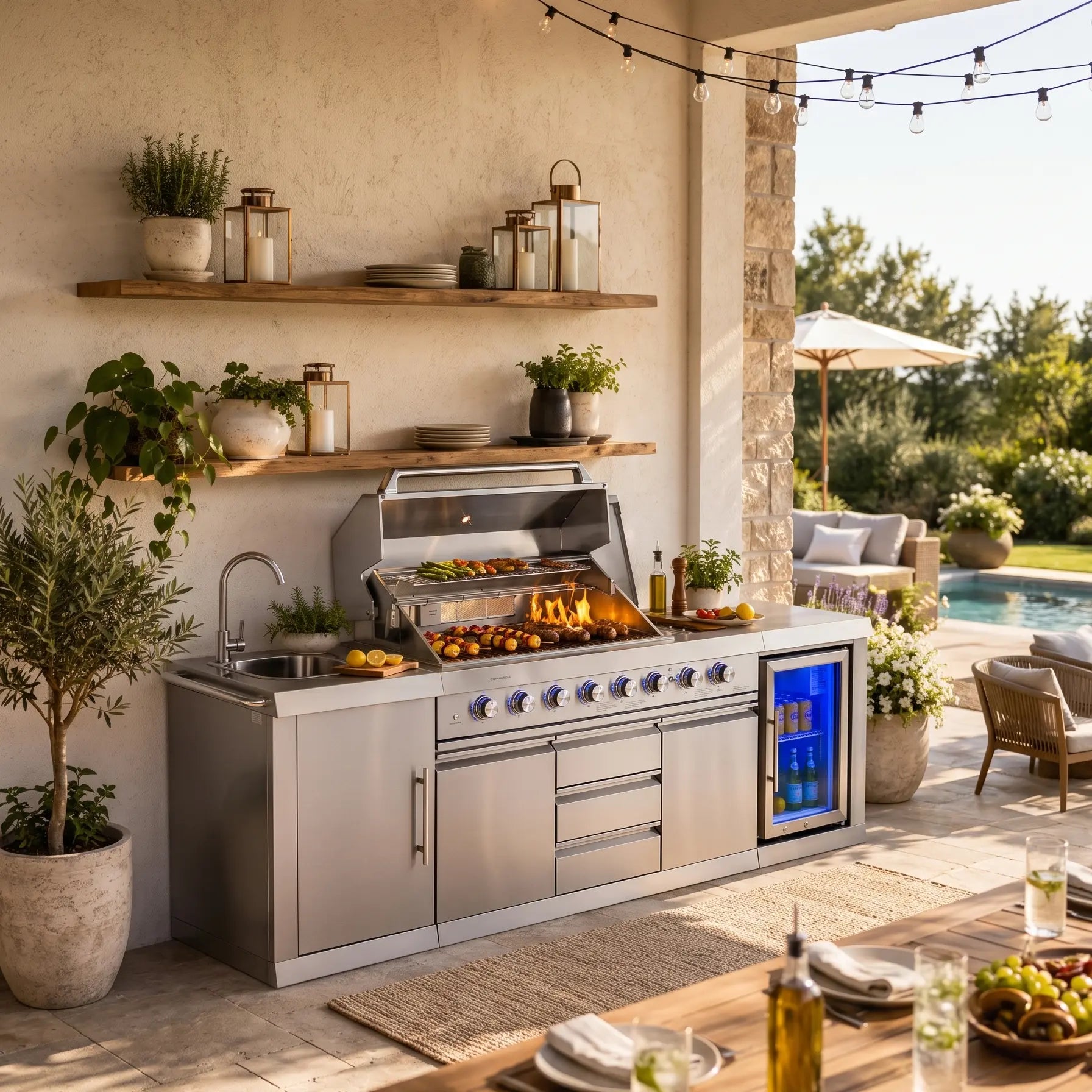
Hosting an asado is about a steady wood or charcoal fire, several cuts of meat cooked slowly over the coals, and simple sides that let the meat lead. Build the fire early so it settles to a stable coal bed, cook in stages with the grate height to sear and slow-roast over the same coals, and serve with chimichurri, grilled bread, and a light salad. A Santa Maria–style grill with an adjustable grate is the tool that makes the rhythm work.
What an asado actually is
An asado is the Argentine tradition of grilling beef and other meats over live fire, and it is as much about the gathering as the food. The format is deliberately slow and social: meat goes on over a settled fire, cooks in stages, and comes off as it finishes while people stay around the fire. It is generous by design — several cuts, plenty for everyone — rather than a precise multi-course production.
What you need to host one
The essentials are a grill, fuel, a selection of meat, and a few sides. A Santa Maria–style grill or parrilla with an adjustable grate is the classic setup because the height control lets you sear close to the coals and slow-roast farther away without moving the fire. Charcoal or hardwood, several cuts, and simple accompaniments complete the kit.
Choosing the meat cuts and their timing
Classic asado builds a meal from several cuts that cook at different rates, which is what keeps the table full over hours. Beef ribs and large roasts go on first at a higher grate position and cook low and slow. Flank and skirt steaks, along with chorizo and other sausages, cook faster and go on later or closer to the fire. The goal is a steady sequence of finished food rather than everything hitting the table at once.
Season simply — coarse salt is traditional and enough — and resist the urge to marinate everything. The fire and the meat carry the flavor; sauces like chimichurri are served alongside to finish each plate.
A sample asado timeline
| Time | Action |
|---|---|
| 2–3 h before | Build the fire, let it settle to coals |
| 1–1.5 h before | First slow cuts on at higher grate |
| 30–40 min before | Add faster cuts closer to the fire |
| Serving | Raise finished meat to hold warm; add chimichurri, bread, salad |
Timing is flexible — the format is deliberately relaxed. What matters is a settled fire and a staged sequence so guests eat as they are ready.
Building the fire: settle it before the meat
Build the fire with charcoal or hardwood and let it burn down to a steady coal bed before the first cut goes on. Start early — a settled fire gives the even, manageable heat that slow grilling needs. Arrange the coals to create hot and cooler zones so you can sear one cut while another holds at lower heat.
Running out of fuel is the most avoidable failure, so have extra charcoal or wood ready and add it as the bed needs topping.

What meat to serve
Serve a variety of cuts so the meal feels generous: beef ribs, flank, chorizo, and other grilling favorites. Different cuts finish at different times, which suits the staged rhythm of an asado. The adjustable grate is the key — raise it for gentle roasting or lower it for a sear, so thick and thin cuts cook together without one overcooking.
Cooking for a group in stages
Cook in stages and use the grate height to manage a crowd. Raise finished food to hold it warm at lower heat while the next cut sears close to the coals. Keep the fire steady, avoid overcrowding the grate (which drops heat and steams the meat), and let each cut finish on its own schedule.
Overcrowding and a late fire are the two mistakes that slow an asado; staging and an early coal bed solve both.
Managing the fire through a long cook
For a several-hour asado the fire needs ongoing attention, not just a strong start. Keep a small reserve of charcoal or firewood nearby and add fuel gradually so the bed stays steady rather than flaring. Use the grate height to manage heat in the moment — lower it to finish a sear, raise it to hold slow cuts — and reposition the coals to create a cooler zone where finished food can rest without overcooking.
Over-firing is the other common mistake. A roaring, flaring fire cooks faster on the outside than the inside and over-char skins and sausages. A settled, even coal bed with the coals spread to a workable thickness gives the control the format needs.
The sides and drinks
Keep the sides simple so the meat stays central: chimichurri, grilled bread, a light salad, and wine or your preferred drinks. Chimichurri is the classic Argentine sauce and rounds out the rich, smoky meat without competing with it.
Bringing authentic touches to the table
A few small details round out the experience beyond the meat. Serve the chimichurri in a shallow bowl alongside, offer grilled bread brushed with a little oil, and keep a simple green salad for contrast. Argentine asado is traditionally eaten as cuts come off the fire rather than as a single plated course, and guests help themselves out of a shared dish — that relaxed, generous rhythm is as much a part of the tradition as the cooking.
Drinks are a matter of preference; wine or a simple spritz both work, and there is no fuss. The point is sociability around a live fire, so keep the atmosphere, not the plating formality, front of mind.
Portion and gear planning for a group
For planning purposes, estimate roughly 1–1.25 pounds of bone-in meat per guest — an asado is deliberately generous, and this leaves room for several cuts and some leftovers. Match the grate size to the guest count: a full-size Argentine grill handles a small gathering in stages, while a smaller portable Santa Maria setup suits four to six people with a little more patience between rounds.
For fuel, budget generously too: several hours of live fire burns more than instinct suggests, so stock extra charcoal or firewood and store it dry nearby. The two planning errors that most often dampen an asado are under-supplying fuel and under-supplying meat, so it is worth over-buying both the first time.
Asado hosting FAQs
How much meat do I need per guest?
Plan generously — roughly 1–1.25 pounds of bone-in cuts per person is a common starting point. Asado is meant to be plentiful, and leftovers are welcome.
How long does an asado take?
Count on several hours, mostly from the fire and slow cooking. The social format is part of the point; it is not a fast cook.
Can I use a gas grill instead?
How many people can one Santa Maria grill feed?
A full-size Argentine grill with a large adjustable grate comfortably serves a small gathering of 8–12, cooked in stages. The limiting factor is grate space per round, not the total — plan the cuts so they finish sequentially.
Do I need special tools for an asado?
A long pair of tongs, a fork or two, and a brush for the chimichurri are the practical minimums. The adjustable grate on the Santa Maria grill does the heavy lifting; you do not need specialty equipment.
You can, but you lose the live-fire flavor and the coals that define an asado. A charcoal or wood fire on a Santa Maria–style grill is the traditional and best match.
For the equipment, review the Argentine Santa Maria grill product page and the grills and griddles collection to find the adjustable-grate setup that fits your space.