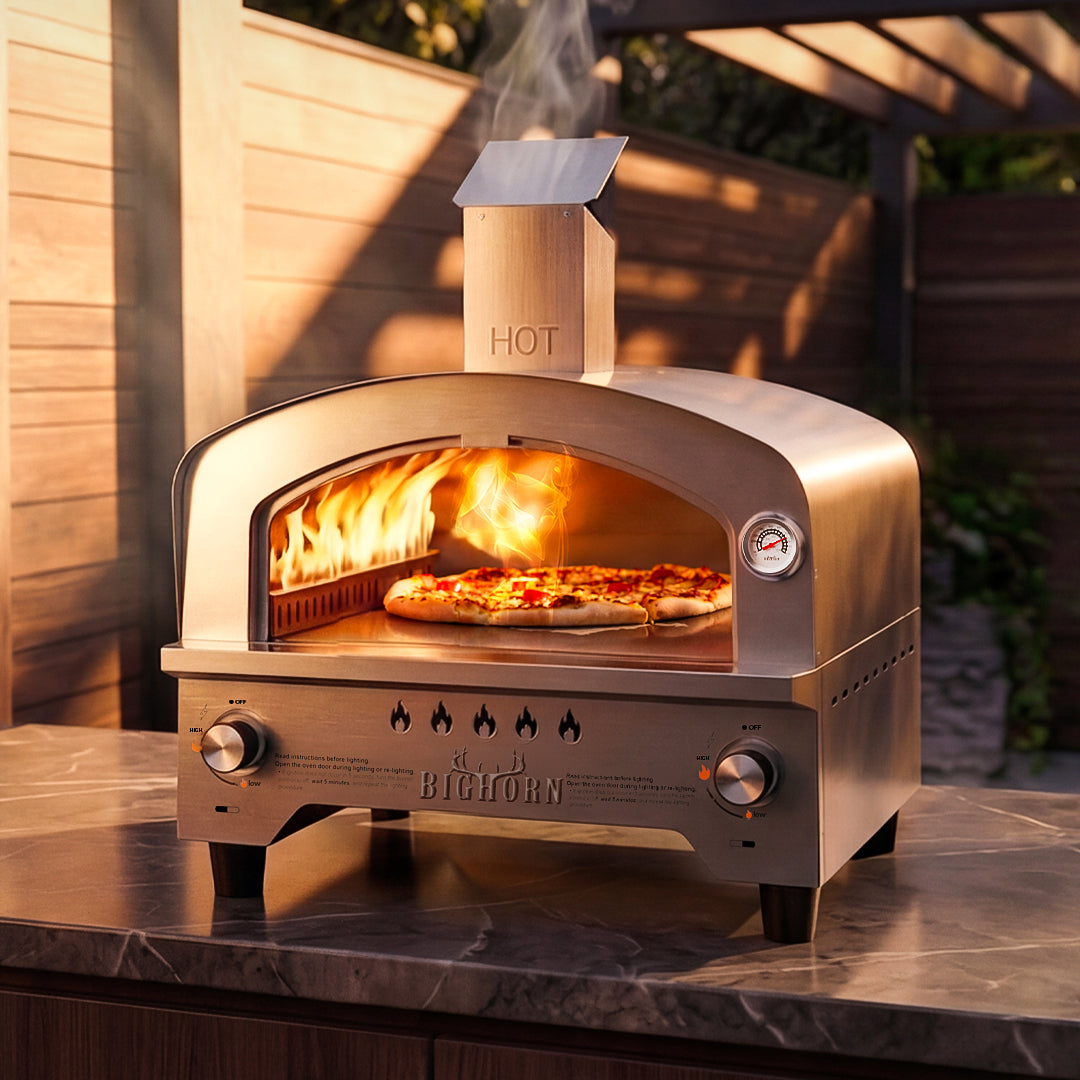
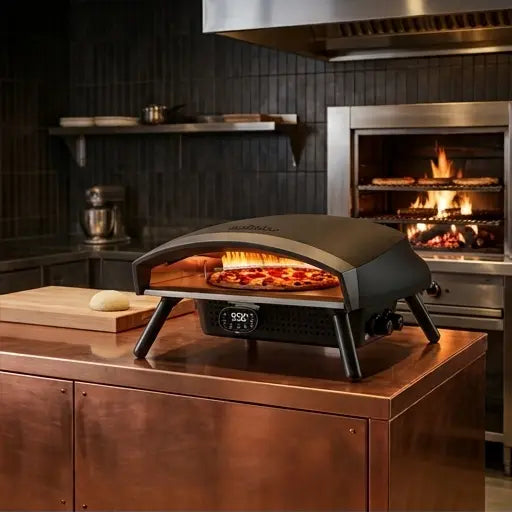
A wood pellet oven gives a cleaner wood-smoke flavor, while a gas oven gives a more neutral, consistent result. The Big Horn Outdoors 12-inch pellet oven reaches 887°F, and the 15-inch gas oven reaches 750°F in about 10 minutes and tops out at 1,070°F. Choose pellets for flavor, gas for consistency.
What Is the Difference Between Pellet and Gas Pizza Ovens?
A pellet oven burns compressed wood pellets, while a gas oven burns propane through burners. The fuel changes the flavor, heat-up time, and effort.
Pellets produce wood smoke that lightly flavors the pizza, while gas burns clean with a neutral taste. Gas also heats up faster and needs no fire management. The fuel is the main difference, and it drives the rest of the trade-offs.
Taste
A pellet oven often tastes better to people who want a subtle wood-smoke note, because the pellets add that character. A gas oven tastes cleaner and lets the toppings stand out more.
Neither is objectively better — it depends on what you want. Pellet ovens give a mild, natural wood flavor, while gas ovens produce a neutral crust that emphasizes the dough and toppings. If you want wood-fired character, pellets win; if you want a clean, controlled bake, gas wins.
Heat-Up Speed
A gas oven heats up faster. The Big Horn Outdoors 15-inch gas oven reaches 750°F in about 10 minutes, while the 12-inch pellet oven takes 18 to 20 minutes.
Gas ignites instantly and climbs quickly, which is its main convenience advantage. Pellets need time to establish a fire and bring the stone to temperature. Gas is the faster route to a hot oven.
Ease of Use
A gas oven is easier to use, because there is no fire to feed or ash to clean. A pellet oven needs pellets, lighting, and a longer preheat.
Gas ovens light with a burner and hold temperature with a dial, while pellet ovens need you to fill the hopper, light the pellets, and manage the fire. Gas is the lower-effort choice, while pellets add a bit of hands-on work.
Flavor
For wood-smoke flavor, a pellet oven is better. For a clean, consistent base that shows off toppings, a gas oven is better.
The pellet oven's wood smoke is its signature advantage. Gas produces no smoke, so the flavor is purely the dough and toppings. Match the flavor you want: wood character from pellets, neutrality from gas.
Which Should You Choose?
Choose a pellet oven if you want wood-fired flavor and do not mind the extra effort. Choose a gas oven for speed, consistency, and low maintenance.
The decision comes down to flavor versus convenience. If the wood-smoke note matters to you, pellets are worth the extra work. If you want pizza fast and repeatable with minimal fuss, gas is the better fit. Both make excellent pizza, so choose based on what you value.
Key Facts
Big Horn Outdoors lists the following specifications at a glance.
- 12-inch pellet oven: up to 887°F, 18 to 20 minute preheat (Big Horn Outdoors' listed figures)
- 15-inch gas oven: 750°F in about 10 minutes, up to 1,070°F (listed)
- Fuel: food-grade wood pellets versus propane
| Factor | Wood Pellet Oven | Gas Oven |
|---|---|---|
| Flavor | Subtle wood smoke | Clean, neutral |
| Heat-up | 18–20 minutes | About 10 minutes |
| Peak heat | Up to 887°F | Up to 1,070°F |
| Effort | Feed pellets, clean ash | Light burner, minimal |
| Best for | Wood-fired flavor | Speed, consistency |
Common Fuel Mistakes to Avoid
The most common fuel mistakes are using damp pellets, using heating pellets, and not preheating either oven fully. Each one hurts flavor or temperature.
Damp or non-food-grade pellets produce off flavors and poor heat. A gas oven that is not fully preheated will not reach its peak. Use the right fuel and preheat fully for the best result.
Big Horn Outdoors Product Team
"Our view is that pellet and gas ovens suit different priorities. The Big Horn Outdoors 12-inch pellet oven reaches 887°F and adds a subtle wood-smoke note, while the 15-inch gas oven reaches 750°F in about 10 minutes and tops out at 1,070°F for speed and consistency. We recommend pellets for flavor and gas for convenience — neither is wrong, but they are different tools."
Conclusion
Wood pellet and gas pizza ovens differ mainly in flavor and convenience. A pellet oven gives a subtle wood-smoke character and reaches 887°F, while a gas oven heats faster and bakes with a clean, neutral flavor. Choose pellets for wood-fired taste and gas for speed and consistency, based on what you value more.
Key Takeaways
- Gas and pellets taste different. Gas is neutral and clean; pellets add a mild wood character.
- Pellets deliver wood-fired flavor with less effort than firewood. That is their middle ground.
- Gas wins on consistency and speed. It heats evenly with minimal management.
- Choose by flavor priority. Pick pellets for a light wood note, gas for neutral control.
Questions to Ask Before Buying
- How important is wood flavor? Pellets add it; gas stays neutral.
- Do I want fast, consistent heat? Gas is the lower-effort option.
- Will I manage fuel? Pellets need a fuel feed and dry storage.
FAQs
Which tastes better, pellet or gas?
It depends — pellet adds wood smoke, while gas is clean and neutral. Choose based on the flavor you want.
Which heats faster?
Gas. The Big Horn Outdoors 15-inch gas oven reaches 750°F in about 10 minutes.
Does a pellet oven add flavor?
Yes, the wood pellets add a subtle smoke note to the crust.
Which is easier?
Gas, because there is no fire to feed or ash to clean.
Sources
- NFPA, Grilling Safety — NFPA, Grilling Safety
- Associazione Verace Pizza Napoletana (AVPN), International Regulation — Associazione Verace Pizza Napoletana (AVPN), International Regulation