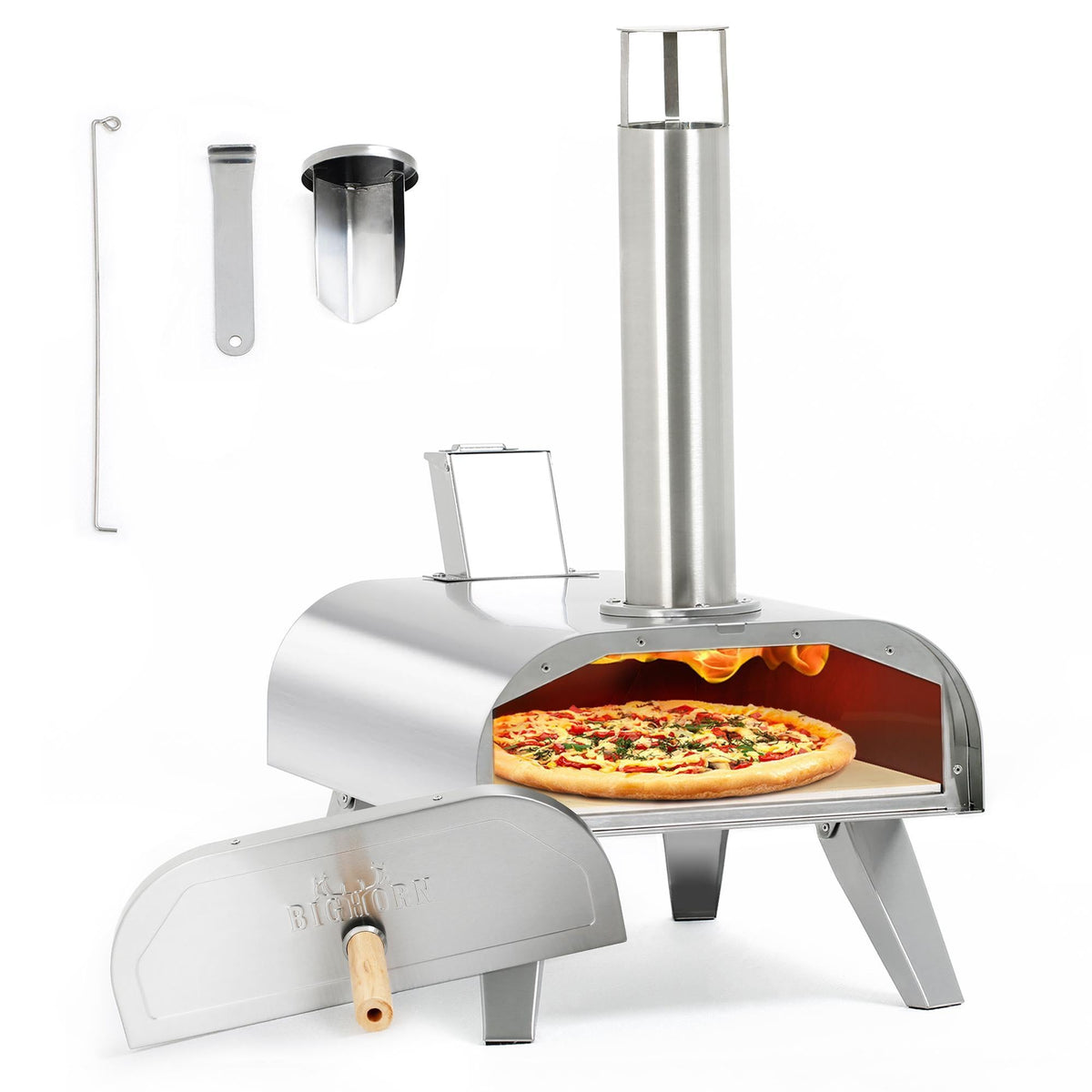
Make Neapolitan pizza in a pellet oven with a simple, well-fermented dough, a fully heated stone, and a 60–90 second bake at high heat. The pellet oven’s wood-fired heat and hot stone produce the puffy, blistered rim and soft center that define the style. On a Big Horn 12-inch pellet oven that reaches about 887 °F (475 °C), the bake is fast and intense, so the technique is all about the dough and the preheat.
Start with the dough
Neapolitan dough is flour, water, salt, and a little yeast at roughly 60–65 percent hydration, fermented slowly — ideally overnight cold. A slow ferment builds the extensibility and air that let the dough puff into a rim without tearing. Use “00” flour if you can; hand-stretch into a thin center with a puffy rim, and keep the toppings light so nothing steams the center.
Preheat the stone fully
The stone must reach baking temperature before the first launch. On the 12-inch pellet oven, that is about 18–20 minutes of preheat; confirm the stone with a thermometer rather than trusting the air temperature. A cold stone gives a pale, chewy base and prevents the leopard spotting the style is known for.

The bake
Launch the pizza and bake at high heat for 60–90 seconds, rotating once for even browning. Pull the moment the rim is puffed and spotted and the base is set. The short bake is what creates the contrast of a soft center and a crisp, blistered rim — go too long and the crust over-char and dries out.
Toppings for the style
Keep toppings minimal and traditional: light crushed tomato, fresh mozzarella, a little basil. Heavy or wet toppings weigh down the center and steam the dough before the high heat can blister it. A Neapolitan pizza is defined by restraint, so a short topping list is both traditional and practical at pellet-oven heat.
What to check when the crust comes out wrong
Work through the symptoms in order. A pale, chewy base points to a cold stone — preheat longer and confirm with a thermometer. A flat, dense rim points to under-proofed or rolled dough — ferment longer and hand-stretch. A burnt top with a raw center means the bake was too hot or too long — lower the heat and rotate earlier. Each failure has one main cause, so fix one variable at a time.
How the pellet fuel affects the flavor
Pellet smoke adds a subtle wood-fired note to the crust that a gas or electric oven cannot produce. Use dry, food-grade hardwood pellets so the smoke stays clean; damp or poor-quality fuel creates off flavors and weak heat. The smoke is a bonus for the Neapolitan style when the fuel is good, and it is one reason the pellet format feels closer to a traditional wood bake.
How to cook several Neapolitan pizzas in a row
Neapolitan bakes are short, so consecutive pies are easy once the oven is hot. Give the stone a brief recovery of 20–30 seconds between launches, and top the next pizza while the previous one bakes. Keep the fire steady and the hopper topped, and the same clean leopard spotting repeats across the whole batch.
Getting the details right
What equipment beyond the oven do you need?
The essentials are a peel for launching and turning, a floured work surface, and a thermometer to confirm the stone. A turning peel helps with even browning, and a brush keeps the stone clean between bakes. You do not need a full kit to start — a peel, a surface, and a thermometer cover the basics, and you can add tools as your technique grows.
How do you adapt the recipe to your oven’s timing?
Every oven has its own preheat and recovery signature. Learn yours by running a test bake and noting how long the stone takes to hold temperature, where the hot spots sit, and how fast it recovers between pies. Adjust the bake time and rotation to that signature, and the same dough behaves consistently on your specific machine.
What hydration and flour work best?
About 60–65 percent hydration with a strong flour or “00” gives the extensibility Neapolitan dough needs: wet enough to puff, dry enough to shape. Lower hydration turns dense; higher goes sticky and hard to launch. Pair the hydration with a slow, cool ferment for the airy rim the style is known for, and hand-stretch to keep the gas in place.
How do you build the pizza without sticking?
Use a floured peel, build quickly, and shake the peel before launching to confirm the pizza slides. Too much flour creates a dry, floury base; too little lets the dough weld to the peel. A light dusting and a confident motion are the balance, and a turning peel then handles the mid-bake rotation.
What signals a properly blistered crust?
Look for a puffy rim with uneven dark spots (leopard spotting), a soft center that folds, and a base that is crisp but not scorched. The bake is done when the rim puffs and char appears on the high points — usually 60–90 seconds. Pull it then; past that, the crust hardens and the center dries.
Neapolitan in a pellet oven FAQs
Can a pellet oven really reach Neapolitan heat?
Yes — the 12-inch reaches about 887 °F (475 °C), which covers the 700–800 °F window the style needs. The pellet flame adds a subtle wood-fired note.
What is the most common mistake?
Launching before the stone is fully heated. A cold stone makes a pale, chewy base and kills the leopard spotting; preheat fully and confirm with a thermometer.
Do I need “00” flour?
It helps with extensibility, but a strong bread flour works with slightly higher hydration. Fermentation and heat matter more than the exact flour.
To confirm the current specs, review the 12-inch Big Horn pellet pizza oven product page.