
Fish falls apart on the grill for one main reason: most grilling advice is written for charcoal or gas, not infrared. Infrared runs hotter, transfers heat differently, and gives you a much shorter window to work with. Get the temperature, timing, and prep right, and fish on an infrared grill comes out cleaner and juicier than almost any other method.
Related product: Shop 16-inch Portable Infrared Steak Grill.

Quick Reference: Infrared Grill Fish Techniques by Fish Type
| Fish | Best Format | Heat Setting | Key Tip |
| Salmon | Fillet, skin-on | Medium-low | Pull at 125 to 130°F for best texture |
| Tuna | Steak | Medium-low | Sear only; center stays rare by design |
| Swordfish | Steak or fillet | Medium-low | Most forgiving fish on infrared |
| Halibut | Fillet | Low to medium-low | Dry thoroughly; very prone to sticking |
| Mahi-mahi | Fillet | Medium-low | Short marinate only; avoid acid |
| Whole snapper | Whole | Low | Score both sides; use grill tray |
| Tilapia or sole | Fillet with tray | Low | Never direct grate contact |
Fish with higher fat content (salmon, tuna, mackerel) tolerate infrared heat better than lean white fish. When in doubt, go lower and slower.
Why Does Fish Fall Apart on an Infrared Grill
Infrared heat is faster and more intense than most people expect, and fish structure makes it the least forgiving protein to grill.
High Radiant Heat vs. Traditional Convection
Infrared grills use electromagnetic waves to heat the surface of the fish directly rather than heating the air around it. This intense radiant heat creates a sear much faster than traditional gas or charcoal grills. If you do not adjust your timing, the surface dries out and sticks to the grates before it has a chance to release cleanly.

Why Fish Sticks to the Grate
Fish proteins are delicate and contain less connective tissue than beef. When cold fish hits a hot grate, the proteins form a chemical bond with the metal. You must wait for the "release point," which occurs only after the outer crust has fully formed and browned.
Common Mistakes with Seafood and High Heat
Most beginners fail because they grease the grates but not the fish, or they try to move the fillet before the crust has formed. Using a low temperature on an infrared grill can also cause trouble, as it stews the fish in its own juices instead of searing it, leading to a soggy, breakable texture.
Which Fish Works Best on an Infrared Grill
Choosing the right fish is the single biggest factor in whether it holds together. Firm fish grip themselves; delicate fish don't.
Firm Fish That Hold Up to High Heat
These varieties have the muscle density to stay intact under infrared heat and are the best starting point for anyone new to grilling fish:
- Salmon holds together well because its natural fat content keeps the flesh moist under rapid high heat.
- Tuna has a dense, steak-like texture that sears cleanly and flips without breaking.
- Swordfish is one of the most forgiving options for beginners: meaty, firm, and nearly grill-proof.
- Halibut has a mild flavor and a firm structure that won't fall through grates.
- Mahi-mahi takes marinades well and stays intact at high temperatures.
Delicate Fish and How to Handle Them
Tilapia, sole, and flounder are thin and fragile. They can still work on an infrared grill, but they need a grill tray or foil support, and the heat setting needs to drop lower than you'd use for firm fish. Skip direct grate contact with these cuts.
Fillets vs. Whole Fish
| Format | Advantage | Best For |
| Fillets | Even heat exposure, easier to portion | Weeknight meals, beginners |
| Whole fish | Skin and bones act as natural heat insulators, locks in moisture | Presentations, oily fish like mackerel or snapper |
Fillets are easier to manage on infrared because the consistent thickness gives you a predictable cook time. Whole fish benefit from the skin barrier, but require more patience and a lower heat setting to cook through evenly.

How to Prepare Fish Before It Hits the Infrared Grill
Preparation does more work than most people expect. Skipping these steps is where most fish-grilling failures actually begin.
Dry the Fish Thoroughly
Pat the fish completely dry with paper towels before it goes anywhere near the grill. On an infrared grill, surface moisture hits the radiant heat and creates a brief steam effect that interferes with searing and dramatically increases sticking. Dry fish sears; wet fish steams and tears.
Score Whole Fish for Better Heat Penetration
For whole fish, make three diagonal cuts on each side down to the bone. Infrared heat is intense at the surface, and scoring helps the heat reach the center without overcooking the exterior. It also prevents the skin from pulling tight and curling, which throws off even cooking.
Marinate Smart: Keep It Short and Sugar-Free
Marinate for 15 to 30 minutes. Acid-based marinades (lemon juice, vinegar) break down fish proteins quickly, so anything beyond 30 minutes will soften the flesh and make it more likely to fall apart on the grates.
Avoid sugar-heavy marinades entirely on infrared. At high radiant temperatures, sugar chars fast. A simple combination of olive oil, lemon, garlic, and fresh herbs gives you flavor without the burn risk.
What Temperature Should You Use to Grill Fish on an Infrared Grill
This is where most people go wrong. Infrared fish grilling requires lower settings than feel intuitive.
Preheat High, Then Turn Down Before the Fish Goes On
Preheat on medium-high for 5 to 10 minutes with the lid closed to bring the grates up to temperature. Then, before placing the fish, reduce to medium-low. Starting fish on a grill that is already at full infrared heat almost always results in a stuck, torn fillet.
Salmon Infrared Grill Temperature and Timing by Cut
| Fish Type | Thickness | Heat Setting | Time Per Side |
| Thin fillets (sole, tilapia) | Under 1 inch | Low | 2 to 3 minutes |
| Salmon, mahi-mahi, halibut | 1 to 1.5 inches | Medium-low | 3 to 4 minutes |
| Swordfish, tuna steaks | 1 to 1.5 inches | Medium-low | 4 to 5 minutes |
| Whole fish (2 to 3 lbs) | N/A | Low | 12 to 15 minutes per side |
Internal temperature is the most reliable indicator: 145°F is the USDA-recommended safe temperature for fish. For salmon specifically, many cooks prefer pulling it at 125 to 130°F for a silkier texture, which is a personal preference rather than a food safety guideline.

How to Keep Fish from Sticking and Falling Apart on an Infrared Grill
Sticking and breaking apart are two sides of the same problem. Fix the sticking and the structural integrity usually follows.
Oil the Fish, Not Just the Grates
The more effective approach is to coat the fish itself with a high smoke-point oil — canola oil or avocado oil both work well. Oiling the fish creates a barrier between the protein and the metal. Oiling the grates helps too, but it burns off faster under infrared heat than most people expect. Do both.
The Lemon Slice Method
Lay thin slices of lemon directly on the oiled grates, then place the fish on top of the lemon slices. The fish never contacts the metal directly. This eliminates sticking entirely for thin fillets, adds flavor, and works especially well for fish that is too delicate to flip.
Use a Grill Tray or Fish Basket
A grill tray with narrow slots allows infrared heat to pass through while supporting the fish from underneath. This is the most reliable method for delicate cuts or whole fish. The fish stays intact because you flip the tray, not the fish. Brush the tray with oil before placing fish on it.
The Release Rule: Do Not Move It Early
Place the fish on the grill and do not touch it. Under infrared heat, a sear crust forms quickly, and that crust is what releases the fish cleanly from the metal. If the fish resists when you try to lift it, it is not ready. Give it another 60 to 90 seconds and try again with a wide, thin spatula. One clean flip beats three hesitant ones every time.
Common Mistakes to Avoid
These four errors account for most infrared fish failures, and every one of them is easy to fix once you know what to watch for.
Running Full Heat the Entire Time
Infrared full heat is designed for searing steaks, not cooking fish through. Starting and staying at maximum output scorches the outside before the center reaches temperature. Preheat high, cook low.
Skipping the Preheat Step
Placing fish on a cold or partially heated grate is the fastest way to guarantee sticking. The grates need to be hot enough that the surface contact sears immediately rather than allowing the fish to bond with the metal as the temperature slowly climbs.
Moving the Fish Too Soon
The first two minutes on the grate are the highest-risk window for tearing. The proteins are bonding with the metal surface before the sear forms. Leave the fish completely undisturbed during this period.
Using Low Smoke-Point Oils or Sugar-Heavy Glazes
Extra virgin olive oil smokes and burns at infrared temperatures. Use refined oils with smoke points above 400°F. Save honey glazes and teriyaki sauces for the last 60 seconds of cooking, or brush them on after the fish comes off the grill.
Start Grilling Fish on an Infrared Grill with Confidence
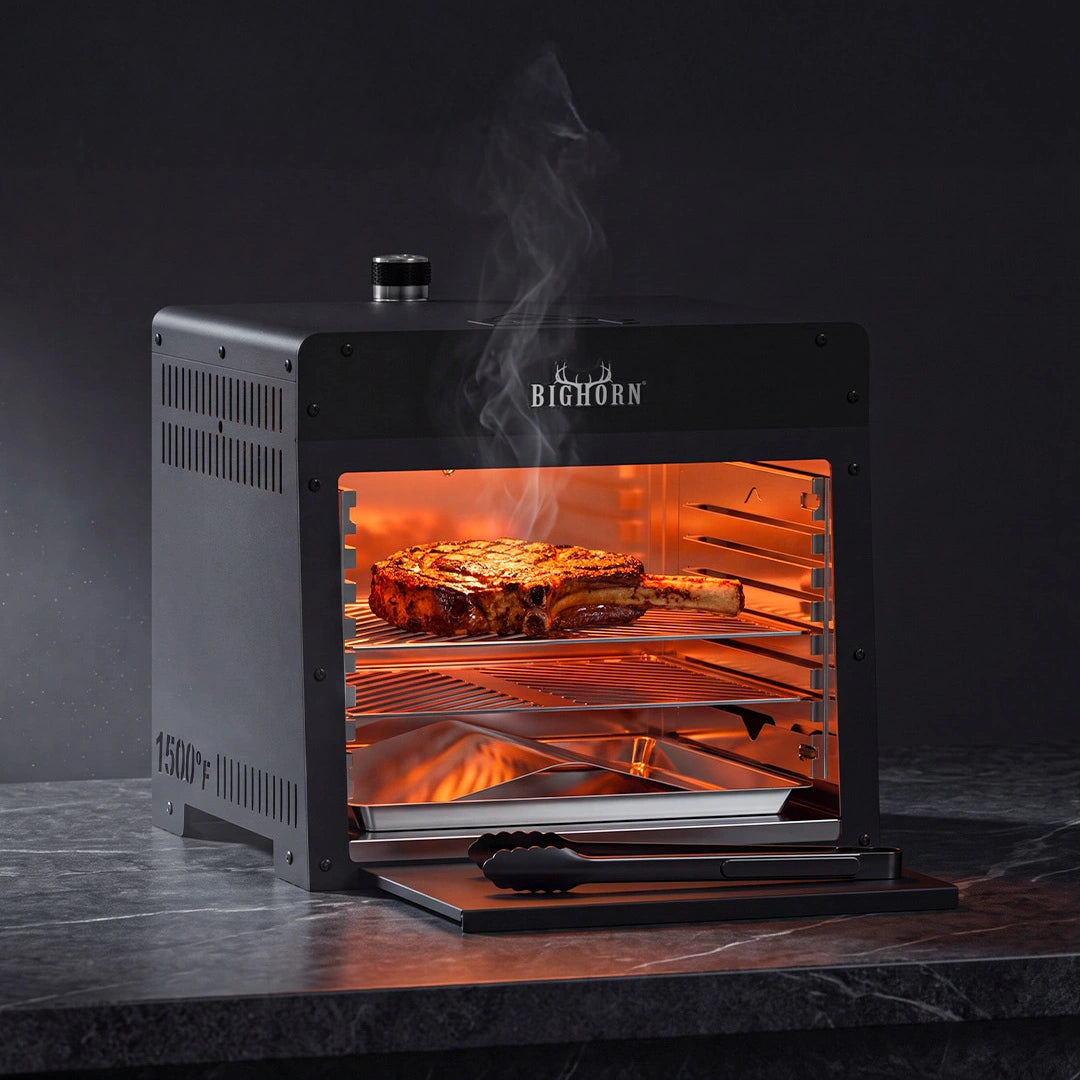
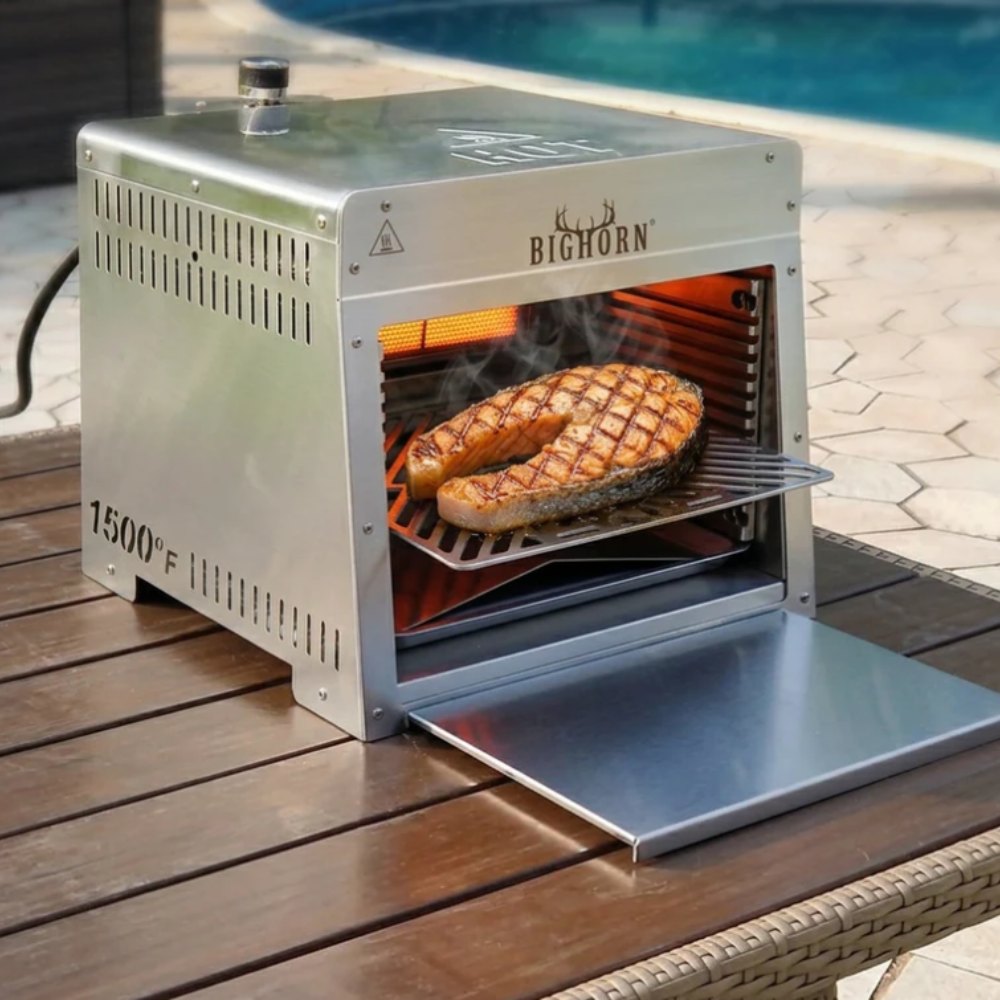
The rules for infrared fish grilling are consistent: dry the fish, lower the heat setting, oil the fish and the grates, and do not move it until it releases on its own. Firm fish like salmon and swordfish are the easiest starting points. A grill tray removes most of the risk for delicate cuts and whole fish. If you want a grill built specifically for high-heat precision cooking, the Big Horn® 1500°F Infrared Grill delivers the radiant power and temperature control that makes these techniques reliable every time.
FAQs about Grilling Fish on Infrared
Q1: Should I Grill Fish With the Lid Open or Closed?
For thin fillets on an infrared grill, leaving the lid open gives you more control and reduces the risk of the center overcooking before you can react. For thicker cuts that need more time, closing the lid helps finish the heat through.
Q2: Can I Use Aluminum Foil on an Infrared Grill?
Yes, but with caution. Aluminum foil blocks direct infrared contact with the grates, which can make temperature control harder to predict. Use a small piece just under the fish, keep the heat on low, and check doneness earlier than usual.
Q3: Do I Need to Let Fish Rest After Grilling on an Infrared Grill?
A brief rest of 1 to 2 minutes is enough. Fish has short, loosely bound muscle fibers that do not retain juices the way beef does, so a long rest is unnecessary. Serve it within a few minutes of coming off the grill for the best texture.
Explore more in the Grill Recipes.
More to Read
 Big Horn Outdoors® Expands Retail Presence with New Experience at Piedmont Outfitters
Big Horn Outdoors® is excited to announce a new retail destination for outdoor cooking enthusiasts. Customers can now experience the brand's popula...
Big Horn Outdoors® Expands Retail Presence with New Experience at Piedmont Outfitters
Big Horn Outdoors® is excited to announce a new retail destination for outdoor cooking enthusiasts. Customers can now experience the brand's popula...