

Grills & Griddles
Infrared Grill vs. Regular Grill: Which is Better for Your BBQ?
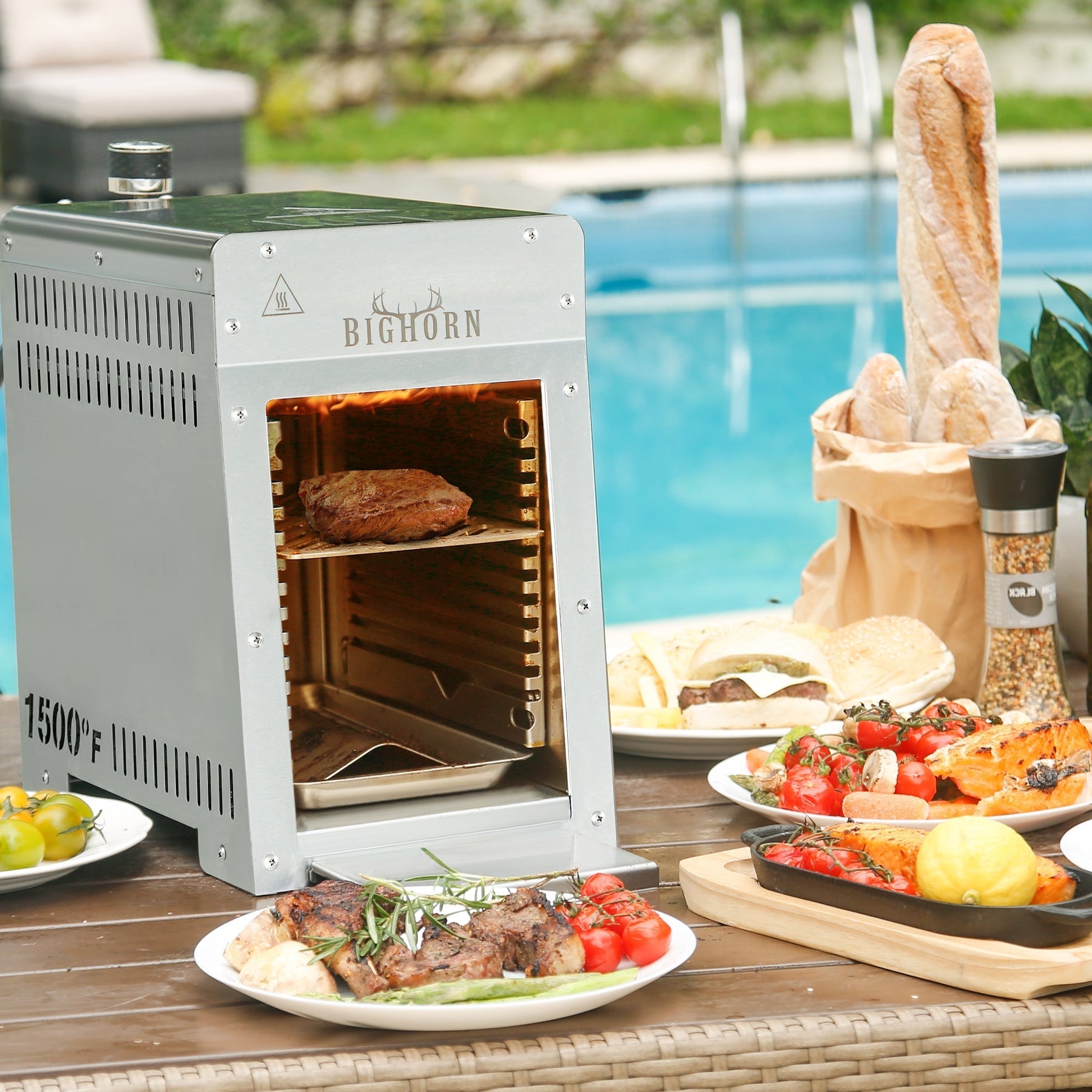
Every backyard chef chases the same dream: the perfect steak. You know the one—a dark, crispy, caramelized crust on the outside, and a tender, pink, juicy center on the inside. But for years, achieving this "steakhouse quality" at home has felt impossible with a standard propane grill.
Enter the infrared grill.
While regular gas grills have been the standard for decades, infrared technology is changing the game, especially for those who value speed and flavor. But is it just hype, or is the science sound?
To understand which grill is better, you have to understand how they cook. The difference isn't just about fuel; it's about physics.
A traditional gas grill works like a convection oven. The burners heat the air inside the grill, and that hot air circulates around your food to cook it.
The downside: Air is a poor conductor of heat. It takes a long time to heat up, and because hot air rises, it often leads to uneven cooking zones (hot and cold spots) and dried-out meat.
An infrared grill uses a heating element (usually ceramic or stainless steel) to emit radiant heat waves.
Think of it like the difference between standing in the sunlight vs. standing in a warm breeze. The sun (infrared) warms your skin instantly and directly, while the breeze (convection) warms the air around you.
So, infrared burners heat the food directly, not the air. This results in intense, consistent heat transfer that doesn't rely on air circulation.
If you have ever struggled to get a good sear on a burger because your grill wouldn't get hot enough, you understand the frustration of standard gas grilling. Most regular grills top out around 500°F to 600°F. While this is fine for chicken or sausages, it’s often too low for a professional sear.
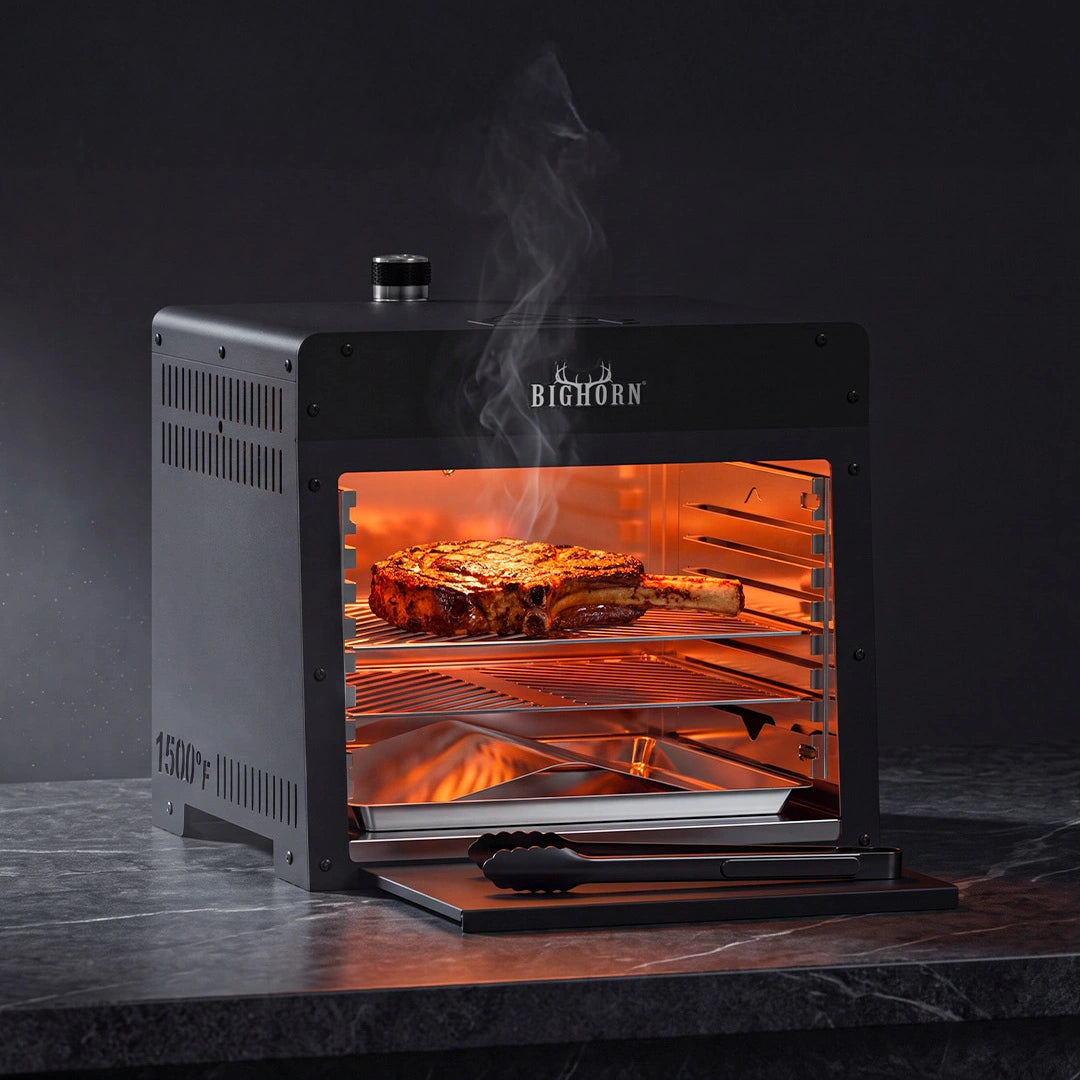
High-end portable infrared grills, like the ones designed for steak lovers, can reach temperatures upwards of 1500°F in just minutes.

Why does this matter?
This extreme heat triggers the Maillard Reaction almost instantly. This reaction creates that savory, brown crust on meat that is packed with flavor. Because the heat is so intense, you can cook a restaurant-quality steak in as little as 3 to 5 minutes total.
One of the biggest complaints about gas grilling is dry meat. The culprit is actually the hot air we mentioned earlier.
On a regular grill, the moving hot air disrupts the moisture barrier of the food, essentially evaporating the juices as it cooks. If you leave a steak on a standard grill long enough to get a good crust, the inside is often well-done and dry.
Infrared grills solve this problem naturally:
The result is meat that retains up to 35% more moisture than meat cooked on a conventional gas grill.
We have all been there: you flip a burger, grease drips onto the open flame below, and whoosh—a fireball engulfs your food (and maybe your eyebrows).
Flare-ups aren't just annoying; they carbonize your food, leaving a bitter, burnt taste.
In an infrared system, the heating element is often located above the food (in broilers) or covered by a specialized emitter plate. When grease drips, it hits the super-heated surface and vaporizes instantly.
Historically, infrared technology was only available in massive, expensive commercial units used by high-end steakhouses. Today, technology has shrunk.
A portable infrared gas grill combines the power of a commercial kitchen with the freedom of the outdoors. These compact units are becoming a favorite for:
If you love the outdoors but hate the "boiled" taste of camping food, a portable infrared grill is the ultimate upgrade.

Still on the fence? Here is a quick breakdown of how the two styles stack up against each other.
| Feature | Regular Gas Grill (Convection) | Infrared Grill (Radiant) |
| Heat Source | Heats the air (indirect) | Heats the food (direct) |
| Max Temperature | 500°F - 600°F | 1500°F+ |
| Preheat Time | 10–20 Minutes | 2–5 Minutes |
| Moisture Retention | Low (Hot air dries food) | High (Locks in juice) |
| Flare-ups | Common | Rare / Non-existent |
| Best For | Slow roasting, smoking | Searing steaks, fast cooking |
| Energy Efficiency | Lower (Heat loss via air) | Higher (Direct energy transfer) |
If you are a "low and slow" BBQ master who primarily smokes briskets for 12 hours, a regular grill or smoker might still be your go-to.
However, if your lifestyle involves:
Then the precision and power of infrared is the clear winner. It’s not just about cooking; it’s about engineering a better meal.
The battle of infrared grill vs. regular grill comes down to efficiency and flavor. While traditional grills have served us well, they simply cannot match the searing power, moisture retention, and speed of infrared technology. Whether you are searing a steak on your patio or grilling burgers at a campsite, upgrading your gear can elevate your cooking from "good" to "gourmet."
Ready to experience the power of 1500°F heat? Check out the Big Horn Outdoors® Portable Infrared Broiler. Designed for the adventurer who refuses to compromise on flavor, it brings professional searing power to your tabletop. Premium Pizza Ovens, Grills, and Outdoor Kitchen Solutions
Yes, for most grillers, the efficiency and food quality justify the cost. Because they heat up faster and cook quicker, you use less propane per cook, and the restaurant-quality results save you money on dining out.
Absolutely. While they are famous for steaks, most portable infrared gas grills have adjustable grates or temperature knobs. You can lower the heat or move the grate further from the burner to cook delicate foods like chicken, fish, and veggies without burning them.
Actually, they are often easier to clean than regular grills. The extreme heat (1500°F) turns food residue and grease into ash, essentially self-cleaning the heating element. Most Big Horn® units also come with removable drip trays for easy washing.
It works just like a standard grill, but more efficiently. You connect a standard 1lb propane tank (or a 20lb tank with an adapter hose). The gas flows to the ceramic or stainless steel burner, which converts the flame into radiant infrared energy.
 Big Horn Outdoors® Expands Retail Presence with New Experience at Piedmont Outfitters
Big Horn Outdoors® is excited to announce a new retail destination for outdoor cooking enthusiasts. Customers can now experience the brand's popula...
Big Horn Outdoors® Expands Retail Presence with New Experience at Piedmont Outfitters
Big Horn Outdoors® is excited to announce a new retail destination for outdoor cooking enthusiasts. Customers can now experience the brand's popula...
 As Seen on NBC Daytime: Big Horn Outdoors® Pizza Oven and Infrared Steak Grill Featured on National Television
Featured on NBC Daytime, the 12-Inch Multi-Fuel Pizza Oven and 16-Inch Infrared Steak Grill demonstrate how Big Horn Outdoors® helps make high-qual...
As Seen on NBC Daytime: Big Horn Outdoors® Pizza Oven and Infrared Steak Grill Featured on National Television
Featured on NBC Daytime, the 12-Inch Multi-Fuel Pizza Oven and 16-Inch Infrared Steak Grill demonstrate how Big Horn Outdoors® helps make high-qual...
 How to Make a Smash Burger on an Infrared Grill
Standard grills ruin beef by losing flavor. Use a cast iron plate on an infrared grill to lock in moisture and make the perfect smash burger crispy...
How to Make a Smash Burger on an Infrared Grill
Standard grills ruin beef by losing flavor. Use a cast iron plate on an infrared grill to lock in moisture and make the perfect smash burger crispy...