Yes—chicken wings cook very well in a pizza oven when you use a lower, steadier chamber temperature than you would for pizza. Aim for about 400–500°F, cook wings in a heavy oven-safe pan or on a raised rack, turn them regularly, and verify that the thickest pieces reach 165°F internally before serving.
Pizza ovens are built for intense heat, so the key is managing that heat rather than treating wings like a 60-second pizza. With the right pan, spacing, and fire control, a pizza oven can render wing fat, crisp the skin, and add light wood-fired character without scorching the exterior before the meat is cooked.
Can You Cook Wings in Any Pizza Oven?
You can cook chicken wings in most pizza ovens, including wood-pellet, gas, multi-fuel, and electric countertop models, as long as the oven and cookware are approved for that use. Wings need controlled, indirect-style heat—not the maximum stone temperature used for Neapolitan pizza.
A pizza oven cooks differently from a conventional kitchen oven. Its hot floor transfers heat by conduction, its heated dome and flame radiate energy toward food, and circulating hot air contributes convection. At pizza temperatures above 700°F, all three forms of heat can brown wing skin faster than the meat cooks through.
For wings, the goal is not maximum oven output. The goal is a stable cooking environment that gives fat beneath the skin time to render before the surface burns.
Use these broad guidelines:
- Wood-fired or pellet pizza ovens: Let the initial high flame settle into a moderate fire with a bed of embers.
- Gas pizza ovens: Reduce the burner after preheating; high flame is often too aggressive for raw wings.
- Electric countertop pizza ovens: Use the appliance’s poultry-capable manual setting or temperature control only if the manufacturer permits cooking chicken in the oven.
- Multi-fuel pizza ovens: Follow the fuel and cookware guidance for the exact configuration being used.
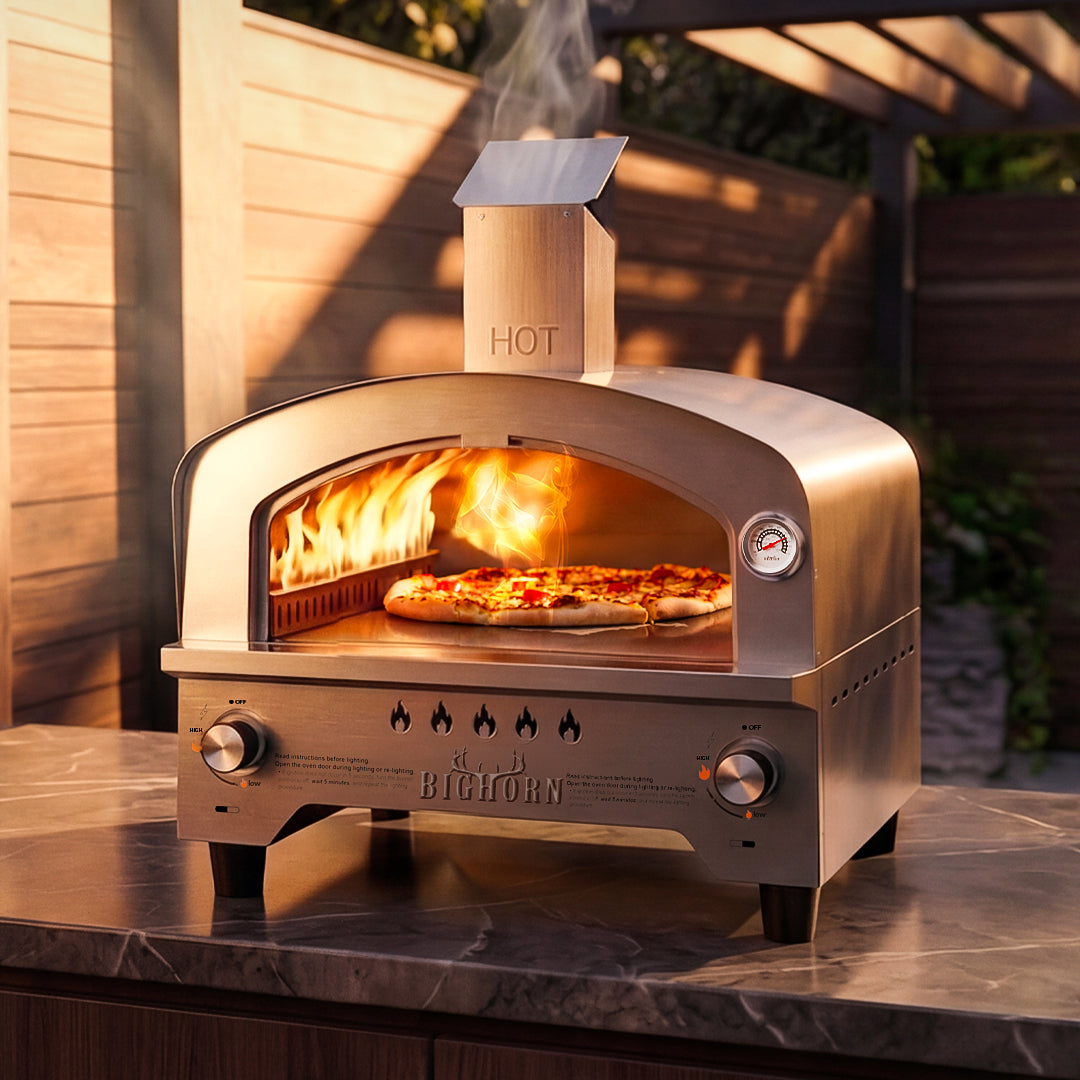
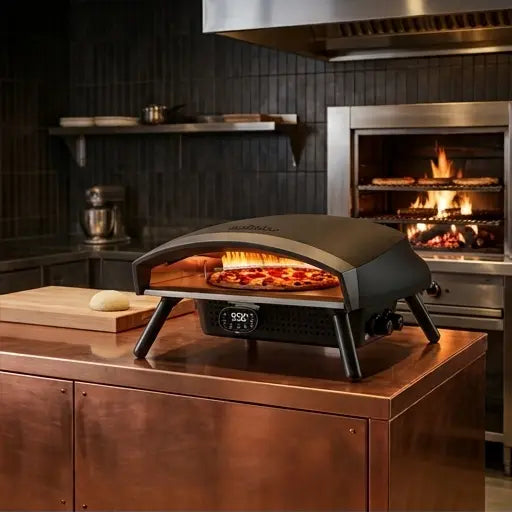
Big Horn Outdoors offers pizza ovens across pellet, gas, electric, and multi-fuel formats. Their operating temperatures, fuel systems, indoor/outdoor suitability, cooking-chamber dimensions, and compatible accessories vary by model, so users should confirm the current manual and official product page before cooking chicken wings.
What Temperature Should Chicken Wings Cook At?
For pizza-oven chicken wings, an oven environment of roughly 400–500°F is a practical starting range; cook until the thickest wing reaches at least 165°F with a food thermometer. The USDA safe minimum internal temperature for all chicken, including wings, is 165°F.[foodsafety][usda]
The best temperature depends on the oven’s heat pattern, wing size, pan material, and whether the wings are fresh or frozen. Unlike pizza dough, wings contain bones, skin, connective tissue, and fat. They need more time for heat to reach the center.
A useful distinction matters here:
- Stone temperature is the surface temperature of the pizza stone.
- Chamber temperature is the air and radiant-heat environment surrounding the wings.
- Internal temperature is the temperature inside the chicken itself—and the only measurement that establishes food safety.
A stone that is too hot can burn the underside of a pan or create excessive smoke from dripping fat. For that reason, avoid placing raw wings directly on a pizza stone unless the oven manufacturer specifically supports that method and you can manage the grease safely.
Instead, place wings in a preheated cast-iron skillet, carbon-steel pan, roasting pan, or other pizza-oven-safe cookware. A perforated pan or wire rack set over a rimmed tray can improve airflow and allow rendered fat to drain away from the skin.
| Pizza-oven condition | Best use for wings | What to watch for |
|---|---|---|
| 400–450°F | More forgiving, even cooking | Usually needs more time for crisp skin |
| 450–500°F | Faster rendering and browning | Turn often and manage hot spots |
| Above 550°F | Brief finishing or charring only | High risk of burned skin and undercooked meat |
| Heavy live flame near food | Limited finishing heat | Move or rotate wings frequently |
A thermometer is more reliable than color, clear juices, or cook time alone. Check several wings from different parts of the pan, inserting the probe into the thickest meaty area without touching bone.[usda][usda]
How Do You Cook Wings in a Pizza Oven?
Cook pizza-oven wings in a single layer, turn them every 5–10 minutes, and rotate the pan away from the hottest side of the oven. Most batches take about 25–40 minutes, but the thermometer—not the clock—determines doneness.
1. Dry and season the wings
Pat the wings thoroughly dry with paper towels. Moisture on the skin must evaporate before browning can begin, so dry wings generally crisp more effectively than wet wings.
Toss them lightly with a high-smoke-point oil if desired, then apply a dry rub, salt-and-pepper blend, or seasoning mixture. Avoid heavily sugared sauces at the beginning of the cook. Sugar can darken or burn quickly under pizza-oven radiant heat.
If using a wet marinade, refrigerate the wings while marinating, then remove excess surface marinade before cooking. Never reuse marinade that contacted raw chicken unless it is brought to a rolling boil first.[usda]
2. Preheat the pan, not just the oven
Place an oven-safe skillet, roasting pan, or tray inside while the oven comes to temperature. A preheated pan starts rendering fat quickly and helps prevent the skin from sticking.
Cast iron works particularly well because its mass stores heat and moderates temperature swings. However, it can get excessively hot near an active flame, so position it away from the fire or burner side when possible.
3. Arrange wings with space between them
Set wings in a single, uncrowded layer. Overlapping wings steam each other and slow browning. If cooking for a group, make several smaller batches rather than filling every inch of the pan.
For crispier results, use a wire rack inside a rimmed pan if the rack and pan are both rated for the oven’s operating temperature. The rack elevates the wings above drippings, allowing hot air to circulate around more of the skin.
4. Turn and rotate for even heat
Turn wings every 5–10 minutes and rotate the pan 180 degrees as needed. In a live-fire oven, the fire-side edge of the pan commonly cooks faster because it receives more direct radiant energy.
Look for gradual rendering and deep golden browning—not immediate blackening. If the skin is darkening too quickly, move the pan farther from the flame, reduce the gas burner, allow a wood fire to settle, or partially shield the pan with an oven-safe lid for a short period.
5. Sauce at the end
Apply Buffalo sauce, barbecue sauce, honey-based glaze, or other sugary sauce during the final few minutes, or toss the cooked wings immediately after they come out of the oven. This protects the sauce from burning while preserving a crisp exterior.
Let the wings rest briefly before serving. The skin can firm as surface steam dissipates, and the sauce will cling better once the wings are no longer actively steaming.
Why Do Pizza-Oven Wings Get Crispy?
Pizza-oven wings become crisp when surface moisture evaporates and chicken fat renders from beneath the skin, allowing browning reactions to develop. High radiant heat speeds this process, but uncontrolled heat can burn the skin before the interior reaches 165°F.
The browned, savory flavor on properly cooked wings comes partly from the Maillard reaction: a family of browning reactions that occurs when amino acids and sugars on the food’s surface are heated. That is why dry skin, proper spacing, and a moderate amount of oil can matter more than simply turning the oven to its highest setting.
A pizza oven can produce exceptional browning because the heated dome and flame radiate heat directly onto the food. But wings are more demanding than pizza because they must cook through around the bone. A pizza may finish in 60–90 seconds in a high-heat oven, while wings need sustained, manageable heat.
For a dry, crackly finish:
- Start with thoroughly dried wings.
- Use a dry seasoning blend instead of a heavy wet coating.
- Leave space between pieces.
- Drain rendered fat when it begins to pool.
- Turn wings regularly.
- Add sweet or sticky sauces near the end.
- Keep the fire moderate rather than large and aggressive.
If the wings are brown but not yet safe internally, reduce the intensity of the heat and continue cooking. Do not rely on charred skin as proof that poultry is done.
Which Fuel Type Works Best for Wings?
Gas, wood pellet, wood, charcoal, and electric pizza ovens can all cook wings; the best choice is the one that gives you enough control to hold a moderate cooking zone. Gas and electric generally make repeatable temperature management easier, while wood and pellet fuel can add a distinct live-fire aroma.
Each fuel type involves a different trade-off:
| Fuel or oven type | Strength for chicken wings | Main limitation |
|---|---|---|
| Gas pizza oven | Fast preheat and adjustable flame | Burner-side hot spots still require rotation |
| Wood-pellet oven | Live-fire character with relatively compact fuel handling | Heat can rise quickly if the fire is overfed |
| Wood-fired oven | Strong radiant heat and traditional live-fire cooking | Requires more active fire and ember management |
| Electric countertop oven | Indoor convenience if the exact model is approved for poultry cooking | Chamber size and cookware clearance may be limited |
| Multi-fuel oven | Flexibility where the exact model supports multiple fuel systems | Verify the correct attachment and operating instructions |
For example, the Big Horn Outdoors 12-inch wood-pellet pizza oven is listed as a stainless-steel, folding-leg model weighing 24.9 pounds. Its official specifications list an 18–20-minute preheat and temperatures up to 887°F, while separately sold gas-burner or electric-heater attachments may be compatible with that exact model. Those high-temperature capabilities are useful for pizza, but wings should be cooked after the oven is brought down to a more controlled range rather than at maximum heat.
Do not assume those specifications apply to a different Big Horn Outdoors pizza oven. A 14-inch electric countertop oven, 15-inch dual-burner oven, or 16-inch gas oven can differ in heat controls, intended location, cooking area, included components, and accessory compatibility.
Big Horn Outdoors Expert Views
“Chicken wings are a heat-management cook, not a maximum-temperature cook. In a pizza oven, use the oven’s stored heat and radiant energy to render the skin gradually, then finish with enough direct heat for browning. A pan that controls drippings, regular rotation, and a thermometer in the thickest part of several wings make the process safer and more repeatable. Choose the oven and fuel system that match your cooking location, batch size, and comfort with live-fire management.”
Big Horn Outdoors began with a 2012 backyard-cooking challenge focused on reducing uneven heat, excessive smoke, and unstable temperatures in high-heat outdoor cooking. That practical focus is relevant to wings: consistent results come from managing the cooking zone rather than chasing the oven’s maximum advertised temperature.
What Safety Rules Matter Most?
Cook wings to 165°F, use cookware rated for the pizza oven’s heat, and operate outdoor-fuel pizza ovens only in the location and clearance conditions specified by their manufacturer. Do not use a wood, pellet, propane, or butane appliance indoors unless the exact product is explicitly designed and approved for indoor use.
Follow these core safety practices:
- Use a food thermometer. Test several wings in the thickest section, avoiding bone; if any sampled wing is below 165°F, continue cooking the batch.[usda][usda]
- Control grease. Wings release fat. Use a rimmed pan or drip-catching setup to reduce flare-up risk and prevent grease from reaching flames, burners, or the oven floor.
- Use proper tools. Long tongs, heat-resistant gloves, and a pizza-oven brush make it easier to turn wings without reaching into a hot chamber.
- Keep raw and cooked foods separate. Use different plates and utensils for raw wings and finished wings.
- Refrigerate promptly. Perishable food should not remain in the 40–140°F danger zone for more than two hours.[usda]
- Respect placement requirements. Set outdoor pizza ovens on stable, noncombustible surfaces and maintain the manufacturer’s required clearance from structures, combustible materials, and overhead coverings.
If you are cooking in wind, allow extra time for heat recovery and watch for uneven flame direction. Wind can make one side of the oven substantially hotter and can affect flame stability in gas-fired equipment.
Cleaning and Maintenance After Wings
Clean a pizza oven after wing cooking once it has cooled completely, because rendered poultry fat can smoke, char, and affect the flavor of later pizzas. Remove food debris from the stone or cooking surface, empty ash only when cold, and clean removable pans according to their material and manufacturer instructions.
Grease management is particularly important after wings. A thin film of rendered fat can smoke during the next high-heat pizza session, while burned sauce can leave stubborn residue on cast iron or trays.
For routine cleanup:
- Let the oven, pan, and stone cool completely.
- Remove loose ash only from a fully cooled wood- or pellet-fired oven.
- Brush away dry debris with a tool intended for pizza-oven surfaces.
- Wash removable pans and racks as directed by their manufacturer.
- Dry cast iron thoroughly and re-season it lightly if necessary.
- Inspect burner openings, grease areas, and fuel connections on gas models before the next cook.
Avoid pouring water into a hot pizza oven or onto a hot stone. A sudden temperature change can damage equipment and create steam burns.
Choose the Right Setup
The right wing setup depends on your fuel preference, batch size, available space, and willingness to actively manage heat. A controlled gas or electric setup suits cooks who want repeatability, while pellet or wood ovens suit cooks who value live-fire flavor and do not mind rotating food more often.
Choose a pizza oven for wings when you want:
- Crisp, browned skin without deep frying.
- A lightly smoky or fire-roasted character.
- A practical appetizer to cook after a pizza session, once the oven has settled below peak pizza temperature.
- A versatile outdoor-cooking tool for wings, vegetables, flatbreads, fish, and other pan-friendly foods.
Choose another appliance when you need:
- Large-volume catering capacity with minimal batch rotation.
- Fully hands-off cooking.
- Indoor cooking without confirming an exact oven’s indoor rating.
- A low-mess option without managing grease, ash, or hot cookware.
For portable cooking at a campsite, tailgate, or RV stop, the exact oven weight, folded dimensions, fuel availability, and approved cooking environment matter as much as its maximum temperature. Big Horn Outdoors offers portable and outdoor-cooking equipment across several categories, but the correct choice should be based on the verified specifications of the exact model—not assumptions based on a similar-looking oven.
Conclusion
Yes, you can cook excellent chicken wings in a pizza oven, but treat them as a controlled roasting job rather than a high-heat pizza cook. Hold the oven around 400–500°F, use a sturdy pan or raised rack, rotate the wings regularly, and confirm a 165°F internal temperature before serving.
For cooks who want simple, repeatable wing batches, a controllable gas or compatible electric pizza oven is often the easiest path. For live-fire enthusiasts, wood or pellet ovens can add roasted flavor when the flame is moderated and drippings are managed carefully. Select a Big Horn Outdoors model based on its exact fuel system, approved location, cooking capacity, portability, and cookware compatibility—and always follow its current product instructions.
FAQs
Can I put chicken wings directly on a pizza stone?
It is usually better to cook wings in a rimmed, oven-safe pan or on a rack set over a tray. Directly placing raw wings on a stone can lead to grease smoke, sticking, flare-ups, and an overcooked underside.
How long do chicken wings take in a pizza oven?
Most wings take about 25–40 minutes at a controlled 400–500°F environment, depending on wing size, pan type, oven heat pattern, and starting temperature. Check the internal temperature rather than relying on time alone.
Should I use baking powder on pizza-oven wings?
A small amount of aluminum-free baking powder in a dry rub can help dry the skin and encourage browning, but it is optional. Use only a light coating, avoid confusing baking powder with baking soda, and keep sugary sauces for the end of the cook.
Can I cook frozen wings in a pizza oven?
Thawing wings in the refrigerator before cooking is the safer, more consistent approach. Frozen wings release more moisture, cook unevenly, and can cool a hot pan enough to reduce browning.
Can I sauce wings before cooking them?
You can use a light, non-sugary marinade or seasoning before cooking, but thick barbecue sauces, honey glazes, and sweet sauces are best added near the end or after cooking. They can burn quickly under strong pizza-oven radiant heat.