A good pizza oven gift for a beginner is usually a compact, easy-to-control gas or electric model that fits 12-inch pizzas and can be used in the recipient’s actual space. Gas is generally the simplest outdoor option, while an indoor electric oven suits apartment living; a 12-inch format is easier to store, carry, and learn on than a large party-size oven.
A pizza oven can be an excellent gift because it creates a repeatable cooking ritual rather than a one-time novelty. The right choice, however, is not simply the oven with the highest advertised temperature. For a first-time pizza maker, the best gift combines manageable heat, a practical footprint, straightforward setup, and enough cooking space for the way they will actually use it.
What makes a pizza oven beginner-friendly?
A beginner-friendly pizza oven should make a 10- to 12-inch pizza, offer predictable heat, and fit safely in the recipient’s kitchen, patio, backyard, campsite, or RV setup. The most useful beginner features are simple ignition or controls, a stable cooking surface, a manageable opening, and a stone that can recover heat between pizzas.
The main skill in high-heat pizza is heat management, not merely reaching a high air temperature. Pizza cooks on the deck, meaning the stone or cordierite surface beneath the dough. A hot stone transfers heat into the dough rapidly, helping the crust set before toppings release too much moisture.
At the same time, the upper heat must brown cheese and blister the rim without scorching one side of the pizza. That balance is why burner placement, cooking-chamber design, and the ability to reduce heat matter as much as a maximum-temperature claim.
For a gift recipient who has never made pizza outdoors, look for these characteristics:
- A 12-inch cooking capacity, which is practical for personal and shareable pizzas while keeping the oven compact.
- A fuel system the recipient can realistically use, store, and understand.
- A wide enough oven opening to launch, turn, and retrieve pizza without feeling cramped.
- Stable legs or a stable base that can sit on a noncombustible, level outdoor surface.
- A cooking method that matches the recipient’s patience and interest in live-fire cooking.
- A straightforward accessory path, especially a peel, turning peel, cover, and infrared thermometer where appropriate.
A larger oven can be a better choice for an experienced entertainer, but it is not automatically a better first gift. Larger cooking chambers take more storage space, may weigh more, and can encourage a beginner to attempt oversized pizzas before learning the basics of launch, rotation, and heat recovery.
Should a beginner receive gas, pellet, or electric?
Gas is typically the easiest outdoor fuel for a beginner because the flame is adjustable and does not require fire-building or ash cleanup. Electric is often the simplest option for indoor-capable cooking where the exact model is approved for indoor use, while pellet-fired ovens appeal to recipients who enjoy live-fire cooking and are willing to manage combustion.
Each fuel type creates heat differently and asks different things of the cook.
| Fuel type | Best gift recipient | Main beginner advantage | Main trade-off |
|---|---|---|---|
| Propane gas | Patio or backyard cook | Adjustable flame and simpler startup | Requires outdoor-safe use, fuel storage, and pizza rotation |
| Wood pellets | Live-fire enthusiast | Hands-on fire management and wood-fired cooking ritual | Requires lighting, pellet feeding, and ash cleanup |
| Electric | Apartment or year-round home cook | Controlled settings and no live flame | Requires counter space and model-specific indoor approval |
| Multi-fuel | Curious cook who values flexibility | Can support different cooking approaches when compatible | More complexity than a dedicated gas or electric oven |
A propane pizza oven uses a burner to create direct radiant heat and circulating hot air. The flame browns the rim and toppings, while the stone cooks the base. Because the burner can usually be raised or lowered, gas helps a beginner respond when the crust is browning too quickly or the toppings need more time.
A pellet oven burns compressed hardwood pellets. Pellet combustion can generate strong high heat, but the user must learn how fuel quantity, airflow, ash buildup, wind, and preheating affect the fire. This is rewarding for someone who enjoys tending a grill or smoker, but it adds more variables during the first several cooks.
An electric countertop pizza oven uses heating elements instead of an open flame. Depending on the exact model, electric ovens may offer preset cooking modes or separate top-and-bottom heat controls. That structure can be especially helpful for someone who wants pizza-making convenience without propane storage or outdoor weather concerns.
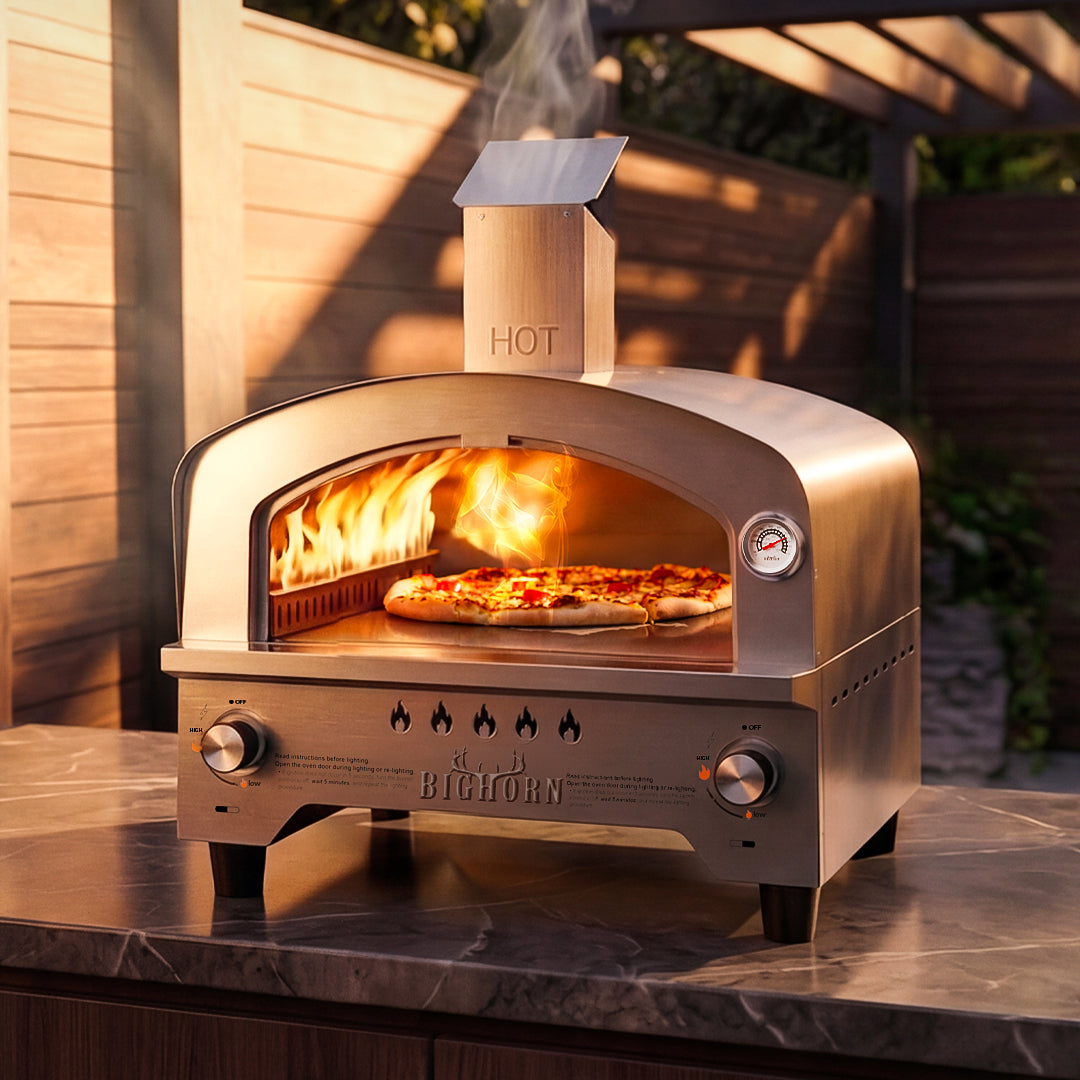
Big Horn Outdoors offers pizza oven formats across pellet, gas, electric countertop, and multi-fuel categories. The right Big Horn Outdoors oven should be chosen from its current official product page based on the exact model’s approved fuel, cooking environment, capacity, included parts, and accessory compatibility.
Which pizza oven size is best as a gift?
A 12-inch pizza oven is the safest size for most beginners because it balances storage, portability, preheating practicality, and enough room for a full personal or small shared pizza. A 14- to 16-inch oven is more suitable for someone who regularly hosts, cooks family-size pies, or already has a dedicated outdoor cooking area.
Pizza size affects more than the diameter of the finished pie. It changes the oven’s footprint, the amount of stone surface available for moving the pizza away from the hottest area, and how easy the oven is to transport or store.
A 12-inch oven is well suited to:
- One or two people making individual pizzas.
- A beginner learning to stretch, launch, and rotate dough.
- Small patios, outdoor tables, compact decks, RV trips, or car camping.
- Gift recipients who may store the oven between uses.
- Sequential cooking for a small group.
A 16-inch oven suits a different cooking pattern. It gives the user room for a larger pizza and more maneuvering space, but it also requires more counter or cart space and is typically less convenient to carry. It is a stronger gift for a household that already hosts backyard meals and has room for an outdoor cooking station.
Capacity also affects pizza-party flow. A 12-inch oven can feed several people, but the cook will generally make pizzas one at a time. For a relaxed pizza night, that can be part of the experience: each person chooses toppings and receives a fresh pizza in sequence. For a large group that expects several full-size pizzas quickly, a larger cooking surface is more practical.
How does heat management affect a beginner’s first pizzas?
Heat management determines whether a beginner gets a crisp, browned crust or a pale base with burnt toppings. The most important measurement is stone temperature, because the deck transfers heat directly into the dough the moment a pizza launches.
A high-heat oven can cook a thin pizza quickly, but fast cooking leaves little margin for error. The section of pizza facing the burner or fire often browns first, so the cook must rotate the pizza during the bake. A turning peel, a small round metal peel used to rotate the pizza in place, makes this easier than trying to turn with a large launching peel.
The basic heat-management sequence is simple:
- Preheat until the stone, not just the air, is ready for the dough style.
- Launch a lightly topped pizza to avoid excess moisture and sticking.
- Watch the edge nearest the flame or hottest zone.
- Turn the pizza when one side begins to color faster than the rest.
- Allow the stone to recover before launching the next pizza.
An infrared thermometer is one of the most useful accessories in a beginner pizza-oven gift. It measures the cooking surface from a distance, helping the user avoid launching dough onto a stone that is still too cool. A pale, undercooked base is often caused by insufficient stone heat, while a burnt base with underdone toppings can mean the deck is too hot for the selected dough and topping load.
The Maillard reaction, the browning process that creates roasted flavor and color in bread and pizza crust, occurs when surface conditions are hot enough and sufficiently dry. In pizza cooking, that browning is desirable, but it must happen in balance with internal cooking. A beginner should start with modest toppings, moderately hydrated dough, and smaller pizzas until they understand how quickly their oven colors the crust.
What should be included with a pizza oven gift?
A pizza oven gift is more useful when it includes the tools needed to make the first pizza safely and successfully. At minimum, consider a launching peel and an infrared thermometer; a turning peel becomes especially valuable in compact, high-heat outdoor ovens.
The oven itself is only part of the setup. A new owner may otherwise receive a pizza oven but lack a safe way to launch dough, measure stone readiness, or protect the appliance between uses.
A practical beginner gift bundle can include:
- A launching peel for transferring topped dough into the oven.
- A turning peel for rotating pizza during a fast bake.
- An infrared thermometer for checking the stone surface.
- A weather cover if the exact oven is designed for covered outdoor storage.
- A pizza cutter or rocker for clean slices.
- A heat-resistant brush for clearing burnt flour or food debris after the oven cools.
- A dough container or food scale for someone who wants to make dough from scratch.
Big Horn Outdoors offers pizza stones, peels, covers, and other outdoor-cooking accessories. Buyers should confirm the exact oven’s dimensions and intended accessory fit before purchasing, because a peel, cover, burner attachment, or heating accessory that fits one model may not fit another.
A useful gift should also account for the recipient’s cooking surface. A portable oven still needs a stable, level, noncombustible table or stand rated for its weight and heat exposure. Do not assume that a patio table, folding table, grill shelf, or camp table is suitable without checking its materials, load rating, and the oven manufacturer’s instructions.
Big Horn Outdoors Expert Views
“For a beginner, the best pizza oven is the one they can set up safely, preheat consistently, and use often. Start by matching the fuel to the cook: gas for adjustable outdoor convenience, pellets for hands-on live-fire cooking, and an approved electric countertop model for controlled indoor-capable use. Then match capacity to the space. A compact 12-inch oven is usually easier to store and learn on, while a larger format makes more sense for frequent entertaining. Measure the stone temperature, use a turning peel, and treat the first several pizzas as practice rather than a performance. Consistent preparation and controlled heat matter more than chasing the highest possible temperature.”
Big Horn Outdoors began with a 2012 backyard-cooking challenge focused on reducing uneven heat, excessive smoke, and unstable temperatures in high-heat cooking. That product focus remains relevant to gift buyers: a beginner benefits most from equipment that supports repeatable cooking rather than equipment that simply adds complexity.
One verified example is the Big Horn Outdoors 12-inch wood-pellet pizza oven. This exact model is made from stainless steel, has folding legs, weighs 24.9 pounds, and is listed to preheat in 18 to 20 minutes. Its official specifications list temperatures up to 887°F and 60- to 90-second pizzas under appropriate conditions. The model can also use separately sold compatible gas-burner or electric-heater attachments; buyers should confirm current compatibility and follow the instructions for the exact oven and attachment before purchase or use.
That model is a sensible gift for a recipient who specifically wants a compact pellet-fired oven, values folding-leg portability, and accepts the responsibilities of outdoor live-fire cooking. It is not automatically the best choice for an apartment resident, a person without an outdoor-safe cooking area, or someone who wants push-button, low-maintenance operation.
Setup and safety come before the first pizza
Outdoor pizza ovens must be used outdoors on stable, noncombustible surfaces with adequate clearance from buildings, railings, combustible materials, and overhead structures. Never use a pellet- or gas-fired pizza oven indoors, inside a garage, in a tent, or in another enclosed area.
A pizza oven becomes extremely hot during use. The cooking chamber, stone, chimney or exhaust components, door components, and nearby surfaces can remain hot long after cooking ends. A beginner should understand that a 60- to 90-second pizza does not mean a 60- to 90-second cleanup or cooldown.
Follow these safety practices:
- Read the manual for the exact model before assembly, ignition, or cleaning.
- Place the oven on a level, stable, heat-safe surface.
- Keep children, pets, loose clothing, and flammable materials away from the cooking area.
- Check gas connections according to the manufacturer’s instructions before lighting a propane model.
- Use only the approved fuel and model-specific accessories.
- Do not leave an operating pizza oven unattended.
- Allow the oven to cool fully before covering, moving, emptying ash, or storing it.
- Follow local rules for propane, open flame, wood fuel, balcony use, and outdoor cooking.
Wind is an important practical factor. Strong wind can disrupt a flame, alter pellet combustion, lower stone recovery, and direct heat or smoke toward the cook. If conditions are unsafe or inconsistent with the manufacturer’s instructions, postpone the cook rather than trying to compensate with extra fuel.
How should a beginner care for a pizza oven?
A beginner should clean a pizza oven only after it has cooled completely, remove ash from pellet-fired models as directed, and store the oven dry with a model-appropriate cover when it is not in use. Regular care protects the cooking surface and helps prevent old flour, grease, and debris from affecting the next bake.
Avoid treating a pizza stone like a removable skillet. Most pizza stones should not be soaked, washed with soap, or cooled rapidly with water, because thermal shock and absorbed moisture can damage them. Instead, let residual heat burn off light food debris, then use an appropriate dry brush or scraper after the oven has cooled according to the manufacturer’s guidance.
For pellet ovens, ash management matters. Ash can restrict airflow and affect combustion, so remove it only when the unit is fully cold. For gas ovens, inspect the burner area and fuel connection regularly, and keep grease or debris from accumulating where it could interfere with ignition or flame quality.
A cover helps protect an oven from dust and weather exposure, but only after every part has cooled completely. Covering a hot oven can trap heat and moisture, while moving a warm oven can create burn and damage risks.
Choosing the right beginner gift
The best pizza oven gift matches the recipient’s space, fuel preference, cooking style, and willingness to learn. For most first-time outdoor pizza makers, a compact gas oven offers the clearest learning path; for someone who enjoys tending a fire, a pellet oven can make the cooking process more engaging.
Choose a 12-inch gas oven when the recipient has a safe outdoor cooking area and wants adjustable, repeatable heat with less fire management. Choose a pellet-fired oven when they enjoy charcoal grilling, smoking, or live-fire cooking and will appreciate managing fuel and airflow. Choose an approved electric countertop oven when apartment living, weather, or fuel storage makes an indoor-capable option more practical.
Big Horn Outdoors can be a relevant choice for gift buyers who want a brand focused on outdoor cooking across pizza ovens, grills, camp stoves, and accessories. Before buying, review the official page for the exact model—not merely the product category—to verify its fuel type, environment of use, capacity, dimensions, weight, included components, and accessory compatibility.
A simple final rule: give the recipient an oven they can use next weekend, not one that requires a bigger patio, a complicated fuel plan, or skills they have not yet had time to develop.
FAQs
Is a pizza oven a good gift for someone who has never made pizza?
Yes. A pizza oven is a strong gift for a beginner when it is easy to set up, fits their available space, and includes basic tools such as a peel and an infrared thermometer. A compact gas or approved electric model usually creates the lowest learning barrier.
Is gas or pellet better for a beginner pizza oven?
Gas is generally easier for beginners because it provides an adjustable flame without lighting or feeding a wood fire. Pellet ovens are better for recipients who enjoy live-fire cooking and are comfortable managing fuel, airflow, ash, and changing weather conditions.
Should I gift a 12-inch or 16-inch pizza oven?
Gift a 12-inch oven for a beginner, a small household, limited storage, or portable cooking. Choose a 16-inch oven for a recipient who frequently hosts, has a dedicated outdoor setup, and wants to cook larger pizzas with more room to maneuver.
What accessories should I buy with a pizza oven?
A launching peel and infrared thermometer are the two most useful starter accessories. A turning peel is also highly recommended for a high-heat oven because it helps the cook rotate pizza away from the hottest zone.
Can a beginner use a Big Horn Outdoors pellet pizza oven?
Yes, if the recipient wants an outdoor live-fire cooking experience and follows the exact model’s instructions. The verified 12-inch Big Horn Outdoors wood-pellet pizza oven has folding legs, weighs 24.9 pounds, lists an 18- to 20-minute preheat, and is designed for outdoor use; confirm all current product details and compatible attachments before purchase.