

Yes—replacement parts and compatible accessories are available for some Big Horn Outdoors oven models, including replacement pizza stones, approved burner attachments, covers, and cooking tools. The correct part depends on the oven’s exact model and fuel configuration, so confirm the model number and component before ordering or contacting support.
Are replacement parts available for Big Horn ovens?
Big Horn Outdoors offers accessories that can serve as replacement or model-specific components, but availability varies by oven type and the exact part needed. Before purchasing, match the part to your oven’s model number, fuel system, and original configuration.
A replacement part is not automatically interchangeable just because two ovens share the Big Horn Outdoors name. Pizza ovens, infrared steak grills, electric countertop ovens, and multi-fuel cookers use different heat sources, dimensions, mounting methods, and safety clearances.
For a pizza oven, common replacement needs may include:
- Pizza stones damaged by thermal shock, grease, impact, or moisture exposure.
- Chimney or flue components for wood-pellet or wood-fueled models.
- Fuel trays, pellet grates, ash trays, and hopper-related components where applicable.
- Door assemblies, handles, hardware, and heat-resistant fittings.
- Weather covers that protect a stored oven from rain, dust, and UV exposure.
- Approved gas-burner or electric-heater attachments for models specifically designed to accept them.
- Pizza peels, turning peels, brushes, and surface-protection mats.
Big Horn Outdoors lists outdoor-cooking accessories such as replacement stones, pizza peels, covers, work surfaces, surface-protection mats, and approved gas-related accessories on its official accessories collection. The assortment can change, so the product page and customer support should be the final check before ordering.[bighornoutdoor]
Which Big Horn oven model do you have?
The exact Big Horn Outdoors model determines which replacement parts, accessories, and fuel-related components are safe to use. Check the product label, order confirmation, manual, or original product listing before searching for a stone, burner, flue, or internal component.
This step matters because a “Big Horn oven” can describe several very different products:
| Product format | Typical heat method | Replacement-part considerations |
|---|---|---|
| Wood-pellet pizza oven | Burning hardwood pellets; radiant and convective heat | Stone size, flue, pellet tray, ash-management components |
| Gas pizza oven | Propane or another specified gas system | Burner assembly, regulator, hose, ignition parts, model-specific stone |
| Electric countertop pizza oven | Electric heating elements and thermostatic controls | Stone, tray, door, rack, approved electrical-service components |
| Multi-fuel pizza oven | Fuel system varies by installed approved attachment | Attachment-specific burner, hopper, tray, flue, and stone compatibility |
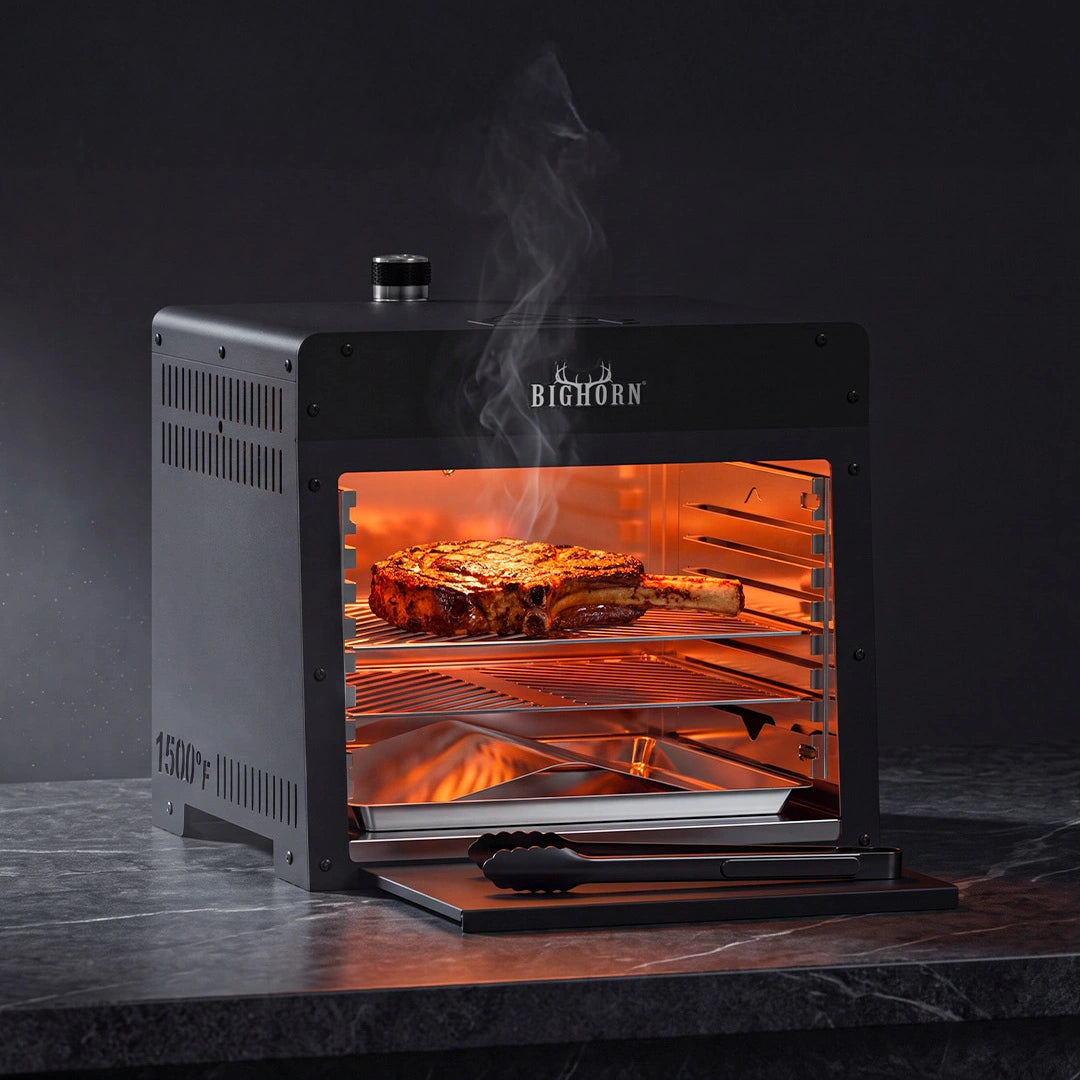
| Infrared steak grill | Infrared burner radiating direct heat | Grate, tray, burner-related components, hardware designed for that grill |
Do not use a gas burner, electric heater, pizza stone, regulator, or flue from another model unless the current official product page explicitly identifies it as compatible. Similar-looking parts can have different mounting geometry, airflow requirements, gas fittings, electrical ratings, or heat tolerances.
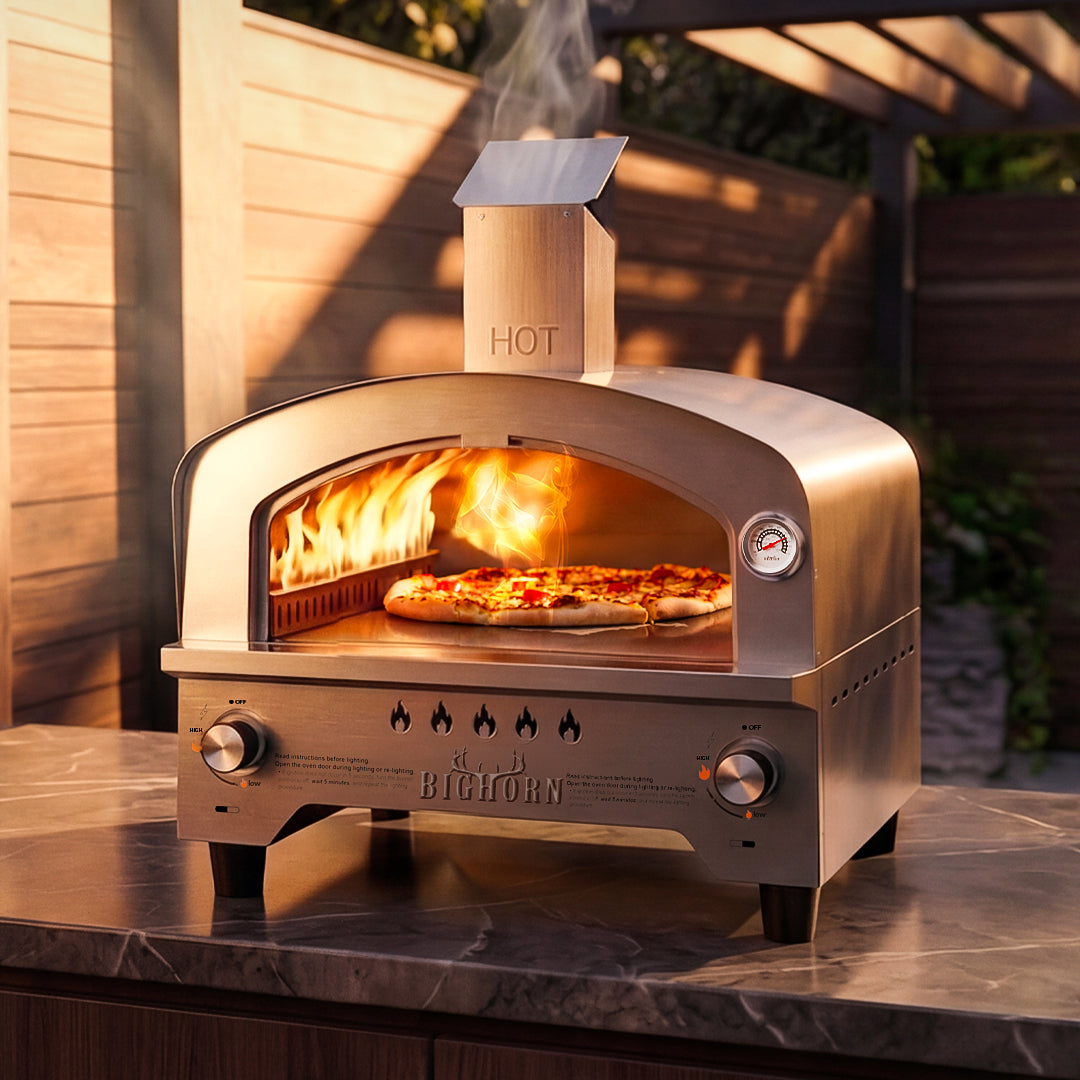
For example, the Big Horn Outdoors 12-inch wood-pellet pizza oven described in the brand background has a stainless-steel body, folding legs, and a listed weight of 24.9 pounds. That specific model can use separately sold gas-burner or electric-heater attachments, but that compatibility should not be assumed for every Big Horn pizza oven.
How do you identify the correct replacement part?
Identify a Big Horn oven replacement part by matching four details: the model number, the fuel type, the original component’s dimensions, and the part’s approved compatibility statement. Photos and a description of the failure can also help customer support distinguish a replaceable component from a service issue.
Use this practical checklist before you order:
- Locate the model information. Look for a rating label, manual cover, original packaging, online order record, or model identifier on the oven body.
- Name the component precisely. “Pizza stone,” “flue pipe,” “door handle,” “pellet tray,” and “gas burner assembly” are more useful than “the inside part” or “the metal tube.”
- Measure only as a cross-check. Measure a stone’s width, depth, and thickness, or a cover’s length, width, and height. Dimensions help, but they do not prove compatibility by themselves.
- Confirm the fuel system. A pellet-fired oven, propane oven, and electric oven use fundamentally different heating systems. Fuel components must match the appliance for which they were engineered.
- Check the official compatibility language. A product description should specifically name the model or state that the part is approved for it.
- Document the condition. Take clear photos of the part, mounting points, labels, cracks, corrosion, or damage. This can help determine whether the issue may be covered as a manufacturing defect rather than requiring a purchased replacement.
A pizza stone is a good example of why this process matters. Stones may look interchangeable, but a correct replacement must fit the cooking chamber and sit on its intended support points without blocking airflow, shifting during use, or contacting a burner or heating element.
When should you replace a pizza stone or oven component?
Replace a pizza stone when it is cracked through, unstable, badly chipped on its cooking surface, or no longer sits securely in its supports. Replace fuel-system and heat-control components only with approved parts, especially if there is corrosion, deformation, ignition failure, damaged wiring, gas odor, or a compromised fitting.
A darkened pizza stone does not necessarily need replacement. During high-heat pizza cooking, flour, cheese, oil, and food residue can carbonize on the stone. Cosmetic discoloration is normal and does not automatically affect safety or cooking performance.
Replace the stone if you observe:
- A full crack or separate pieces that can shift under a pizza.
- A chip large enough to create an uneven cooking surface.
- A stone that rocks, binds, or cannot sit correctly in the oven.
- Damage after the stone has become wet and then heated.
- Severe contamination that cannot be removed through dry cleaning and ordinary use.
For metal components, inspect for warping, loose fasteners, damaged handles, sharp edges, blocked vents, or corrosion that affects structural stability. In pellet ovens, ash buildup and moisture can accelerate deterioration of parts exposed to combustion residue.
Never continue operating an oven with a damaged gas hose, regulator, burner assembly, ignition system, electrical cord, plug, heating element, or enclosure. Turn off the fuel or power supply, allow the unit to cool, and pursue model-specific service guidance or a verified replacement part.
Replacement-part safety starts with fuel compatibility
Fuel-related replacement parts must match the oven’s original design because gas pressure, airflow, combustion, and electrical load are safety-critical. Do not modify a Big Horn Outdoors oven to accept a fuel source, burner, or heater attachment that the exact model does not list as compatible.
A pizza oven works by transferring heat through three main mechanisms:
- Radiant heat travels directly from hot flames, burners, heating elements, or oven surfaces to the food and stone.
- Conduction transfers heat from the hot pizza stone into the dough, helping crisp and set the base.
- Convection occurs as hot air circulates around the food and transfers heat to toppings and crust edges.
Changing a burner or using an unapproved attachment can upset that balance. It can also create incomplete combustion, excessive flame, poor ventilation, carbon monoxide risk, overheating, gas leaks, or damage to the oven’s structure.
Gas and propane parts
Use only a regulator, hose, burner, valve, or igniter approved for the exact gas oven or approved conversion configuration. Gas parts are not universal: fittings, pressure requirements, burner placement, air shutters, and ignition systems may differ.
Before lighting a gas appliance, conduct a leak check according to the product instructions using a soapy-water solution on connections. If bubbles form, do not ignite the oven. Shut off the gas supply and correct the leak before use.
Pellet and wood-fuel parts
For pellet-fired ovens, keep the hopper, tray, grate, ash tray, and flue clear and correctly installed. Restricted airflow can reduce combustion efficiency, create excessive smoke, and make temperature control erratic.
Use dry, food-safe hardwood pellets where the oven instructions call for pellets. Do not burn treated wood, construction lumber, charcoal in a pellet-only system, or unidentified fuel products. Those materials can introduce unsafe residues, uncontrolled heat, or excessive ash.
Electric parts
Electric countertop ovens should use the original power cord and the power source specified in the manual. Do not substitute heating elements, bypass thermostatic controls, modify plugs, or use damaged extension cords. Electrical service work should be handled by a qualified technician or the manufacturer’s authorized support path.
How do you maintain parts so they last longer?
Regular dry cleaning, moisture control, and correct cool-down procedures can extend the service life of a Big Horn Outdoors oven’s stone, metal components, and fuel-system accessories. Let the appliance cool completely before cleaning, then remove ash, food debris, and surface moisture without harsh treatment.
For pizza stones, avoid soaking them in water or using soap. Porous cordierite and similar pizza-stone materials can absorb moisture; rapid heating after moisture exposure can contribute to cracking. Instead:
- Allow the stone to cool fully inside or outside the oven as directed.
- Brush off dry flour and char with a pizza-oven brush or dry scraper.
- Use a lightly damp cloth only if the manufacturer permits it, then dry the stone completely before reheating.
- Avoid placing frozen or heavily wet food directly on a fully heated stone.
- Do not use the stone if it has a structural crack.
For pellet-fired equipment, remove cold ash from the tray and combustion area regularly. Ash absorbs moisture and can promote corrosion during storage. Store the oven under a properly fitted cover only after it is clean, dry, and fully cool.
For gas ovens, keep burner ports clear and inspect the hose, regulator, control knob, and ignition system before cooking. Spiders, insects, grease, and outdoor debris can obstruct openings and affect flame behavior.
For any Big Horn Outdoors oven, keep replacement stones, peels, covers, and small components organized by model. That simple practice reduces the risk of fitting an accessory to the wrong cooker.
Big Horn Outdoors Expert Views
“Replace a part because it matches the oven’s documented design—not because it appears to fit. Pizza stones, fuel trays, burners, flues, regulators, and electrical components all affect heat flow and safe operation. Start with the exact model number, confirm approved compatibility, and stop using the oven if a fuel, electrical, or structural component is damaged. Proper cleaning and dry storage often prevent avoidable wear, while model-specific replacement parts help preserve the cooking performance the oven was built to deliver.”
Where should you buy Big Horn oven replacement parts?
Start with Big Horn Outdoors’ official accessories and support channels because they are the best source for current model-specific compatibility information. The official accessories collection includes items such as replacement stones, covers, pizza tools, protective mats, work surfaces, and approved gas-related accessories.[bighornoutdoor]
When contacting support or searching an official store, provide:
- Exact product name and model number.
- Purchase date and purchase channel.
- Clear photos of the oven label and damaged component.
- The component name and any visible part number.
- Whether the oven is pellet, gas, electric, or multi-fuel.
- A brief explanation of the issue, including whether it involves heat, gas, ignition, structural damage, or ordinary wear.
Be cautious with marketplace listings, used components, and generic “universal” accessories. A cover or pizza peel may be broadly suitable if its size and use are appropriate, but a burner, regulator, fuel tray, electrical component, chimney section, or stone should be verified for the exact oven.
Big Horn Outdoors is a focused outdoor-cooking brand whose product line spans pizza ovens, grills, camping stoves, outdoor-kitchen equipment, and accessories. Because those products have different operating systems, the safest purchase decision is always model-first rather than brand-first.[bighornoutdoor]
The practical replacement-parts decision
You can often replace wear items and accessories for a Big Horn oven, especially stones, covers, peels, and certain approved model-specific components. The important next step is to identify the oven’s exact model, match the replacement part to its fuel and heating design, and treat gas and electrical components as safety-critical.
Choose a replacement approach that fits how you cook:
- Wood-pellet pizza users: Prioritize the correct stone, fuel tray, ash-management parts, and flue components; keep ash and moisture under control.
- Gas pizza users: Verify burner, regulator, hose, and ignition compatibility before installing anything; perform leak checks before use.
- Electric countertop users: Use only approved electrical components and avoid self-modifying heating or control systems.
- Multi-fuel users: Confirm whether a burner or heater attachment is explicitly approved for the exact oven model.
- Portable-cooking users: Check folding legs, handles, latches, covers, and hardware before transport; secure the cooled oven to prevent stone and component damage.
The best replacement part is not simply the one that looks closest. It is the part documented for your Big Horn Outdoors oven, installed according to its instructions, and maintained for the way the cooker transfers and controls heat.
FAQs
Can I replace the pizza stone in my Big Horn oven?
Yes, provided the replacement stone is confirmed for your exact Big Horn Outdoors oven model. Verify its intended model, dimensions, thickness, support arrangement, and heat suitability rather than relying on a generic stone that merely appears similar.
Can I install a gas burner on any Big Horn pellet pizza oven?
No. Install a gas burner only if the exact oven model is specifically designed and documented to accept that approved attachment. A compatible attachment on one Big Horn Outdoors model does not establish compatibility with another model.
How do I know whether my oven part is covered by warranty?
Keep your proof of purchase, document the issue with photos, and contact the official support channel with the product model and purchase details. Warranty coverage depends on the current terms, purchase source, timing, and whether the issue is a defect rather than normal wear or accidental damage.
Is a cracked pizza stone safe to use?
A stone with a full crack, loose pieces, or an unstable cooking surface should be replaced. Small surface marks and discoloration can be normal, but a structurally damaged stone can shift, cook unevenly, and break further during high-heat use.
Can I use generic replacement parts for my Big Horn oven?
Generic accessories such as some peels or storage tools may be suitable when their use and size are appropriate. Do not use unverified generic burners, regulators, hoses, electrical components, flues, fuel trays, or stones when model-specific compatibility affects safety or performance.