Quick answer: Choose an outdoor pizza oven by matching fuel, cooking-surface size, heat control, portability, and placement to your normal pizza routine. Gas favors convenience and repeatability; wood or pellets add live-fire management and wood aroma; multi-fuel models trade simplicity for flexibility. Size the oven for the pizzas you actually make and confirm the outdoor setup before comparing peak-temperature claims.
Which fuel best matches your cooking style?
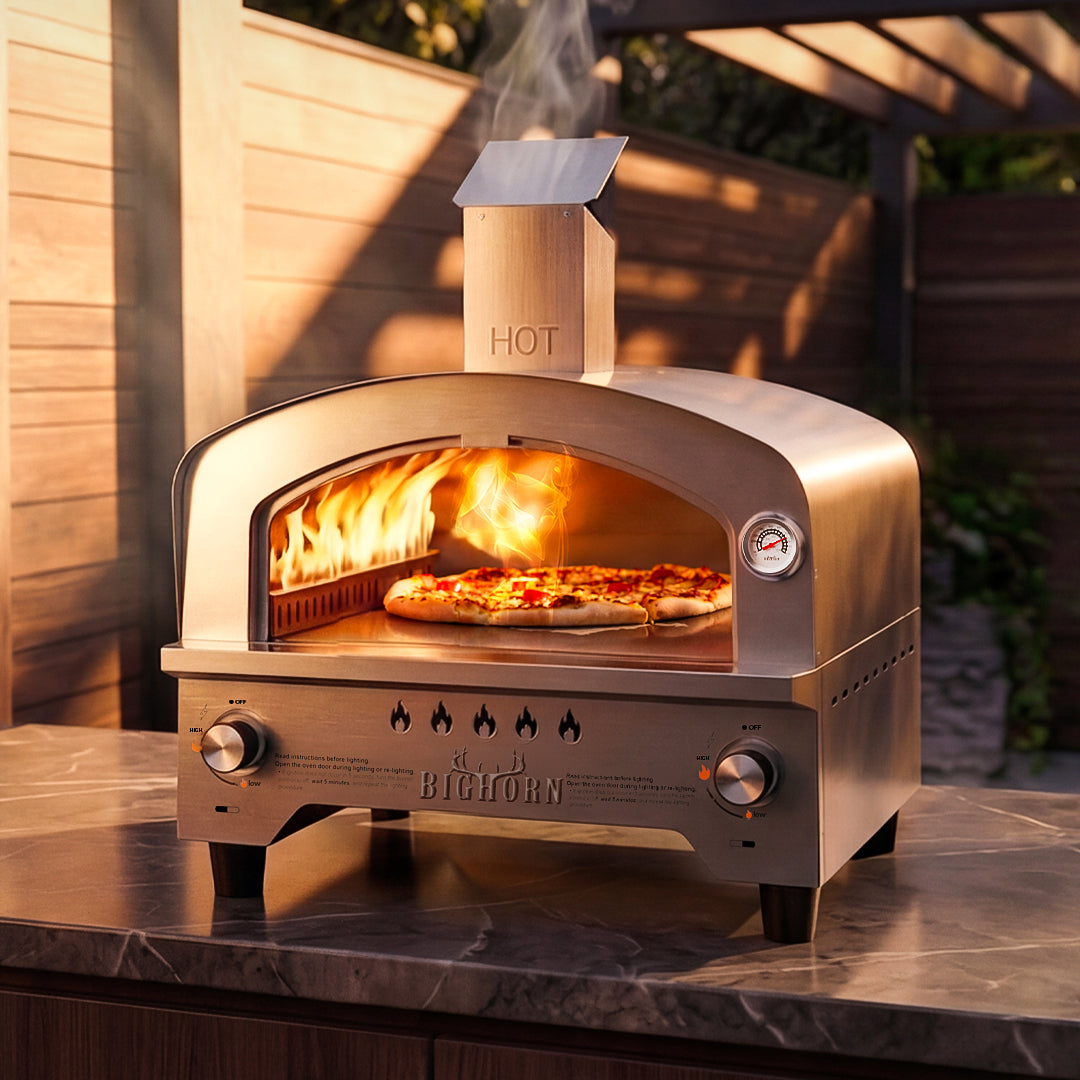
Gas is the easiest choice for quick ignition and direct heat adjustment. Pellet and wood ovens suit cooks who want a live-fire routine and are comfortable managing fuel, ash, and recovery. Multi-fuel designs appeal to buyers who genuinely expect to switch fuels rather than simply wanting the longest feature list.
Fuel choice affects every cook, so decide it before comparing accessories or exterior style.
What pizza-oven size do you actually need?
Start with finished pizza diameter and turning space. A 12-inch deck is compact and portable but leaves less room to turn. Larger decks handle bigger pizzas and cookware more easily but increase oven size, storage needs, and transport weight.
If you routinely serve several people, a larger deck may improve workflow even if each pizza is not especially large.
Why does heat distribution matter more than peak temperature?
A pizza bakes from several directions: the floor heats the base, the roof and flame brown the rim, and hot air cooks toppings. An oven can advertise a very high maximum temperature but still be difficult to use if one side burns before the base is ready.
Look for a design that creates a predictable heat pattern and allows the pizza to be turned comfortably.
How should portability influence the choice?
“Portable” should include the oven, stone, fuel, hose or hopper, tools, and stand. A compact oven is useful for camping or tailgating only if the complete kit fits the vehicle and can be set up on a stable surface.
If the oven will stay on a patio all season, stability, weather protection, and cooking capacity may matter more than low weight.
What outdoor setup should you verify before buying?
Measure the cooking location and required clearances. Check whether the surface can support the oven, whether the fuel can be stored safely, and whether smoke or exhaust will affect doors, seating, or neighbors. Follow the manufacturer’s placement requirements and local rules.
How should beginners compare controls?
Gas dials are straightforward because heat can be reduced directly. Solid-fuel ovens require a little more observation: fuel condition, airflow, ember bed, and floor recovery all affect the bake. Neither is difficult, but the learning curve is different.
What features are worth paying for?
Useful features improve repeatability or ownership: enough deck space, a removable or replaceable stone, reliable ignition, accessible fuel loading, clear temperature information, stable legs or stand, a cover, and replacement-part availability. Decorative extras are less valuable than features that simplify every bake.
FAQs
Is gas or wood better for a first pizza oven?
Gas is simpler; wood or pellets are better if the live-fire process is part of what you want to learn.
Is a 12-inch oven too small?
Not for personal or standard small pizzas, but larger decks give more turning room and capacity.
Should you choose by maximum temperature?
No. Heat distribution, floor recovery, fuel control, and usable space affect real cooking more than the highest advertised number.