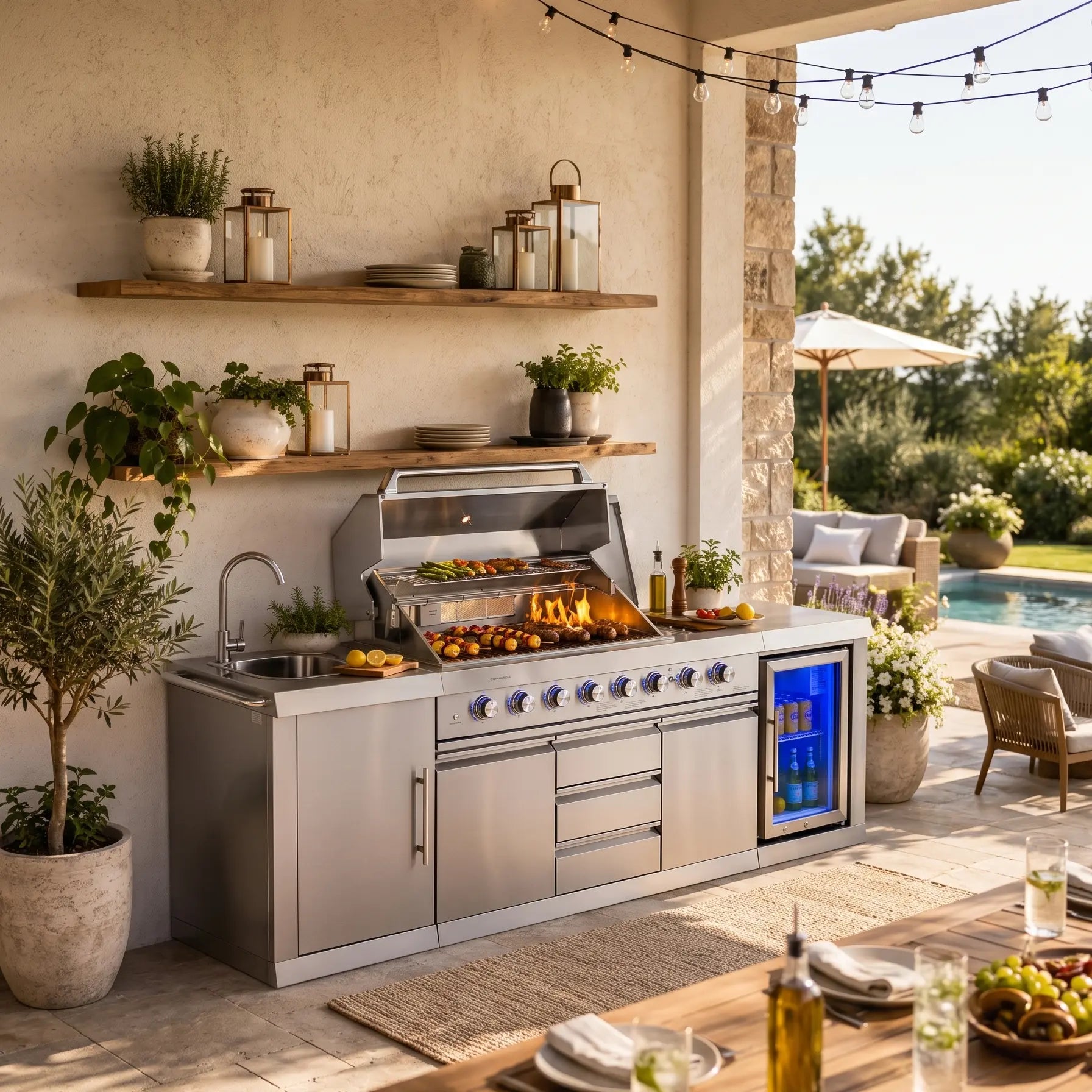
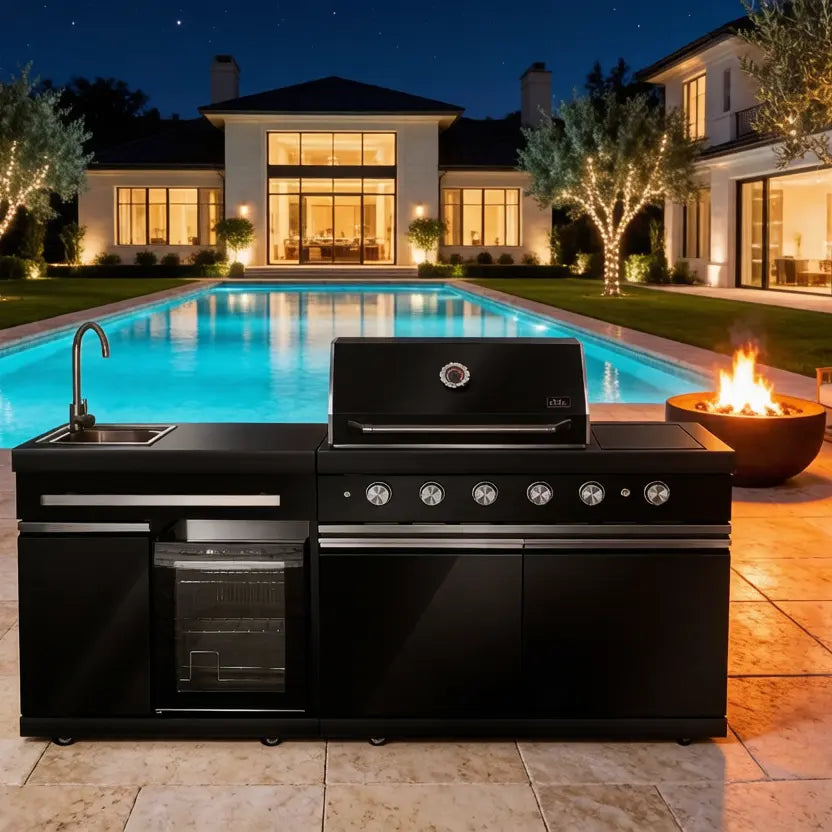
Gas grill temperature control comes down to three things: using the burner dials to build and hold heat, creating zones with independent burners, and measuring the real temperature at the grate with a probe rather than trusting the lid dial. A multi-burner grill like the Big Horn island models makes this easy — light the outside burners low and leave the middle off for a two-zone cook, or run full for direct heat. This guide covers the dial math, the zone setup, and the thermometers that take the guesswork out.
These are general gas-grill temperature techniques; temperatures vary with grill size, fuel, and weather.
What actually matters for temperature control
- Burner dials. The dials adjust fuel flow, which drives the heat; learn the relationship for your grill.
- Zones. Independent burners create hot, medium, and off zones in one cook.
- Real temperature. A probe at the grate beats the lid dial, which reads dome air, not grate heat.
- Preheat. A full preheat with the lid closed settles the grill before you dial it down.
Understanding the dial before you decide
Gas grill dials control fuel flow, and each grill has its own dial-to-temperature relationship. In general, a medium setting lands around 350–400°F at the grate in a preheated grill, low holds near 250–300°F, and high reaches the grill’s maximum — but weather, fuel pressure, and grill size shift the numbers. The reliable approach is to preheat fully with the lid closed, then adjust dials and confirm with a probe at the grate.
Building zones with burners
With several independently controlled burners, one grill can hold multiple temperatures at once. For a two-zone cook, light the outside burners low (or one full side) and leave the center or opposite side off; for direct heat, run one side high and keep the other as a cool landing zone. The Big Horn island grills with separate burner controls make this straightforward — set each burner to its own level and the grill holds hot, medium, and off zones in one session.
The thermometers that matter
The lid thermometer shows the dome air temperature, which can differ significantly from the grate-level temperature where the food cooks. For control, use a probe thermometer at the grate for ambient heat and a meat probe for doneness. Gas grills with digital temperature monitoring and app-connected probes take this further, but the principle is the same: measure the heat where the food sits, not just the dome.
The key factors, ranked
| Factor | Why it matters | What to do |
|---|---|---|
| Dial control | Sets the heat | Learn each dial setting on your grill |
| Zones | Multiple temps at once | Independent burners, hot and off sides |
| Probe | Real grate heat | Probe at the grate, not just the lid dial |
| Preheat | Settles the heat | Full preheat, lid closed, before dialing down |
Matching the choice to your situation
If you grill whole meals, a multi-burner grill with independent controls gives the zones you need — hot for searing, off for indirect. If you want precise, set-and-forget temperature, a grill with digital temperature control or a probe system adds that convenience. If you smoke or hold low heat, confirm the grill holds a low setting with the lid closed and a probe in place before trusting it.
Common mistakes and how to avoid them
- Trusting the lid dial. It reads dome air; use a grate-level probe for real heat.
- Preheating with the lid open. Heat escapes; preheat with the lid closed.
- Running all burners high all the time. Use zones — independent burners give hot and cool areas.
- Ignoring weather and gas. Wind, cold, and a low tank shift the dial relationship; confirm with a probe.
- Not settling the heat. Adjust dials, then let the grill settle before cooking.
Realistic expectations and results
With burner zones and a grate-level probe, a gas grill holds the heat you set — direct high for searing, low indirect for smoking, and zones for mixed meals. The dial relationship varies by grill and weather, so a probe is the reliable referee. Expect consistent, controllable heat once you learn the dials and measure the grate.
The takeaway in one paragraph
Gas grill temperature control is burner zones plus real measurement: learn each dial’s setting, use independent burners to create hot and cool zones, and confirm the heat at the grate with a probe rather than the lid dial. Preheat with the lid closed, then adjust and let it settle. With zones and a probe, the gas grill holds the temperature you need for direct, indirect, and mixed cooks.
See the multi-burner grills with independent controls. grills and griddles collection · outdoor kitchen island collection
FAQ
How long should it take a gas grill to get to 400 degrees?
A multi-burner gas grill typically reaches about 400°F at the grate in 10–15 minutes with a full preheat, lid closed. Time varies with grill size, burners, and weather; confirm the grate temperature with a probe rather than the lid dial.
What setting is 350 on a gas grill?
A medium setting usually lands around 350–400°F at the grate in a preheated grill, but the exact dial position varies by grill and weather. Confirm with a grate-level probe; “medium” on one grill may be high on another.
Why won't my gas grill get hotter than 250?
A grill stuck near 250°F usually means low fuel pressure — a low or empty tank, a long hose, or a regulator issue — or a grill that cannot push enough fuel at that dial setting. Check the tank level and the gas system, and preheat full with the lid closed before judging the ceiling.
How to get a grill to stay at a certain temperature?
To hold a temperature, preheat fully with the lid closed, set the burners to the dial level that matched your target, and confirm with a grate-level probe; adjust slightly and let the grill settle. On a multi-burner grill, low and indirect settings hold steady better than fighting a high setting.