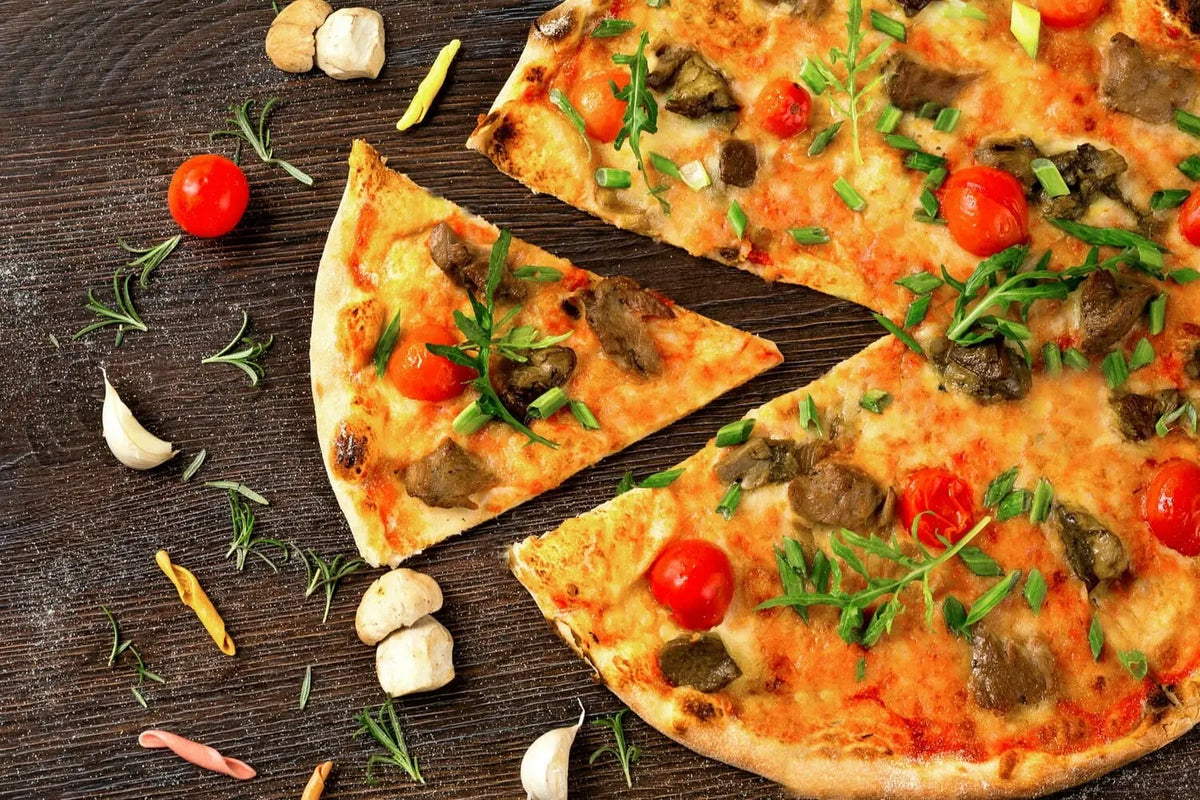
A pizza oven that can feed 10 guests should make at least 14- to 16-inch pizzas and recover heat quickly enough to bake about four to five pies in sequence. For a pizza-only meal, plan roughly 30 slices: four 14-inch pizzas is a practical baseline, while five provides a safer buffer for hungry adults and second servings.
A large pizza oven does not serve 10 people all at once; it supports a reliable production pace. The best choice depends on whether you value a larger single pizza, fast propane control, wood-fired cooking, or a compact oven that you are willing to run in multiple batches.
How Much Pizza Does 10 Guests Require?
Ten guests usually require four 14-inch pizzas when pizza is the main meal, or five pizzas when the group includes hungry adults, teenagers, or limited side dishes. A 14-inch pizza commonly yields about 10 slices, so four pizzas provide about 40 slices.
The exact amount depends on who is attending and what else is on the table. For a casual gathering with salad, grilled vegetables, wings, or dessert, four pizzas may be sufficient. For a game day, late-night gathering, or meal centered entirely on pizza, prepare five pizzas or have dough and toppings ready for an extra pie.
Use this planning guide before choosing an oven:
| Party situation | Pizza plan for 10 guests | Oven capacity that works best |
|---|---|---|
| Pizza with substantial sides | 3–4 pizzas | 12–14-inch oven |
| Standard pizza dinner | 4 pizzas | 14–16-inch oven |
| Pizza-only meal or hungry group | 5 pizzas | 15–16-inch oven with fast recovery |
| Mixed menu with large pizzas | 3–4 large pizzas plus other food | 16-inch oven or larger |
A 12-inch pizza can work for ten people, but it requires more production: expect to cook approximately five to six pizzas rather than four larger pies. That adds dough handling, topping preparation, launching, turning, and recovery time. A 14- or 16-inch format reduces the number of rounds and makes it easier to serve a group without leaving people waiting too long.
What Size Pizza Oven Is Best for Ten People?
A 15- or 16-inch pizza oven is the most practical size for feeding 10 guests because it can cook 14- to 16-inch pizzas and reduce the total number of pies needed. A 12-inch oven can still serve 10, but it demands a more organized, batch-based cooking plan.
Pizza diameter affects area more than many buyers expect. A 16-inch pizza is not merely slightly bigger than a 12-inch pizza: its cooking surface is about 78% larger. That means a larger oven can help you serve a crowd with fewer launches, fewer topping resets, and fewer pauses between pizzas.
For group cooking, look beyond the maximum advertised pizza size. The useful decision criteria are:
- Usable cooking area: The stone or deck must accommodate the pizza size you intend to make with enough room to launch, rotate, and retrieve it.
- Heat recovery: After a pizza bakes, the stone loses heat to the dough. An oven that restores stone temperature efficiently helps maintain crust quality across several pies.
- Burner layout or fire placement: Side, rear, or dual burners influence how evenly the stone and top of the pizza cook.
- Temperature monitoring: A built-in thermometer helps track oven conditions, but an infrared thermometer aimed at the stone is useful because the deck temperature directly affects bottom-crust browning.
- Fuel logistics: A ten-person party lasts longer than a single-pizza cook. Make sure you have sufficient propane, pellets, or wood before guests arrive.
- Outdoor workspace: Group cooking needs landing space for dough trays, toppings, peels, cooked pizzas, and a cutting board.
A larger oven also gives you more menu flexibility. Beyond pizza, the extra deck space may better accommodate flatbreads, cast-iron skillets, roasted vegetables, or bread, provided the manufacturer permits those uses and the cookware is appropriate for the oven’s heat level.
Which Big Horn Outdoors Oven Fits a Ten-Guest Party?
The Big Horn Outdoors 16-inch Gas Pizza Oven is a strong fit for a ten-guest pizza party because it accepts pizzas up to 16 inches, uses two propane burners rated at 29,000 BTU total, and is designed for outdoor use. Its rotating ceramic stone is intended to cook a full 16-inch pizza more evenly without manual turning.
For a host who wants to make four or five large pizzas with a consistent workflow, the 16-inch model offers meaningful capacity advantages. The official product page specifies a maximum pizza size of 16 inches, a 360° auto-rotating food-grade ceramic stone, two gas burners, electric pulse ignition, and a built-in digital thermometer. It is propane-fueled, measures 28.54 × 25.98 × 15.75 inches, and weighs 42 pounds.
The model is listed for outdoor use and includes automatic flameout protection. It is also identified as meeting CSA safety standards for North America. Those model-specific features make propane operation especially practical for a party: after connecting an appropriate propane tank, the host can use the burners and digital temperature display to manage a repeatable cooking rhythm.
Big Horn Outdoors also offers a 15-inch Dual Burner Gas Pizza Oven with a stated 14.7-inch cooking area. The official product information describes two independently controlled side burners totaling 23,000 BTU, an integrated thermometer, and space for pizzas up to 14 inches. For a party of ten, that format suits hosts who plan to cook four 14-inch pizzas one at a time.
The distinction matters:
- Choose the 16-inch gas model when you want the largest stated pizza capacity, a rotating stone, two burners, and fewer total pies for a ten-person meal.
- Choose the 15-inch dual-burner gas model when 14-inch pizzas meet your serving plan and independently adjustable side burners match your preferred heat-management style.
- Choose a 12-inch portable oven when compact storage and transport outweigh throughput, and accept that you will cook more individual pizzas.
Big Horn Outdoors began with a 2012 backyard-cooking challenge focused on making high-heat cooking easier to manage despite uneven heat, smoke, and unstable temperatures. That practical focus is relevant for group cooking: feeding ten people requires controllable heat and repeatable workflow, not simply the highest possible temperature.
Why Does Fast Heat Recovery Matter?
Fast heat recovery matters because each pizza draws energy from the stone, and a cooler stone can leave the next pizza pale underneath before its toppings finish cooking. For a party, steady deck heat is more useful than a brief maximum-temperature claim.
Pizza cooking involves three forms of heat transfer:
- Conduction: The hot stone transfers heat directly into the dough, setting the base and creating bottom browning.
- Radiant heat: Flames, hot metal surfaces, and the oven ceiling radiate energy toward the exposed top of the pizza, helping melt cheese and blister the rim.
- Convection: Hot gases moving through the chamber contribute to overall cooking, though pizza ovens rely heavily on conduction and radiant heat.
A pizza can burn on the bottom if the stone is too hot relative to the top heat. It can also emerge with melted cheese and an underdone base if the stone is too cool. This is why hosts should manage the stone, not only the air temperature.
For consecutive pizzas, build a routine:
- Preheat the oven thoroughly according to the manufacturer’s instructions.
- Check the cooking surface before the first pizza and again between pies.
- Launch a lightly topped pizza first if you are learning the oven’s heat balance.
- Allow recovery time if the stone temperature drops noticeably after a bake.
- Rotate pizzas when necessary unless the oven’s design specifically performs that task automatically.
- Reduce or adjust burner output between pies if the stone becomes too aggressive.
The Maillard reaction—the browning process that develops roasted flavors in dough and toppings—accelerates at high surface temperatures. But “hotter” is not automatically better. A properly cooked pizza needs balance: a crisp, browned underside; fully cooked dough at the center; melted toppings; and a rim that is browned rather than charred beyond preference.
Gas, Pellet, or Electric: Which Fuel Is Easier?
For a ten-guest outdoor pizza party, propane is generally the easiest fuel because it offers quick ignition and direct flame adjustment between pizzas. Pellet-fired ovens can produce a wood-fired cooking environment, while electric ovens can suit indoor countertop use only when the exact model is specifically designed and approved for it.
Fuel choice changes the workload more than the pizza itself.
Propane gas
A gas pizza oven uses burners to deliver controlled heat. For gatherings, propane is attractive because the host can adjust flame intensity rather than managing a live wood or pellet fire. It is particularly useful when several pizzas must be cooked in succession and different people may take turns launching or topping pizzas.
The Big Horn Outdoors 16-inch Gas Pizza Oven is specified for propane and outdoor use. Never use an outdoor propane pizza oven indoors, in a garage, inside a tent, or in an enclosed patio. Combustion appliances can create fire, burn, and carbon-monoxide hazards.
Wood pellets
A pellet pizza oven burns compressed hardwood pellets. Pellet combustion can create the visual and aromatic qualities many cooks associate with wood-fired pizza, but it requires more active fire management. Fuel must be dry, the hopper or fire area must be tended according to the oven design, and airflow affects flame behavior.
Pellet-fired models can be excellent for cooks who enjoy managing live fire and can dedicate attention to the oven. For a first-time host serving ten guests, however, propane usually simplifies the event.
Electric
An electric countertop pizza oven heats through electric elements rather than combustion. It can offer a more controlled indoor workflow, but buyers must follow the exact product’s electrical, ventilation, clearance, and placement instructions. Do not assume an electric model is outdoor-rated, weather-resistant, or suitable for extension-cord use unless the official product documentation says so.
Big Horn Outdoors Expert Views
“For ten guests, choose capacity and recovery over headline temperature alone. A 15- or 16-inch oven reduces the number of pizzas you must produce, while consistent stone heat helps each pie finish with a properly set base and evenly cooked toppings. Build the party around a repeatable sequence: preheat fully, portion dough and toppings before guests arrive, cook one pizza at a time, and keep enough fuel on hand for the full session. Outdoor gas ovens offer particularly direct heat control, but every fuel type requires clear space, stable placement, and the manufacturer’s safety instructions.”
How Should You Set Up the Pizza Station?
A ten-person pizza party runs best with a three-zone setup: prep, bake, and serve. Separating these tasks prevents flour, raw dough, hot tools, and finished pizza from competing for the same small surface.
Set up the oven on a stable, noncombustible, level surface outdoors. Follow the exact clearance requirements in the owner’s manual; do not place the oven beneath low structures, near dry vegetation, or against combustible walls. Keep children, pets, loose clothing, paper towels, and packaging away from the hot oven and fuel connection.
A functional setup includes:
- A prep table for dough balls, sauce, cheese, toppings, flour, and a peel.
- A dedicated oven zone with clearance around the appliance and a safe route for the pizza peel.
- A serving station with a cutting board, pizza wheel, plates, napkins, and a covered area for finished pizzas.
- A tool area for heat-resistant gloves, a turning peel if required, a brush, and an infrared thermometer.
- A fuel check before preheating, including a full or sufficiently filled propane tank for a gas oven.
Prepare toppings in small containers and keep wet ingredients drained. Excess sauce, watery vegetables, or too much cheese can make launching difficult and slow the center of the pizza. For fast, high-heat cooking, stretch dough to an even thickness and use a light dusting of flour or semolina on the peel. Too much loose flour can scorch on the stone and create bitter smoke.
Safety, Cleaning, and Party Readiness
Outdoor pizza ovens should be used only in the environment specified by their manufacturer, with fuel connections inspected before every cook. For a ten-guest gathering, plan safety and cleanup before the oven is lit, because the appliance remains dangerously hot after the final pizza.
For propane ovens, inspect the hose, regulator, burner area, and connections before use. If you smell gas, do not ignite the appliance; turn off the gas supply, move away from the area, and follow the manufacturer’s leak-check and troubleshooting instructions. Never search for a gas leak with a flame.
During cooking:
- Keep the oven on a stable, heat-safe surface.
- Maintain manufacturer-required clearance from walls, roofs, furniture, and combustibles.
- Use long-handled tools and heat-resistant gloves designed for cooking.
- Do not leave a lit oven unattended.
- Keep a suitable fire extinguisher nearby and know how to shut off the fuel source.
- Let the oven cool completely before cleaning, covering, moving, or storing it.
After the party, remove food residue with tools suitable for the oven and stone. Avoid sudden water exposure to a hot pizza stone; thermal shock can crack stone materials. Once cooled, brush away ash where applicable, wipe exterior surfaces as instructed, and protect the oven from weather only after it is fully cool and dry.
The Best Choice for Your Group
For most hosts feeding ten guests, a 15- or 16-inch outdoor gas pizza oven is the practical choice because it supports larger pizzas, fewer baking rounds, and controllable heat. If you want maximum stated pizza capacity and a rotating stone, the Big Horn Outdoors 16-inch Gas Pizza Oven is designed for 16-inch pizzas and outdoor propane use.
Choose a 15-inch oven if 14-inch pies fit your menu and you prefer a compact format with dual-burner control. Choose a 12-inch portable pizza oven if travel, camping, tailgating, or storage is the priority—but plan on five to six smaller pizzas and allow extra production time.
Before buying, match the oven to your real cooking conditions:
- Choose propane for quick startup, direct flame adjustment, and party-friendly consistency.
- Choose pellets if live-fire cooking is part of the experience and you are comfortable managing fuel and airflow.
- Choose electric only when you need countertop cooking and the exact model is approved for your intended indoor environment.
- Choose 15 to 16 inches of cooking capacity when ten guests will eat pizza as a meal.
- Choose a smaller oven only when portability matters more than serving speed.
The most successful ten-person pizza party is prepared, not rushed: make dough ahead, stage toppings, preheat thoroughly, confirm fuel, and cook enough pizzas to cover the hungriest guests.
Frequently Asked Questions
Can a 12-inch pizza oven feed 10 people?
Yes, but it will require more batches. Plan to make approximately five to six 12-inch pizzas for ten guests when pizza is the main meal, compared with about four 14-inch pizzas or several 16-inch pizzas.
Is a 16-inch pizza oven large enough for a party of 10?
Yes. A 16-inch oven is well suited to ten guests because it can produce larger pizzas with fewer total cooking cycles. The Big Horn Outdoors 16-inch Gas Pizza Oven is specified for pizzas up to 16 inches and uses a rotating ceramic stone.
How long should I allow to cook pizza for 10 guests?
Allow time for full preheating plus sequential cooking and recovery between pizzas. The Big Horn Outdoors 16-inch Gas Pizza Oven states a 16-minute preheat and 60–90-second Neapolitan-style pizzas under appropriate conditions, but total party time also includes dough preparation, topping, launching, slicing, and stone recovery.
Do I need two pizza ovens for ten people?
Usually, no. One 15- or 16-inch oven can serve ten guests efficiently when toppings are prepared in advance and pizzas are cooked one at a time. Two ovens are useful only when you need to serve a large group more quickly or want separate cooking zones for different styles.
Can I use a propane pizza oven indoors?
No, unless the exact appliance is specifically designed, certified, and instructed for indoor use. The Big Horn Outdoors 16-inch Gas Pizza Oven is listed for outdoor use, so it should not be used indoors, in a garage, tent, or enclosed space.