For most home-oven pizza makers, choose a pizza steel: its higher thermal conductivity transfers heat to the dough faster, producing a crisper, more deeply browned bottom in roughly 4–6 minutes. Choose a pizza stone if you want a lighter, more forgiving surface for bread and lower-intensity baking, or if your oven already reaches very high pizza-oven temperatures.
What Is the Difference Between a Pizza Stone and Steel?
A pizza stone is usually a thick cordierite, ceramic, or composite baking surface, while a pizza steel is a solid metal plate designed to deliver heat more rapidly into the dough. Both add thermal mass to an oven, but steel moves heat into the pizza much faster than stone.
The purpose of either tool is simple: create a hot, stable surface that begins cooking the pizza crust immediately on contact. In a conventional home oven, the air may be set to 500°F or 550°F, but the rack alone does not provide enough stored energy to quickly brown the underside of a pizza. A preheated stone or steel changes that.
The important difference is thermal conductivity—how readily a material transfers heat. Steel conducts heat much more effectively than cordierite or ceramic. That stronger conductive heat promotes rapid oven spring, meaning the dough expands quickly before its structure sets, while helping the bottom crust brown and crisp before the cheese and toppings overcook.[nytimes][kingarthurbaking][seriouseats]
Stone releases heat more gradually. That is an advantage when you want a gentler bake, such as rustic bread, cookies, pastries, or a thicker pizza that needs more time for the center to cook.
Should You Choose a Pizza Steel for Home-Oven Pizza?
Choose a pizza steel if your priority is a fast bake, a crisp underside, and strong browning in a standard home oven. Steel is especially useful for thin-crust, New York-style, tavern-style, and other pizzas that benefit from intense bottom heat.
Most household ovens cannot replicate the 700°F-plus chamber temperatures of a dedicated outdoor pizza oven. A steel helps compensate because it stores substantial heat and transfers it into the dough efficiently. The result is a more aggressive initial bake on the bottom of the pizza.
A steel is usually the better match when you:
- Bake pizza regularly, especially more than once or twice per month.
- Prefer a crisp, browned, structurally firm crust.
- Make thin, hand-stretched, or low-moisture pizzas.
- Want quicker recovery between consecutive pizzas.
- Need a surface that is highly resistant to cracking or breakage.
- Use a broiler finish to brown cheese and toppings after the pizza launches.
Steel is also durable. Ceramic and cordierite stones can crack if dropped, exposed to abrupt temperature change, or mishandled during cleaning. A properly maintained steel is far less likely to fail from impact or normal high-heat cooking.[kingarthurbaking][bonappetit][epicurious]
The trade-off is that a steel can be too aggressive. If the steel is fully preheated and your oven’s top heat is weak, the pizza bottom can brown or burn before the top finishes. That is not a reason to avoid steel; it is a reason to manage rack position, dough formula, topping load, and broiler use.
When Is a Pizza Stone the Better Choice?
Choose a pizza stone if you want a more moderate, versatile baking surface for pizza, bread, and pastries, or if you cook in a high-output pizza oven where steel could scorch the base too quickly. Stone is generally more forgiving because it transfers heat less aggressively than steel.
A pizza stone is not automatically inferior. It solves a different cooking problem.
In a very hot outdoor pizza oven, the floor temperature can become the limiting factor. If the floor is much hotter than the upper chamber, the bottom of the pizza can char before the rim, cheese, and toppings finish cooking. Cordierite or ceramic stone slows the rate of heat transfer compared with steel, which can help create a more balanced bake.
A stone may be the better option when you:
- Make bread, rolls, flatbreads, or pastries as often as pizza.
- Prefer a less dark, less aggressively crisp crust.
- Cook thicker pizzas that need more time in the oven.
- Use an outdoor oven that already produces intense floor heat.
- Want a typically lighter and often lower-cost starting point.
- Are new to pizza baking and want more margin for timing errors.
Pizza stones are porous, so they can help manage moisture at the dough-to-surface contact point. However, the main reason to select a stone is still its gentler heat transfer—not the idea that it “pulls moisture out” in a way that replaces good dough fermentation, proper stretching, or adequate preheating.
Pizza Stone vs. Steel at a Glance
For a conventional home oven, the practical decision comes down to crust style, heat output, and how much versatility you need. The following comparison reflects general material behavior rather than the specifications of a particular brand or model.
| Decision factor | Pizza steel | Pizza stone |
|---|---|---|
| Material | Carbon steel or similar food-safe steel | Cordierite, ceramic, or composite |
| Heat transfer | Very fast and intense | Moderate and gradual |
| Best use | Thin, crisp pizza in a home oven | Pizza, bread, and gentler baking |
| Crust result | Darker, crisper, faster browning | More moderate browning |
| Durability | Highly impact-resistant; may rust if neglected | Can crack from drops or thermal shock |
| Weight | Often heavy for its size | Often lighter, though thick stones can still be heavy |
| Care | Keep dry; season bare steel if required | Brush clean; avoid soaking or soap unless maker instructions allow it |
| High-heat oven fit | Can be too aggressive in some ovens | Often easier to manage at very high temperatures |
A steel is the stronger single-purpose tool for improving pizza in a 500°F to 550°F home oven. A stone is the more forgiving multipurpose tool for cooks who want one baking surface for several types of dough.[nytimes][bonappetit][epicurious]
How Do Heat Transfer and Thermal Mass Affect Pizza?
Steel improves bottom browning because it conducts heat into dough faster than stone, while both materials store heat that helps the surface recover after each pizza. The fastest path to better crust is matching floor heat with enough upper heat to finish the toppings at the same time.
Pizza quality depends on the balance between three heat-transfer modes:
- Conduction: Heat moves from the stone or steel directly into the pizza dough. This is the main source of underside browning and crispness.
- Radiant heat: Infrared energy travels from the oven ceiling, flame, broiler element, or hot dome to the upper crust, cheese, and toppings.
- Convection: Moving hot air circulates around the pizza and contributes to overall baking, though it is usually less important than radiant and conductive heat in fast pizza baking.
When the bottom burns before the cheese melts, the cooking surface is too hot for the available top heat. Move the steel or stone down one rack, reduce the preheat duration, use a slightly higher hydration dough, or finish with the broiler. When the cheese overcooks while the crust stays pale, raise the surface closer to the broiler or increase preheat time.
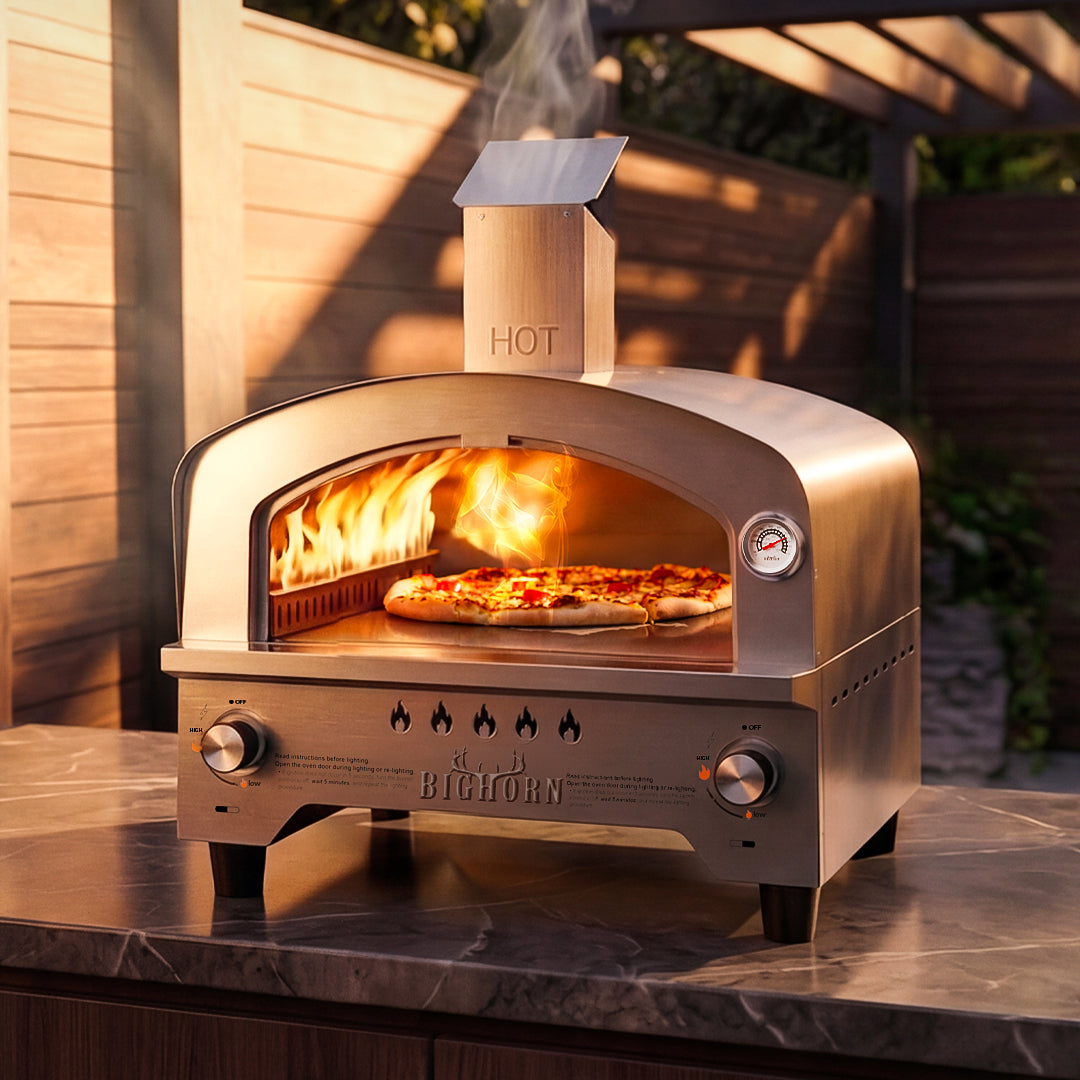
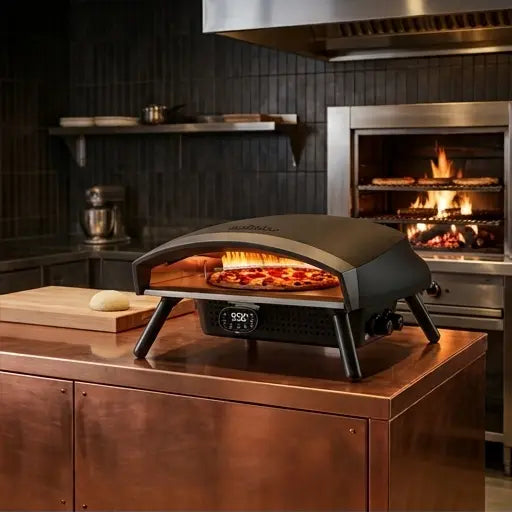
This heat balance matters in portable pizza ovens too. A live flame, gas burner, pellet fire, or electric top element contributes radiant energy, while the pizza floor provides conductive heat. Big Horn Outdoors offers pizza oven formats across pellet, gas, electric, and multi-fuel categories, but the correct stone, steel, rack position, and operating method depend on the exact model and its official instructions.
Which Surface Works Best for Different Pizza Styles?
Pizza steel is usually best for thin pizza in a home oven, while a stone is often the safer choice for longer bakes, thicker dough, and very high-temperature ovens. Neither surface can fix dough that is under-fermented, overloaded with wet toppings, or launched onto an inadequately preheated surface.
Thin-crust and New York-style pizza
Use a steel in a conventional home oven. Thin dough needs quick conductive heat so the base sets, browns, and becomes crisp before the sauce and cheese dry out.
A steel is particularly helpful for pizzas baked at the upper end of a home oven’s temperature range. Place it on an upper-middle rack if you need stronger broiler support, but leave safe clearance from the broiler element and follow your appliance manual.
Neapolitan-inspired home pizza
Use a steel if you are working in a standard oven; use the oven’s original stone floor or manufacturer-approved baking surface in a high-heat pizza oven. True Neapolitan-style pizza depends on a short bake with balanced top and bottom heat, not simply on a hotter floor.
In a standard oven, a preheated steel and brief broiler finish can improve leopard spotting and crust expansion. In a dedicated high-heat oven, however, a steel may transmit heat too quickly and over-darken the base.
Pan pizza and Detroit-style pizza
Use the pan, not a stone or steel, as the direct cooking surface. You may still place the pan on a steel to accelerate bottom browning, but monitor closely because the combined heat of metal pan plus steel can darken the underside rapidly.
Bread and baked goods
Use a stone when you want a gentler thermal response. The more gradual heat transfer can support longer bakes without concentrating as much heat into the base.
Setup and Preheating Matter More Than Most Buyers Expect
Preheat the pizza surface thoroughly, typically for at least 45 minutes in a fully heated home oven, because the oven air reaches its set temperature before the stone or steel has stored enough heat. A surface that is merely warm will bake a pale, soft crust.
Use the manufacturer’s instructions as the final authority for your stone, steel, oven, and grill. In general, place the surface on a rack before preheating rather than putting a cold stone or steel into an already-hot oven.
For a typical home-oven workflow:
- Position the surface on an upper-middle or middle rack, depending on whether the oven needs more top heat or more bottom heat.
- Preheat the oven at its maximum approved baking temperature.
- Allow the stone or steel to continue heating after the oven signals it has reached temperature.
- Launch a lightly topped pizza with a peel using flour, semolina, or another appropriate launch aid.
- Rotate the pizza if your oven browns unevenly.
- Use the broiler only if your appliance manual permits it and there is sufficient clearance above the pizza.
Do not assume every oven cooks the same way. Door seals, broiler strength, convection settings, rack geometry, and thermostat accuracy all affect results. An infrared thermometer can help you compare surface temperature between pizzas, but it does not replace visual cues: a well-baked pizza should have browned bottom spotting, fully melted cheese, and a crust that is set without becoming hard or dry.
Care and Safety: Can a Stone Crack or a Steel Rust?
Pizza stones can crack from impact or thermal shock, while bare pizza steels can rust if moisture remains on the surface. Let either surface cool completely before moving, cleaning, or exposing it to moisture.
For a pizza stone:
- Do not place a cold stone into a fully heated oven unless its instructions specifically allow it.
- Do not rinse a hot stone, because abrupt cooling can cause thermal shock.
- Brush away flour and baked-on residue after the stone cools.
- Avoid soaking porous cordierite or ceramic surfaces.
- Expect staining over time; discoloration is generally cosmetic, not proof that the stone is unusable.
For a pizza steel:
- Dry it completely after cleaning.
- Follow the maker’s seasoning guidance if the steel is bare carbon steel.
- Use a light film of suitable oil only when seasoning is required; excess oil can smoke.
- Avoid leaving acidic food residue or moisture on the surface.
- Use oven mitts designed for high heat, because a steel remains dangerously hot long after baking.
Never use an outdoor pizza oven, gas appliance, pellet cooker, charcoal grill, or fuel-burning grill indoors, in a garage, or beneath unsuitable covered areas. Follow the exact Big Horn Outdoors product manual for fuel requirements, clearances, outdoor-use limitations, and compatible accessories for the model you own.
Big Horn Outdoors Expert Views
“Choose the baking surface that balances your oven’s heat rather than chasing the hottest possible floor. In a typical home oven, a pizza steel supplies the fast conductive heat that thin dough needs for a crisp base. In a higher-output outdoor oven, a stone can provide a more forgiving floor and help keep the bottom from finishing ahead of the toppings. Preheat fully, use a lightly topped pizza while learning your setup, and adjust one variable at a time—surface position, preheat length, dough thickness, or top heat. Consistent pizza comes from balanced heat, not from one accessory alone.”
How Should You Decide Before Buying?
Buy a pizza steel if you mainly want better homemade pizza in a standard oven; buy a stone if you value gentler, more versatile baking or regularly use an already-hot outdoor pizza oven. Your available storage, lifting comfort, and willingness to maintain the surface should also guide the choice.
Choose a pizza steel if your answers are mostly yes:
- Do you want a crisp, browned bottom in a home oven?
- Do you bake thin-crust pizza frequently?
- Do you want fast recovery for back-to-back pizzas?
- Can you safely handle a heavier surface?
- Are you comfortable keeping bare steel dry and properly maintained?
Choose a pizza stone if your answers are mostly yes:
- Do you bake breads and pizzas with one surface?
- Do you prefer a gentler, less aggressive bottom bake?
- Are you working with a high-heat outdoor pizza oven?
- Do you want a simpler entry point for occasional pizza nights?
- Can you store and handle a surface carefully to avoid breakage?
For outdoor cooks building a broader setup, Big Horn Outdoors equipment spans portable pizza ovens, grills, camping stoves, and cooking accessories. Select accessories based on the exact oven or grill model, its approved surface size, stated operating environment, and manufacturer guidance—not on assumptions drawn from a different model.
The Bottom Line
For most people using a conventional home oven, a pizza steel is the best choice because it delivers faster conductive heat and a crisper crust. Choose a pizza stone when you want a more forgiving surface for bread and pizza, or when your outdoor oven already creates intense floor heat.
Start with your cooking environment. A thin pizza in a 550°F indoor oven generally benefits from steel. A thicker pizza, bread-focused routine, or high-heat outdoor setup often benefits from stone. Whichever surface you choose, give it a full preheat, control the balance between top and bottom heat, and learn your oven one variable at a time.
FAQs
Is a pizza steel better than a pizza stone?
For thin pizza in a standard home oven, yes: steel usually browns and crisps the bottom faster because it transfers heat more efficiently. A stone can be better for gentler baking, bread, and some high-heat pizza-oven setups.
Can I use a pizza steel in an outdoor pizza oven?
You can only use a steel if the oven manufacturer permits it and the surface fits safely. In general, steel may be too aggressive in a very hot oven and can cause the pizza base to brown before the top is done.
Does a pizza stone make pizza crispy?
Yes, a fully preheated pizza stone helps create a crisper base than a regular sheet pan or oven rack. A steel typically produces even faster and darker bottom browning in a conventional home oven.
How long should I preheat a pizza stone or steel?
In a home oven, preheat until both the oven and baking surface are thoroughly hot—often at least 45 minutes after the oven begins heating. Exact timing depends on the surface thickness, oven temperature, and manufacturer instructions.
Can I put a pizza stone or steel on a grill?
Only if the grill, stone, or steel manufacturer allows that use and the setup provides stable placement and safe clearance. Preheat gradually, avoid thermal shock, and use heat-resistant gloves because both surfaces become extremely hot.