An electric countertop pizza oven needs the least attention because it eliminates live-fire management, ash removal, and propane-cylinder setup; many models use preset cooking modes and controlled heating. For an outdoor oven, a gas model is the lowest-attention choice because its burner starts quickly and heat is adjusted with a control knob rather than by feeding wood or pellets.
By the Big Horn Outdoors Product Team
Published September 28, 2026
What Type of Pizza Oven Requires the Least Work?
Electric pizza ovens require the least day-to-day attention, followed by gas, then pellet and wood-fired ovens. The main reason is simple: electric heating is controlled by internal elements, while live-fire ovens require fuel loading, flame management, ash cleanup, and more active temperature monitoring.
A low-attention pizza oven is not necessarily the one that reaches the highest temperature. It is the one that reduces the number of decisions required before, during, and after cooking:
- No fire to build or maintain
- No ash to empty after cooling
- No fuel hopper or firebox to monitor
- No propane connection to check before use
- Minimal temperature adjustment during the bake
- Simple wipe-down cleaning after the oven cools
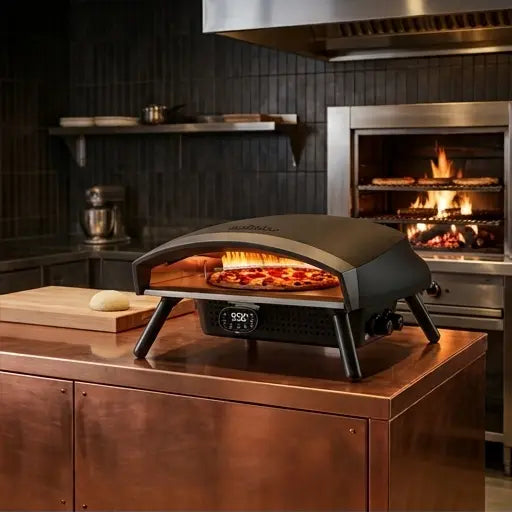
For indoor households, apartment kitchens, and cooks who value repeatability, an electric countertop pizza oven is usually the most hands-off format. Big Horn Outdoors offers indoor electric countertop pizza ovens with preset modes, which can reduce the need to manually manage heat compared with a live-fire outdoor oven.
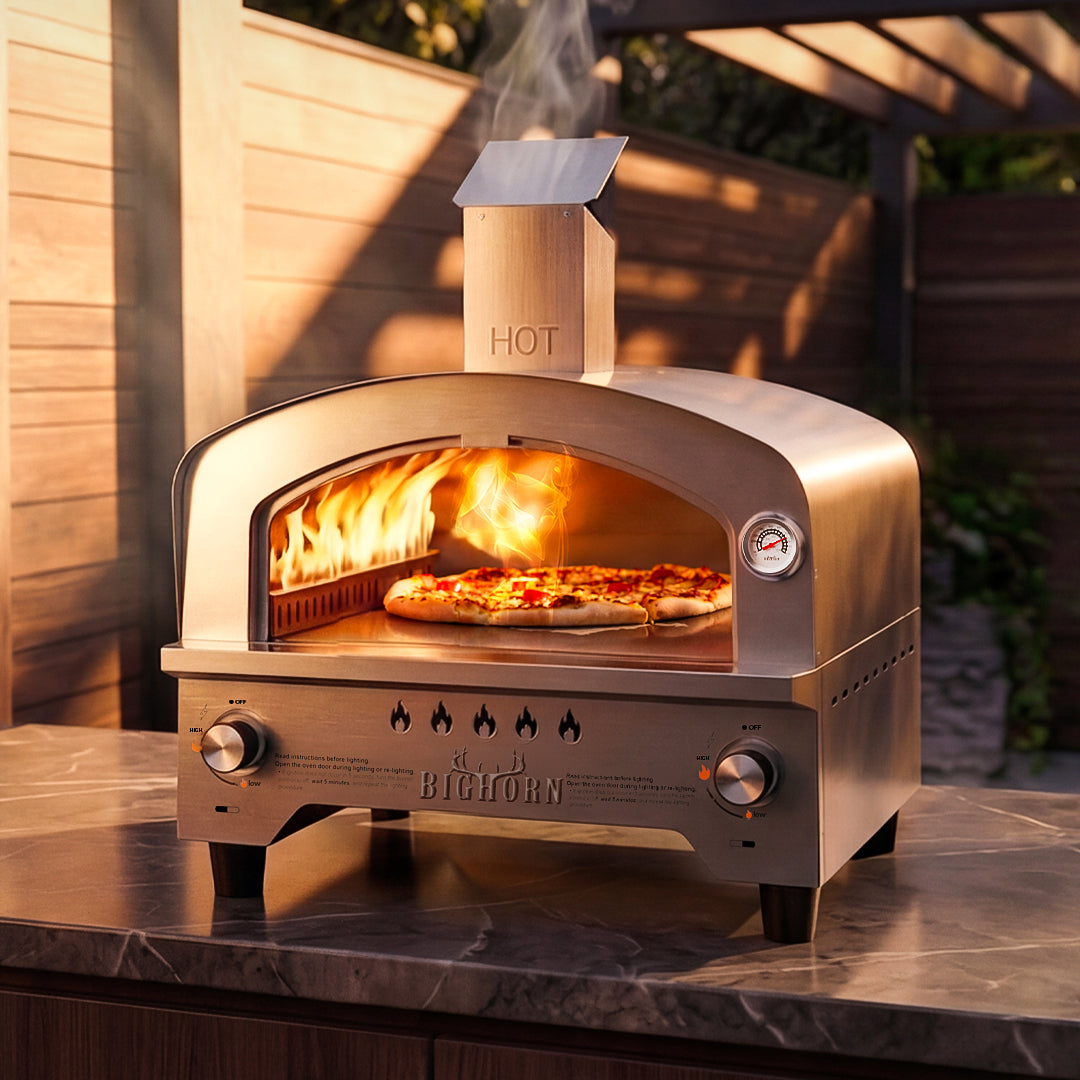
For patio cooking, gas is the practical convenience leader. A gas pizza oven still needs outdoor placement, propane handling, preheat time, stone management, and periodic burner inspection, but it avoids the combustion work associated with wood and pellet models.
Why Do Electric Pizza Ovens Need Less Attention?
An electric pizza oven uses heating elements and temperature controls rather than a live flame, so the cook does not need to add fuel, manage airflow, or remove combustion ash. Its main tasks are preheating, loading the pizza, turning it as needed, and cleaning the cooled cooking surface.
Electric models simplify several parts of the pizza-making process.
First, electrical resistance heating creates heat when current passes through a heating element. The appliance converts that energy into radiant and convective heat inside the chamber. Radiant heat cooks the top of the pizza by transferring energy directly from hot elements and surfaces, while conductive heat cooks the bottom as the dough contacts the heated stone or deck.
Second, many electric countertop ovens use controlled settings or preset programs. These programs do not remove the need to watch the pizza, especially at high temperatures, but they can reduce the amount of manual heat adjustment required.
Third, electric cooking leaves no wood ash, pellet ash, soot buildup, or spent charcoal. The usual cleanup is limited to brushing loose flour or cornmeal from a fully cooled stone and wiping the exterior or interior surfaces according to the manufacturer’s instructions.
Electric ovens do have limitations:
- They require a suitable electrical outlet and should be used only as the manufacturer specifies.
- Their capacity may be smaller than that of larger outdoor ovens.
- They may not provide smoke flavor because there is no burning wood or pellet fuel.
- A pizza stone can still become too hot after repeated pizzas, so a cook may need to allow recovery time or adjust settings between bakes.
The least-attention option is therefore electric when indoor use, electrical access, and controlled cooking matter more than live-fire flavor or large-batch capacity.
How Do Gas, Pellet, and Wood Compare?
Gas pizza ovens are the least demanding outdoor format because the burner provides controllable heat without producing ash. Pellet and wood-fired ovens need more active attention because the fire, fuel supply, airflow, and embers influence the oven temperature throughout the cook.
The table below compares the attention required by common pizza-oven fuel types. These are general operating characteristics, not performance specifications for every model.
| Pizza oven type | Attention level | What the cook manages | Typical cleanup | Best fit |
|---|---|---|---|---|
| Electric countertop | Lowest | Preset or temperature setting, bake timing, stone recovery | Brush cooled stone; wipe surfaces | Indoor, repeatable, low-effort pizza |
| Gas | Low | Ignition, burner setting, propane supply, pizza turning | Brush stone; inspect burner area | Fast outdoor pizza with minimal fire management |
| Wood pellet | Moderate | Pellet loading, flame stability, airflow, stone temperature | Remove cooled ash; brush fire area and stone | Outdoor cooks who want light wood-fired character |
| Wood-fired | Highest | Fire building, wood additions, coal placement, airflow, heat zones | Remove ash; clean firebox and stone | Live-fire enthusiasts and traditional oven cooking |
A gas burner is easier to regulate because fuel flow is controlled at the valve. Turning the control changes the amount of gas delivered to the burner, which changes the flame and heat output. The cook still needs to rotate pizzas because high-heat ovens often have hotter zones near the flame or rear wall, but the temperature is generally easier to stabilize than in a wood-fired oven.
Pellet ovens add convenience compared with split wood because pellets are compact and relatively uniform. However, they still burn solid fuel. That means the user must light the pellets, maintain the burn, account for airflow, and remove ash after the oven is cool.
Wood-fired pizza ovens require the most skill and the most attention. Wood size, moisture content, combustion rate, draft, fire placement, and ember volume all affect heat. That hands-on work is part of the appeal for many cooks, but it is not the best match for someone who wants the simplest weeknight pizza process.
Which Outdoor Pizza Oven Is Easiest to Manage?
A gas pizza oven is the easiest outdoor pizza oven to manage because it offers push-button or manual ignition and adjustable burner control without the ash and fire tending of pellet or wood ovens. It is the best choice for outdoor cooks who want fast setup and a more repeatable cooking routine.
For many buyers, “least attention” means “least disruption between making dough and serving pizza.” Gas supports that goal well:
- Connect and inspect the fuel source according to the manufacturer’s instructions.
- Ignite the burner outdoors in a clear, stable location.
- Preheat the oven and stone fully.
- Launch the pizza and rotate it as the crust colors.
- Turn off the burner, let the oven cool completely, and brush off loose debris.
This is still active cooking, not set-and-forget cooking. Thin pizzas cook quickly at high heat, and toppings can scorch if a pie is left near the flame too long. The difference is that the cook is managing the pizza rather than managing a fire at the same time.
Big Horn Outdoors’ product range includes gas pizza ovens in different sizes, including 15-inch dual-burner and 16-inch gas formats. Buyers should verify the exact official product page before relying on a specific model’s fuel connection, burner configuration, included components, cooking area, temperature rating, or outdoor-use requirements.
A dual-burner layout may offer more control over heat zones than a single-burner design, but it also introduces another control to learn. The best low-attention configuration is not always the biggest oven; it is the one whose capacity, fuel system, and workflow match how many pizzas you typically cook.
What Makes a Pizza Oven Low Maintenance?
A low-maintenance pizza oven has fewer combustion byproducts, fewer fuel-handling steps, accessible cooking surfaces, and controls that make heat predictable. Electric ovens are usually lowest maintenance, while gas ovens offer the lowest-maintenance route to high-heat outdoor pizza.
Maintenance is different from cooking attention. A pizza oven can be easy to operate but still require care after cooking. Consider these practical maintenance factors before buying.
Ash and soot
Wood and pellet combustion creates ash. Fine ash can settle in a firebox, fuel tray, oven floor, or around air openings. It should only be removed once the oven is fully cool. Ash is not just a cleaning issue; buildup can affect airflow and make subsequent firing less predictable.
Electric and gas ovens do not create wood ash. Flour, cheese, sauce, and cornmeal can still burn on the stone or oven floor, so every format benefits from a cooled, dry brushing routine.
Stone care
A pizza stone stores heat and transfers it into the dough. It should not be soaked, aggressively scrubbed while hot, or rapidly cooled with water. Thermal shock can crack a stone or cordierite baking surface.
Instead:
- Let the oven and stone cool completely.
- Use a dry pizza-oven brush or scraper suitable for the surface.
- Brush away loose flour and food particles.
- Follow the exact manufacturer’s care instructions for stubborn residue.
Burner and electrical checks
Gas users should inspect the hose, regulator, burner openings, and ignition components as directed by the manufacturer. Do not use an oven if a gas connection appears damaged, loose, or leaking.
Electric users should inspect the power cord, plug, and outlet condition. Never use an electric pizza oven with a damaged cord or in an environment the manufacturer does not approve.
Heat Management Still Matters
Even the easiest pizza oven needs active heat management because pizza cooks through a balance of top heat, stone heat, and bake time. The goal is not simply the highest chamber temperature; it is matching the cooking surface temperature and upper heat to the dough style and toppings.
A pizza oven cooks from multiple directions:
- Stone heat sets the bottom crust and drives oven spring.
- Radiant heat browns cheese, blisters the rim, and colors toppings.
- Convective heat circulates hot air around the pizza.
- Flame direction can create a hotter zone near the burner or fire.
This is why an oven can look hot on a thermometer yet still produce a pale top or a burned bottom. If the stone is excessively hot, the dough base can char before the cheese finishes. If the top heat is weak relative to the stone, the crust may cook faster than the toppings.
For low-attention pizza, choose a dough style and oven workflow that tolerate small temperature changes. Thicker crusts, pan pizzas, and moderate-temperature bakes generally give more time to react than ultra-thin Neapolitan-style pizzas.
A practical example: if you are cooking several pizzas in succession, the stone may gain heat from repeated firing. Rather than launching each pie immediately, monitor the cooking surface according to your oven’s instructions and allow it to recover or cool if needed. That small pause can prevent scorched bottoms and reduce wasted dough.
Big Horn Outdoors Expert Views
“The pizza oven that needs the least attention is the one whose fuel and heat-control system fit your real cooking routine. Choose electric when you want the simplest indoor workflow and minimal cleanup. Choose gas when you want high-heat outdoor pizza without tending a live fire. Choose pellet or wood only when the flavor, ritual, and hands-on control of solid-fuel cooking are part of the experience you want. In every format, fully preheat the cooking surface, rotate pizzas as needed, and let the oven cool before cleaning.”
Big Horn Outdoors began with a practical backyard-cooking focus: making high-heat cooking easier to manage while addressing uneven heat and unstable temperatures. That focus matters most when buyers evaluate a pizza oven by workflow rather than only by maximum advertised temperature.
Safety and Placement Essentials
Use a pizza oven only in the environment specified for that exact model: electric countertop models may be designed for indoor use, while gas, pellet, and wood-fired ovens generally require outdoor operation. Keep the oven on a stable, noncombustible or manufacturer-approved surface with the required clearances from walls, roofs, furniture, and combustible materials.
Before cooking, confirm these essentials:
- Read the exact model’s manual before first use.
- Keep children and pets away from the hot oven and fuel source.
- Never leave a live-fire, gas, or high-heat electric oven unattended while operating.
- Use heat-resistant gloves and a proper pizza peel when loading or turning food.
- Keep loose clothing, paper products, and flammable liquids away from the oven.
- Do not move the oven while it is hot or connected to fuel or electricity unless the manufacturer explicitly permits it.
- Allow complete cooling before covering, storing, cleaning, or removing ash.
- For propane models, check connections as instructed and keep cylinders upright and away from heat sources.
A cover protects an oven during storage, but it should never be placed over a hot appliance. Moisture, trapped heat, and incomplete cooling can damage components or create a safety risk.
How Should You Choose the Right Low-Attention Oven?
Choose an electric pizza oven for the least overall work, a gas pizza oven for the easiest outdoor cooking, and a pellet or wood oven only if live-fire flavor outweighs added fuel and cleanup tasks. Your available space, cooking frequency, pizza style, and willingness to manage heat should determine the final choice.
Use this decision guide:
- Choose electric if you cook indoors, want preset-style control, dislike ash cleanup, and have suitable counter space and electrical service.
- Choose gas if you cook outdoors, want fast high-heat pizza, prefer a controllable burner, and do not want to tend pellets or wood.
- Choose pellet if you want some wood-fired character but prefer compact fuel over split wood.
- Choose wood-fired if fire building, smoke, embers, and traditional live-fire technique are part of the cooking experience you want.
- Choose a multi-fuel system only if you will actually use more than one fuel option. Flexibility can add setup steps, parts, and storage considerations.
For portable cooking, also consider weight, folding components, fuel availability, setup time, and whether you need electricity at the campsite or tailgate. Big Horn Outdoors offers pizza ovens and outdoor-cooking equipment across different fuel types and formats, so model-by-model verification is essential before purchase.
For example, the official specifications for the Big Horn Outdoors 12-inch wood-pellet pizza oven identify a stainless-steel construction, folding legs, a 24.9-pound weight, and compatibility with separately sold gas-burner or electric-heater attachments. Those details apply to that exact 12-inch model only; they should not be assumed for other Big Horn Outdoors pizza ovens.
Conclusion
The least attention-demanding pizza oven is an electric countertop model because it removes fuel handling, live-fire control, and ash cleanup. If you want outdoor high-heat pizza with a similarly simple routine, choose gas: it gives you controllable burner heat without feeding pellets or wood.
The best next step is to match the oven to your real use case. Select electric for indoor convenience and preset-style cooking, gas for low-effort patio pizza, pellet for a more hands-on wood-fired character, or wood for full live-fire involvement. Before buying, confirm the exact model’s approved location, fuel type, cooking capacity, clearances, power requirements, and care instructions.
FAQs
Is an electric pizza oven easier to use than a gas pizza oven?
Yes. In general, electric pizza ovens require less setup because there is no propane cylinder, ignition process, burner adjustment, or outdoor placement requirement. Gas remains the easier choice when you specifically want an outdoor high-heat oven.
Do gas pizza ovens need much cleaning?
Gas pizza ovens usually need less cleanup than pellet or wood ovens because they do not create ash. You still need to brush the cooled stone, remove food debris, and inspect the burner area, hose, and connections according to the manufacturer’s instructions.
Are pellet pizza ovens hard to operate?
Pellet pizza ovens are not necessarily difficult, but they require more attention than gas or electric models. You must light and maintain the pellet fire, account for airflow, manage stone heat, and remove ash once the oven is completely cool.
Can I use an outdoor gas pizza oven indoors?
No, unless the exact product manual explicitly states that indoor use is approved. Most gas pizza ovens are designed for outdoor use because combustion produces heat and exhaust that require adequate ventilation and proper clearance.
Does a low-maintenance pizza oven still make good pizza?
Yes. Great pizza depends on dough formulation, fermentation, stone heat, top heat, toppings, launching technique, and bake timing—not on the amount of fire management required. A well-preheated electric or gas oven can produce excellent pizza when used within its intended operating range.