An expensive pizza oven is worth it when it improves the part of cooking you do most: managing heat, baking multiple pizzas, fitting larger food, or cooking in your preferred location. A premium oven does not automatically make hotter pizza—many capable ovens can reach pizza-ready temperatures—but better insulation, stone recovery, usable capacity, and control can make repeated cooking more consistent.
By the Big Horn Outdoors Product Team
Published: September 28, 2026
What are you really paying for in a premium pizza oven?
A higher-priced pizza oven should buy measurable usability: steadier heat, faster recovery between pizzas, a larger cooking floor, more durable construction, or a fuel system that matches how you cook. If it only adds styling while leaving capacity and heat control unchanged, it may not add meaningful value.
The key distinction is between maximum temperature and useful cooking performance. Many outdoor pizza ovens can reach temperatures suitable for high-heat pizza. The greater challenge is holding enough energy in the pizza stone and cooking chamber after a cold dough ball, sauce, cheese, and toppings are launched onto the floor.
A premium build often invests in:
- Insulation, which slows heat loss from the chamber and helps the oven recover after each bake.
- Stone mass and quality, which affect how much stored heat is available to brown and crisp the underside.
- A larger cooking surface, which allows bigger pizzas, more turning room, or cookware beyond pizza.
- More controllable burners or airflow, which helps balance top heat and bottom heat.
- Materials and fit, including stainless-steel construction, stable legs, rigid doors, weather-resistant covers, and hardware designed for regular outdoor use.
- Fuel flexibility or indoor capability, when the specific model is built and approved for those uses.
A pizza oven is not valuable simply because it has a high advertised number on a thermometer. It is valuable when its design makes the cook less dependent on perfect timing, ideal weather, or constant fire management.
Why does heat retention matter more than peak heat?
Heat retention matters because pizza baking depends on both radiant heat above the pizza and stored heat below it. An oven that briefly reaches a high temperature but loses stone heat after one pizza may struggle to produce consistent crusts for a group.
A pizza oven cooks with three forms of heat:
- Conduction moves heat from the stone directly into the dough, setting the crust and creating bottom browning.
- Radiant heat travels from flames, burners, hot metal, and the heated dome toward the top of the pizza.
- Convection is heat carried by moving hot air and combustion gases inside the chamber.
For a fast, high-temperature pizza, these forces need to work together. If the stone is too cool, the dough can remain pale or soft underneath before the cheese and rim are finished. If overhead heat is excessive while the stone is underheated, toppings can scorch before the base is crisp.
This is why an insulated chamber, a properly heated stone, and manageable flame direction can be more valuable than a higher peak-temperature claim. During a pizza party, the relevant question is not “How hot can it get once?” It is “Can it bake the next pizza well after the first, second, and third launches?”
The recovery-time test
A practical way to judge whether premium construction will matter is to consider your normal cooking volume.
| Cooking pattern | What matters most | When paying more can help |
|---|---|---|
| One or two pizzas for a weeknight meal | Quick setup, simple fuel, manageable footprint | Only if convenience or a specific cooking format matters |
| Four to six pizzas for family or friends | Stone recovery, flame control, turning space | Often worthwhile for more reliable consecutive bakes |
| Large gatherings and frequent entertaining | Cooking-floor size, thermal stability, durable construction | Usually more valuable than chasing the highest temperature |
| Bread, roasts, vegetables, or cast-iron dishes | Chamber depth, door design, heat management | Worth considering if pizza is not the only use |
For cooks who make one pizza occasionally, a smaller oven with straightforward fuel may be the better purchase. For cooks who regularly feed several people, the extra cost can pay for itself in fewer stalled bakes, less waiting, and less stress at the peel.
Is a larger pizza oven always a better value?
A larger oven is better only when its added cooking-floor space, opening size, and thermal mass match the food you make and the number of people you serve. Larger units take more patio space, use more fuel, and may be less convenient to store or transport.
Cooking capacity affects more than pizza diameter. A wider stone gives you room to turn a pizza without crowding the flame zone or oven walls. That margin is especially useful with high-hydration dough, heavily topped pizzas, or larger pies that need regular turning.
A larger opening can also make the oven more versatile for skillets, roasting pans, fish, vegetables, flatbreads, and bread baking. But more capacity is not automatically more practical. A large oven can be a poor fit if you cook for one or two people, lack a stable outdoor counter, or need to move the oven after each use.
Before upgrading, measure more than the oven itself:
- The countertop, stand, or table must safely support the oven’s weight.
- You need clear space for launching and turning with a peel.
- Fuel must be positioned safely according to the manufacturer’s instructions.
- The oven requires outdoor clearance from combustible surfaces, overhead structures, and foot traffic.
- A cover and storage plan matter in wet, freezing, windy, or coastal conditions.
The best size is the smallest oven that comfortably handles your usual pizza size and cooking volume. Paying for unused capacity rarely improves your results.
Which fuel type justifies spending more?
The most worthwhile fuel system is the one that gives you the flavor, speed, control, and portability you will actually use. Gas usually prioritizes repeatability; pellets and wood prioritize live-fire involvement; electric models can make high-heat pizza possible where an outdoor flame is impractical.
Gas pizza ovens
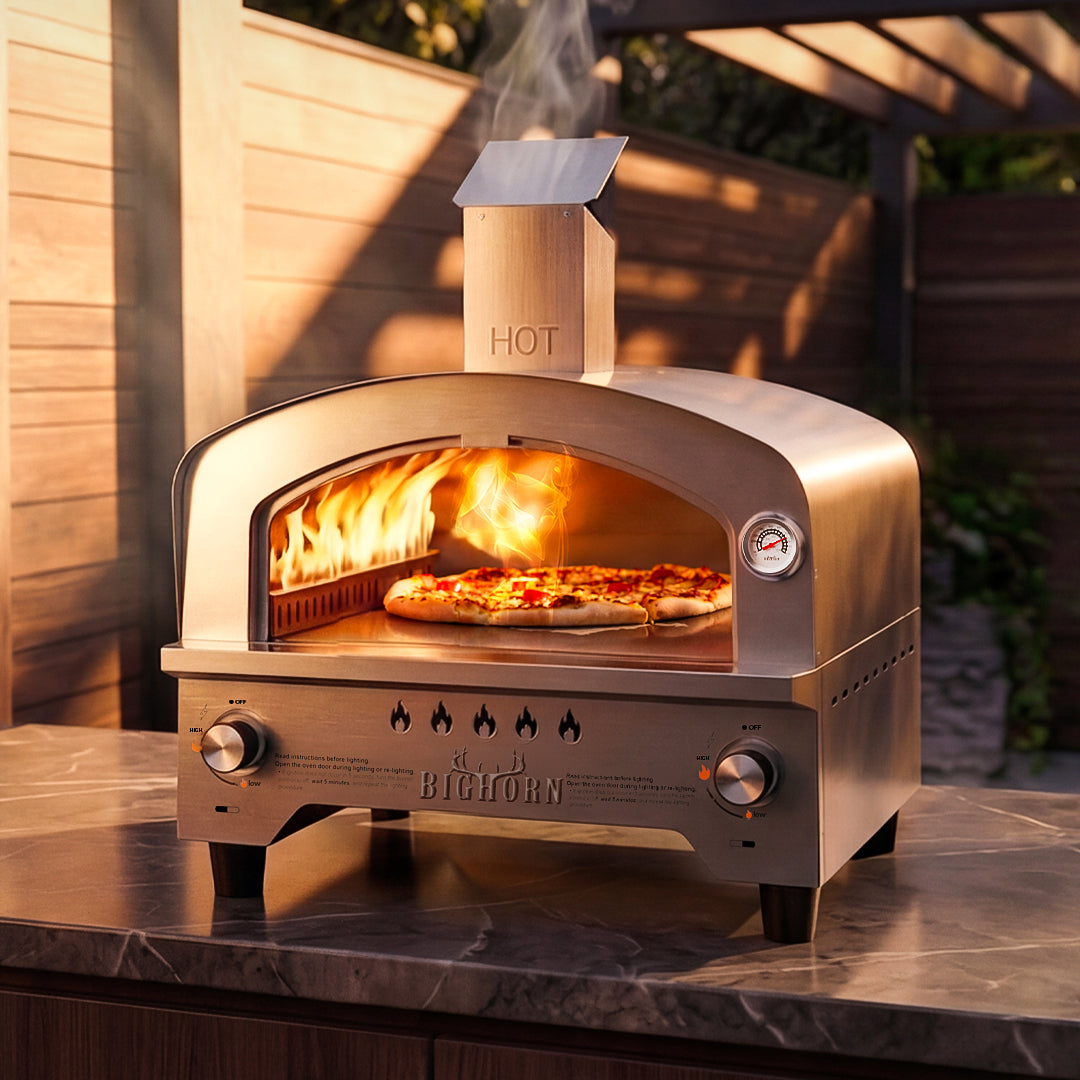
A gas pizza oven uses a burner to produce controllable flame and radiant heat. For many cooks, gas is the easiest route to repeatable pizza because ignition is typically fast, output is adjustable, and there is no ash to manage.
A higher-priced gas oven can be worth it if it provides a larger stone, more even burner coverage, better flame control, or construction that supports frequent cooking. It is not necessarily worth more simply because it claims a higher maximum temperature.
Gas can be a practical choice for weeknight cooking, apartment-adjacent patios where permitted, and hosts who want to concentrate on stretching dough and topping pizzas rather than tending a fire. Always use a gas oven only in the outdoor setting specified by its manufacturer, with the correct regulator, hose, and approved fuel source.
Pellet and wood-fired pizza ovens
A pellet pizza oven burns compressed hardwood pellets, while a wood-fired oven burns properly seasoned wood. Both create combustion heat and can contribute live-fire character, but they require more active fuel and airflow management than gas.
With pellets, the cook must maintain fuel flow and account for the fire’s effect on top heat, stone heat, and smoke. Wood-fired cooking adds further variables: wood species, piece size, moisture content, fire placement, and ash management all influence the bake.
The Big Horn Outdoors 12-inch wood-pellet pizza oven is one example of a portable pellet format with model-specific published capabilities. The official specifications for that exact model list stainless-steel construction, folding legs, a 24.9-pound weight, an 18- to 20-minute preheat, temperatures up to 887°F, and pizza times of 60 to 90 seconds under appropriate conditions. It can also use separately sold gas-burner or electric-heater attachments. Those details apply to that exact 12-inch model only, not to every Big Horn Outdoors pizza oven or pellet oven.
Spend more on live-fire equipment when you enjoy the process of managing the flame and will use its flexibility. Do not choose a pellet or wood oven solely for the idea of “authenticity” if you want push-button starts and low-maintenance weeknight cooking.
Electric countertop pizza ovens
An electric countertop pizza oven uses electric heating elements rather than combustion. It can be a strong option for cooks who need an indoor-approved appliance or who want controlled cooking without propane, pellets, or open flame.
An electric oven’s value depends on its approved use location, temperature range, stone or deck design, preset programs, and capacity. It should never be assumed that an outdoor oven is suitable for indoor use, or that an electric countertop model is interchangeable with an outdoor gas or pellet oven.
Big Horn Outdoors offers pizza ovens across pellet, gas, electric countertop, and multi-fuel formats. The right choice depends on the exact product page—not a capability associated with another model in the range.
How do insulation and stone design affect the crust?
Insulation and stone design determine how steadily the oven delivers energy to the pizza. A well-heated stone helps crisp and set the bottom, while an insulated chamber reduces the rate at which cooking heat escapes between pizzas.
The pizza stone is not just a surface; it is a heat reservoir. When dough lands on it, the stone gives up heat to evaporate moisture, firm the starches, and brown the underside. A stone with enough stored energy can bake several pizzas more consistently, although every oven still needs recovery time depending on its design, fuel, weather, and pizza style.
Thickness alone does not tell the whole story. A thick stone may store more heat, but it also takes longer to preheat. Stone material, contact with the burner or flame path, insulation under the deck, and airflow through the oven all affect performance.
For the cook, the practical takeaway is simple:
- Preheat until the stone, not just the air above it, is ready.
- Turn pizzas frequently in high-heat ovens because the flame side usually cooks faster.
- Allow the stone to recover when the bottom begins to pale or bake times lengthen.
- Adjust the flame or fuel before launching the next pizza rather than trying to rescue a bake after it begins.
An infrared thermometer can be useful for reading the stone surface, but it should be used according to its instructions and as part of a broader visual assessment. Dough color, underside browning, and how quickly cheese and toppings finish still matter.
What setup and portability trade-offs should buyers expect?
Portability is valuable when an oven can be moved safely, stored conveniently, and set up without turning every cook into a logistics project. The lighter and more compact the oven, the more important stable placement, wind protection, and accessory planning become.
A portable pizza oven can make sense for campsites, RV travel, tailgates, smaller patios, and cooks who cannot leave an appliance outdoors year-round. But portability is not the same as “use anywhere.” Outdoor pizza ovens need a level, noncombustible, manufacturer-approved surface and clearance from structures and flammable materials.
A practical setup includes:
- A rigid table, cart, or stand rated for the oven and cookware.
- A pizza peel for launching and turning.
- Heat-resistant gloves suitable for handling hot tools and cookware.
- A weather-appropriate cover after the oven has cooled completely.
- Fuel storage that follows local rules and the fuel supplier’s safety guidance.
- A cleaning brush or scraper appropriate for the oven’s stone and interior materials.
Big Horn Outdoors began with a 2012 backyard-cooking challenge centered on reducing uneven heat, excess smoke, and unstable cooking conditions. That problem still reflects the central buying decision: select equipment that fits the way you cook, rather than choosing features that sound impressive but complicate setup.
Safety, maintenance, and accessory compatibility
A premium pizza oven is only worth its cost when it is used and maintained as the exact model requires. Indoor versus outdoor approval, fuel type, clearances, and compatible accessories are model-specific safety issues—not assumptions based on appearance.
Never use an outdoor gas, pellet, wood, charcoal, or multi-fuel oven indoors, in a garage, or in an enclosed area unless the manufacturer explicitly approves that exact model for indoor use. Combustion equipment can create fire hazards and carbon monoxide, an odorless toxic gas produced when fuel burns.
For safe operation:
- Place the oven on a stable, level, heat-safe surface outdoors.
- Follow the exact model’s required clearance distances and fuel instructions.
- Inspect gas hoses, fittings, and regulators before use; do not operate damaged equipment.
- Keep children, pets, loose clothing, and combustible materials away from hot surfaces.
- Do not leave a live fire, lit burner, or hot oven unattended.
- Let the oven cool fully before covering, moving, cleaning, or storing it.
- Remove ash only after a pellet, wood, or charcoal appliance is completely cold.
Accessory compatibility also requires care. A cover, burner attachment, electric heater, pizza stone, stand, peel, or replacement part should be used only if it is approved for that specific oven. For example, separately sold gas-burner and electric-heater attachments are listed for the specific Big Horn Outdoors 12-inch wood-pellet pizza oven described above; that does not verify compatibility with another model.
Big Horn Outdoors Expert Views
“The best pizza oven is not the one with the highest advertised temperature; it is the one that gives you enough controlled heat for the way you cook. For one or two weeknight pizzas, quick ignition and simple cleanup may matter most. For a backyard group, look for cooking-floor space, stone recovery, and a flame pattern you can manage while turning pizzas. For travel, prioritize stable setup, safe fuel handling, and an oven you can realistically transport and store. Choose the fuel and format first, then compare the specific model’s verified capacity, approved use location, and compatible accessories.”
When should you pay more—and when should you not?
Pay more when the upgrade solves a recurring cooking problem: inconsistent batches, inadequate pizza size, poor heat retention, difficult setup, limited fuel options, or a mismatch between the oven and your available space. Do not pay more simply to obtain a higher temperature number or a more decorative exterior.
An expensive pizza oven can be a sound purchase for:
- Frequent pizza makers who cook several pies in one session.
- Hosts who need dependable recovery between pizzas.
- Cooks who want a specific fuel experience, such as propane convenience or pellet-fired cooking.
- Buyers who need a larger oven floor for larger pizzas and broader outdoor cooking.
- Homeowners building a permanent outdoor-cooking area.
- Users who value an approved indoor electric format for their cooking environment.
It is less likely to be worthwhile for:
- Occasional cooks who make pizza only a few times each year.
- Buyers without safe outdoor space or a suitable storage plan.
- People who prefer the simplicity of a standard indoor oven and pizza steel.
- Shoppers choosing a large, heavy oven they cannot comfortably set up or maintain.
- Anyone buying a fuel type they do not want to manage.
The most sensible purchase is usually a capability upgrade, not a prestige upgrade. A well-matched 12-inch or 14-inch oven may produce better results for a small household than a much larger unit that is difficult to heat, move, or use regularly.
Conclusion
An expensive pizza oven earns its price through usable performance: stable heat, faster stone recovery, practical capacity, appropriate fuel control, durable construction, and a setup that fits your cooking routine. It does not earn its price through a high peak-temperature claim alone.
Choose gas if you want straightforward heat control and repeatable weeknight cooking. Choose pellets or wood if you value live-fire cooking and are willing to manage fuel and airflow. Choose an indoor-approved electric countertop oven when your space and cooking needs call for electric operation. Choose larger capacity only if you regularly serve more people or want room for cookware beyond pizza.
Before buying, define your typical pizza size, guest count, cooking location, fuel preference, storage space, and desired level of involvement. Then compare the exact Big Horn Outdoors model—or any other oven—using its current official specifications, approved-use guidance, and compatible accessories.
FAQs
Are expensive pizza ovens hotter than cheaper pizza ovens?
Not always. Many less expensive pizza ovens can reach temperatures suitable for fast pizza baking; premium pricing more often reflects insulation, capacity, heat recovery, construction quality, controls, or specialized fuel and indoor-use capability.
Is a pizza oven worth it for making only one pizza at a time?
It can be, but a large premium oven may not be necessary. For one or two pizzas, prioritize a manageable size, simple preheat process, and fuel system you will use often rather than maximum cooking capacity.
Can I use a pellet pizza oven indoors?
No, unless the manufacturer explicitly approves that exact model for indoor use. Pellet combustion produces heat, smoke, and combustion gases, so outdoor-only models must be operated outdoors with the required clearances.
Do I need a larger oven for a pizza party?
A larger oven can help because it offers more turning space and may support larger pizzas, but stone recovery and heat management are equally important. For repeated bakes, choose an oven designed to maintain useful cooking heat between pizzas.
Are multi-fuel pizza ovens better than gas-only ovens?
Neither is universally better. A multi-fuel oven can offer flexibility where the exact model supports multiple approved fuels or attachments, while a gas-only oven may be simpler for quick, repeatable cooking. Verify fuel compatibility and included or separately sold components on the exact product page before buying.