A charred bottom can come from two distinct situations. When the top is already done and only the base is scorched, the deck ran too hot or the bake ran too long, and lowering the deck or shortening the bake is the lever. When the top is still underdone while the base burns, the heat is tilted toward the bottom; here you rebalance the deck against the top heat rather than just shortening the bake, because a shorter bake would leave the top raw. Name which situation you are in first, then change that one lever before judging the result.
The bottom heat versus top cook balance
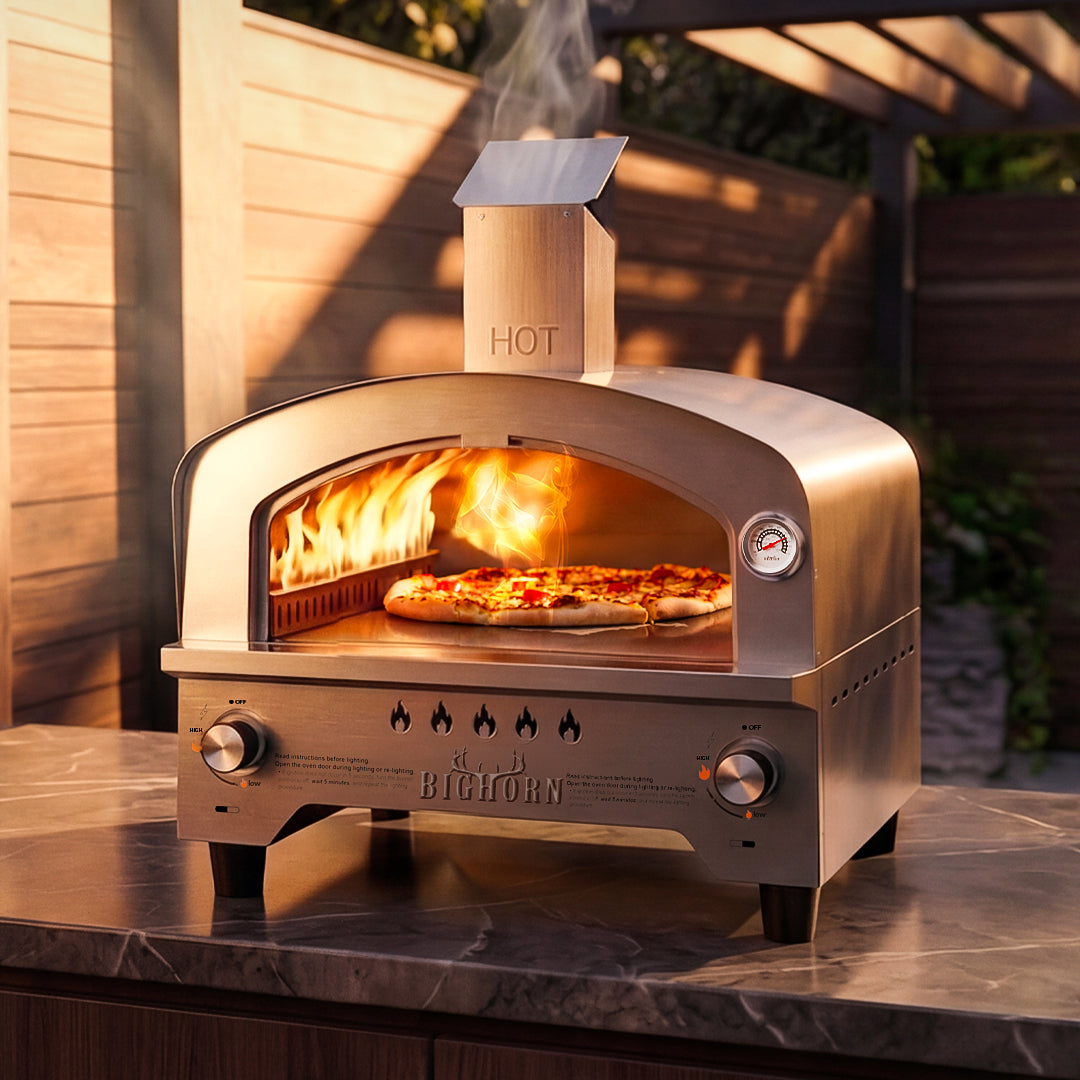
A pizza cooks from below and above at the same time. The deck drives heat into the dough base while overhead heat cooks the top. When the two are out of balance, the bottom darkens and blisters before the top sets. In most home ovens the base is the easier side to overdo because a hot deck keeps feeding heat into the dough; the flame position and deck temperature decide how fast that happens. The specific layout of a given model, such as where its burner sits, should be checked against that model’s manual or diagram rather than assumed from a photo.
How to confirm it is bottom heat and not something else
Start with the base and the top as two separate reads. Lift the pie on a peel and check the bottom: is the scorch even across the base, or only in one spot? Then check the top: is it fully baked, or still pale in the center? Write down four things for one control pie: the stone preheat time, whether the burn is even or local, whether the top finished before or after the base charred, and how long the bake was. An even, overall scorch usually points to the deck running hot, so confirm it by checking the stone surface temperature and comparing a control bake at a lower setting. A burn in one spot usually points to a local hot zone or debris, so brush the stone and check whether the same side burns again before changing the heat. A pale, underdone top at the same time points to a heat imbalance rather than time alone, so rebalance the top and deck instead of just shortening the bake.
| What you observe | Possible cause | Confirm before fixing |
|---|---|---|
| Scorched base, pale top, even across the pizza | Deck hotter than the top can keep up with | Confirm the deck was not over-preheated and compare bake time |
| Dark ring or spot on only one side of the base | Local hot zone or flame placement, not an overall-hot deck | Check whether the same side burns every bake before adjusting |
| Bottom scorches at the very end of the bake | Bake time too long for the deck temperature | If the top is already done, pull sooner; if the top is still pale, rebalance the top heat instead of pulling early |
| Base pale but top is burning instead | Top heat too high relative to the deck | Lower top heat or raise base before lengthening the bake |
Stone temperature and preheat: what changes the bottom
The deck temperature is the biggest lever for the base. A stone that is hotter than the oven air bakes the base fast, so a very hot deck can char a thin center while the rim is still pale. Whether the deck is too hot depends on your actual bake, not on a fixed preheat time, so use a consistent temperature read on the stone surface and note it, then compare the result across bakes. If the base is scorched but the top is done, you can lower the deck heat; if the top is still pale, raise the top heat or move the pie to finish up top instead of only dropping the base. Because every oven is different, the first pizza of a session is also informative: a strong, early base with a pale top means the deck is running ahead of the top heat, and a pale first base means the deck is still warming.

Bake time and the “burned bottom, raw top” pattern
Split the two cases rather than changing several things at once. Case one: the top is fully baked and only the base is charred. The base ran hot or the bake ran long, so change one thing at a time, either a shorter bake or a lower deck, and re-check which one helped. Case two: the top is underdone while the base burns. Shorter time would leave the top raw, so the lever is the heat balance, not time: raise the top heat or drop the base, then compare the next pie. Change one lever per bake so you can tell which variable was responsible.
Fuel and flame-height differences across gas, pellet, and electric
Fuel changes how the bottom takes heat. On the 15-inch dual side burner gas pizza oven, the flame height and how close it runs to the deck are the levers; check the recommended settings for your model rather than assuming a burner position. Pellet ovens build a live fire close to the stone, which tends to make the base run hot by design; with the top done, a shorter bake or a lower deck is the lever, and with the top still pale, rebalance the deck against the top heat rather than shortening the bake or assuming the deck is underheated. Electric models heat the deck evenly, so a burned bottom with a done top points to preheat time or bake time rather than flame placement. Matching the fix to your fuel and to the two cases above avoids chasing the wrong variable.
Related readings when the burn is one-sided or the middle is wet
Not every dark base is deck temperature. Scorched flour dust left on launch, stuck debris on the stone, or a very thin center that sets in seconds can all read as a burn without the deck itself being too hot. Rule those out by brushing the stone, changing nothing else, and using a clean, even-thickness dough before you adjust the heat. If the burn is only on one side rather than across the whole base, our guide to one side of the pizza burning covers the local hot-zone fix. For a wet rather than burned center, see our soggy middle guide. For a broader read on reading the crust before changing the heat, start with the high-temperature troubleshooting guide.