A 12-inch pellet pizza oven makes sense when your cooking style matches its scale. It is compact, portable, and well suited to one-pizza-at-a-time cooking. What it does not do is turn into a high-volume party oven simply because each pizza bakes quickly. The cooking surface, turning room, fire management, and stone recovery still set the pace.
The 12-Inch Number Is a Real Limit
A compact oven is easiest to use when the pizza leaves some room around its edges. Even if a dough can technically be stretched close to the maximum diameter, the cook still needs space to launch, turn, and retrieve it without pushing toppings into the flame or wall.

For many households, that is not a drawback. A 10- to 12-inch pizza is easy to portion for one or two people, encourages individual topping choices, and moves through a small oven quickly once the stone and fire are ready.
Where the Format Works Best
The strongest use case is a couple, small family, or solo cook who enjoys making pizzas in sequence. One person can stretch the next dough while another pizza bakes, and the interval between pies gives the stone time to recover.
The compact body also matters when storage and transport are part of the buying decision. A smaller pellet oven is easier to move than a large permanent backyard setup and makes more sense for patios, car camping, or households that cannot dedicate a large area to an oven year-round.
Where Expectations Go Wrong
The biggest mistake is equating a short bake time with unlimited throughput. A pizza may spend only a brief period in the oven, but the session also includes stretching, topping, launching, turning, removing, cleaning the stone surface when necessary, tending the fire, and recovering heat before the next pie.
That is why a 12-inch oven can feel excellent for two or four diners and slow for a large party. If ten guests all expect a whole hot pizza at the same moment, the problem is not the quality of the oven—it is production capacity.
Pellet Heat Requires Participation
A pellet oven is not a set-and-forget appliance. The fuel needs to stay dry, the feed path needs to remain clear, and the fire has to receive enough air to burn cleanly. The cook also has to notice how each refill changes the flame.
For someone who enjoys live-fire cooking, this is part of the appeal. For someone who wants to turn a dial and hold a stable flame with minimal intervention, a gas oven may be the more natural fit.
Stone Recovery Controls the Rhythm
The stone loses surface heat every time cold dough lands on it. The rear or flame-side wall may still look extremely hot after the pizza comes out, but that does not prove the center of the stone is ready for another launch.
If the first pizza has a beautifully browned base and the second comes out pale underneath, recovery is the first thing to investigate. Give the oven time to rebuild heat, manage the fire according to the manual, and use a consistent stone-temperature check if the manufacturer permits infrared measurement.
Plan Dough for the Oven You Own
A 12-inch oven is easiest to use when the dough is portioned for a true 12-inch or slightly smaller finished pizza. Oversized dough balls encourage thick centers, crowded toppings, and awkward launches.
When learning, moderate hydration is generally easier to handle than extremely wet dough. Consistency is more important than chasing a fashionable percentage: similar dough-ball weights and similar finished diameters make it easier to understand what the oven is doing from one pizza to the next.
What to Have Ready Before the First Bake
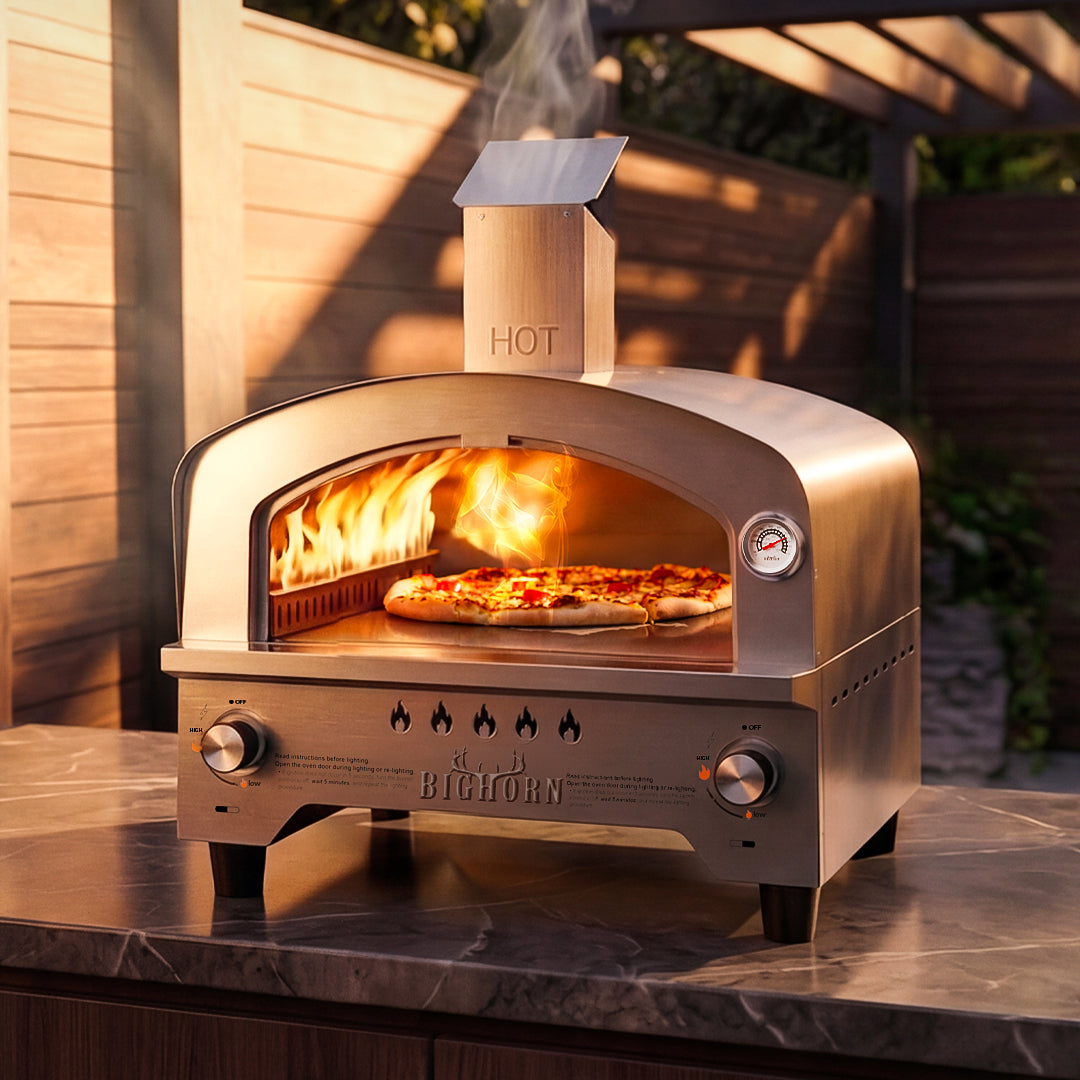
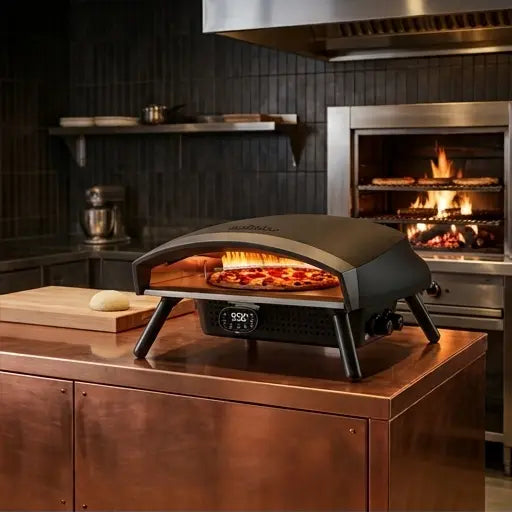
Do not assume every tool shown in a product photograph is included in the box. Check the current product listing and the manual for the exact model. Confirm the stone, pellet-feed components, door or chimney pieces, and any included tools before the first session.
A practical station normally includes a launching peel, a turning method appropriate for the oven, a safe place for the finished pizza, dry cooking pellets, and—if approved for use with the model—a way to compare stone temperature between launches.
When a Larger Oven Makes More Sense
Size up when larger pizzas are part of your normal menu, when you frequently feed groups, or when you want more room to rotate food without working close to the flame. A larger deck does not automatically make better pizza, but it gives the cook more physical space and can improve service flow for repeated bakes.
Stay with 12 inches when portability, storage, smaller portions, and live-fire cooking matter more than throughput. In that situation, the compact format is not a compromise. It is simply the right-sized tool.