
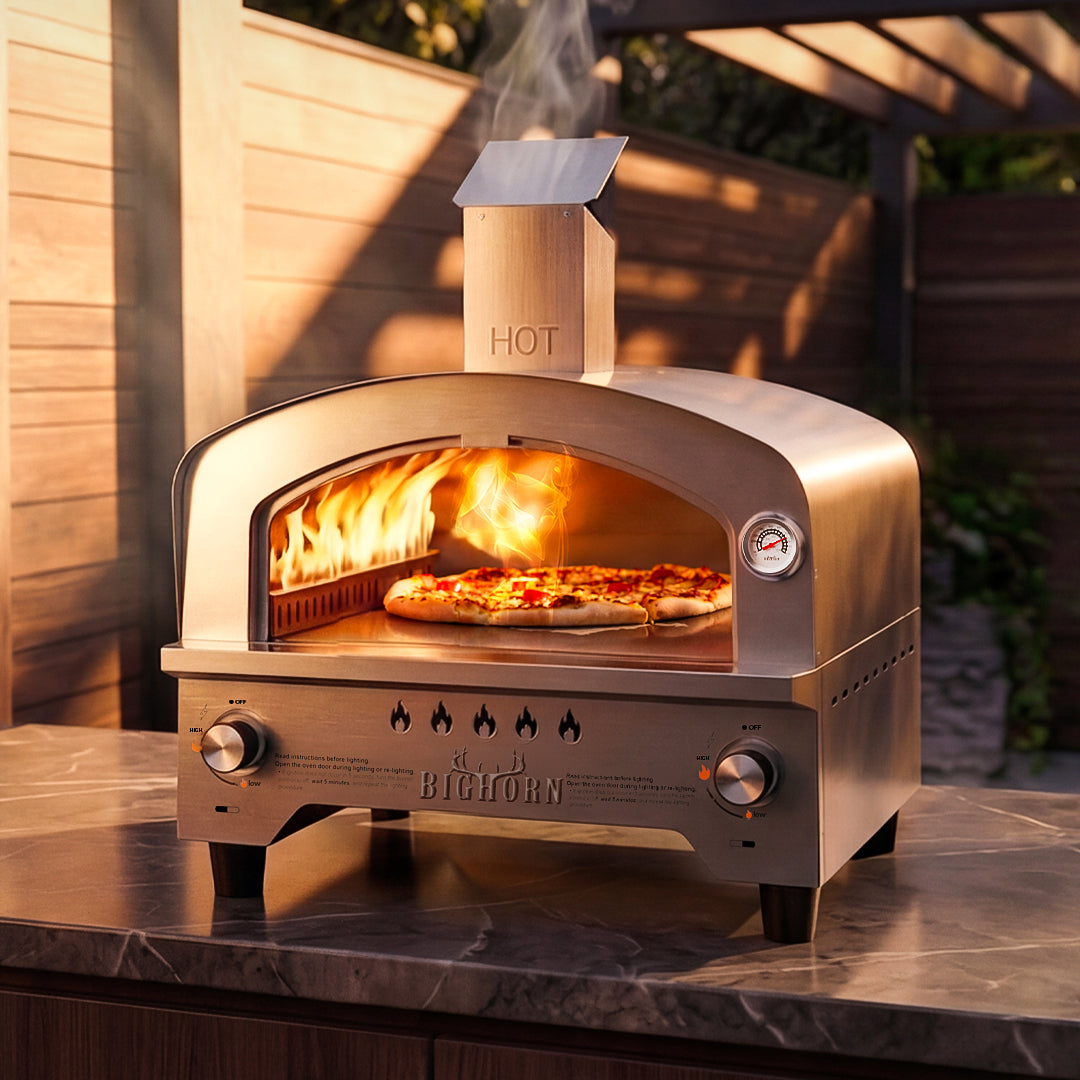
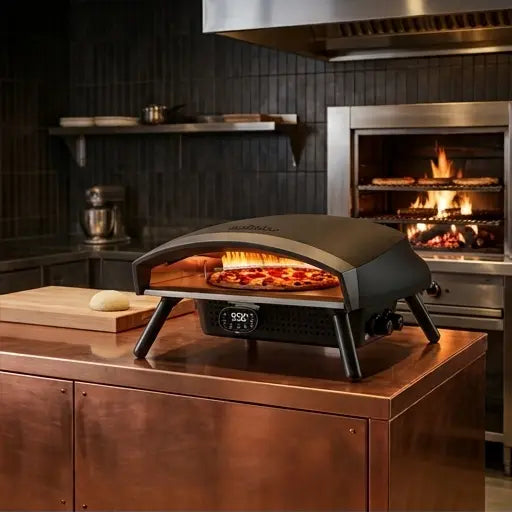
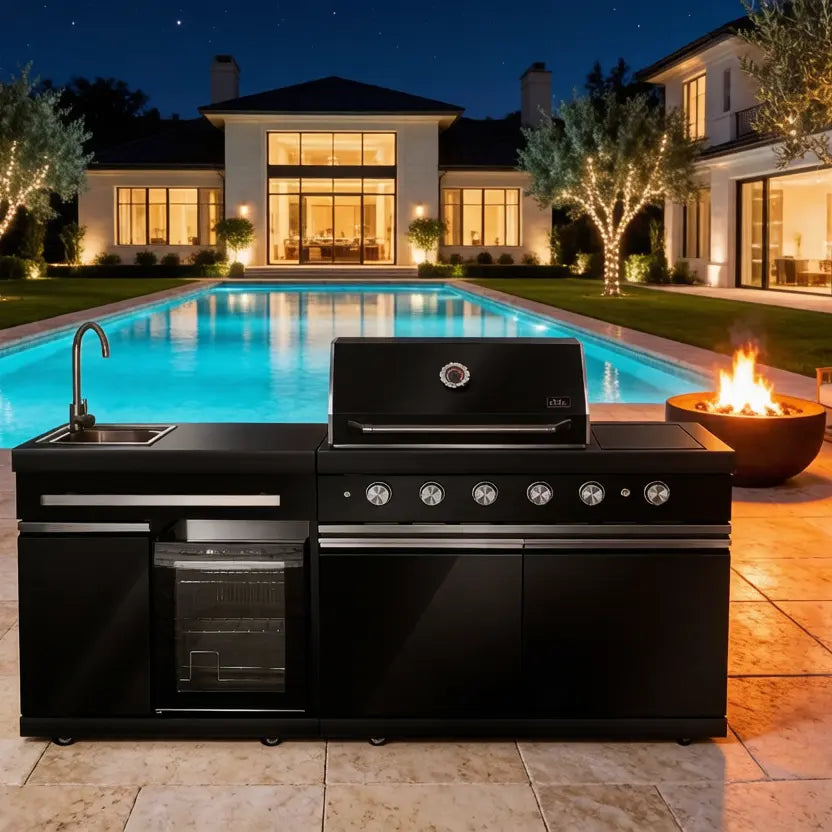
A propane pizza oven is reliable when the fuel system is routine: an approved cylinder, regulator, and hose, a cold leak check after every connection, a deliberate ignition sequence, and a cylinder stored upright away from heat. The gas formats from Big Horn Outdoors run on propane, and this guide teaches the fuel system.
What This Guide Answers
This page covers the propane system behind a gas pizza oven: cylinder formats, regulator and hose compatibility, leak checks, excess-flow devices, cold weather, and cylinder storage. It does not compare oven models or teach the bake; the fuel system is the subject.
The fuel system is where gas oven reliability is won. A household that runs the same components and checks every session gets dependable heat; one that improvises gets a troubleshooting session.
Cylinder Formats and Connections
Propane cylinders come in sizes, from disposable camping cylinders to refillable tanks, and the oven is designed for a specific connection. The regulator controls fuel pressure, and connector fit alone does not establish compatibility. Use only the cylinder, regulator, hose, and fittings approved for the oven.
Check the connection type before buying fuel, and confirm the destination rules if the oven travels. Some sites restrict cylinder sizes, so confirm before packing a large tank.
The Regulator and the Hose
The regulator turns cylinder pressure into a usable flame, and it must be the one approved for the oven. A mismatched regulator can deliver too little or too much gas while the fitting still connects, which is why compatibility is a model fact, not a guess.
Inspect the hose along its full length before every session, and check the regulator and fittings for damage. A worn hose or loose fitting is not a field repair; replace or correct it before lighting.
The Cold Leak Check
Perform the manufacturer's leak check after connecting a cylinder, after disturbing a fitting, and whenever damage or leakage is suspected, using the approved solution and never flame. Growing bubbles at a connection mean close the valve when safe and correct the issue.
Do not tighten a pressurized connection or add unapproved tape or sealant. If you smell gas, hear hissing, or see an abnormal flame, close the fuel when safe, move people away, and do not operate switches or create sparks.
Understand the Excess-Flow Device
Many systems include an excess-flow device that restricts gas flow when the connection is disturbed or the flow is abnormally high. If the flame is weak after a cylinder change, the device may have tripped, or the cylinder may be low. Turn everything off, follow the manual's reset sequence, and do not bypass the protection.
The device is protection, not an obstacle. Forcing more output past a tripped device risks an unsafe pressure condition, and the manual's reset is the correct path.
Cold Weather and Cylinder Storage
Cold weather changes the fuel math. Propane vapor pressure drops as the cylinder cools, so output can weaken and consumption rises. Keep the cylinder as warm as practical within the manual's guidance, protect the connection from ice, and plan the fuel supply with a reserve.
Store the cylinder upright in the approved outdoor position, away from heat, ignition, and enclosed living spaces. Never store a cylinder inside a house or enclosed area contrary to safety rules, and keep the valve closed with the protective cap in place when disconnected.
Big Horn Outdoors Expert Views
Propane pizza cooking is a fuel routine: approved components, a cold leak check after every connection, a deliberate ignition sequence, and a cylinder stored upright away from heat. The regulator and hose are the parts most likely to fail, and inspection is the cheapest insurance. The excess-flow device is protection, not an obstacle, and a weak flame after a cylinder change should be reset by the manual, never bypassed. Cold weather increases consumption and reduces vapor pressure, so the fuel plan follows the forecast. Big Horn Outdoors builds the gas line across its formats, and the manual for your exact oven defines the cylinder, regulator, and ignition sequence.
The Propane Pre-Session Checklist, Step by Step
The propane session opens with a checklist, and the checklist is a fixed order. Confirm the oven is outdoors, level, and at the manual's clearances, with the smoke path clear of doors and seating. Then inspect the hose along its full length, the regulator, and the fittings, and confirm the cylinder is upright, secure, and full enough for the session.
The leak check is the checklist's core, and it runs after every connection and disturbance. The approved solution goes on the fittings, the valve opens, and the bubbles are observed; growing bubbles mean the valve closes when safe and the issue is corrected before lighting. The leak check is never skipped, because it is the check that protects the session.
The lighting sequence follows the manual: controls off, cylinder valve open, then the burner. The flame is verified before food touches the surface, and the abnormal signs are watched for: lifting, soot, and a control that does not respond. The deliberate lighting sequence is the difference between a controlled ignition and a problem.
The cylinder behavior is part of the checklist. A weak flame after a cylinder change means an excess-flow device may have tripped or the cylinder is low, and the response is shutdown, reset, and inspect. The device is protection, not an obstacle, and the manual's reset sequence is the correct path.
The cold-weather branch of the checklist plans the fuel. Propane vapor pressure drops as the cylinder cools, so the output weakens and the consumption rises, and the fuel plan adds a reserve for the forecast. The cylinder is kept as warm as practical within the manual's guidance, and the connection is protected from ice.
The storage rules close the checklist. The cylinder lives upright in the approved outdoor position, away from heat and ignition, with the valve closed and the cap in place when disconnected. The storage rule is the checklist's final line, and it protects the space between sessions.
The checklist is reviewed when something changes: a new cylinder, a moved oven, or a long storage period. The review is the same order as the original, because the routine is only reliable when it is identical. The propane pre-session checklist is the fuel system's operating procedure, and the procedure is what makes the convenience safe.
The final note is the record. Note the cylinder level, the leak-check result, and the session's behavior, because the record shows when the fuel system was last verified. The record supports the troubleshooting when a session behaves differently, and the supported troubleshooting is the reason the routine works.
The compatible components complete the record: the propane gas burner with regulator and hose and the accessories collection hold the approved parts, and the model match should be confirmed on the current product page before any connection.
The fuel record is the checklist's final page. The cylinder level, the leak-check result, and the session's flame behavior are noted, and the note is the fuel system's history. The history is what the troubleshooting consults when a session behaves differently, and the consulted history is the reason the propane routine stays dependable.
The fuel record is the checklist's final page. The cylinder level, the leak-check result, and the session's flame behavior are noted, and the note is the fuel system's history that the troubleshooting consults when a session behaves differently.
FAQ
Can I use a propane pizza oven indoors?
No. Propane combustion produces carbon monoxide, so the oven must be used outdoors in an open, well-ventilated area. Never operate it inside a house, garage, tent, or enclosed patio.
How long does a propane cylinder last?
Cylinder life depends on burner time and flame level. Estimate the minutes of cooking at each setting, then add a reserve. A nearly empty cylinder can also activate an excess-flow device on connection.
Why is the flame small after I change cylinders?
An excess-flow device may have activated, or the cylinder, regulator, hose, or burner may need attention. Turn everything off, follow the manual's reset and inspection sequence, and do not bypass protective components.
Do propane pizza ovens come with a regulator and hose?
Package contents vary by model. Confirm the current product page and manual for the exact oven, and use only the approved regulator, hose, and cylinder connection.
Where should I store the propane cylinder?
Upright, in the approved outdoor position, away from heat and ignition sources. Never store a cylinder inside a house or enclosed area contrary to safety rules.
Conclusion
A propane pizza oven is only as reliable as its fuel routine. Use the approved cylinder, regulator, and hose, perform a cold leak check after every connection, understand the excess-flow device, and store the cylinder upright away from heat. See the current gas pizza oven collection for the models, and follow the manual for your exact oven. The fuel system is the foundation, and the routine is what makes propane cooking dependable.