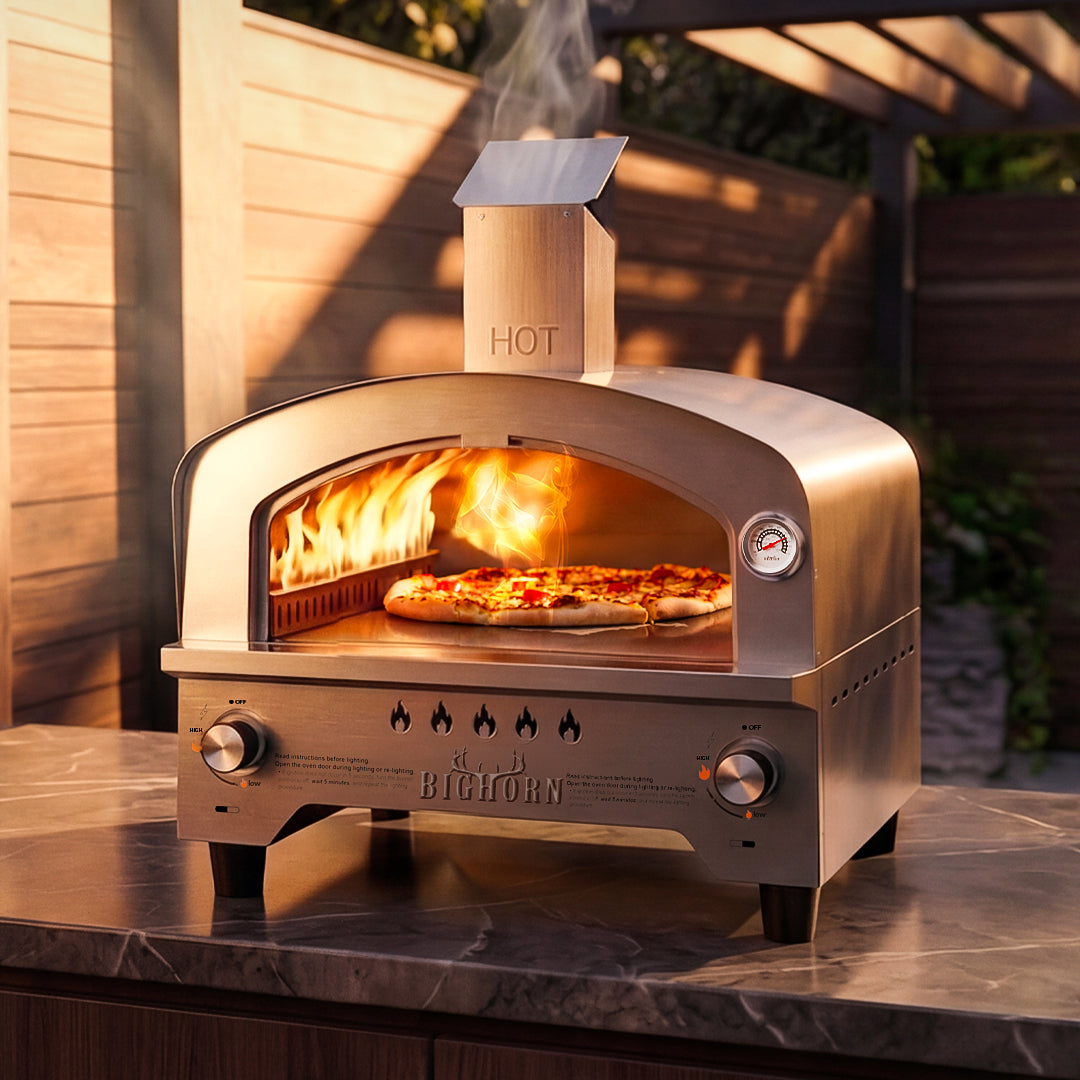
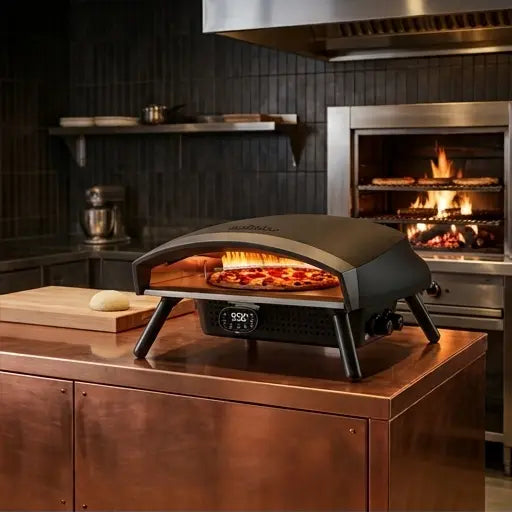
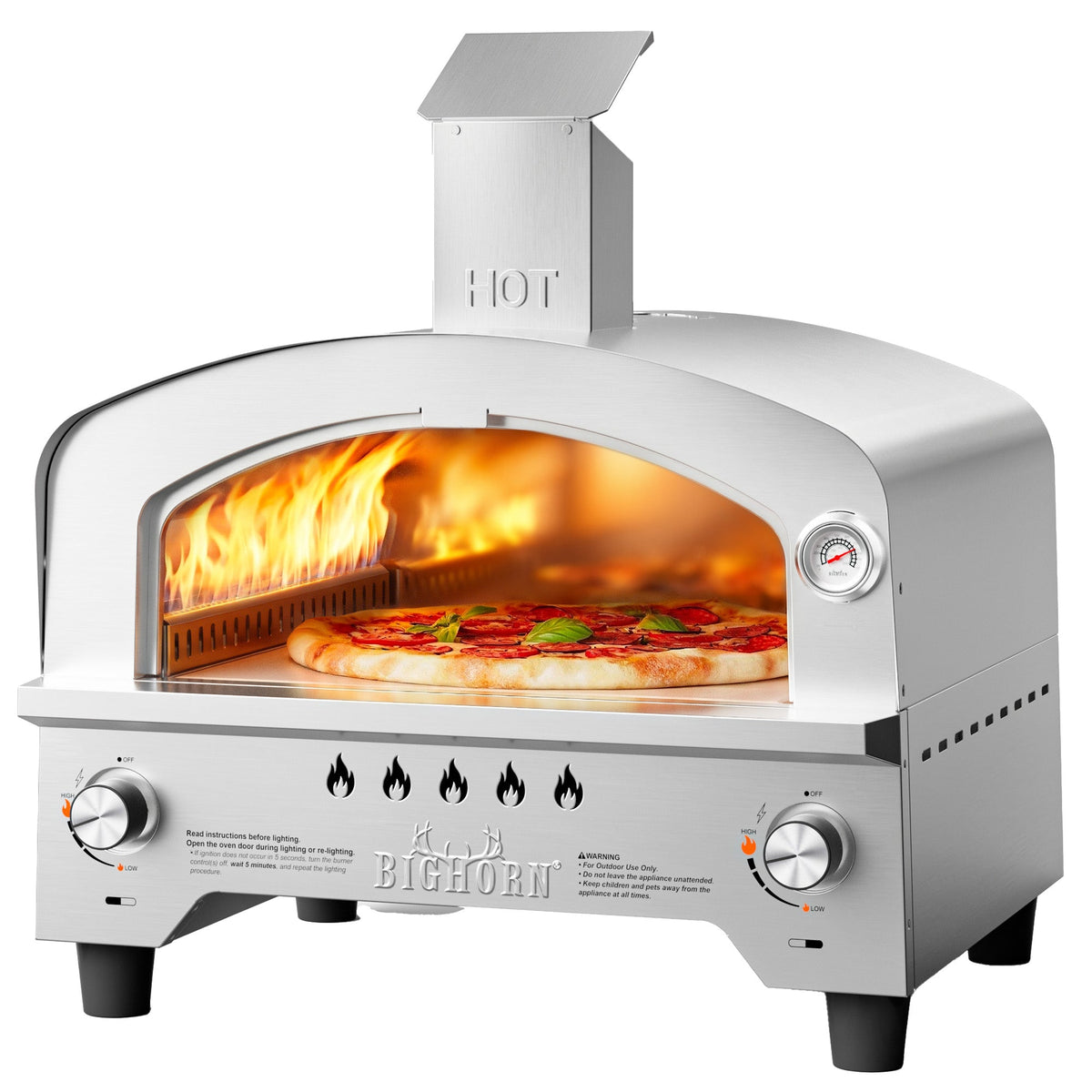
The 15-inch dual-burner gas pizza oven heats the stone more evenly than a single burner, and the skill is learning the two zones: start balanced, adjust one burner at a time, and read the stone rather than the dials. The model fits pizzas up to about 14 inches and paces family sessions, and this guide teaches the control that makes the format easy.
How the two zones behave
Two independently controlled side burners let each side of the stone run at a different output, which shapes how the pizza browns — with edges near each burner behaving differently from the center, and wind changing the pattern. Start a session with both burners at a similar setting and preheat fully. Then observe where the stone browns fastest before adjusting anything; the observation is the first step of the control.
Balance the burners, one at a time
Adjust one burner at a time and give the change time to appear in the stone. If the left edge burns early, reduce the left burner or turn the pizza slightly; changing both at once makes the result unreadable. Record the burner positions and bake results so the next session starts from a known configuration — the record becomes the oven’s real manual for your household.

Read the bake in order
When a bake misses, check the base first because the stone is the performance center: a pale base means it needed more preheat or recovery. Then check the top, the edge nearest each burner, and the dough. Adjust one variable, never both at once. Use the built-in thermometer as a reference, but verify the stone when the manual recommends one, because the chamber reading and the stone’s state are different numbers.
Pace the family session
The 15-inch format serves households cooking for several people: a roughly 14-inch pizza feeds several diners, and the larger stone reduces the number of sequential bakes. Run the session as a sequence — preheat, bake, recover, repeat — and keep the burners set so the stone stays hot between pies. Topping pizza ahead lets you keep a steady flow without scrambling mid-bake.
Dual-burner tips and answers
How do you get even bakes on a windy day?
Wind changes how each burner behaves, pushing heat toward one side of the stone. On a breezy day, shield the oven from the direct wind and start with both burners slightly higher, then adjust the windward burner down once the stone is hot. Shelter the flame and let the stone settle before baking; wind is the biggest external variable on a dual-burner cook.
How many people does a 15-inch session feed?
A roughly 14-inch pizza feeds several diners, and the larger stone means fewer sequential bakes than a 12-inch oven. For a family of four to six, two to three pizzas cover the meal, baked back-to-back with a short recovery between. The format is built for family throughput, not just single pies.
How do you build a repeatable burner routine?
Record your burner positions, the preheat time, and the bake result for a few sessions. You will find a baseline that works for your patio — say, both burners at medium, preheat 12 minutes, then nudge one burner for the common hot spot. The note becomes your household’s manual, and repeatability beats guesswork every time.
What should you do when a bake comes out uneven?
Work through the bake in order: base, top, edges, dough. A pale base means a cold stone — preheat and recover more. An uneven edge means the burner on that side runs hot — nudge it down one step. Rotate the pizza partway through as a habit, then adjust one variable at a time until the result is even.
What happens if you run both burners fully?
Running both burners at full output pushes the chamber to its hottest and fastest bake, but it sharpens the hot spots near the burner edges. It is the right setting for a quick, high-heat bake when you accept more edge row color; for family sessions, a medium balanced setting is usually steadier. Use full output for speed, and back off for consistency.
How do you warm the stone between bakes?
Keep both burners set and give the stone 20–30 seconds of recovery between launches without opening the chamber more than needed. The stone recharges while the next pizza is built, and the steady burners hold the chamber heat. A short, disciplined recovery keeps consecutive family pies identical.
How do you adapt the technique to your patio?
Every patio has its own wind and layout, so treat the burner settings as a starting baseline and tune by observation. Record which side of the stone browns fastest in your spot, then bias the opposite burner slightly to compensate. After a few sessions you will have a personal setting that turns the dials into even bakes on your exact setup.
When is the built-in thermometer enough?
The built-in thermometer is a reliable chamber reference for everyday cooking, but it reads air, not the stone. For the most consistent results, confirm the stone with an infrared check when recovery matters — for example, before the first pie and after a long break. The thermometer guides; the stone decides.
Dual-burner control FAQs
Why does one side of my pizza burn first?
Wind or a slightly unbalanced burner is the usual cause. Reduce the burner on the burning side, or turn the pizza slightly, and let the stone settle before the next bake.
Should I set both burners the same?
Start with both similar, then adjust one at a time based on where the stone browns fastest. Identical settings are the baseline, not the rule.
How do I know the stone is ready?
Use the built-in thermometer as a guide, but confirm the stone with a manual or infrared check when possible. A fully heated stone is what turns the dials into even bakes.
To confirm the current specs, review the 15-inch dual-burner gas pizza oven product page.