Rotating Stone Gas Pizza Oven: Is the Automation Worth It?

ByJohn White
Share

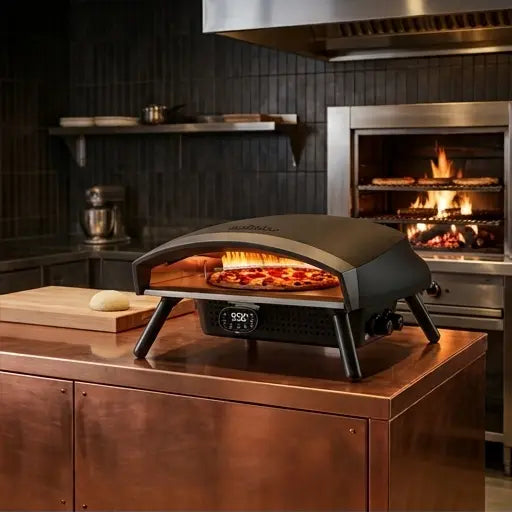
A rotating stone gas pizza oven is worth buying when you regularly bake larger pizzas and want even browning with less manual turning, and you accept the mechanism's maintenance. The 16-inch auto-rotating model from Big Horn Outdoors combines a rotating ceramic stone, a digital thermometer, and a dual-burner system, and this guide evaluates the automation.

What This Guide Answers

This page evaluates the auto-rotating stone gas pizza oven: what rotation does, when the automation helps, the mechanism's maintenance cost, and how to decide whether the convenience fits your sessions. It does not teach the bake or compare every gas model; it answers the worth-it question.

Automation is a convenience with a cost. The evaluation compares the benefits, even browning and less turning, against the maintenance and the format's size.

What Rotation Actually Does

The rotating stone moves the pizza continuously through the oven's heat zones, spreading exposure evenly across the crust. In a stationary single-burner oven, the side nearest the flame browns fastest; rotation balances that effect across the whole pizza.

Rotation is a convenience that changes the workflow, not a replacement for monitoring. The stone still needs a full preheat, the toppings still need to finish, and the cook still watches the result.

When the Automation Helps

Automation helps when the sessions match its design: larger pizzas, entertaining, and cooks who want even browning without timing every turn. The 16-inch format fits pizzas up to 16 inches, and the rotating stone supports guests' pace while the host manages the rest of the meal.

It does not help when the fundamentals are missing. A cold stone produces a pale base no matter how smoothly it rotates, and heavy toppings slow the bake regardless of the mechanism.

The Maintenance Cost

The rotating mechanism adds moving parts that need inspection and cleaning. Check the rotation before each session, clear debris after cooling, and follow the manual's care guidance. A smooth, well-maintained mechanism is what actually delivers the convenience.

If rotation becomes uneven or stops during a bake, monitor the pizza closely and turn it by hand if the oven design allows, then investigate the mechanism after cooling. The maintenance is part of ownership, not an exception.

Compare Against Manual Turning

Factor Manual Turning Auto-Rotating Stone
Heat management Cook turns the pizza Stone rotates continuously
Turning effort Regular intervention Mechanical rotation
Temperature reference External thermometer Built-in digital thermometer
Maintenance Simpler Mechanism needs care
Best match Smaller sessions Larger pizzas, gatherings

The comparison makes the tradeoff explicit: automation reduces effort and adds maintenance, and the format's size serves larger gatherings. Small-session cooks may prefer the simpler manual format.

Decide by Your Sessions

Count the large-pizza sessions per month and the hosting frequency. A household that regularly bakes 16-inch pies for groups gets the most from the automation; one that bakes small pizzas occasionally may not justify the mechanism.

Confirm the specifications and package contents on the current product page, and set up the oven outdoors at the manual's clearances. The decision follows the calendar, not the feature list.

Big Horn Outdoors Expert Views

An auto-rotating stone is a genuine convenience that comes with a responsibility: the mechanism is a component that needs inspection and care. It spreads heat exposure evenly and reduces manual turning, but it does not replace the full stone preheat, the monitoring of the bake, or the recovery between pizzas. The digital thermometer supports a repeatable process, and the dual-burner system shapes the heat that the rotation distributes. The format serves cooks who regularly bake larger pizzas; for small sessions, a compact manual-turn oven may fit better. Big Horn Outdoors built the 16-inch auto-rotating model for assisted outdoor cooking, and the manual for your exact oven defines the mechanism's care.

The Automation Decision, Worked Through

The rotating stone decision is worked through with the session calendar, not the feature list. Count the large-pizza sessions per month, the gatherings that would benefit from even browning, and the hosting frequency, because the automation earns its cost when the calendar uses it. A household that bakes a 16-inch pie weekly for guests gets the value; one that bakes small pizzas monthly does not.

The comparison against manual turning is the second part of the decision. A manual-turn oven puts the cook's attention in the bake, and a host with divided attention can miss a turn; the rotating stone manages the exposure mechanically, but it still needs monitoring because dough and toppings change the bake. The comparison is about attention and maintenance, not about quality.

The maintenance cost is the third part. The rotating mechanism adds moving parts that need inspection and cleaning, and the convenience carries that cost into the ownership routine. A household that accepts the maintenance gets the convenience; one that skips it gets a mechanism that fails mid-session.

The format's size is the fourth part. The 16-inch surface and the auto-rotating mechanism serve larger pizzas and gatherings, and the footprint and storage follow. A household with the space and the gatherings fits the format; one with a small patio or a travel habit may prefer the compact manual-turn models.

The temperature reference is part of the value. The built-in digital thermometer supports repeatable bakes, and the cook uses it with the stone's readiness, because the chamber reading and the stone's state are different numbers. The thermometer is the reference tool, and the stone is the performance center.

The session with the auto-rotating oven is the test of the decision. Preheat the stone fully, confirm the rotation before launch, and monitor the first minute, then adjust the burners if one side browns faster. The tested session is the decision's evidence, and the evidence is the household's answer.

The maintenance routine is the ownership commitment. Check the rotation before each session, clear debris after cooling, and follow the manual's care guidance for the drive components. The routine is short and scheduled, and the scheduled routine is what keeps the automation reliable.

The final part of the decision is the fallback. If the rotation stops during a bake, the cook turns the pizza by hand if the design allows and investigates the mechanism after cooling, and the manual's troubleshooting is the reference. The fallback is part of owning the automation, and the prepared owner is the confident one.

The decision closes with the honest answer: the rotating stone format is worth it for the household that bakes large pizzas regularly and accepts the mechanism's care, and it is not worth it for the household that bakes small sessions occasionally. The calendar, the attention, and the maintenance decide, and the decided household buys with confidence.

The alternatives complete the comparison: the gas pizza oven collection shows the manual-turn formats, and the accessories collection holds the tools that support either choice.

The decision's final check is the package contents. The 16-inch auto-rotating model's stone, thermometer, and burner configuration are confirmed on the current product page, because the automation's value depends on what actually ships. The confirmed package is the evaluation's completion, and the completion is the confident purchase.

The decision's final check is the package contents. The 16-inch auto-rotating model's stone, thermometer, and burner configuration are confirmed on the current product page, because the automation's value depends on what actually ships.

FAQ

Do I still need to turn pizza in an auto-rotating oven?

The rotating stone turns the pizza continuously, so manual turning is generally not needed. Monitor the bake anyway, because dough, toppings, and weather still affect cooking time.

How big a pizza can a rotating stone gas oven bake?

The 16-inch auto-rotating model fits pizzas up to 16 inches. Confirm the exact cooking surface and package contents on the current product page.

Is the rotating mechanism difficult to maintain?

The mechanism needs inspection and clearing of debris according to the manual. Keep it clean and follow the troubleshooting steps if rotation becomes uneven.

Is a rotating stone oven worth the extra cost?

It is worth it for cooks who regularly bake large pizzas and value even browning with less manual intervention. For small sessions, a compact manual-turn oven may be the more practical choice.

Can the oven still cook without rotation?

Follow the manual for the exact model. If rotation stops during a bake, monitor the pizza closely and turn it by hand if the oven design allows, then investigate the mechanism after cooling.

Conclusion

A rotating stone gas pizza oven is worth buying when large-pizza sessions and less manual turning justify the mechanism's maintenance. The 16-inch gas pizza oven combines the rotating ceramic stone, a digital thermometer, and a dual-burner system for assisted outdoor cooking. Confirm the specifications and package contents on the current product page, and compare the gas collection for the alternative formats. The evaluation follows your sessions, and the automation earns its place when the calendar uses it.


More to Read

15-Inch Gas Pizza Oven: Controlling Two Burners for Family Bakes The 15-inch dual-burner gas pizza oven heats the stone more evenly than a single burner, and the skill is learning the two zones: start balanced, a... Portable Gas Pizza Oven: Choosing the Fuel Setup for the Trip A portable gas pizza oven is chosen by the destination: the cylinder logistics, the site's fuel rules, the packed kit, and the cold leak check at e... Propane Pizza Oven: Cylinders, Regulators, and Leak Checks A propane pizza oven is reliable when the fuel system is routine: an approved cylinder, regulator, and hose, a cold leak check after every connecti...