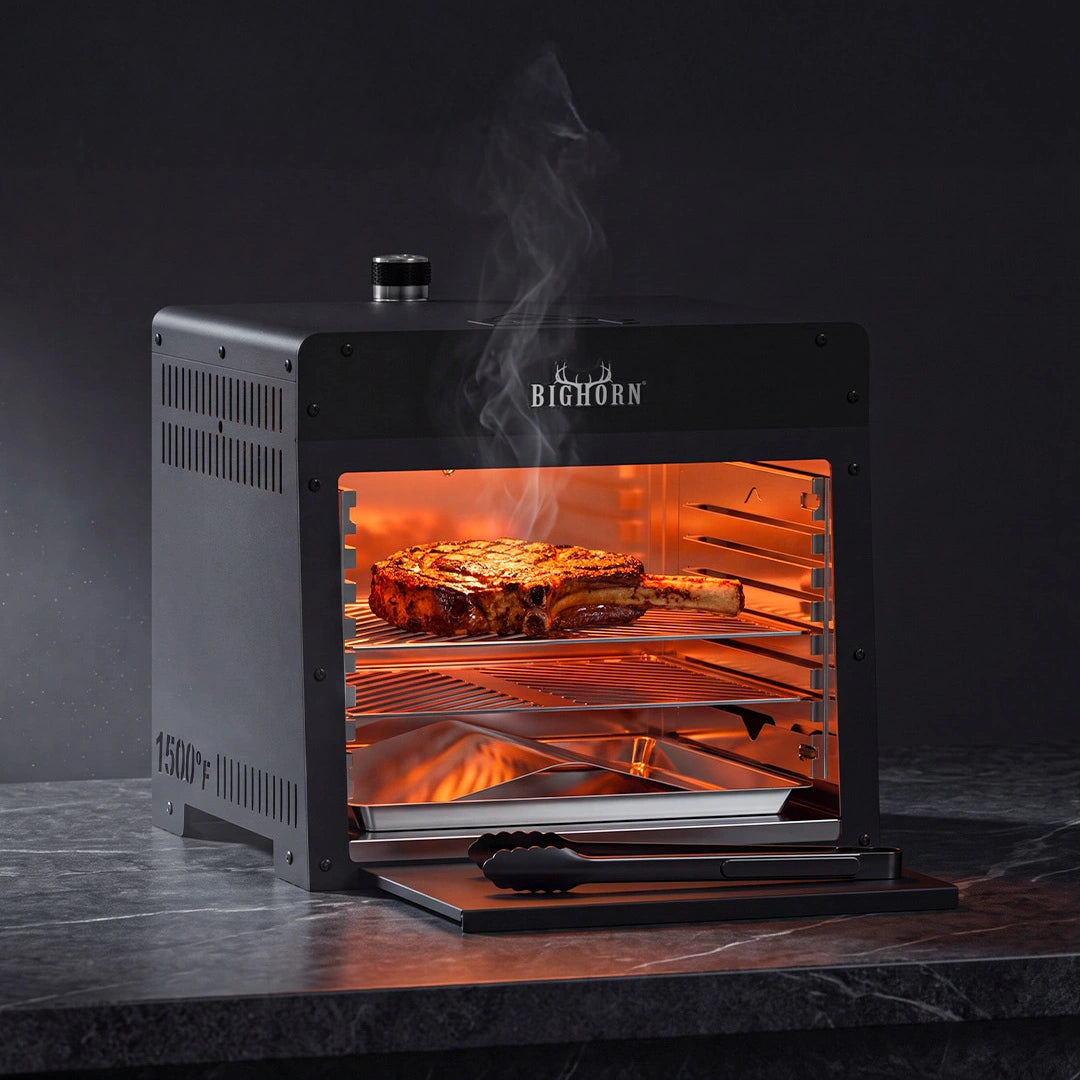
A 1500°F grill rating describes an infrared grill that concentrates intense radiant heat directly onto the food, and for most home cooks the practical takeaway is short: it preheats in minutes, sears a crust in tens of seconds, and changes the way you cook steak outdoors. The 1500° number is a peak heat claim, not a promise that you will cook everything at 1500°F — the skill is moving food between the hot zone and a gentler zone as it cooks. This guide explains the temperature, what makes a 1500-degree grill different, the features that decide whether one fits you, and the mistakes that trip up first-time owners.
Specifications here are traceable to the official Big Horn Outdoors product listing, and current pricing belongs at checkout because promotions move faster than specs.
Understanding temperature before you decide
Infrared grills work differently from conventional gas grills. A gas grill heats the grates and the air around the food; an infrared grill uses a ceramic emitter to radiate heat directly onto the food surface from above or below. That is why a 1500°F rating matters: the surface sees extreme heat immediately, while the air temperature stays lower. The result is a fast crust and fewer flare-ups, because the flame never touches the food.
Peak temperature alone is a weak comparison tool. A grill that reaches 1500°F in the first minutes is different from one that takes twenty minutes to settle, and a hot emitter is useless if the food burns before the interior cooks. Compare preheat time, burner design, rack positions, and cooking area — not just the number on the box.
What actually matters for this decision
- Preheat time. A 1500-degree infrared grill should reach searing heat in 3–5 minutes; a long preheat defeats the point of the format.
- Burner output. The Big Horn 16-inch model runs a 19,000 BTU ceramic infrared burner, which is what produces the fast, concentrated heat.
- Rack positions. Ten adjustable positions let you sear close to the emitter and finish at a lower zone around 450°F (232°C).
- Included pieces. Two cooking plates plus a pizza stone give the grill a range beyond searing — bake or hold a second dish while you sear.
- Portability. A tabletop stainless steel body fits a trunk, RV cabinet, or camping bag.
Matching the choice to your situation
A 1500-degree grill fits a steak-focused cook who wants restaurant-style crusts at home, on the patio, or at the tailgate. It is also a strong fit for anyone who already owns a conventional grill and wants a fast, intense searing zone without firing up the big unit. It is a weaker fit for low-and-slow cooks: the format is not built for smoking, and a tabletop grill has a smaller cooking area than a full-size backyard grill. If most of your grilling is slow barbecue, keep the smoker and add a searing tool only if the crust is the part you miss.
How a 1500-degree grill performs in practice
On the upper rack positions, a steak sears in tens of seconds per side; moving it to a lower rack finishes the interior without burning the surface. The heat is intense enough that a thin steak can go from seared to overdone very quickly, so an instant-read thermometer or probe is not optional. Once the preheat is fully soaked in — grates and stone at temperature, not just the air — the results are repeatable.
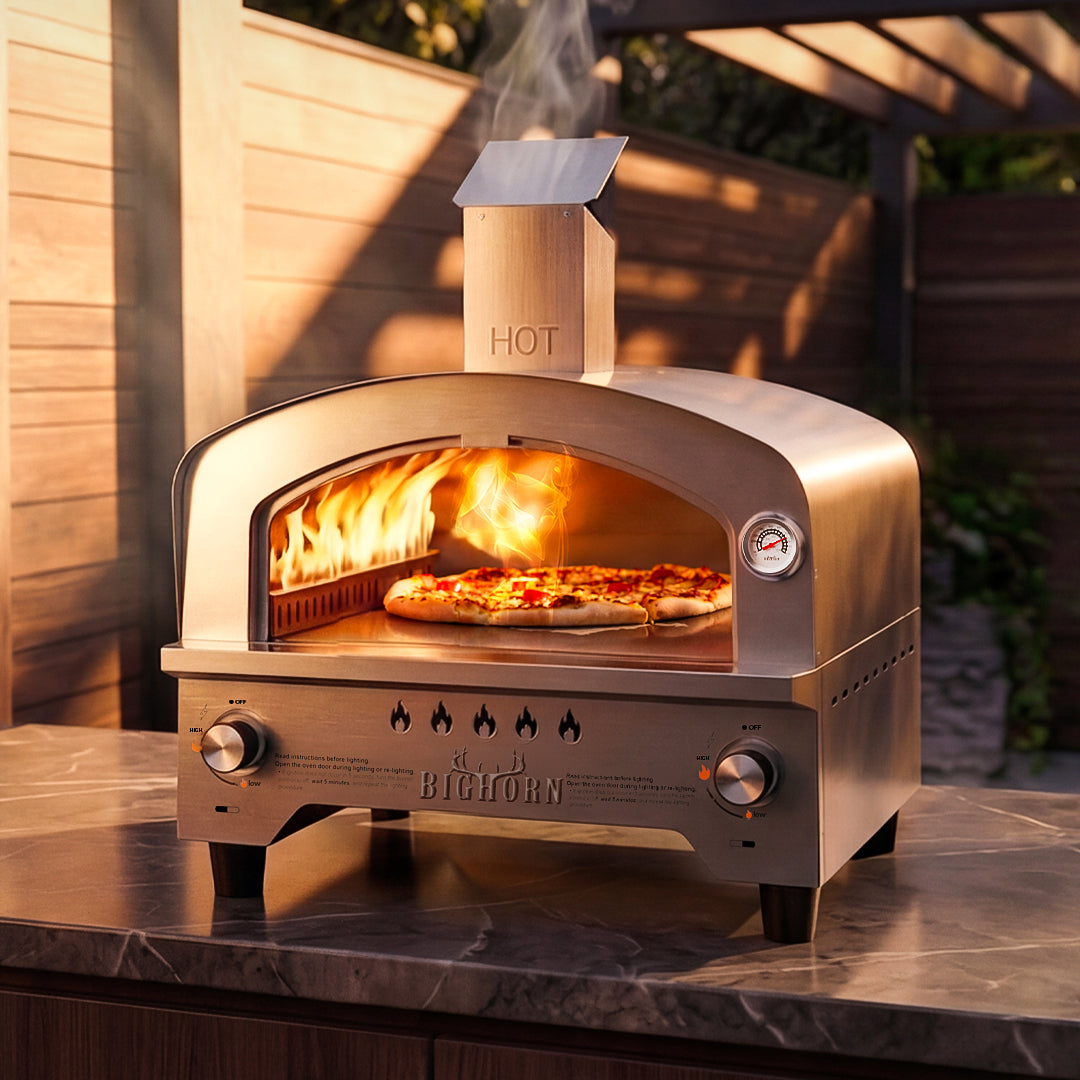
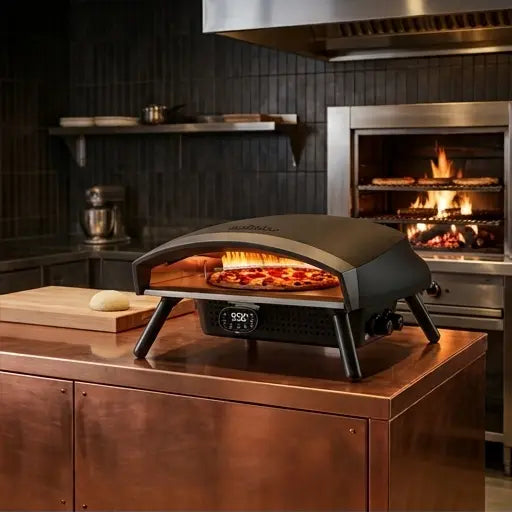
The same tool handles chops, burgers, seafood, and vegetables that benefit from high, dry heat. The included pizza stone converts the grill to a small outdoor pizza or flatbread baker, and the lower rack zone cooks vegetables or reheats sides without charring them.
Common mistakes and how to avoid them
- Cooking before the preheat settles. The unit may feel ready in the first minutes; soak the preheat so the grates and stone are fully hot.
- Leaving thin cuts on the high rack. Thin steaks and fish need shorter contact; use the lower rack or shorten the time.
- Ignoring the thermometer. At 1500°F, surface changes happen in tens of seconds; a probe is the difference between a crust and a burned surface.
- Overloading the grate. A tabletop unit has a compact cooking area; cook in batches instead of crowding food.
- Expecting slow-cook capability. This is a searing tool, not a smoker; match the tool to the job.
Realistic expectations and results
With a fully preheated emitter and a probe in hand, a 1500-degree grill produces the fast, deep crust that is the whole point of the format — and it does it in minutes instead of a long warm-up. The limits are the format’s own: a smaller cooking area than a full-size grill, and no low-and-slow capability. A 1500°F rating is not magic; it is a focused tool that rewards attention and technique.

The takeaway in one paragraph
A 1500-degree grill is worth buying when you want fast, intense searing outside the kitchen and you understand the trade-off: it is a specialist tool, not a do-everything grill. The Big Horn 16-inch model delivers the format’s promise — 19,000 BTU ceramic infrared heat, 3–5 minute preheat, ten rack positions, and the included plates and stone — at a portable size that fits a patio, campsite, or tailgate. If your cooking is about the crust, this is the tool for it.
See the current 1500°F portable infrared grill and the full infrared collection. Big Horn portable infrared broiler · infrared grill collection
FAQ
How long does it take a gas grill to get to 500 degrees?
A typical gas grill takes 10–15 minutes to reach around 500°F at the grates, depending on burner output and ambient conditions. An infrared grill is different: the Big Horn 16-inch model reaches about 1500°F in 3–5 minutes because the ceramic emitter radiates heat directly onto the surface instead of heating a large air volume first.
Which infrared grill is best for steak?
The best infrared grill for steak is one that preheats fast, sears close to the emitter, and lets you move food to a gentler zone to finish. The Big Horn 16-inch portable infrared broiler fits that pattern with a 19,000 BTU ceramic burner, ten rack positions, and a lower zone around 450°F. Match the model to how you cook: a dual-burner 21.2-inch model adds a wider searing zone for thicker steaks or a crowd.
How hot does a Schwank grill get?
Schwank’s portable infrared grill is also marketed at around 1500°F, using overhead infrared burners to sear quickly. The 1500° class is shared by several portable infrared brands; the practical comparison is preheat time, burner output, included accessories, and price, not the peak number.
Will 500 degrees clean a grill?
No — 500°F is not enough to burn off grill residue, and self-cleaning by high heat can damage grates and burners. The reliable routine is to brush the grates after each cook, protect the infrared burner from scraping, and manage grease with a drip tray. High heat alone is not a cleaning shortcut.