A 16-inch pellet pizza oven is engineered for outdoor cooking enthusiasts who demand the surface area needed for large, family-sized pies while enjoying the authentic, wood-fired flavor of hardwood pellets. Big Horn Outdoors offers high-performance outdoor pizza ovens, pellets, cooking accessories, and dough-planning tools designed to help backyards reach restaurant-quality results.(Edited on August 9, 2026)
Choosing the right outdoor oven requires understanding capacity, thermal performance, fuel dynamics, and proper setup. This guide covers everything you need to know—from stone temperatures and preheating times to fuel comparisons, maintenance, and safe operation.
What Is a 16-Inch Pellet Pizza Oven?
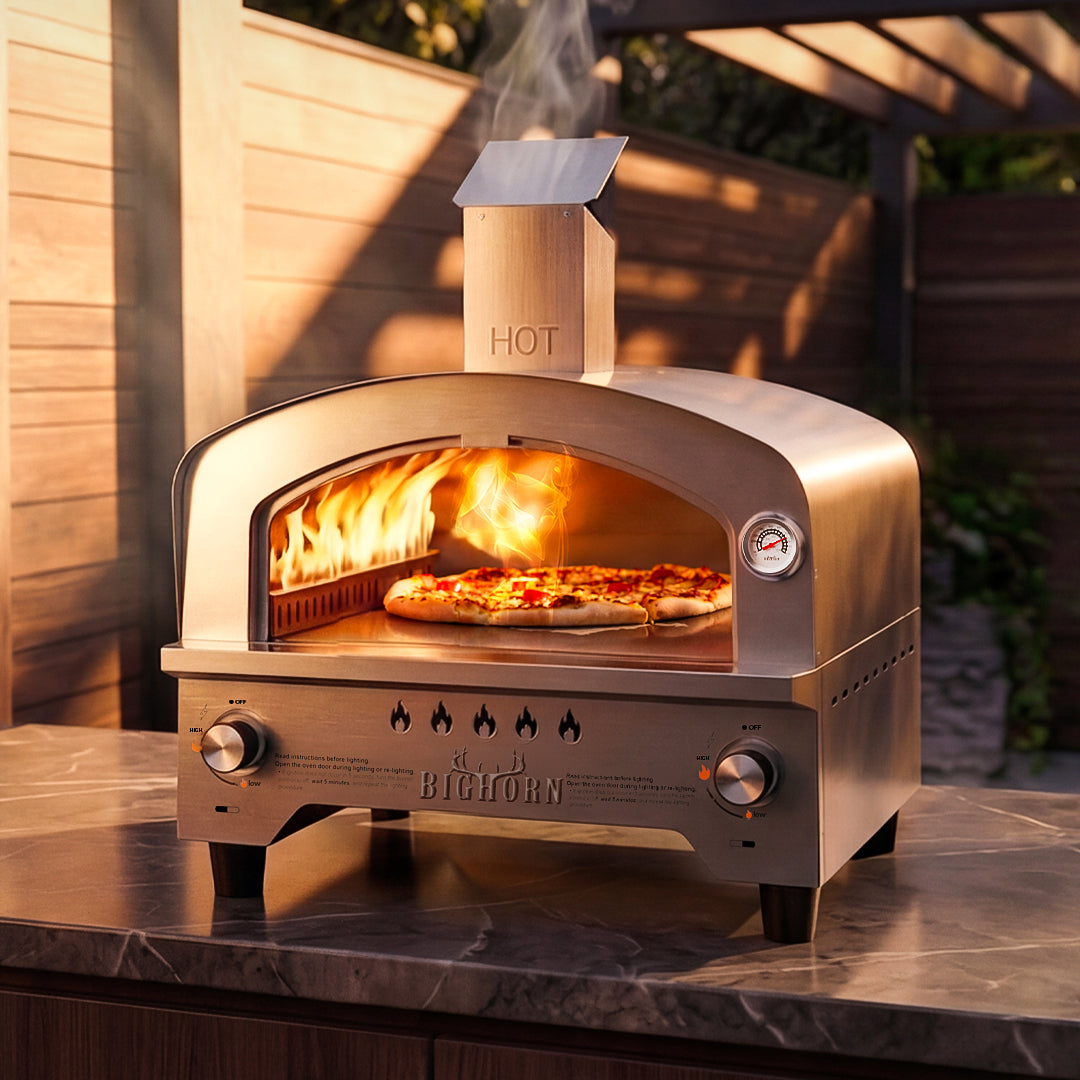
A 16-inch pellet pizza oven is a high-heat outdoor cooking appliance featuring a spacious stone surface (typically 16 inches wide) designed to bake pizzas up to 16 inches in diameter, as well as cast-iron skillets, flatbreads, roasted vegetables, and meats.
Performance & Key Specifications
-
Operating Temperatures: Reaches searing temperatures from 700°F to over 900°F (480°C–500°C), far exceeding standard household ovens.
-
Preheat Time: Reaches full cooking temperature in just 15 to 25 minutes depending on ambient weather and airflow management.
-
Bake Speed: Cooks authentic, stone-baked Neapolitan-style pizzas with ideal crust char in 60 to 90 seconds.
-
Price & Value Range: High-quality portable consumer models generally range between $250 and $350, providing high-end outdoor performance under $500.
-
Portability: Built with durable stainless steel bodies and foldable legs, most units weigh around 40 to 55 lbs, making them practical for backyard setups, tailgating, or outdoor camping.
Unlike gas or electric countertop appliances, a pellet oven relies on live wood combustion. This requires active fuel management—including loading hardwood pellets, monitoring ignition, managing chimney airflow, and clearing cold ash.
Why Stone Temperature Matters More Than Air Temperature
A common pitfall in outdoor pizza oven marketing is focusing solely on air temperature. In authentic pizza baking, maximum pizza stone temperature is the single most critical metric.
Pizza bakes from the bottom up through conductive heat transfer. High stone heat (700°F minimum) triggers immediate dough expansion ("oven spring"), caramelizes natural sugars in well-fermented doughs (such as 72-hour fermented doughs), and creates a crispy, leopard-spotted exterior while keeping the interior airy and tender. An oven with high air temperature but a cold stone produces pale, soggy crusts.
Extra clearance on a 16-inch stone also provides crucial maneuverability. The wide surface area makes it easier to slide a peel underneath, turn the pie mid-bake for an even char, and prevent raw dough from crowding the oven walls.
Compare Main Options: Pellet vs. Propane vs. Multi-Fuel
Understanding fuel trade-offs ensures you select the right appliance for your cooking style and entertaining needs.
| Feature / Factor | Pellet Pizza Oven | Propane / Gas Pizza Oven | Big Horn Outdoors Recommendation |
| Primary Fuel | 100% Food-Grade Hardwood Pellets | Propane Cylinder (LP) | Choose pellet for genuine wood-smoke flavor; choose gas for rapid push-button convenience. |
| Flavor Profile | Distinct, smoky, wood-fired aroma | Clean heat; neutral flavor profile | Natural wood pellets add subtle smoke to crusts and roasted meats. |
| Heat & Recovery | Reaches 700°F–900°F+; requires periodic hopper refills | Reaches up to 750°F–900°F; instant flame regulation and continuous heat | Gas offers near-instant heat recovery between back-to-back bakes; pellets offer higher peak combustion. |
| Preheat Duration | 15–25 Minutes | 15–20 Minutes | Both systems preheat rapidly compared to traditional brick wood ovens. |
| Workflow & Attention | Hands-on: managing pellet hopper, fire airflow, and ash removal | Streamlined: knob controls and consistent thermal output | Pellet cooking appeals to live-fire enthusiasts; gas suits quick weeknight meals. |
| Cleanup & Care | Requires cold-ash removal and stone sweeping | Requires grease management and periodic stone sweeping | Always let the unit cool completely before performing maintenance. |
| Location Use | Open Outdoor Area Only | Open Outdoor Area Only | Fuel-burning outdoor ovens must never be used indoors or in enclosed spaces. |
Critical Factors Before Buying
1. Overall Footprint vs. Cooking Surface: A "16-inch" specification designates maximum pie capacity. The physical oven body, chimney extension, pellet hopper, and heat-safe zone require significantly more counter or cart space than a 16-inch circle.
2. Dough Handling & Hydration: A 16-inch dough skin requires more technique to stretch, top, launch, and rotate than a 12-inch pie. Higher hydration doughs can stick to the peel if left untended. Use the Big Horn Outdoors Pizza Calculator to determine exact flour, water, yeast, and salt baker's percentages for seamless dough launching.
3. Hopper Capacity & Airflow Controls: Look for ovens equipped with oversized pellet hoppers and adjustable chimney dampers. A larger hopper maintains flame consistency for multi-pizza sessions without constant refilling, while adjustable vents help stabilize stone heat.
4. Essential Accessories vs. Included Items: Check individual package listings carefully. Items like turning peels, infrared thermometers, protective weather covers, and prep carts are vital for a complete outdoor kitchen setup but may be sold separately within the Accessories collection.
How to Set Up and Use Your Oven Safely
-
Location & Clearances: Place the oven on a stable, non-combustible surface in an open outdoor area. Maintain clear distance from wooden structures, overhangs, railings, and dry foliage. Never operate a wood-pellet or gas oven indoors, in a garage, inside a tent, on an enclosed balcony, or in an RV.
-
Indoor vs. Outdoor Models: Big Horn Outdoors offers specialized indoor electric countertop ovens alongside fuel-fired outdoor units. Only use an oven indoors if its product manual explicitly designates it as an indoor electric appliance.
-
Approved Fuels Only: Use high-quality, dry, food-grade hardwood pellets. Do not use chemical starters, scrap wood, charcoal, or liquid accelerants. Never attempt to retrofit a gas burner or electrical element into a pellet oven unless authorized by manufacturer documentation.
-
Food Safety Standards: When cooking meats, poultry, or seafood in cast-iron cookware inside your pizza oven, do not rely on visual char or cook time alone. Use a digital probe thermometer to verify safe minimum internal temperatures per USDA guidelines (e.g., 165°F for poultry, 145°F for steaks and chops followed by a rest period). Keep raw poultry separate from ready-to-eat ingredients.
-
Cooling & Maintenance: Allow the oven, chimney, body, and cordierite pizza stone to cool completely (at least 2 hours) before handling. Remove cold ash into a metal container. Never pour cold water on a hot pizza stone, as thermal shock will cause the stone to crack.
Practical Use Cases
-
Family Gatherings & Backyard Parties: A 16-inch format allows you to cook larger, shareable pizzas in a single bake, reducing wait times between pies compared to smaller 12-inch ovens.
-
Versatile Cast-Iron Cooking: Beyond pizza, the high ceiling and 16-inch stone accommodate small cast-iron skillets for searing steaks at 800°F, roasting vegetables, or baking flatbreads.
-
Tailgating & Outdoor Camping: With foldable legs and portable weight profiles (40–55 lbs), these ovens easily transport to campsites or outdoor events when paired with protective travel covers.
Frequently Asked Questions
Can a 16-inch pellet pizza oven be used indoors or under a covered patio?
No. Wood-pellet ovens produce carbon monoxide and intense live flames. They are strictly designed for open outdoor environments with unrestricted ventilation.
How fast does a 16-inch pellet pizza oven cook a pizza?
Once properly preheated (15 to 25 minutes until the stone reaches 700°F–900°F), a Neapolitan-style pizza cooks in approximately 60 to 90 seconds.
Can I cook smaller 10-inch or 12-inch pizzas in a 16-inch oven?
Yes. Cooking smaller pizzas on a 16-inch stone provides extra surface room, making it significantly easier to rotate the pie away from direct flame zones for better temperature control.
How do I keep pizza dough from sticking to the peel?
Ensure your stone is fully preheated, keep toppings balanced without overloading, use a light dusting of semolina or cornmeal on the peel, and launch the pizza shortly after assembling to prevent moisture transfer.
How should I clean my cordierite pizza stone?
Once the stone is completely cool, scrape off burnt food debris with a dry brush or spatula. Do not soak the stone in water or use dish soap, as porous cordierite absorbs moisture and detergent, which can cause cracking or foul odors during future high-heat bakes.
What is the return and warranty policy?
Big Horn Outdoors provides product warranty coverage and a return policy requiring requests to be submitted within 30 days of delivery, provided items are in original condition with proof of purchase. Review specific policy terms prior to return processing.
Conclusion
A 16-inch pellet pizza oven balances high-heat wood-fired performance with practical family-sized cooking capacity. By delivering stone temperatures over 700°F, 60-second bake times, and genuine smoke flavor under $500, it stands out as a powerful upgrade for any outdoor kitchen setup.
Explore the complete Big Horn Outdoors Pizza Ovens line, pair your setup with essential Accessories, and use the Pizza Calculator to plan your next outdoor pizza night.
More to Read
Pizza Oven Accessories You Actually Need: The Core Kit
You need surprisingly little to make good pizza in a pizza oven: a launching peel, a turning peel, and a way to protect your hands and your oven ar...
Pizza Dough Troubleshooting: Fix Sticky, Tight, or Overproofed Dough
Most pizza dough problems come down to three variables — rest time, hydration, and proofing — so the fix is usually one of three moves: let a tight...
Pellet Pizza Oven vs Gas Pizza Oven: Which One Fits Your Backyard
The short answer: choose a pellet pizza oven when wood-fired flavor is the point and you are happy to manage a fire; choose a gas pizza oven when c...