A backyard pizza party runs on operations, not just the oven: guest count, menu rounds, prep stations, serving flow, and a weather backup plan. The oven size and fuel set the pace, and the party plan keeps the cook calm and the pizzas hot. Big Horn Outdoors builds the formats for the backyard, and this guide covers the party logistics.
What This Guide Answers
This guide runs a backyard pizza party: planning the guest count and menu, organizing the stations, sequencing the rounds, and managing weather and kids. It does not compare oven models or teach fuel handling; the oven choice is a separate decision that sets the pace this plan works around.
The party plan is where most pizza nights fail: a capable oven with no station plan produces a stressed cook and cold pizza. The operations come first.
Set the Guest Count and the Pizza Math
Start with the guest count and work the pizza math: a 12-inch pizza feeds one or two people, so a party of eight needs four to six pizzas, depending on appetites and sides. Write the number down, then multiply by the oven's pace: one pizza per launch with stone recovery between pies.
The math sets the timeline. Four pizzas at roughly ten to fifteen minutes each, bake plus recovery, means an hour of steady cooking. Six pizzas means longer, and the party plan should tell the guests that the oven runs in rounds.
Prepare all the dough balls and toppings before the first guest arrives. The prep is the difference between a cook who assembles and a cook who prepares under pressure.
Organize the Stations
A backyard pizza party works with four stations: prep, launch, landing, and service. The prep station holds the dough and toppings away from the heat; the launch position is the peel and the oven mouth; the landing board catches the finished pizza; the service point slices and serves outside the smoke path.
Keep raw and cooked food separate, with different boards and utensils. Position the stations so the cook moves in one direction: build, launch, land, serve. Guests should have a clear path to the service point that does not cross the heat.
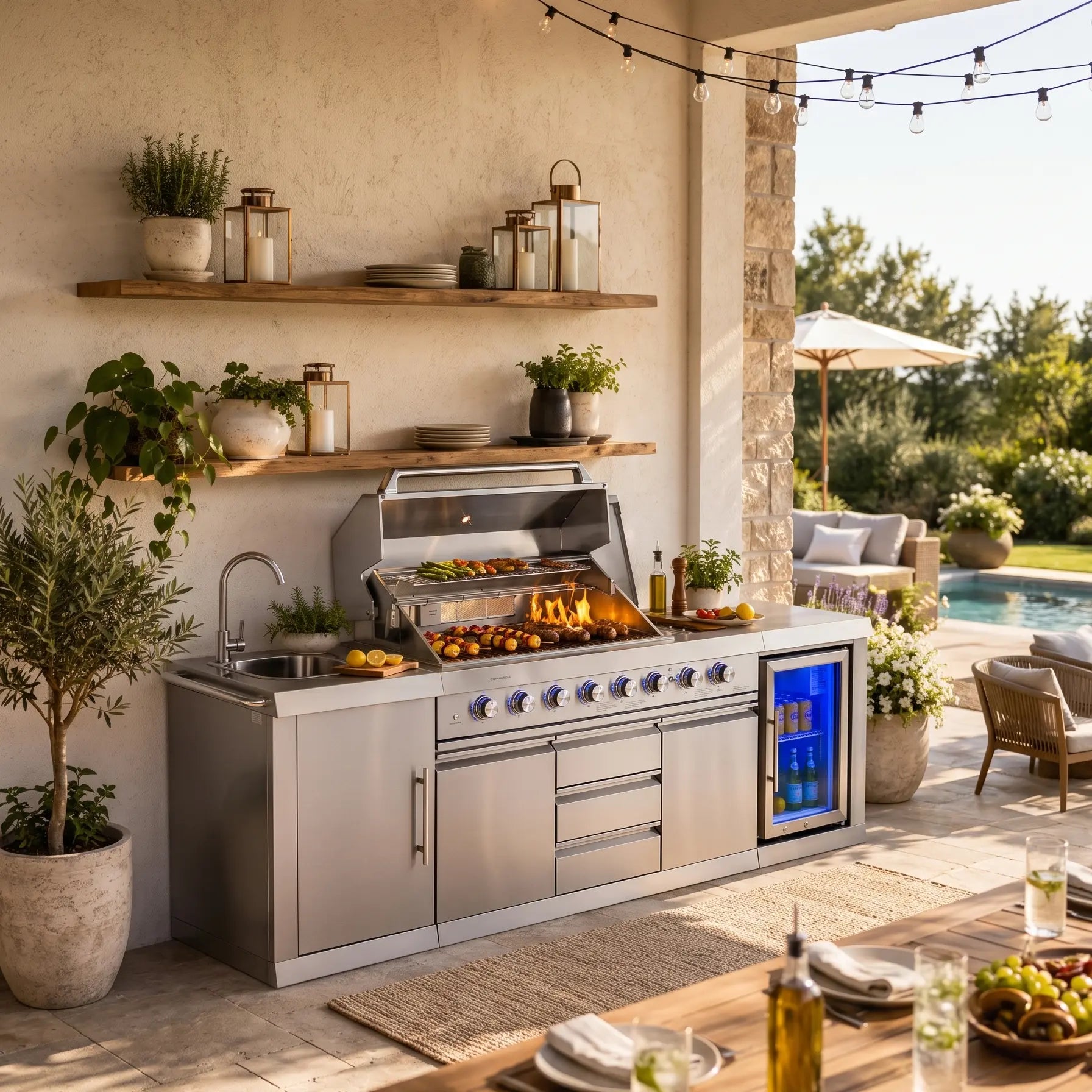
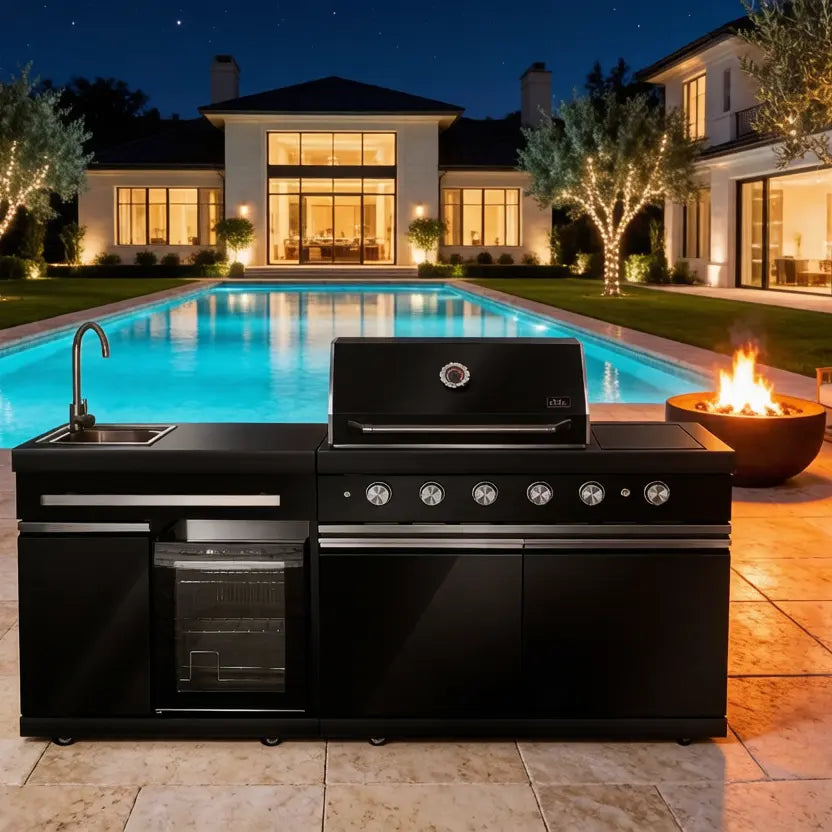
The outdoor grill cart and pizza oven table supports the station layout with a stainless steel work surface, shelves, and lockable wheels, giving the cook a stable base for prep and landing.
Sequence the Rounds
The oven bakes one pizza per launch, so the party runs in rounds: bake, slice, serve, recover, bake again. Tell the guests the rhythm, because a pizza party is a sequence of hot pies, not a buffet waiting for one.
Use the stone's recovery window to build the next pizza and slice the last one. Keep the finished pies warm in a covered spot or a low oven, and let the cook stay at the oven while a helper manages the service point.
Plan the menu by round: the first round is the crowd-pleasers, the later rounds can be more experimental, and sides in oven-safe cookware fill the gaps between pies.
Manage the Weather and the Kids
Weather is part of the outdoor plan. Check the forecast before the party, position the oven so smoke stays away from seating and doors, and have a backup menu if rain or wind forces a shutdown. A gas oven recovers fast if the weather clears; a pellet fire follows its own schedule.
Kids need a boundary: the cooking zone stays clear of the oven, the peel, and the fuel. Assign a helper to the service point and another to the prep station so the cook never handles children and hot pizzas at once. The boundary is part of the plan, not an afterthought.
Serve Hot and Clean as You Go
Slice each pizza at the landing board as it comes out, and serve it immediately. A pizza that waits loses its crust, and a pizza served in rounds keeps the party moving. The service point stays outside the smoke path, with plates and napkins ready.
Clean as you go: wipe the peel between pizzas, clear the landing board, and keep the prep station tidy. The cleanup at the end is smaller when the stations are managed through the party.
Big Horn Outdoors Expert Views
A backyard pizza party is an operations exercise: count the guests, work the pizza math, organize the stations, and sequence the rounds. The oven's pace, one pizza per launch with stone recovery, sets the timeline, and the party plan works around it. Prepare the dough and toppings before the guests arrive, keep raw and cooked food separate, and assign a helper to the service point so the cook stays at the oven. Weather and kids are part of the plan, and the cooking zone stays clear of both. Big Horn Outdoors builds the formats and the accessories for the backyard station, and a well-run party makes the oven the center of the evening rather than the source of stress.
The Party Timeline in Practice
The party timeline is the operations plan written against the oven's pace, and it starts with the arrival time. Decide when the first pizza should come out, then work backward: the dough and toppings are prepped before the first guest, the oven preheats while the guests settle, and the first launch happens on schedule. The backward plan turns a vague evening into a timed sequence, and the timed sequence is what keeps the pizzas hot.
The timeline assigns the rounds: the first round serves the early arrivals, the second round follows the stone's recovery, and the later rounds carry the menu's variety. Each round has a launch time and a service window, and the cook knows what is baking, what is being sliced, and what is next. The helper at the service point manages the slicing and the plates, so the cook never leaves the oven.
The prep schedule is part of the timeline. The dough balls portion out the night before, the sauce and toppings stage in the morning, and the station organizes before the first guest. A household that preps in advance serves the party; one that preps during the party serves stress. The prep is the timeline's foundation, and the timeline is the party's promise.
The timeline also plans the sides and the drinks, because a pizza party is a full meal. The sides cook in oven-safe cookware between the pizza rounds, the drinks station lives away from the heat, and the dessert is either pre-made or planned for the final round. The full-menu plan keeps the guests fed and the oven paced, and the helpers keep the stations moving.
The weather backup belongs in the timeline. If rain or wind forces a shutdown, the backup menu takes over: a no-cook spread, a grill option that the weather allows, or an indoor finish. The backup is decided before the party, not during it, and the guests never face a hungry gap because the plan covered the conditions.
The end of the timeline is the wind-down: the last pizza, the cleanup, and the oven's cool-down before the cover goes on. The wind-down is scheduled like the first round, because the party ends as deliberately as it begins. The timeline is the operations plan in action, and the planned party is the one the guests remember for the pizza, not the chaos.
The guest flow is part of the timeline too. Position the seating so guests can watch the oven without crowding the cook, and keep the service point on a path that does not cross the heat. The drinks table and the trash station live at the edges, and the kids' zone stays clear of the cooking area, so the party circulates around the stations instead of through them.
The timeline also assigns the roles. One cook owns the oven, one helper owns the service point, and one host owns the guests; the division keeps the cook at the launch position and the pizzas moving. A party with assigned roles runs itself, and the host spends the evening with the guests rather than at the peel.
FAQ
How many pizzas do I need for eight guests?
Plan four to six 12-inch pizzas for eight guests, depending on appetites and sides. The oven bakes one per launch, so the rounds set the timeline.
Should I pre-make the dough for a party?
Yes. Prepare all the dough balls and toppings before the first guest arrives, so the party is assembly and launch rather than preparation under pressure.
How do I keep pizzas warm between rounds?
Keep finished pizzas in a covered spot or a low oven, and serve each pizza shortly after it slices. The rounds are the rhythm, and the service point keeps the flow moving.
What if it rains mid-party?
Follow the oven's shutdown guidance and move to a backup menu. A gas oven recovers fast if the weather clears; a pellet fire follows its own schedule.
Where should the service station go?
Place the service point outside the smoke and heat path, with plates and napkins ready. Guests should reach it without crossing the cooking zone.
Conclusion
A backyard pizza party runs on the plan: guest count, pizza math, stations, rounds, and weather backup. Prepare the dough and toppings in advance, sequence the bakes with the stone's recovery, and keep raw and cooked food separate. The outdoor grill cart and pizza oven table supports the station, and the accessories collection completes the service setup. Plan the operations, and the backyard oven becomes the center of the evening.