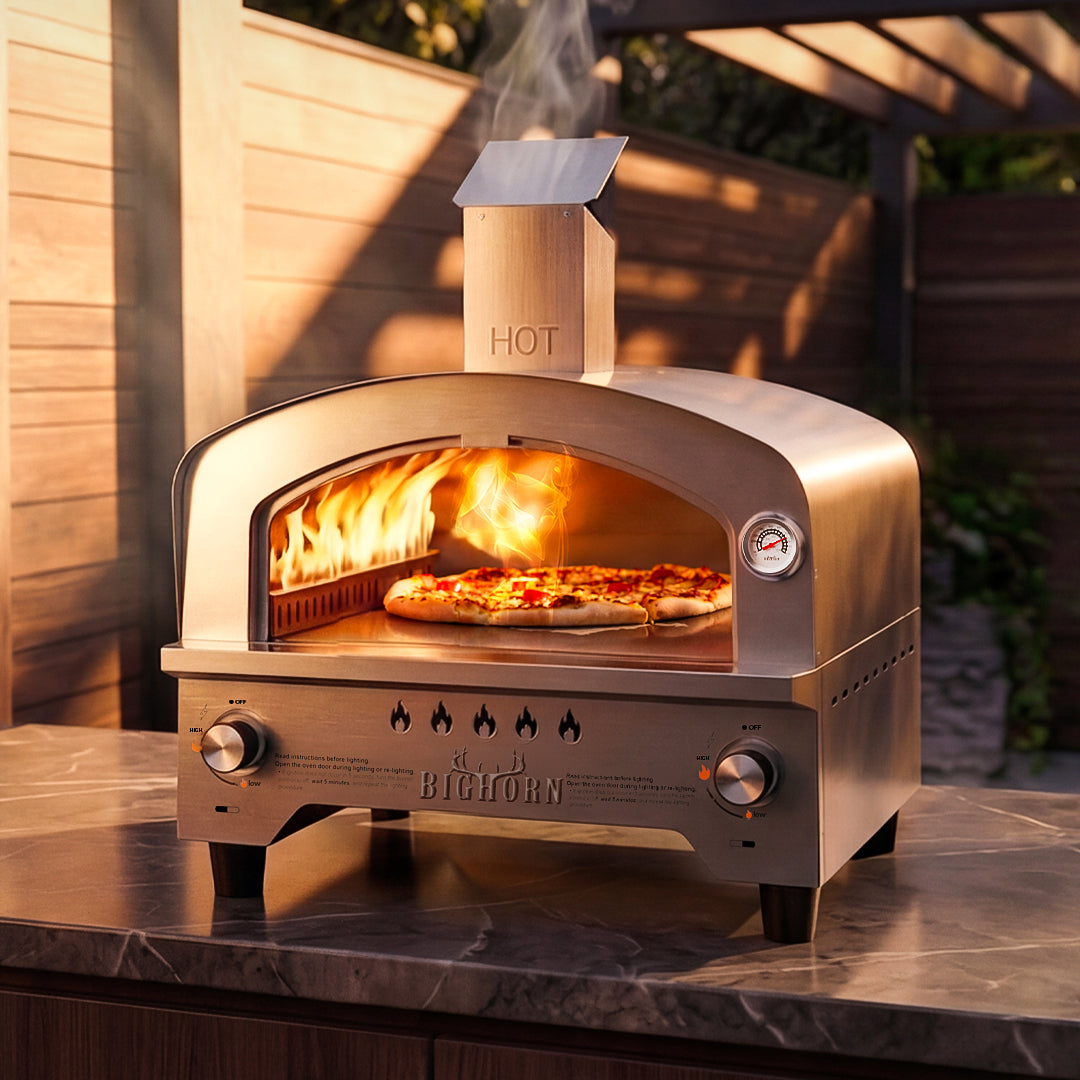
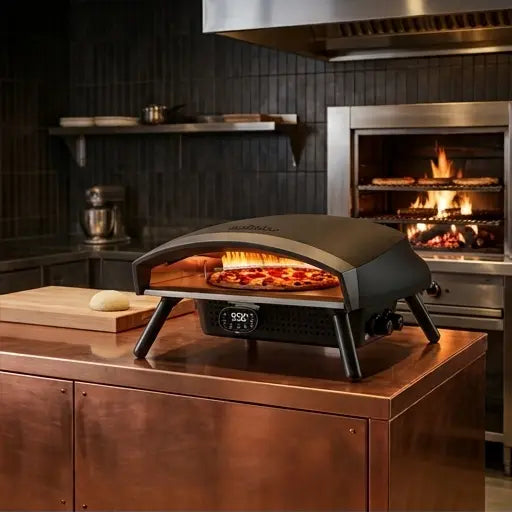
A wood pellet pizza oven bakes well when the fire is stable: dry food-grade hardwood pellets, a deliberate lighting sequence, small fuel additions, and a stone that is verified before launch. The 12-inch and 16-inch pellet models from Big Horn Outdoors run on this discipline, and this guide teaches the fire, not the purchase.
What This Guide Answers
This is a fire-management tutorial for a wood pellet pizza oven: choosing pellets, storing them dry, building the first flame, feeding the fire, and diagnosing a weak or fluctuating fire. It does not cover oven selection, yard placement, or party planning; those belong to separate guides.
The pellet fire is the oven's engine, and the cook is the operator. A household that learns the fire gets consistent wood-fired pizza; one that fights it gets a different result every session.
Choose the Right Pellets
Use only dry, food-grade hardwood pellets intended for cooking. Oak, maple, and hickory are common choices that burn cleanly and produce a food-safe smoke profile. Never use heating pellets, softwood fuel, or pellets with binders and additives not approved for cooking.
The species adds subtle flavor differences, but the practical requirements are the same: dry, dense, and food-grade. Buy from a reliable source, note the species and batch, and check the label before filling.
Store Pellets Dry
Pellet moisture is the quiet killer of consistent fires. Store pellets in a sealed container away from ground contact, humidity, and heat, and inspect them before use. Damp pellets swell, crumble, and produce an unstable fire; dusty pellets burn unevenly.
Remove loose pellet dust before filling the firebox, and keep the hopper or feed area clear. The storage routine is part of the cooking process, and a household that treats pellets like a dry ingredient gets predictable fires.
Build the First Flame
Follow the oven's lighting procedure from the manual. Add the initial pellet charge, light it by the approved method, and let the flame establish before adding more fuel. Never use accelerants, lighter fluid, or unapproved additives.
The first flame is the foundation: allow it to build steadily rather than forcing it with a large fuel dump. A small, stable fire grows; a smothered one stalls.
Feed the Fire in Small Steps
Fire management is small adjustments, not large corrections. Add fuel before the fire falls too low, in small, regular amounts, and avoid overfilling a small firebox, which restricts airflow. The 12-inch model's compact firebox responds quickly, so fuel additions should be smaller and more frequent; the 16-inch model's larger chamber and airflow control support longer sessions.
Watch the flame as well as any thermometer. A declining fire can reduce top heat before the stone loses its stored energy, so the fire's visual state is part of the reading.
Diagnose a Weak or Fluctuating Fire
A weak flame usually traces to one of three causes: damp or dusty pellets, a blocked feed path, or an airflow problem. Check the pellet moisture and dust first, then confirm the feed area is clear, then review the airflow control. Fix one variable and observe before changing another.
If the fire keeps dying, follow the manual's troubleshooting steps rather than adding accelerants or enlarging openings. Repeated failure is a reason to inspect the feed system, not to improvise.
Verify the Stone Before Launch
The stone is the second half of the system. The chamber can reach high air temperatures while the stone is still warming, and launching early produces cooked toppings on a pale base. Give the oven the full preheat, and verify the cooking surface with an infrared thermometer when the manual recommends one.
Launch the pizza near the rear, and turn it as the edge nearest the flame browns. Between pizzas, let the stone recover before the next launch.
Big Horn Outdoors Expert Views
Pellet cooking is a fuel discipline before it is a heat discipline. Dry, food-grade hardwood pellets in a sealed container, a stable flame built in small steps, and a stone verified before launch produce the repeatable results the format is known for. The 12-inch model rewards smaller, more frequent fuel additions, while the 16-inch model's airflow and viewing window support longer sessions. When the flame weakens, check pellet moisture and dust before touching the airflow, and never add accelerants. The fire and the stone work as one system: the fire supplies the heat, and the stone delivers it to the dough. Big Horn Outdoors builds both pellet formats, and the manual for your exact oven defines the lighting, fuel, and care sequence.
Diagnosing the Fire, Step by Step
When the pellet fire misbehaves, work the diagnosis in a fixed order instead of changing everything at once. The first check is the fuel: is the pellet bag dry, is the batch food-grade hardwood, and is the firebox free of dust and clumps? Moisture and dust are the most common causes of a weak or sputtering fire, and the fuel check catches them before any hardware is touched.
The second check is the feed path: is the hopper or firebox opening clear, and is the fuel reaching the flame? A bridge of pellets or a blocked chute starves the fire regardless of the fuel quality, and clearing the path restores the burn. The third check is the airflow: is the oven's air control in the position the manual prescribes, and is the chimney clear of ash and debris?
The fourth check is the lighting sequence itself. A fire that was rushed at ignition, smothered by a large fuel dump, or lit with damp pellets will never stabilize, and the fix is to start over with a small, dry charge and let the flame build. The restart is not a failure; it is the correction of the process.
The fifth check is the environment. Wind, cold, and altitude change how the fire burns, and a session that worked in calm summer air may struggle in a breeze. Position the oven with the wind in mind, accept the longer preheat in the cold, and adjust the fuel rhythm to the conditions rather than fighting them.
When the fire keeps dying despite all five checks, stop diagnosing and follow the manual's troubleshooting section. Repeated failure is a reason to inspect the feed system and the components, not to add accelerants or enlarge openings, and the manual plus after-sales support are the correct next steps.
The final discipline is the log. Record the pellet batch, the weather, the airflow position, and the result, because the log turns the diagnosis from a repeat into a pattern. The pattern is what the household learns from, and the learned pattern is the difference between a pellet oven that frustrates and one that delivers.
The log also tracks the pellet supply. Note which species and batch burned cleanly, which bag behaved poorly, and when the reserve needs refilling, because the supply history explains the fire history. A household that logs the fuel as well as the fire manages both, and the managed supply is the foundation of the managed flame.
The final habit is the pre-session check that prevents most problems: confirm the pellets are dry, the firebox is clear, the airflow is in the manual's position, and the stone is ready before the first launch. The check takes a minute, and it replaces the mid-session surprise with a predictable fire. The diagnosis skills matter, but the prevention habit is what makes them rare.
Keep the fuel reference with the oven: the 12-inch wood pellet pizza oven and the 16-inch wood pellet pizza oven product pages list the preheat and fuel guidance for the model you own, and both should be confirmed before the first session.
FAQ
Can I use heating pellets in a pizza oven?
No. Use only dry, food-grade hardwood pellets intended for cooking. Heating pellets may contain materials that are not safe for food contact or smoke.
Why does my pellet fire keep dying?
Check the pellet moisture, dust, and feed path first, then the airflow. Fix one variable and observe before changing another, and never add accelerants.
How long does a pellet pizza oven take to preheat?
The 12-inch model lists about 18 to 20 minutes; larger models vary. Pellet quality, weather, and target stone temperature affect the time, so verify the stone.
How often should I add pellets?
Add fuel in small amounts before the fire falls too low. The rhythm depends on the model and the flame, and the 12-inch firebox needs smaller, more frequent additions.
Can the oven cook more than pizza?
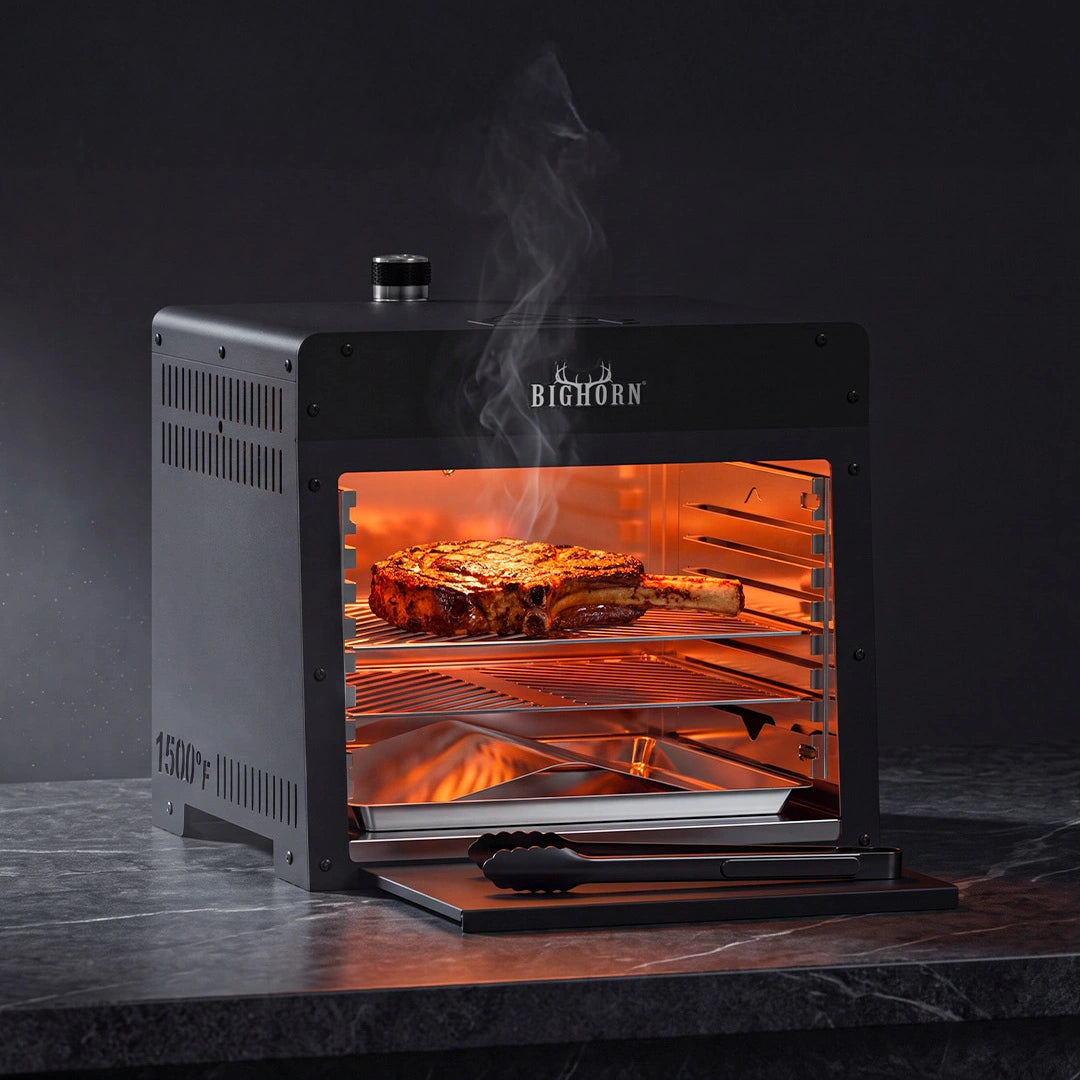
Yes. With suitable oven-safe cookware and temperature control, pellet ovens can roast vegetables, sear meat, cook seafood, and bake bread. Follow the manual's temperature and cookware guidance.
Conclusion
A wood pellet pizza oven rewards a stable fire: dry food-grade pellets, deliberate lighting, small fuel additions, and a verified stone. The 12-inch and 16-inch models from Big Horn Outdoors run on the same discipline at different scales, and the fire tutorial is the skill that makes the format work. Diagnose a weak flame by checking fuel and airflow in order, and never improvise with accelerants. See the current pellet pizza oven lineup for the models, and keep the fire stable for the pizza it was built to make.