


The best wood pellet for a pizza oven is the one that is food-grade, dry, consistently sized and made from a hardwood whose smoke flavor you like. Brand names matter less than those four qualities, and availability changes by region and season, so this guide gives you a selection method rather than a static list that will be outdated by spring. You will learn how wood species change flavor, what pellet size and quality to look for, how to store pellets so they stay dry, and where oak and other hardwoods fit in a wood-fired cooking setup.
What makes a pellet right for pizza
Pellets for pizza ovens are compressed hardwood sawdust, and four qualities separate good fuel from frustrating fuel. Food-grade pellets are made from clean hardwood without fillers or binding chemicals; pellets sold for heating stoves are not the same product. Dryness decides burn quality — damp pellets smolder, stall and produce heavy smoke. Consistent size matters because the hopper and auger feed by volume; pellets that vary wildly in length can bridge and stall the feed. Hardwood content determines heat and ash: hardwoods burn hot and clean, while softwoods or blends can burn dirtier and leave more ash.
When you read a pellet label, look for those four qualities stated plainly. If a bag does not say food-grade, treat it with suspicion; if it lists fillers or binding agents, skip it; if the pellets are visibly dusty or broken in the bag, they will feed poorly.
Hardwood types and flavor
Wood species change the smoke character more than the heat. Oak is the classic pizza and barbecue hardwood — a clean, medium smoke that does not overpower the dough. Cherry adds a mild, slightly sweet note that suits pepperoni and margherita alike. Apple is subtle and fruity, popular for lighter pizzas and vegetables. Blends combine species for balance, and many pizza cooks land on oak or an oak-forward blend because it flavors without dominating. There is no wrong choice among the fruitwoods — the difference is preference, not quality, and the way to find yours is to cook the same pizza with two species and compare.
| Wood type | Flavor character | Good with |
|---|---|---|
| Oak | Clean, medium | Most pizzas; a reliable default |
| Cherry | Mild, slightly sweet | Pepperoni, margherita, white pizzas |
| Apple | Subtle, fruity | Vegetable pizzas, lighter toppings |
| Blends | Balanced | All-purpose cooking |
Keep one species as your baseline and experiment from there. Most cooks discover a preference within a few bags and then stop thinking about flavor entirely.
A note on smoke intensity: in a short, hot pizza bake, the food spends little time in the smoke compared with a long barbecue cook, so the flavor differences between oak, cherry and apple are subtler than grill cooks expect. That is not a reason to ignore species — it is a reason to choose by what you want on the crust rather than expecting a dramatic transformation. Oak's clean neutrality makes it the safest first purchase; a fruitwood is the easy second experiment. If a bag's smoke is overwhelming, check that you are not overfeeding the fire or using damp pellets, both of which create harsh smoke that has nothing to do with the wood species.
Pellet size and feed fit
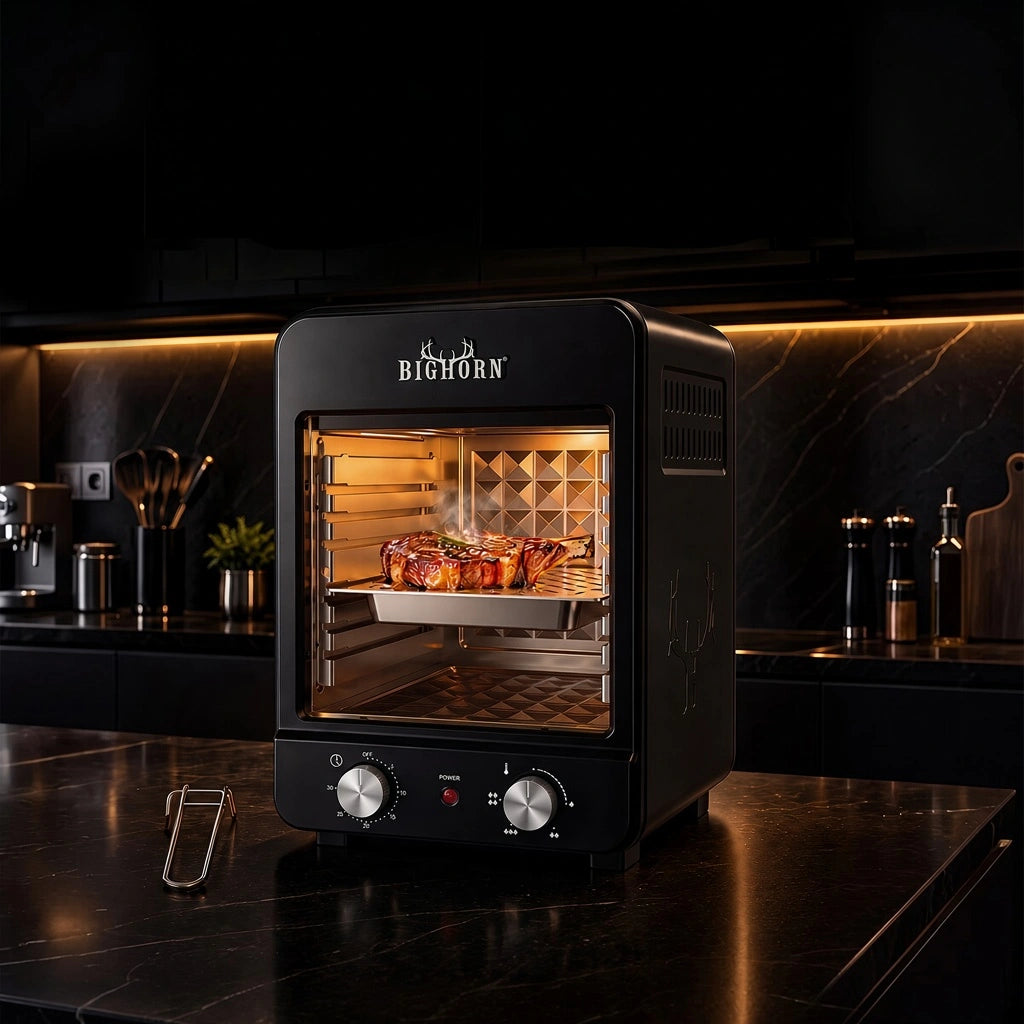
Most pizza ovens use standard-diameter wood pellets, and the feed system is designed for that size. The length can vary by brand, which is where feeding problems start: extra-long pellets can jam an auger, and very short ones can create dust that packs the feed. If a new bag feeds poorly after your previous bag worked fine, compare the pellet length and dust content before blaming the oven. Your oven's manual or the product page for your model — like the Big Horn 16-inch wood pellet pizza oven — is the reference for what fits.
Ash content is the other quality signal that shows up over a season. All wood pellets produce some ash, but clean hardwood pellets leave noticeably less than low-grade or bark-heavy blends. High-ash pellets mean more frequent firebox cleaning, more dust in the feed path and slightly less efficient burns. You cannot see ash content on the bag in most cases, but you will feel it in the cleaning routine — if you are brushing the firebox after every session with one brand and every few sessions with another, the second brand is doing you a favor even if it costs a little more.

Moisture and storage
Moisture is the quiet killer of pellet quality. Pellets that sit in an opened bag in a humid garage absorb water, swell and crumble, and the resulting dust and damp fuel stall the fire. Store opened bags in a sealed container, keep the container off the ground, and never leave an open bag outside overnight. If pellets look swollen, feel damp or crumble easily in your hand, treat them as suspect; a bag that fails the squeeze test belongs in disposal, not in the hopper. Buy in sizes you will use within a season, and rotate stock so older pellets are used first.
Before a long cook, run a quick pellet check at the same time you check the oven: pour a handful into a dry bowl, look for dust and broken pieces, and confirm the pellets are firm and uniform. A minute of inspection before the fire is cheaper than a stalled ramp twenty minutes later. If you store pellets in a shed or garage through winter, bring the working bag inside a day before cooking so the fuel starts at room temperature; cold pellets burn, but they ramp more slowly and can make the first fire of the day feel sluggish.
Buying in bulk saves money only if you can store it properly. A large pallet of pellets in a humid shed will degrade before you reach the bottom; a few sealed bags that you use within the season are a better purchase for most home cooks. Match your purchase size to your cooking frequency, and reserve bulk buying for cooks who go through enough fuel that storage is never an issue.
Sourcing and current availability
Pellet brands and availability change by region and season, which is why this guide deliberately avoids a static brand list. Instead, source by quality signals: check that the bag states food-grade hardwood, compare pellet length and dust across brands you can buy locally, and read current reviews for feed and ash complaints on the specific product, not the brand generally. Big-box stores, grill shops and online retailers all stock different lines, so let your region decide the shortlist — then apply the four qualities above to pick from what is actually available.
Pellets vs logs and hybrid cooking
One confusion deserves a clear note: pellet pizza ovens run on pellets, not logs, and kiln-dried logs belong in wood-fired grills and Santa Maria-style cookers rather than a pellet hopper. Big Horn sells kiln-dried oak logs for those live-fire setups, and the accessories collection and pellet pizza oven collection are the places to match fuel and parts to your model. The right fuel for the right appliance is the first rule of clean, predictable wood-fired cooking.
Keep a simple buying checklist with you when you shop: food-grade on the label, hardwood species stated, pellets firm and uniform in the bag, and an honest look at the dust level at the bottom. If the bag passes all four checks and the price fits your fuel budget, it is worth trying regardless of the brand name — and if it feeds and burns cleanly in your oven, it has earned a repeat purchase. Between two bags that both pass, choose the one whose species matches the flavor you want and whose store is easiest to reach, because consistency of supply matters more than the label on the front.
When you try a new brand, buy a single bag rather than committing to a case, and keep the first session short — one or two pizzas is enough to judge feed behavior, flame character and smoke. Compare it against your baseline bag on the same oven and dough, and note whether the hopper fed smoothly and the ash was manageable. One test bag tells you more than a dozen online reviews written for other ovens, and it keeps a bad purchase from becoming a season-long problem.
Product details and prices in this guide were verified against official Big Horn Outdoors listings during the September 5, 2026 review; re-check prices and availability at checkout.
Explore more in the Pellet Pizza Oven Buying Guides.