
Big Horn's signature pizza dough is made from four ingredients — "00" flour, lukewarm water, fine sea salt and yeast — and it is designed for the high heat of an outdoor pizza oven rather than a standard kitchen oven. The official recipe below makes four dough balls of about 230 g (8 oz) each, enough for four 10–12 inch pizzas. This page adds what the recipe card leaves out: the baker's percentages behind those weights, the two fermentation routes, and the signs that tell you the dough is ready to stretch.
The signature recipe at a glance
Weigh the flour and water rather than scooping; the gram weights keep the ratio stable batch after batch.
| Ingredient | Amount (volume) | Weight for 4 balls |
|---|---|---|
| "00" pizza flour | 4½ cups + 4 tbsp | 560 g |
| Lukewarm water | 1⅓ cups + 4 tbsp | 360 g |
| Fine sea salt | 4 tsp | 20 g |
| Active dry yeast | 2 tsp | 6 g |
| Fresh yeast (alternative) | 1 tbsp | 10 g |
To scale the batch up or down, multiply every ingredient by the same factor; Big Horn's Pizza Calculator does that arithmetic for you.
Why these ratios work at high heat
The four weights set the dough's character before you start mixing. Water at 360 g against flour at 560 g works out to about 64% hydration — a moderately hydrated dough that is still easy to handle, rather than the wet, sticky doughs many home recipes use. In an 800–900 °F oven, a very wet dough has two practical problems: it is harder to slide off the peel, and the surface can brown before the interior finishes. Big Horn's own calculator guidance recommends 60–62% hydration for pellet and gas ovens reaching 900 °F, with 65% and above left for cooks comfortable with a softer, stickier dough and a semolina-dusted peel.
"00" on a bag refers mainly to the flour's fine milling grade, not to a single fixed protein content. Pizza-specific 00 flours are often formulated for extensibility and high-temperature baking, but strength varies by brand, so treat a flour swap as a variable to test rather than an assumption. Salt at 20 g for 560 g of flour is about 3.6% of the flour weight — higher than many standard recipes — and it does more than season: it tightens the gluten network and slows fermentation, which helps the dough hold its shape during the fast, hot bake.
Mix, rest and strengthen: the exact timeline
The recipe moves in four short stages before the dough is balled. If you use active dry yeast, stir it into the lukewarm water — not hot water — and let it sit 5–10 minutes until foamy. Instant yeast skips this step and can be mixed into the flour.
- Mix. Whisk the flour and salt together, then add them gradually to the water-yeast mixture. By hand, stir until a shaggy dough forms and knead on a floured surface for about 10 minutes. With a stand mixer, use the dough hook on low for 5–8 minutes, until the dough is smooth and springs back when pressed.
- First rest. Cover the bowl with a damp towel or plastic wrap and rest for 30 minutes at room temperature.
- Strengthen. Fold and stretch the dough three or four times (or knead it briefly again) to build gluten, then let it rest, covered, for another hour. If you used a stand mixer, this second knead is optional.
- Ball. By now the dough should be roughly doubled. Divide it into pieces of about 230 g each, shape each into a tight ball by pulling the edges underneath and pinching the seam closed, and place the balls seam-side down in a covered container or tray.
The two rests do different jobs. The first 30 minutes lets the flour fully hydrate, so the dough becomes extensible instead of fighting you during the folds. The hour after folding lets the strengthened gluten relax; skipping it makes the balls tight and hard to stretch later.
Same-day or cold ferment: two official routes
Big Horn's recipe offers two proofing options, and the choice is a trade between schedule and flavor.
Same day (room temperature). Let the balls rise at room temperature for 1 to 1½ hours, until they are soft, puffy and relaxed. The calculator's "same day" setting uses more yeast (about 1.5% of flour weight) so the shorter rise still develops enough gas.
Slow ferment (cold proof). Refrigerate the covered dough balls for 12–24 hours, then bring them to room temperature for about an hour before stretching. The calculator's slow-ferment setting drops the yeast to about 0.5% of flour weight. Cold fermentation gives enzymes more time to work at a temperature where the yeast is sluggish, which gives the dough time to develop deeper, more complex flavor. If you are hosting and can start the dough the day before, this is the route that makes the pizza taste as if it rested in a pizzeria cooler.
Both routes are "correct" for this recipe; choose by when you need the pizzas.
Portioning for your oven
A 230 g ball stretches to a 10–12 inch round in this recipe, which suits the cooking surfaces of most portable and countertop pizza ovens. If you bake larger pies or cook Neapolitan style in a pellet oven, adjust the ball weight rather than the hydration. Big Horn's Pizza Calculator returns total flour, water, salt, yeast and oil weights for the pizza size, style and count you choose — including a 12-inch ball weight of about 250 g at its default setting. The two weights answer different questions: 230 g is what you get when you divide this recipe's official batch into four balls, while 250 g is the calculator's default for a 12-inch Neapolitan pie. With the same diameter, a heavier ball yields a thicker rim and a softer bite, and a lighter ball stretches thinner with a crisper base — so choose the weight that matches the crust you want and keep it consistent across the batch.
When you shape the balls, keep them seam-side down in lightly oiled or floured containers so they do not stick as they rise. Tight balls stretch evenly; loose balls tear into uneven crusts.
Bake it: heat, launch and rotation
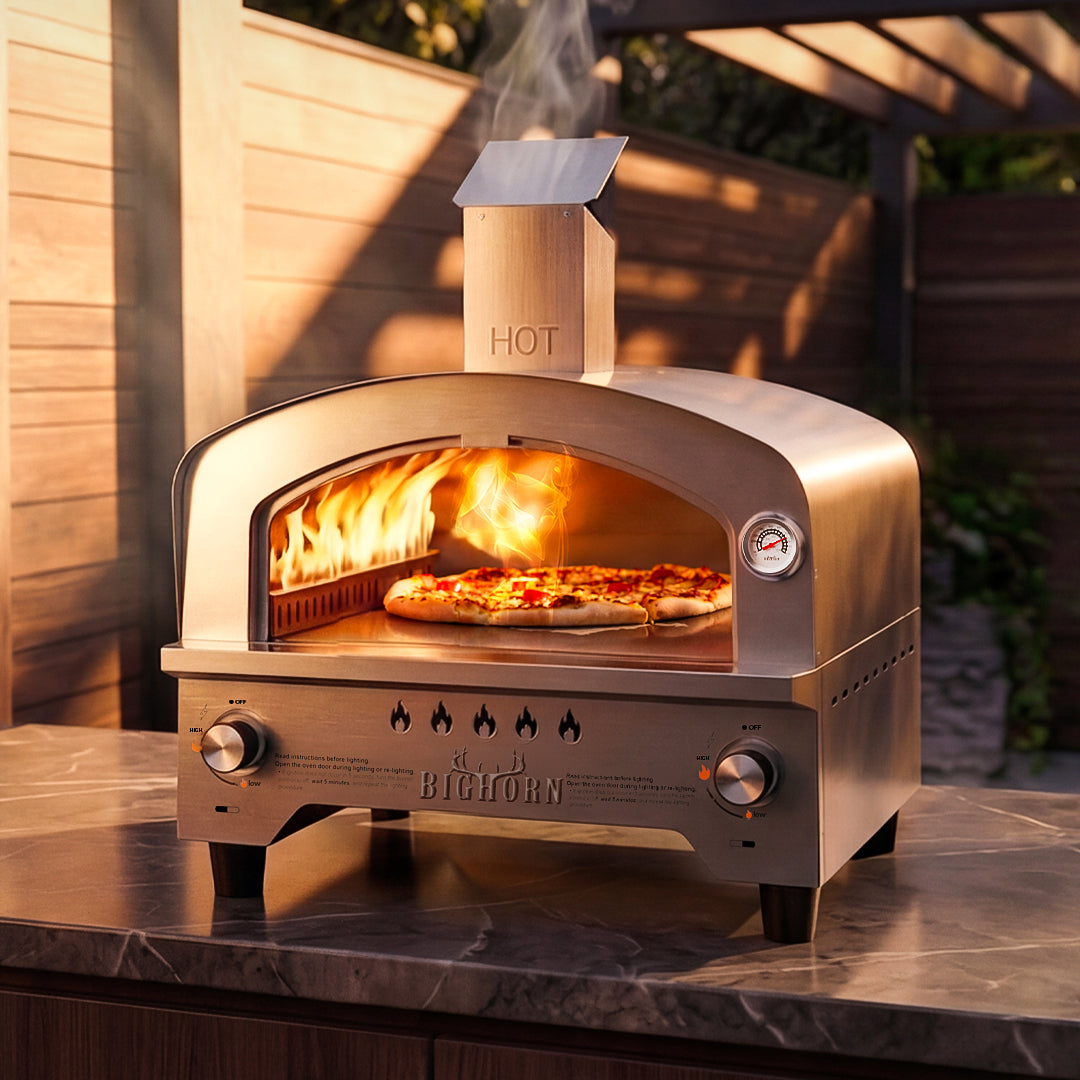
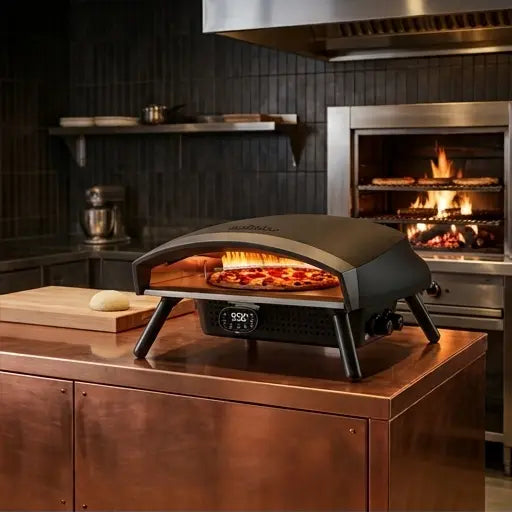
This dough is written for an oven preheated to 660 °F (350 °C) or higher, which is why the same recipe will not behave in a 450 °F home oven. At pizza-oven temperatures the bake runs 60–90 seconds, with a rotation every 20–30 seconds so the crust blisters evenly instead of charring on the side nearest the flame. If you are choosing or checking the oven itself, Big Horn's outdoor pizza oven collection is the place to compare fuel types and sizes.
Before you launch, dust the peel lightly with flour or semolina and give the topped pizza a small shake to confirm it moves freely. A dough that sticks halfway onto the stone is the most common cause of a ruined first pizza; a stainless steel pizza peel slides more reliably than a wooden board once the dough has rested properly.

Signs the bake is on track: the rim puffs and develops leopard-spotted char in the first 20–30 seconds, the bottom is set and releaseable by the first rotation, and the cheese is molten without the base burning through. If the bottom browns before the top finishes, the first suspect is usually the stone running hotter than the air — lower the launch temperature slightly or move the pizza closer to the dome. If the top browns while the bottom stays pale, the stone may not have recovered between pies, but dough thickness and wet toppings can contribute too; the first fix is waiting longer between launches, then adjusting thickness if it recurs.
When dough gets sticky, and when the flour matters
Sticky dough is rarely a reason to throw the batch away. It usually means the hydration is at the wet end of the range, the dough has not rested long enough to absorb the water, or the peel is not dusted enough.
Sticky dough. Stickiness usually means the hydration is at the wet end of the range, the dough has not rested long enough to absorb the water, or the peel is not dusted enough. Above 65% hydration this dough is naturally sticky; drop toward the 60–62% zone for easier handling, or dust generously with semolina and use a smooth steel peel. If the dough sticks to your fingers during balling, let it rest 10–15 minutes and try again — forcing it while wet tears the gluten.
All-purpose flour. You can make a New York-style pizza with all-purpose flour, and the calculator offers that option. For the blistered, Neapolitan-style crust this recipe is built around, pizza-specific 00 flour is usually the better choice: its fine grind and typical formulation are built for thin stretching at high heat, though brands differ. If you substitute flours, expect the dough to feel different at the same hydration and adjust water by 1–2 percentage points rather than copying the volume measures.
A quick pre-bake check
- Dough: the balls are soft, puffy and relaxed, and they hold a light fingerprint that springs back slowly.
- Oven: fully preheated and holding temperature, with a clean stone ready for the first launch.
- Peel: dusted with flour or semolina, and the topped pizza slides with one small shake.
- Plan: launch, rotate every 20–30 seconds, and read the first pie's top-and-bottom balance before adjusting anything for the second.
These recipes and cook guides are editorial guidance from the Big Horn Outdoors team. Cooking results vary with equipment, fuel, ingredient temperature and weather, so rely on doneness signals and an instant-read thermometer instead of exact times. The equipment shown reflects official Big Horn Outdoors listings reviewed September 5, 2026; prices and availability can change at checkout.
Explore more in the Pizza Dough & Crust Guides.