







Camping Stoves & Fuel
Four hungry people and two burners is a logistics problem, not a shortage of recipes. One camp puts coffee, eggs, a skillet of potatoes, and a second kettle on the fire at once, and everything cools or scorches. Another camp gives each burner a job, holds finished food on a diffuser or under a lid, and serves in a short window. The comparison is the queue. Breakfast on a 2 burner camping stove works when the pans wait their turn.
Two burners need a queue, not four pans at once
Breakfast on a 2 burner camping stove for four needs a queue, not four pans at once. Give one burner to coffee or a kettle and the other to eggs or a starch, and use a heat diffuser if a pan runs too hot. Night-before prep keeps a 20- or 40-minute plan moving.
A queue is not a delay you apologize for. It is the method that lets coffee finish while eggs stay in their window, and it is how you avoid a fourth pan teetering on a grate that was never meant to hold it. If you already think in burner jobs, two-burner heat-zone planning is the broader station idea. This page applies that idea to breakfast for four.
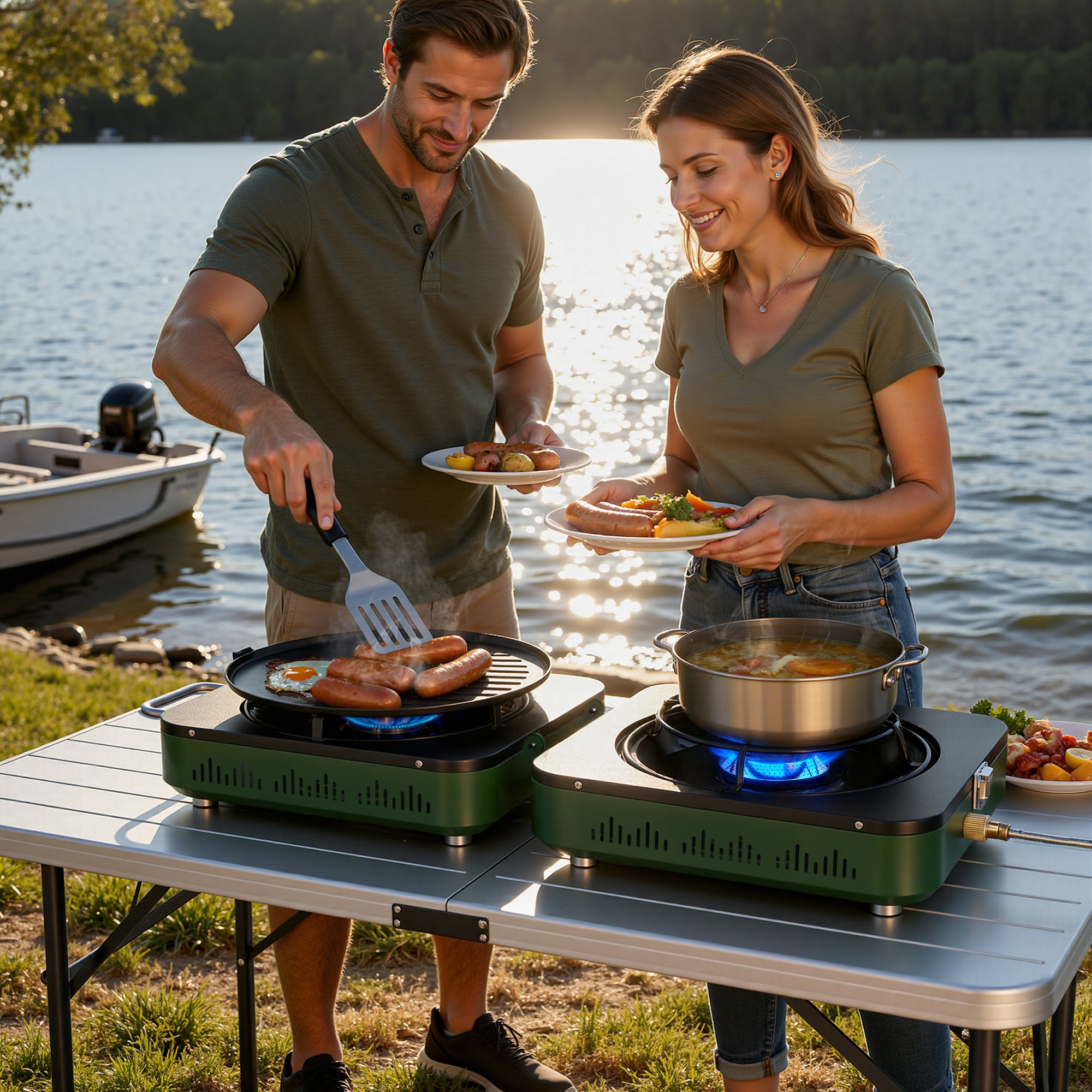
Coffee, eggs, a starch and a heat diffuser
Give the long burner to coffee, a percolator, or a kettle. Give the short burner to eggs, bacon, or a small skillet. A starch — potatoes, pancakes, or leftover rice — usually follows, or it starts the night before so it only needs a reheat. A heat diffuser, which is a plate that sits between the flame and the pan to spread heat, helps when a thin pan scorches or when you want a gentle hold on food that is already cooked.
Use a diffuser only if it sits stably on your stove and the manual does not forbid that kind of accessory. It is not a third burner, and it is not a place to walk away from a live flame. If you came for recipes rather than a queue, 2-burner camping stove recipes and real meals from two burners are those pages. This one stays with the order of operations.
A 20- and 40-minute breakfast timeline for four
These timelines are planning aids, not stopwatch tests of a particular stove, fuel, or pan. Your altitude, wind, and pot will change the clock. Use them to see how the queue fits a short morning or a slower one, then adjust. Keep the cook outdoors and attended either way. U.S. Fire Administration cooking-and-fire prevention and NFPA grilling fire-safety guidance are the official outdoor-cooking starting points while you watch both burners.
| Plan | Burner jobs | What the clock is for |
|---|---|---|
| About 20 minutes | Coffee or a kettle on one burner; eggs or a small skillet on the other. Starch is already prepped or skipped. | A short morning when you need to eat and pack. Night-before prep is almost required. |
| About 40 minutes | Coffee first on the long burner; eggs in the middle; a starch on the freed burner, with a lid or diffuser holding finished food. | A slower morning with a third item in the queue. Still only two live pans at a time. |
If the group is larger than four, or you want a true batch-and-serve line, camping-stove breakfast for a group is the wider plan. This page stays with four people and two burners.
What to prep the night before
The night before is when you shrink the queue. Measure coffee, mix a dry batter, chop onion or fruit, and set the pans, utensils, oil, and a diffuser in one bin. Keep eggs and other cold food in a working cooler. FDA safe food-handling guidance, FDA kitchen food-safety guidance, and FDA food-storage guidance are the official reminders that cold food stays cold and cooked food does not sit in the danger zone for a long, casual wait.
Do not crack a dozen eggs into a bottle unless you already know you can keep that mix cold and use it promptly. Do not leave a raw meat side on the table overnight. The prep is meant to make morning shorter, not to invent a new food-safety risk at camp.
How this differs from a general 2-burner meals page and a percolator page
The live 2-burner meals pages tell you how to cook real food on two burners in general. A percolator page, when you use one, is about that pot alone. This article is the breakfast queue for four: coffee, eggs, a starch, a diffuser, and two sample clocks. It does not redo a full recipe library, and it does not rank stoves. If you are still choosing 2-burner versus single-burner for car camping, use the car-camping stove comparison first, then come back to the breakfast line.
A packing list for breakfast-only mornings
Pack a kit that can run the 20-minute plan without borrowing from dinner: the stove and its listed fuel, two pans that actually fit, a lid, a spatula, coffee gear, a cloth, and a diffuser if you rely on one. Add a small cutting board and a bowl if the night-before prep needs them. Leave the fourth skillet at home. It will not get a burner.
Ready.gov food guidance supports keeping a simple, workable food plan, which is the spirit of a breakfast-only kit. You can still cook dinner later with the same stove. The point of the list is that breakfast does not depend on a pan you left in another bin.
A make-ahead mix or pre-chop that shrinks the morning queue
A dry pancake or oat mix, pre-chopped vegetables, and pre-measured coffee are the usual make-ahead moves because they transfer well in a cooler or a sealed jar. They shave the minutes you would spend measuring on a cold table while the coffee is already asking for a burner. They do not replace the queue. They only make the queue shorter.
If you pre-cook a starch at home and reheat it in a covered pan, you can often run the 20-minute plan without a third wait. Reheat thoroughly, keep the food out of a long lukewarm hold, and serve when it is hot. That is ordinary food sense, not a restaurant trick, and it is how four people eat before the morning gets away from you.
A recap of who this method is for, and who should use a different cooker
This method is for a family or a small group of four cooking breakfast on a 2-burner camp stove, when the temptation is to put every pan on at once. It is not a backpacking one-pot plan, not a group batch line for a dozen people, and not a percolator manual.
If you only need coffee and one skillet, the queue is even shorter, and you may not need a diffuser. If you need four live pans, you need another stove or a different menu, not a tighter stack on two burners. Two jobs at a time, a lid or a diffuser to hold, and a night-before mix or chop: that is the whole breakfast method.
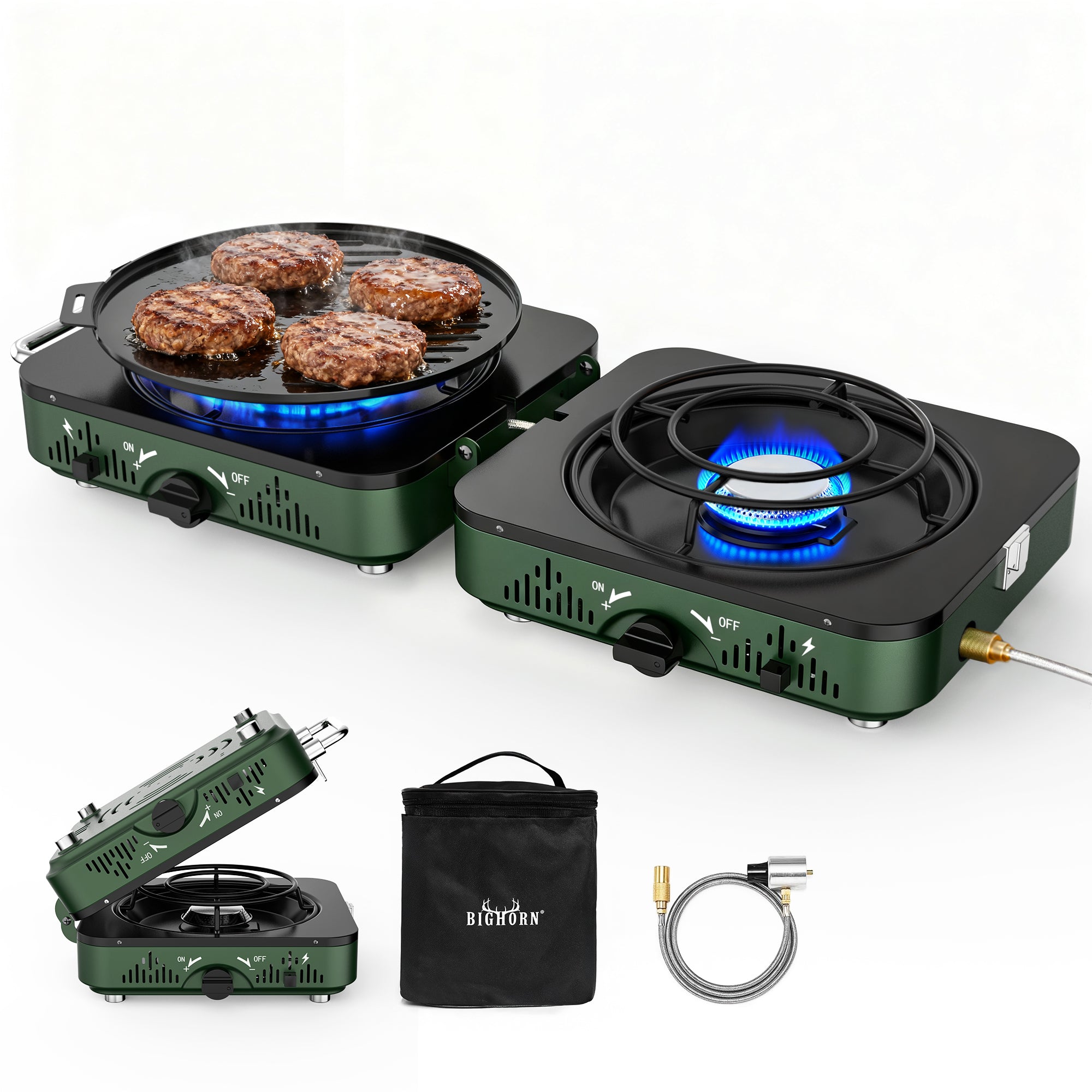
A portable 2-burner propane camping stove is the shape of this four-person breakfast plan: two jobs at a time, a queue for everything else, and a lid or diffuser to hold food while the next pan cooks.
FAQ
How do you cook breakfast for 4 on a 2-burner camp stove?
You cook it as a queue, not as four pans at once. Give one burner a long job such as coffee or a kettle, and give the other a short job such as eggs or a starch, then hold finished food in a covered pot or on a diffuser set low. Prep what you can the night before so the morning line is shorter. The 20- and 40-minute plans on this page are planning aids, not timed tests of a particular stove.
Should I use a heat diffuser on a camping stove?
Use a heat diffuser when a thin pan is scorching, when you need a gentler hold on cooked food, or when a pot is a poor match for a concentrated camp burner. Use only a diffuser that sits stably on that stove, and do not treat it as a third burner. If the pan is already even and the flame is modest, you may not need one. Never leave a diffuser as an excuse to walk away from a live stove.
Can I make coffee and eggs at the same time on two burners?
Yes, that is the usual two-burner breakfast split: coffee or a kettle on one burner, eggs or a skillet on the other. Start the coffee first if it needs a long heat, then cook the eggs so they land when the coffee is ready. If you also want a starch, it usually waits for a burner to free, unless you pre-cooked it or you are using a hold on a diffuser. Four pans at once is how the queue breaks.
What should I prep the night before for a camp breakfast?
Pre-measure coffee, pre-chop onion or fruit, mix a dry pancake or oat mix, and set out the pans, utensils, and a diffuser if you use one. Crack eggs only if you can keep them cold and you will use them promptly in the morning, following ordinary cold-food sense. The goal is to shrink the morning queue, not to do the entire cook at midnight. Pack the kit together so you are not hunting a lid while the coffee boils.
More to Read
Leftover Holiday Turkey on the Grill or in the Pizza Oven: Sandwiches, Tostadas and a White Pie
Give leftover turkey a second heat, not another roast: grill sandwiches or tostadas, or bake a white pie, after a safe leftover inventory the night...
Parrilla Taco Night: Carne, Salsas and Grate Space for a Crowd
Run taco night on a parrilla as a grate-space plan: carne, a second protein, a salsa station, and tortillas held soft, without one crowded fire.
Bone-In Lamb Leg or Shoulder on a Santa Maria or Gas Grill
Grill a bone-in lamb leg or shoulder as a roast: Santa Maria height or a gas two-zone fire, a USDA safety floor, and a probe that does not touch bone.
