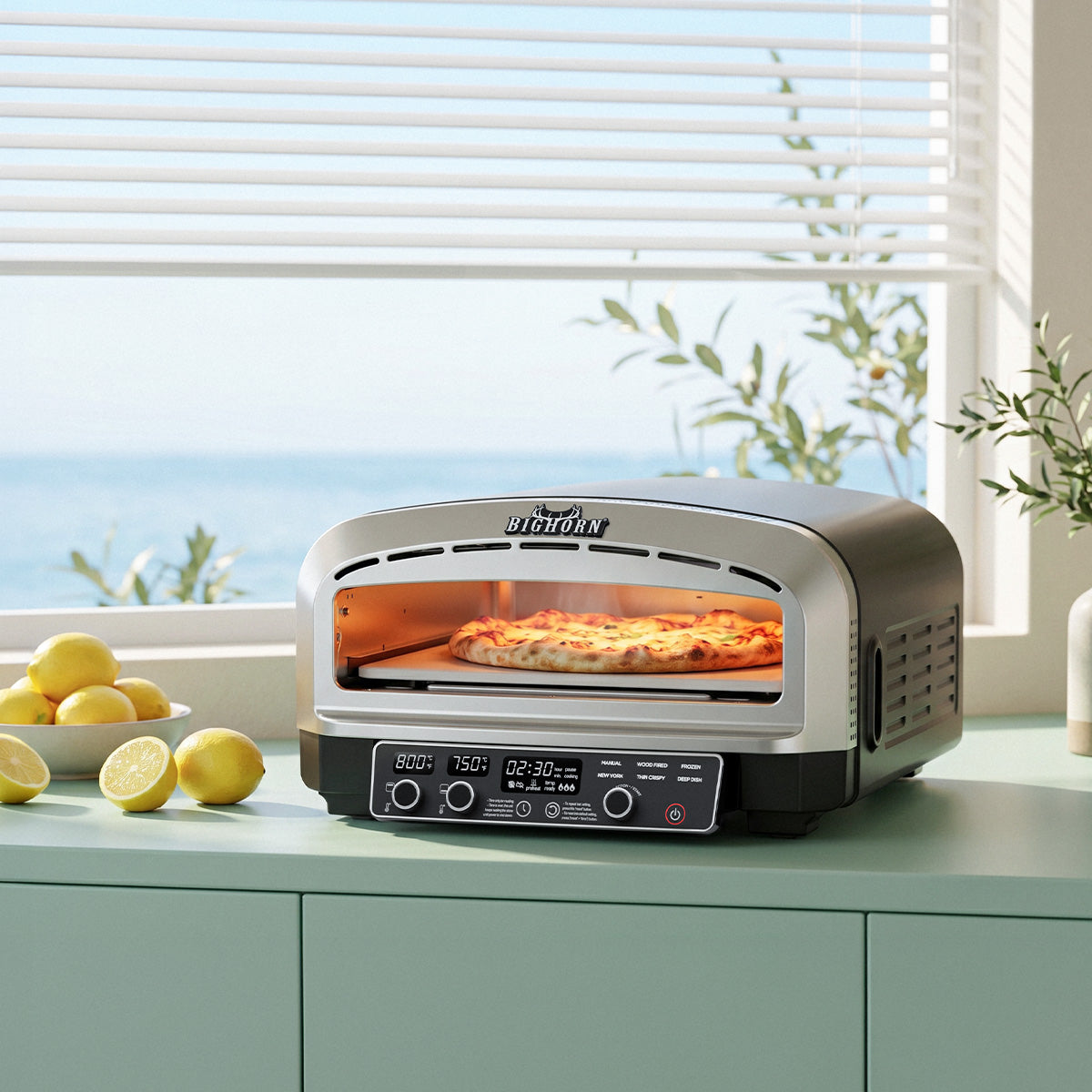
Yes — with the right equipment and technique, an electric oven can produce restaurant-quality pizza at home. A dedicated countertop electric pizza oven that reaches 700–850 °F and uses a well-heated stone gets you most of the way there, and the indoor, flame-free format suits kitchens where a gas or wood oven is impractical.
What makes pizza taste restaurant-quality
Restaurant-quality pizza depends on high heat, a hot stone, and well-made dough more than on any single ingredient. A dedicated electric pizza oven concentrates heat in a small chamber and sets the base crisply while browning the top, which is how you get the blistered crust restaurants are known for. The electric format reaches the heat window a kitchen oven cannot, even if its ceiling is lower than a gas or wood unit.
Choosing the right electric oven
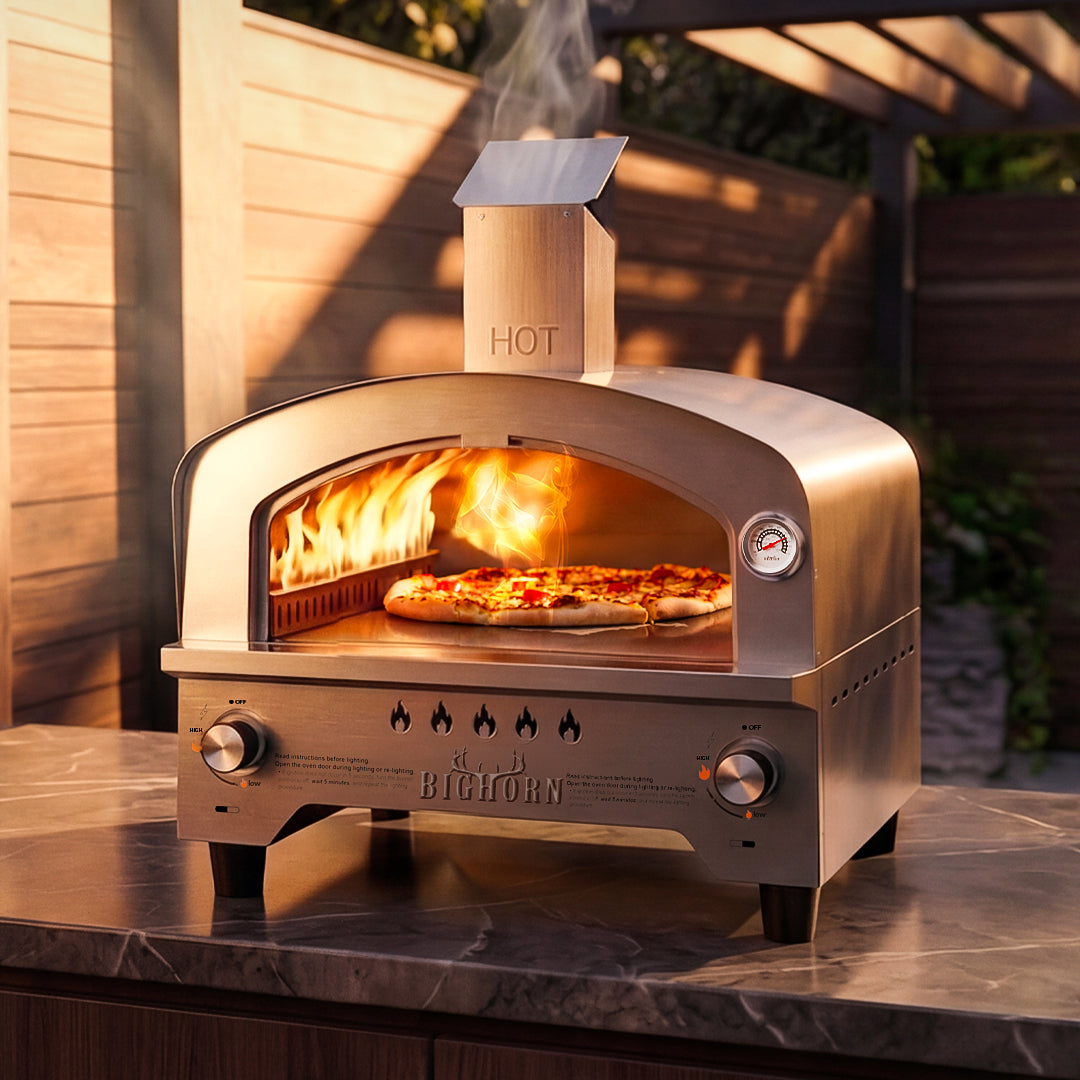
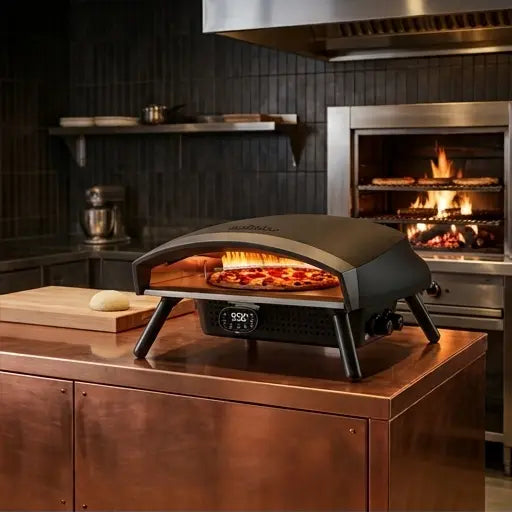
Look for a model that reaches at least 700 °F, has a thick stone, and offers simple temperature control or presets. A compact unit with presets, like a countertop electric oven reaching up to 850 °F, removes guesswork for a first-time owner. Confirm the stone’s quality and the recovery between bakes, because both decide whether consecutive pizzas stay consistent.

Technique that closes the gap
Technique matters more with electric: preheat the stone fully, use a well-fermented dough, keep toppings light, and give the stone a short recovery between pies. A fully saturated stone is what produces a crisp base from a lower-heat electric unit. Pair those habits with good dough, and the electric oven gets remarkably close to a restaurant result.
Where electric comes up short
The limits are peak heat and, sometimes, recovery. A gas or wood oven can exceed the electric ceiling and produce faster char; electric runs slightly lower and may need a beat longer for significant leopard spotting. If your priority is maximum char and smoke, a fuel-fired oven goes further; if indoor convenience and great pizza are the goal, electric is the practical winner.
What stone should an electric oven use?
Choose a thick cordierite or similar stone that absorbs and retains heat well. A dense stone holds temperature through the bake and recovers between pies, which is what makes consecutive pizzas consistent. Avoid thin stones that drop heat on the first launch; the stone is the electric oven’s real engine.
How do you get a crisp base every time?
Preheat the stone fully, keep the dough at a workable hydration, and build the pizza quickly on a floured peel. A fully saturated stone crisps the base before the top over-bakes, and light toppings keep the center from steaming. The same discipline that works on any high-heat oven applies — preheat is the difference maker.
Can you cook more than pizza in an electric oven?
Yes — flatbreads, vegetables, and small bakes work well in the high-heat chamber. The oven’s main strength is pizza, but it earns its counter space when it also handles a quick flatbread or roasted side dish between pizzas.
What should you look for when buying?
Look for at least 700–750 °F peak heat, a thick stone, simple presets or control, and a footprint that fits your counter. Check recovery between bakes and cleaning access for the stone. A model that reaches the heat window and holds it with a good stone is the one that delivers restaurant-adjacent results.
Is an electric oven worth it if I also have a gas grill?
It depends on where you want pizza. If you want indoor, all-weather baking with presets, the electric countertop unit adds a capability the gas grill cannot reach indoors. If you only cook pizza outdoors, the gas option may cover it; the electric is for the indoor, convenient path.
How much counter space does an electric oven need?
Measure the foot print plus clearance above and around the oven for heat to escape. Flip-up or compact models take less permanent space and store away after use. Confirm the outlet reach and circuit capacity, and keep a landing board nearby. A little measurement up-front fits a capable oven into a small kitchen.
What is the fastest way to improve your first electric pizza?
Fix the stone temperature first — a fully saturated stone cures pale bases, speeds the bake, and puffs the rim. Hold preheat discipline for a few sessions, keep toppings light, and build quickly on a floured peel. Most first-pizza problems shrink before you change anything else.
What is the biggest mistake with an electric pizza oven?
Launching before the stone is fully preheated. An under-preheated stone produces a pale, chewy base no matter how good your dough is. Give the oven the full warm-up, confirm with a thermometer if possible, and the electric format becomes dramatically better very quickly.
How do you maintain an electric pizza oven?
Cool the oven fully, brush the stone without soap, wipe the shell, and empty any crumb tray. Keep the stone dry and avoid soaking it, and confirm the outlet and cord are in good condition before each use. A few minutes of cool-down care keeps the electric oven clean and ready.
Electric pizza oven FAQs
Is an electric pizza oven as good as a gas one?
Not identical, but close for the home cook: electric has a slightly lower ceiling and less smoke, while offering indoor convenience and presets. The result depends on your dough and technique as much as the fuel.
How long does an electric oven take to preheat?
About 15 minutes for a countertop model to reach baking temperature. Preheat fully so the stone saturates before the first pie.
Can I get leopard spotting with electric?
Yes — a fully heated stone and a short, hot bake produce blistered rims on many electric models, though the char is lighter than high-output gas or wood units.
To see the current specs, review the 14-inch Big Horn electric pizza oven product page.