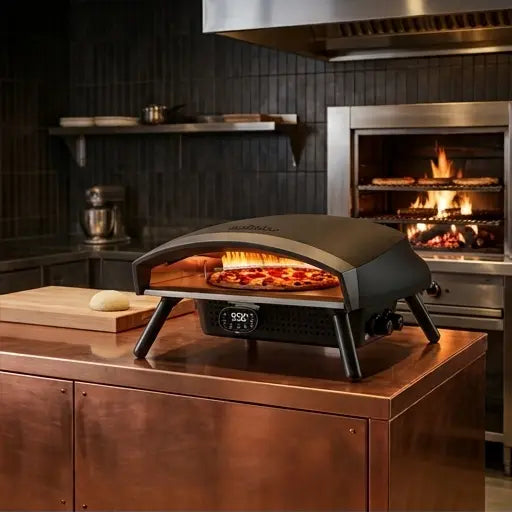
On the Big Horn Outdoors 14-inch electric countertop pizza oven, the six listed modes are Manual, Wood Fired, Frozen, New York, Thin Crispy, and Deep Dish. The useful way to understand them is not as six separate recipes, but as starting points for different combinations of heat and bake time.
Presets are most helpful on the first few cooks, when you want the oven to make the broad temperature-and-time decision for you. Manual mode becomes more valuable once you know how your dough, toppings, pan, and preferred level of browning behave.
If you are still choosing the appliance itself, compare the current electric pizza oven range. For tools that affect launching, baking, and handling, the pizza oven accessories page is the more useful next stop.
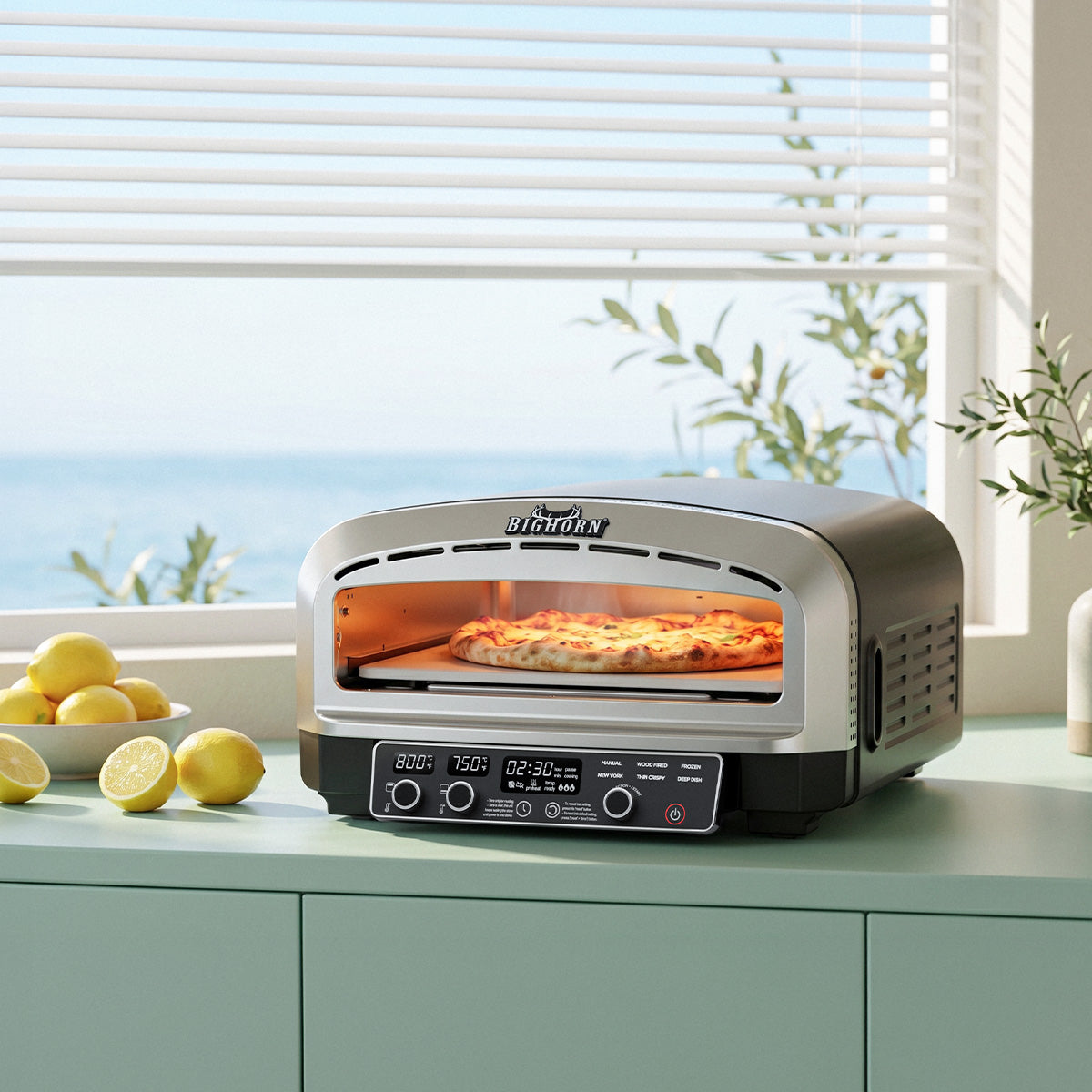
Manual: When You Want the Oven to Follow Your Recipe
Manual mode is the flexible option. Instead of choosing a named pizza style, you set the temperature and cooking time yourself within the operating range of the appliance.
That is useful for two kinds of cooking. First, it lets you fine-tune a pizza after you have learned that a preset runs a little hotter, cooler, longer, or shorter than your dough needs. Second, it makes the oven useful for foods that do not fit one of the pizza labels at all.
Manual mode is therefore not the “expert-only” setting. It is simply the setting that gives you the most direct control.
Wood Fired: A High-Heat Starting Point
The Wood Fired preset is intended to move toward the fast, high-heat bake associated with wood-fired-style pizza. Expect strong browning and a shorter cooking window than with a thick-pan pizza.
This mode works best with dough and toppings that suit high heat. A heavily topped pizza, a sweetened dough, or a thick crust can brown too quickly on the outside before the center catches up. Use the preset as the starting point, then judge the actual pizza rather than assuming the label guarantees a particular crust.
Frozen: Convenience Without Guessing From the Box Alone
Frozen pizza behaves differently from fresh stretched dough. It begins cold, often carries more moisture, and may need a longer, less aggressive bake than a fresh thin pizza.
The Frozen preset is designed to make that adjustment easier. It is still worth checking the pizza near the end of the cycle, especially when brands differ in thickness, topping load, and crust style. A preset can standardize the oven; it cannot make every frozen pizza identical.
New York and Thin Crispy Are Not the Same Thing
These two modes can sound similar because both aim for a crisp base, but the eating experience is different.
New York is intended for a slice that has structure and browning while remaining flexible enough to fold. Thin Crispy pushes toward a drier, more brittle crust with more crunch and less chew.
If you are testing the same dough in both modes, keep the topping quantity similar. Otherwise a wetter or heavier pizza can hide the difference created by the preset.
Deep Dish Needs More Time, Not Simply More Heat
A thick pizza cannot be treated like a thin high-heat pie. The center and the dough beneath the toppings need time to cook before the exposed edges become too dark.
That is why a Deep Dish program favors a gentler, longer bake. Use an oven-safe pan suited to the appliance, avoid overloading the center, and confirm that the crust and fillings are fully cooked before serving.
Which Preset Should You Choose First?
| Mode | Best starting use | What to watch |
|---|---|---|
| Manual | Custom recipes and non-pizza foods | Your own time and temperature settings |
| Wood Fired | Fast, high-heat fresh pizza | Rapid rim and base browning |
| Frozen | Frozen pizza and convenience cooking | Brand-to-brand thickness and moisture |
| New York | Foldable slices with a crisp base | Bottom color without drying the slice |
| Thin Crispy | Thin dough with a crunchy finish | Over-browning on very lean or dry crusts |
| Deep Dish | Thicker, pan-style pizza | Center doneness and edge browning |
Presets Work Better When the Oven Is Properly Preheated
A named mode cannot compensate for a stone or cooking surface that has not reached a stable temperature. Give the oven the preheat time specified for the model and recipe, then avoid repeatedly opening the door before the pizza goes in.
The same rule applies between pizzas. If one bake pulls a lot of heat from the stone, the next pizza may need recovery time even though the control panel still shows the selected program.
When to Leave the Preset and Use Manual
Switch to Manual when you can describe the adjustment you want. Perhaps the base is perfect but the cheese needs another minute at a gentler temperature. Maybe your New York dough uses more oil or sugar and colors earlier than expected. Or perhaps you are baking bread, roasting vegetables, or using a pan that changes the way heat reaches the food.
That is the real purpose of the six-mode system: presets shorten the learning curve, while Manual keeps the oven from locking you into six fixed outcomes. Start with the mode that is closest to your food, watch the result, and make the next cook slightly more specific.