
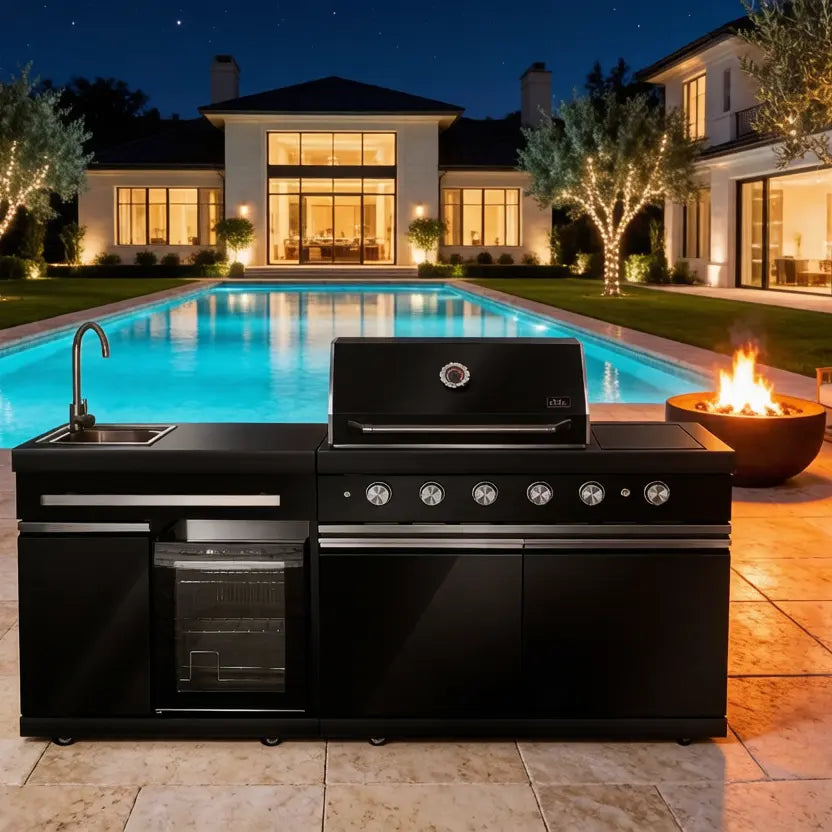
A concrete outdoor fireplace is a permanent, weather-resistant fire feature cast or precast from concrete — strong, fire-safe, and able to hold a chimney and hearth. Its limits are practical: concrete is heavy, so it needs a solid base; it must cure fully before the first fire; and it can crack if moisture gets in and freezes or if the firebox is not lined with fire-rated material. This guide covers whether concrete is the right material, how the build works, and the care that keeps one sound for years.
These are general outdoor fireplace guidelines; building an outdoor fireplace involves structural and fire-safety requirements that should follow local codes and professional guidance.
What actually matters for this decision
- Material fit. Concrete is strong, fire-safe, and weather-resistant, but heavy and permanent.
- Base and structure. A proper footing and a fire-rated firebox decide whether it lasts.
- Chimney and venting. A sound chimney or flue and clearances are part of the build.
- Curing and sealing. Concrete must cure and be sealed to resist weather and cracking.
Understanding the material before you decide
Concrete is a strong, dense material that holds a fireplace’s structure and resists weather, and it can be cast or precast into fireplace units, fire pits, and fire tables. Its limits are practical: it is heavy, so it needs a proper footing; it must cure fully before use; and it can crack if moisture gets in and freezes or if the firebox is not built with fire-rated material. The right concrete fireplace is one built on a solid base, lined for the fire, sealed for the weather, and cured before the first fire.
The key factors, ranked
| Factor | Why it matters | What to check |
|---|---|---|
| Base and footing | Concrete is heavy | Proper footing and level site |
| Firebox lining | Fire safety | Fire-rated material inside |
| Chimney and venting | Smoke and draft | Sound flue and clearances |
| Curing and sealing | Prevents cracking | Full cure; weather seal |
| Local codes | Legal build | Permits and clearances |
Matching the choice to your situation
If you want a permanent, weather-resistant fire feature that anchors the patio, a concrete outdoor fireplace is a strong fit — cast or precast units deliver the look with less on-site work than full masonry. If you want something portable or changeable, a steel or stone fire pit is simpler. If you want to build one on a budget, a precast or DIY concrete fire pit on a proper base is the economical path, but the firebox, chimney, and sealing are not places to cut corners. Match the permanence and the build to your yard.
What the experts look for
Builders and owners check the same things: a proper footing for the weight, a fire-rated firebox and a sound chimney or flue, full concrete cure before the first fire, and a weather seal that keeps moisture out of the concrete. They also follow local codes for clearances and permits. Concrete is a good fireplace material when those structural and moisture details are done right — the failures are almost always footing, firebox, or sealing.
Common mistakes and how to avoid them
- Skipping the footing. Heavy concrete on bare ground settles and cracks; pour a proper base.
- Burning before the concrete cures. A new concrete firebox needs its cure time before the first fire.
- Lining the firebox wrong. Use fire-rated material; ordinary concrete in the direct fire can spall.
- Ignoring the seal. Unsealed concrete absorbs moisture and cracks in freeze-thaw cycles.
- Skipping local codes. Clearances and permits keep the build legal and safe.
Realistic expectations and results
A well-built concrete outdoor fireplace is a permanent, weather-resistant anchor that holds a real fire with a sound chimney. Expect the trade-offs to be weight and permanence — concrete does not move or change like a portable unit — and the care to be about moisture: cured, sealed, and protected between seasons. Built right, a concrete fireplace lasts for years and becomes the centerpiece of the yard.
The takeaway in one paragraph
A concrete outdoor fireplace is a strong, weather-resistant, permanent choice when it is built right: a proper footing, a fire-rated firebox, a sound chimney, a full cure, and a weather seal, with local-code compliance. Concrete is heavy and permanent, so it fits a patio ready for a fixed anchor rather than a portable unit. Match the build and the care to the material, and the concrete fireplace lasts for years.
See the fire features and grill collections. fire and grill collection
FAQ
Is concrete good for a fireplace?
Yes — concrete is strong, fire-safe, and weather-resistant, which suits an outdoor fireplace when it is built with a proper footing, a fire-rated firebox, a sound chimney, and a weather seal. Its limits are weight and the need for full curing.
How to build an outdoor fireplace cheaply?
Build cheaply with a precast or DIY concrete fire pit or fireplace unit on a proper base, using a fire-rated firebox and a sound chimney or flue. Cut costs on the finish, not on the footing, the firebox, or the code requirements.
How much does a concrete fire pit cost?
Concrete fire pits range from precast units to custom-built fireplaces, so price varies widely with size, finish, and build. Get a quote for the specific unit and its installation; prices change with materials and labor.
What is the best material to use for an outdoor fireplace?
It depends on the build: concrete and stone are strong, weather-resistant, and permanent; steel is lighter and more portable; fire-rated masonry suits large permanent fireplaces. Concrete is a strong all-round choice when built and sealed correctly.