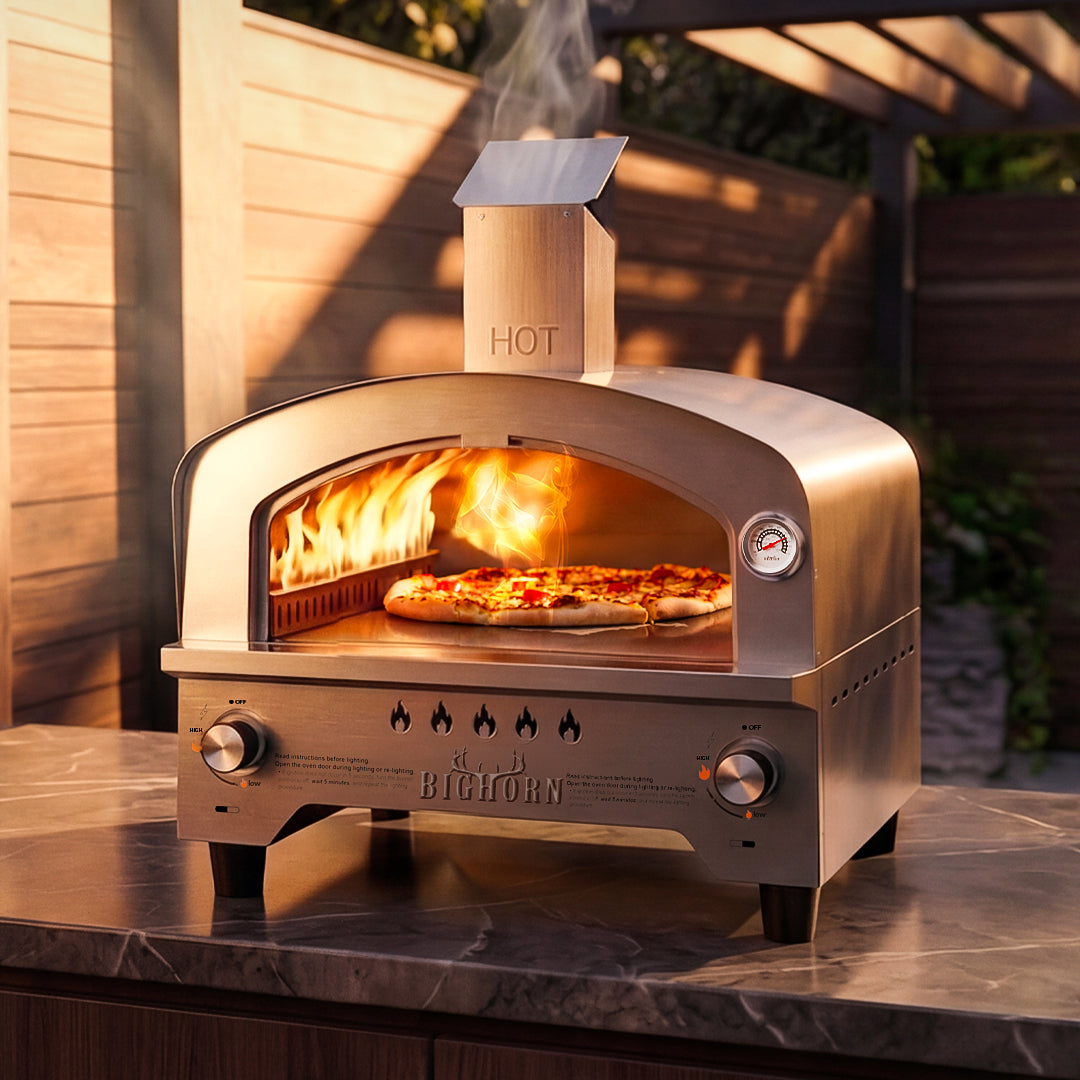
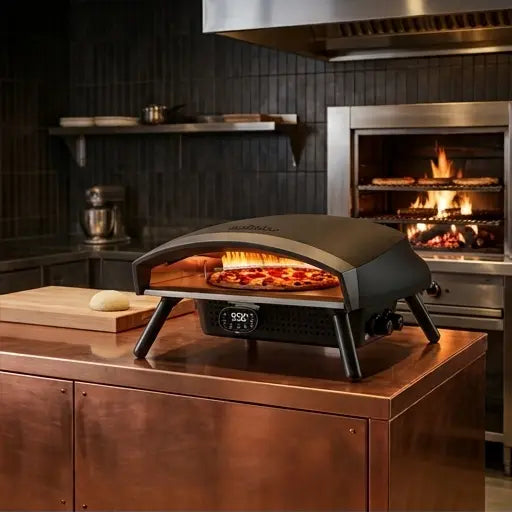
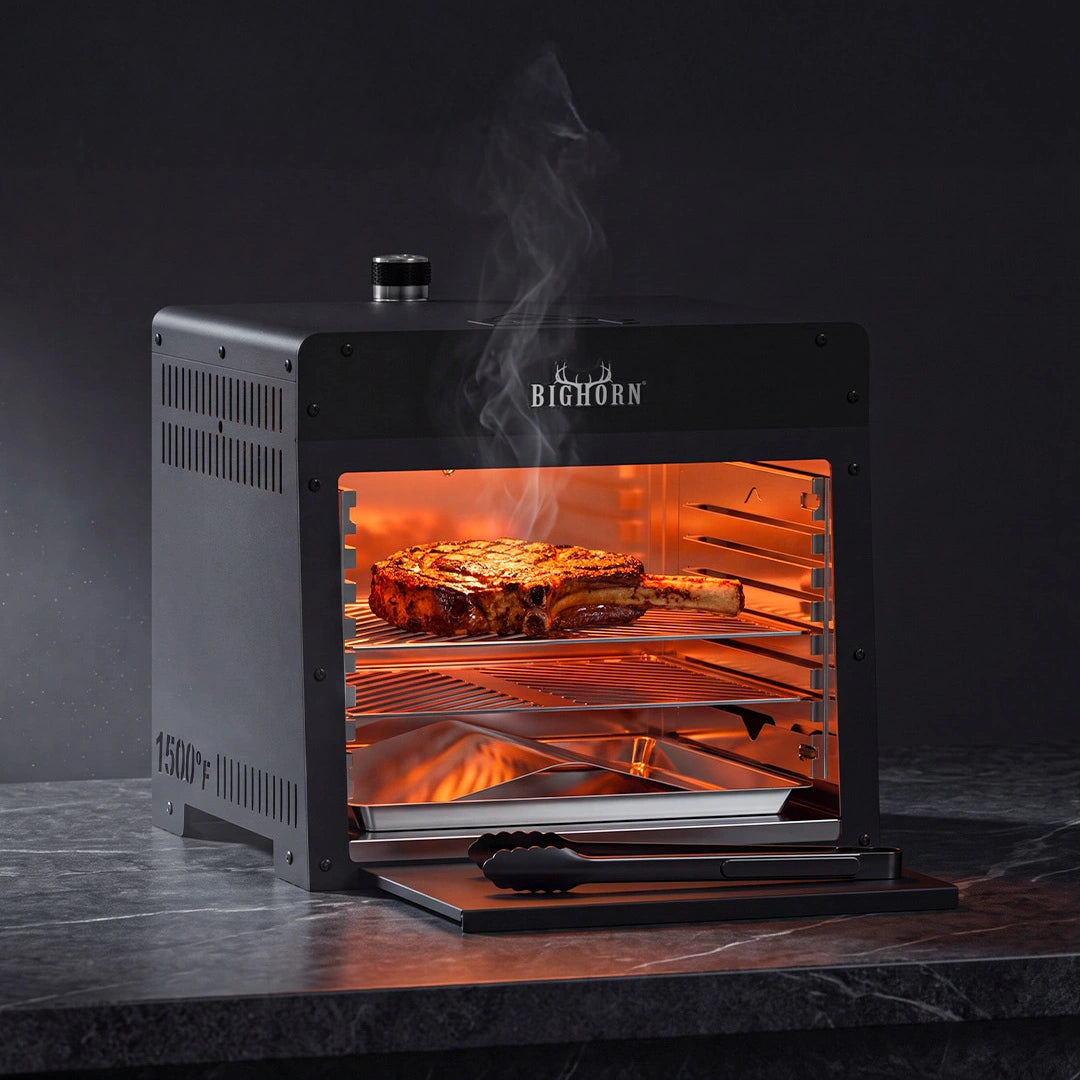

A dual-fuel pizza oven that accepts gas and electric attachments gives you two heat personalities in one appliance: gas for fast, intense, dial-controlled outdoor heat, and electric for a quiet, flame-free bake when you do not want to manage a fire. The right choice between them depends on where you cook, how often you want speed versus convenience, and what your space allows. On the Big Horn 12-inch oven, both modes attach to the same pellet-capable stainless body, so the decision is about the session, not about buying two ovens.
Related product: Shop 12-inch Triple-Fuel Pizza Oven.
What dual-fuel actually gives you
Dual-fuel means the same oven can run on more than one heat source by swapping attachments. You are not getting two ovens; you are getting one chamber that can switch between fuels when configured. That saves footprint on a patio and money versus owning separate units, but it adds a requirement: each mode has its own heat profile, location rules, and switch-over routine. The flexibility is real when you use both modes, and wasted when you only ever reach for one.
Gas mode: speed and intensity
Gas is the faster, more intense mode. It ignites quickly, climbs to high heat in minutes, and holds steady with a dial — the profile that suits a busy night or a group. The trade is that propane needs to be stored and connected, and the oven stays an outdoor appliance. For a cook who wants high heat without fire management, gas is the closer match to a traditional pizza-oven bake.
Electric mode: quiet and flame-free
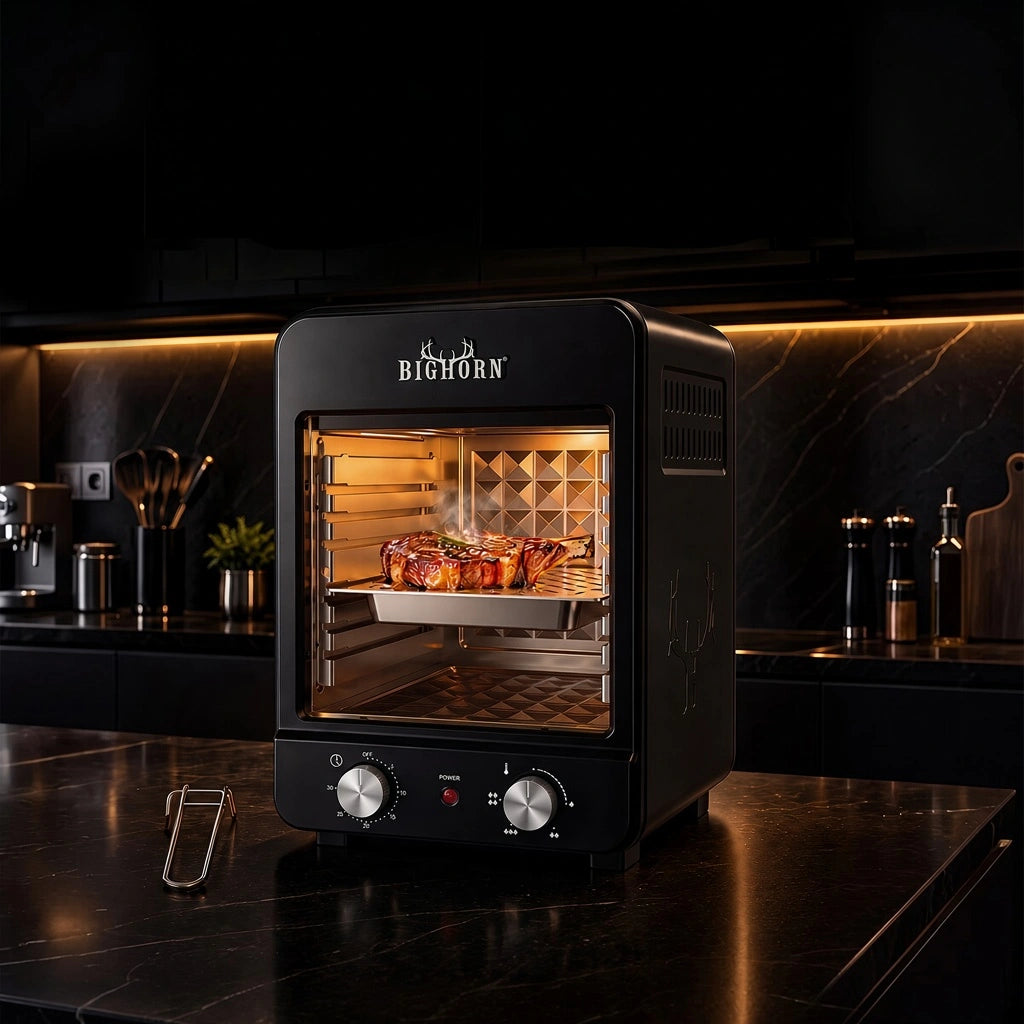
Electric mode replaces the flame and fuel feed with a heating element, removing propane storage and ash from the process. It is the quieter, cleaner session for a quick single pizza or a weeknight bake. The trade-offs are a gentler heat profile and stricter location rules: electric compatibility alone does not prove indoor approval, so you must confirm your exact model’s manual before running it indoors.

How to choose per session
| Session | Better mode | Why |
|---|---|---|
| Full patio cook for guests | Gas | Fast, intense, steady heat for volume |
| Quick single pizza | Electric | Quiet, no fire or propane |
| No propane on hand | Electric | Removes fuel storage |
| Maximum flavor / smoke | Pellet (base) | Wood-fired character |
There is no universal better mode — the two serve different evenings. The honest selector is your trigger for the session: if you want speed and guests, choose gas; if you want low fuss and a single bake, choose electric.
Dual-fuel vs. owning two ovens
The dual-fuel argument against owning two separate ovens is strongest when you genuinely use both modes. A single stainless chamber with two attachments takes one patio footprint, one stone, and one set of accessories, while two ovens double the space, cost, and upkeep. If your usage is truly split, dual-fuel saves real money and clutter; if it is really one-mode-dominant, the second oven would sit unused, which is the exact case where the attachment is wasted.
How to judge whether dual-fuel fits your cooking
Look back at your last few months of cooking and count the sessions by fuel. If pellets, gas, and electric each appeared in meaningful numbers, the flexibility pays. If one fuel appeared in nearly every session, buy for that fuel and add attachments later. The decision is simplest when it reflects recorded habit rather than imagined variety.
Location and safety differ per mode
Gas and electric modes bring different rules. Gas needs outdoor placement, a stable surface, and a leak-checked connection. Electric needs a reliable outlet, clean dry contacts, and confirmation from the manual that the exact configuration is approved for where you run it. Before switching modes, let the oven cool and follow the manual’s attachment changeover; never run two fuels at once.
Dual-fuel in practice
What does switching between modes require day to day?
Switching modes is a deliberate changeover rather than a hot swap. To move from gas to electric, you let the oven cool, disconnect the gas attachment per the manual, and fit the electric element in its place — then confirm the connection before heating. The same chamber and stone serve both, so the change is about the heat source and its hooks, not about replacing the oven. Keep the attachments stored dry and protected when not in use, and never leave one fuel connected while running another.
How does each mode affect the bake itself?
Even with the same stone, the two modes behave differently. Gas heats the chamber fast and intensely, so preheat is short and the bake window stays close to the classic 60–90 seconds. Electric heats more gently and relies on a stepped control (high, medium, low), so preheat runs a bit longer and you learn which level works for which dough. Recovery between consecutive pizzas also differs: gas bounces back quickly, while electric benefits from a short pause between launches. Expecting these differences is what makes a dual-fuel oven predictable rather than confusing.
Which mode should you buy first?
Nobody needs both attachments on day one. Start with the mode that matches your most common session: gas if you cook for groups and want fast, intense heat; electric if you want a quiet, low-fuss single-pizza cook without propane. Add the second attachment only when a real use case appears — the flexibility is the point, but paying for both upfront rarely pays.
How do you clean a dual-fuel oven?
Cleaning a dual-fuel oven follows the same rule as any pizza oven: cool it fully, brush the stone without soap, wipe the shell, and empty any crumb tray. The extra step is caring for the attachments — keep gas connections leak-checked and dry, and keep the electric element’s contacts clean and moisture-free. A quick cool-down clean after each session keeps both modes ready for the next cook.
What are the limits of each mode?
Gas is limited to outdoor placement and propane storage; electric is limited by its lower, gentler heat and model-specific location approval. Neither is unlimited. The point of the pair is to cover each other’s gaps for the sessions where each shines — not for either to do everything.
Dual-fuel pizza oven FAQs
Is a dual-fuel oven as good as a single-fuel one?
Yes, for each configured mode — the performance depends on the attachment and how you use it, not on the dual-fuel badge. The gain is flexibility, not quality.
Does electric mode use the same stone?
Yes, the chamber and stone stay the same; only the heat source changes. Expect preheat and recovery to behave differently in electric mode.
Can I switch fuels mid-cook?
No. Switch modes on a cooled oven following the manual’s changeover steps, and never run two fuels at the same time.
To confirm the gas and electric attachment options and approved usage for your setup, review the 12-inch Big Horn pellet pizza oven product page.
Explore more in the Electric Pizza Oven Guides.