
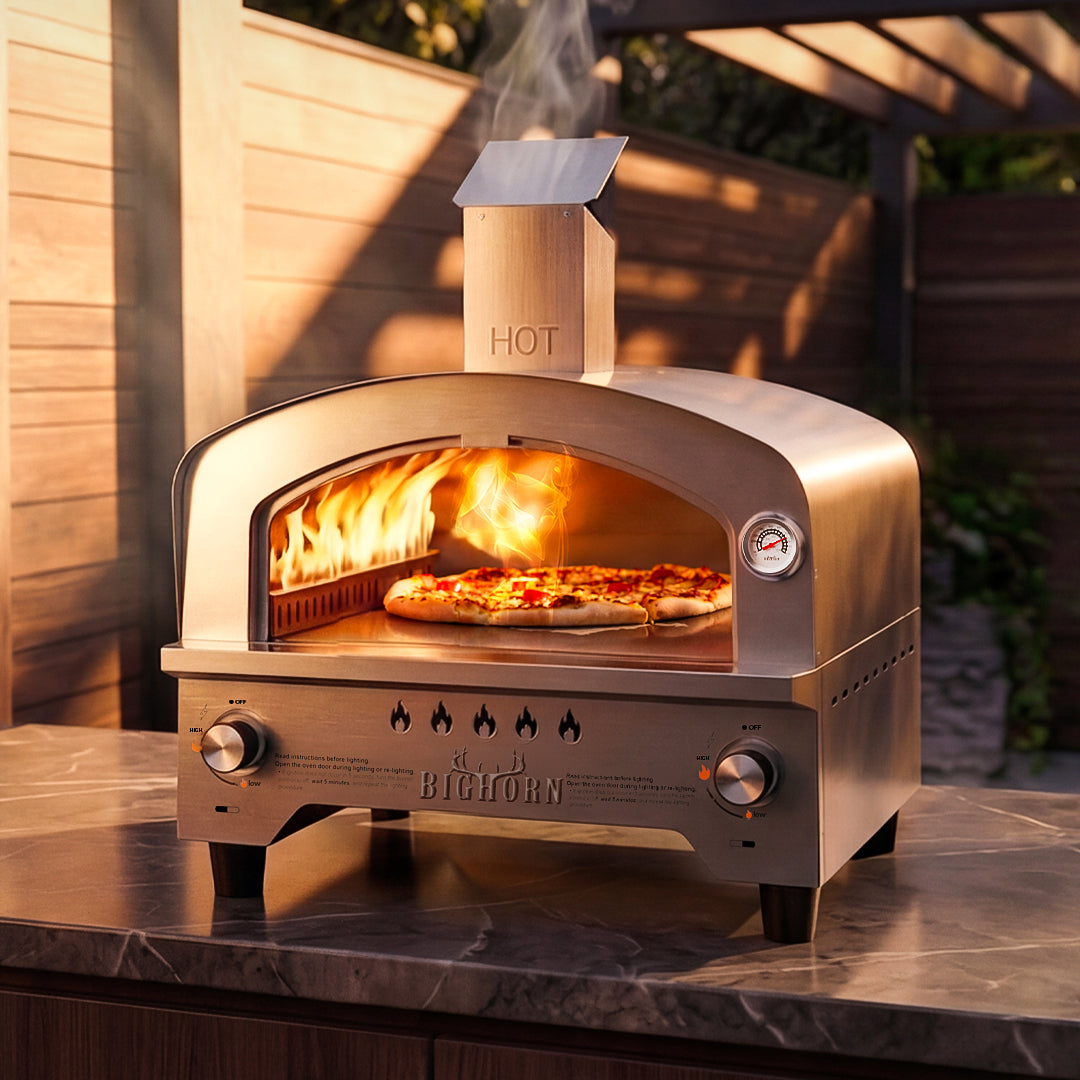
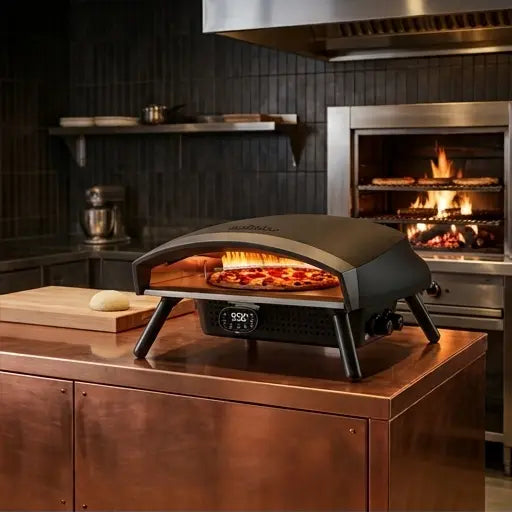
A hybrid pizza oven is one oven with more than one approved heat source, letting the cook switch between fuels instead of owning separate appliances. It pays off when two cooking modes are genuinely part of the routine, and it costs extra in components, storage, and switching discipline. Big Horn Outdoors offers hybrid ovens across several fuel combinations.
What This Guide Answers
This page explains the hybrid pizza oven concept and its value: what hybrid means, the switching routine, and the cost comparison against two single-fuel ovens. It does not compare specific fuel modes in depth; those belong to the mode-specific pages.
The word hybrid describes a category, not a feature. Understanding what it actually means, and what it costs, is the first step of the decision.
What ""Hybrid"" Actually Means
A hybrid pizza oven accepts more than one heat source: wood pellets and propane, pellets and electric heat, or a pellet oven compatible with both gas and electric attachments. The cook selects one approved mode at a time, installs the matching component, and cooks. It is not a machine that runs two fuels at once.
The flexibility is real, but the label hides the logistics. Each mode has its own fuel, its own component, and its own safety checks, and a hybrid oven concentrates the storage and maintenance of all its fuels into one appliance.
Hybrid vs. Two Separate Ovens
| Factor | One Hybrid Oven | Two Single-Fuel Ovens |
|---|---|---|
| Purchase cost | One platform plus attachments | Two complete appliances |
| Storage | One body, multiple components | Two bodies and fuel systems |
| Changeover | Cool, swap component, recalibrate | Walk to the other oven |
| Simplicity | More steps between modes | No switching required |
| Space | Smaller footprint | Two cooking stations |
The hybrid wins on footprint and the cost of a second body; two ovens win on instant mode switching and simpler each-time setup. For a household with the space, two single-fuel ovens are the low-friction answer.
When the Flexibility Is Worth the Cost
The hybrid pays off when both modes appear on the calendar. A pattern of wood-fired weekends plus weekday gas or electric sessions gives every component a job. A household that always cooks one way is paying for flexibility it never uses.
The attachments themselves add cost: a compatible gas burner or electric element may be sold separately, and each component needs storage and maintenance. The deciding question is honest: which modes will you use, and how often?
The Switching Discipline
Switching modes is a fixed sequence: turn the oven off, disconnect the fuel or power, let the oven and stone cool completely, remove residue, install the approved component, and complete the fuel-specific checks before lighting. Never run two heat sources at the same time unless the exact manual explicitly permits it.
After every switch, recalibrate the bake. Each mode changes warm-up, flame position, stone recovery, and management, so recheck the stone and treat the first pizza after a change as a test.
Read the Package Contents
Package contents vary by model. Some hybrid configurations include their second heat source; others require the burner or element separately. The phrase ""compatible with"" does not mean ""included with,"" so read the current product page before comparing costs.
Confirm the location rules for each mode. Pellet and gas modes require outdoor placement; an electric attachment does not automatically make the oven indoor-rated.
Big Horn Outdoors Expert Views
A hybrid pizza oven is a space-saving answer to a two-fuel household, and it is only worth the cost when both modes are real. The attachments, storage, and switching routine are the price of flexibility, so buy for the modes you will use rather than the maximum the platform can accept. The switching sequence is non-negotiable: cool completely, install the approved component, complete the fuel-specific checks, and recalibrate the stone. Never run two heat sources at once, and never assume an electric attachment changes the outdoor rule for the whole appliance. Big Horn Outdoors builds hybrid ovens across several combinations, and the manual for your exact model defines the modes, contents, and care.
The Mode Mix That Justifies the Platform
The hybrid platform is justified by a mode mix, and the mix is estimated before the purchase. Write the sessions per month and assign each to a mode: the wood-fired weekends, the weekday gas or electric bakes, and the occasional sessions that fall in between. A mix where both modes appear regularly justifies the platform; a mix where one mode dominates points to a single-fuel oven.
The estimate is written from the calendar, not the aspiration. The household that planned wood-fired weekends but cooked gas all season has a mix the estimate should reflect, because the honest mix is the one the purchase decision needs. The honest estimate is the platform's first test, and the test is passed or failed on paper.
The mode percentages sharpen the estimate. A 70-30 mix tells a different story than a 50-50 split, and the ratio helps decide whether the second mode earns its attachment cost. The percentage is the estimate's precision, and the precision is what the cost comparison uses.
The attachment cost is the platform's second test. A compatible burner or element may be sold separately, and the total setup cost, oven plus attachments plus fuel, is compared against two single-fuel ovens. The total cost comparison is the honest one, and the honest comparison decides whether the platform earns its place.
The switching discipline is the platform's third test. The cool-down, the component change, the fuel-specific checks, and the calibration bake are the fixed sequence, and the household that cannot commit to the sequence is paying for flexibility it will not use. The discipline is the platform's operating cost, and the cost is real.
The storage plan is the platform's fourth test. Each component needs a labeled home: the pellets sealed, the burner protected, the element dry, and the model information with each part. The storage plan is part of the purchase, and the planned storage is what makes the multi-component system manageable.
The location rules complete the platform's test. Pellet and gas modes require outdoor placement, and an electric attachment does not automatically change the location rule, so the manual for the exact configuration is confirmed before the purchase. The location rules are the platform's boundary, and the boundary is respected.
The review after a season is the platform's final test. The mode log shows which mode ran, which sat unused, and which earned its storage space, and the review keeps the platform honest. The honest platform is the one the household keeps, and the mode mix is the evidence that justifies it.
The configuration completes the platform's comparison: the 12-inch triple-fuel pizza oven is the platform, and the Pizza Calculator plans the dough across the modes.
The platform's final check is the total-cost comparison. The attachments, the fuel, and the storage are added to the oven price, and the total is compared against the two single-fuel ovens. The completed comparison is the platform's honest test, and the honest test is the purchase's certainty.
The platform's final check is the total-cost comparison. The attachments, the fuel, and the storage are added to the oven price, and the total is compared against the two single-fuel ovens. The completed comparison is the platform's honest test, and the honest test is the purchase's certainty.
FAQ
Can I use two fuels at the same time in a hybrid oven?
No. Use one approved mode at a time unless the exact manual explicitly instructs otherwise. Running two heat sources together is not a normal hybrid function.
Are all fuel attachments included with a hybrid oven?
No. Package contents vary by model. Some configurations include their second heat source; others sell the burner or heater separately. Confirm the current product page.
Is a hybrid oven cheaper than two single-fuel ovens?
The platform can cost less than two bodies, but the attachments, fuel logistics, and maintenance add up. Compare the total setup cost against your actual mode usage.
Can a hybrid oven be used indoors?
Only when the exact model, configuration, and manual approve the location. Pellet and gas modes require outdoor use; electric compatibility alone does not make the oven indoor-rated.
How long does switching modes take?
The switch includes a full cool-down, component change, fuel-specific checks, and a calibration bake. The time depends on the model and how long the oven takes to cool.
Conclusion
A hybrid pizza oven is worth the cost when two fuel modes are genuinely part of the routine and space is tight. Compare it honestly against two single-fuel ovens, confirm which attachments are included, and commit to the switching discipline. See the current multi-fuel pizza oven collection for the configurations, and confirm the package contents on the current product page. Buy for the modes you will use, and the hybrid oven becomes flexibility rather than complexity.
Explore more in the Pizza Oven Guides.