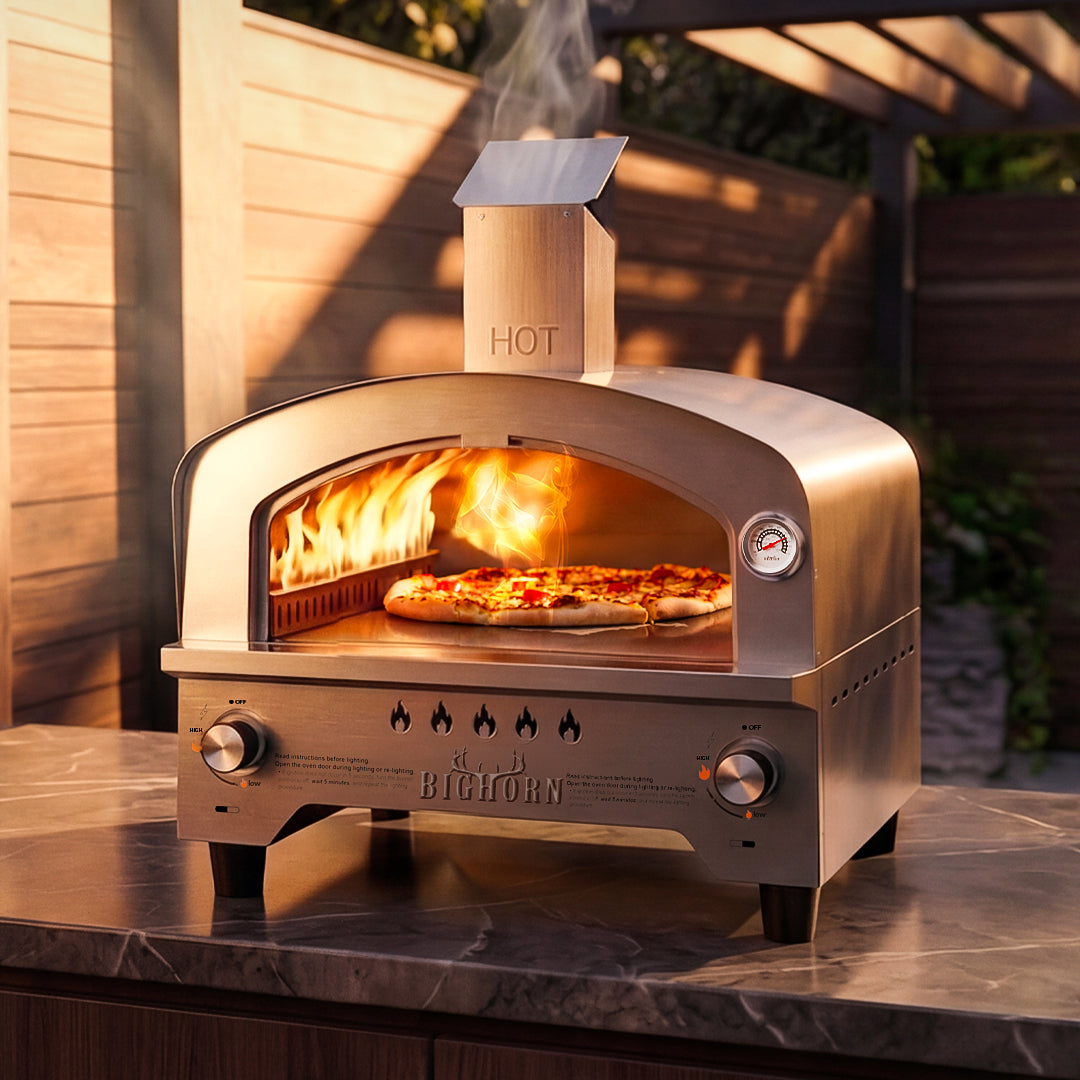
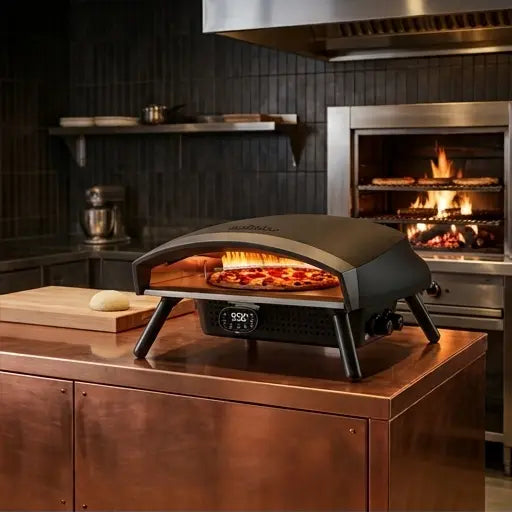
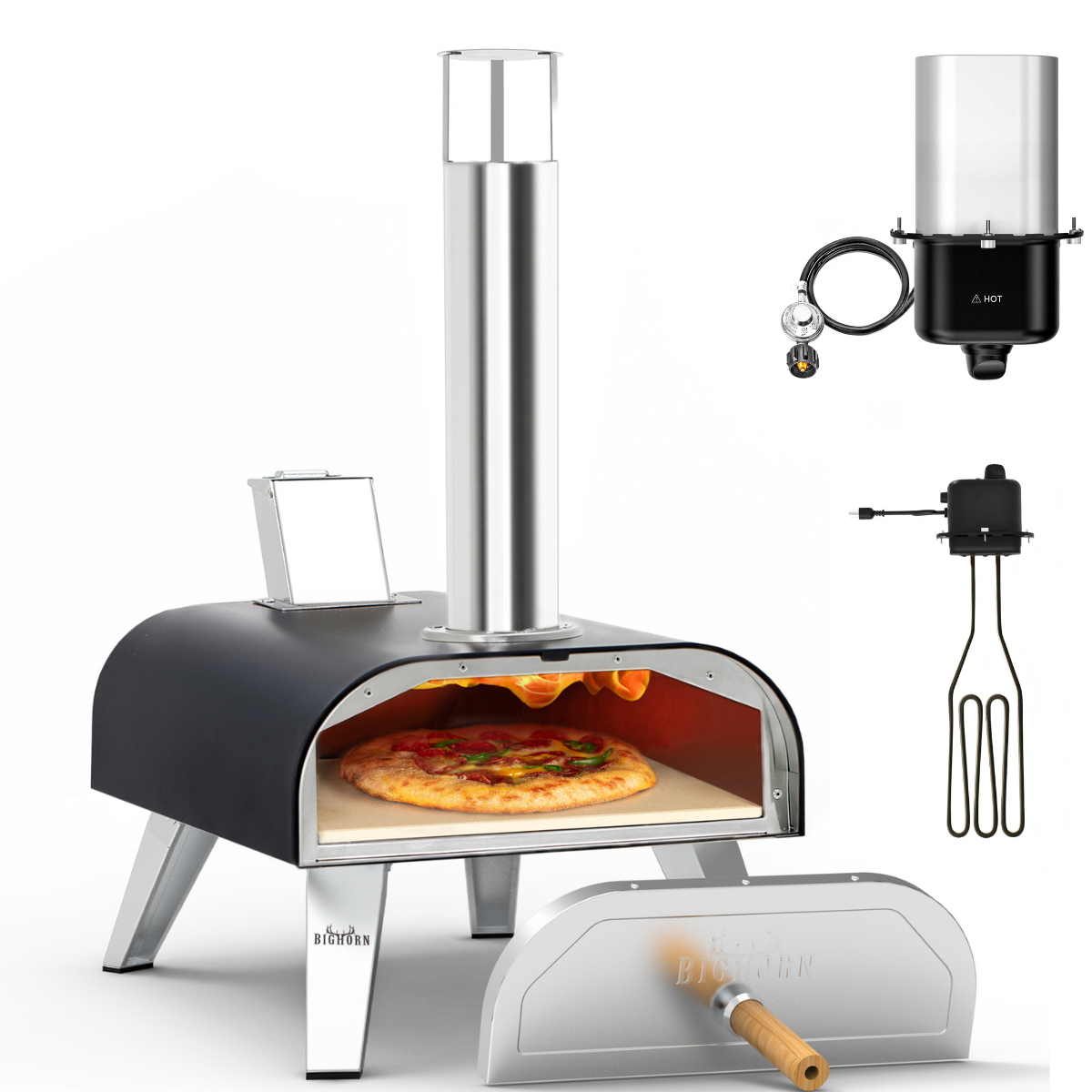
A pellet-and-gas pizza oven gives you two heat personalities in one appliance: pellet for wood-fired flavor and a slow, deliberate session, gas for fast, dial-controlled heat on busy nights. The right mode depends on the moment — flavor and ritual point to pellet, speed and consistency point to gas. You are not choosing a better fuel; you are choosing the right tool for the session.
Related product: Shop 12-inch Pellet & Gas Pizza Oven.
What each mode does best
Pellet mode burns dry hardwood pellets to produce a live-fire, smoky character that gas cannot replicate; the flavor and blistered crust are its strength, at the cost of a 15–20 minute preheat and fire management. Gas mode ignites in minutes, holds a steady temperature by dial, and recovers quickly between pies — ideal for a weeknight or a group where speed matters. The oven’s chamber and stone stay the same; only the fuel and its behavior change.
When pellet is the better choice
Choose pellet for a weekend session, a wood-fired flavor showcase, or when you want the live-fire ritual as part of the experience. It suits slow, deliberate cooking where the 15–20 minute warm-up is part of the plan. If smoke character and the classic charred rim matter most, pellet delivers what gas cannot.
When gas is the better choice
Choose gas when you want fast results: a weeknight dinner, guests waiting, or back-to-back bakes where every minute counts. Gas preheats in roughly 10 minutes and holds a steady dial temperature, so consecutive pizzas bake identically. If convenience and speed lead, gas is the mode that keeps the flow moving.

Switching between modes
Switch modes on a cool oven following the manual: let the chamber cool, swap the heat source, and confirm connections before heating. Never run two fuels at once, keep gas fittings leak-checked, and follow the attachment’s placement rules. The changeover takes a few minutes and keeps each mode safe and predictable.
How do the bakes differ in flavor?
Pellet mode adds a subtle wood-fired note and a slightly smokier char to the crust, while gas produces a clean, neutral bake. The chamber and stone are the same, so the difference is the seasoning the fuel adds. If smoke character matters, pellet leads; if you want the dough and toppings unmodified, gas is cleaner.
How much maintenance does each mode need?
Pellet mode adds ash emptying and pellet storage; gas mode adds a propane connection to check and store. The base oven care is the same, so the mode you choose changes the routine only around fuel. If you use one mode most of the time, the extra care stays small.
Is a pellet-and-gas oven worth it?
Yes, if you will genuinely use both fuels — the flexibility covers flavor and speed in one footprint. If you only ever use one, a dedicated single-fuel oven is simpler and cheaper. Value comes from real variety, not from owning the option.
How long does each mode take to preheat?
Gas reaches baking temperature in about 10 minutes; pellet takes roughly 15–20 minutes. That difference decides the planning: gas suits a spontaneous weeknight, pellet suits a planned session. Confirm the stone with a thermometer in either mode, since the deck, not the air, sets the bake.
What is the ideal first session in each mode?
In gas mode, start with a simple margherita to learn the fast heat. In pellet mode, let the oven warm fully and bake the same simple pie to compare flavor. Two identical first pizzas teach you both modes without complicating the variables.
How do the two modes compare on cost?
Gas cost tracks fuel and convenience; pellet cost tracks food-grade pellets and dry storage. Neither is dramatically cheaper overall, and the mode you use most determines the ongoing spend. The bigger value difference is flavor versus speed, not running cost.
Which mode suits a beginner?
Gas is the easier start because it preheats fast and holds a steady dial temperature, removing fire management. Pellet adds flavor but a longer warm-up and fuel care. Learn the technique on gas, then add pellet for the flavor upgrade once the basics are comfortable.
What should you store for each mode?
For pellet, you need food-grade hardwood pellets in a sealed, dry container; for gas, a propane tank and a dry hose or regulator. Both store compactly, but pellets need moisture protection and gas needs a safe, ventilated spot. Keeping the fuel right is the first step to a predictable session.
Can you switch modes mid-session?
No — switch on a cool oven following the manual. Each mode runs best as its own session, and the changeover takes a few minutes. Plan which mode you want before the cook and configure once.
The honest selector for any given night is simple: if flavor and a slower pace fit the plan, run pellet; if speed and consistency lead, run gas. Both live in the same oven, so the decision is per session rather than per purchase — the flexibility is the point of owning both modes.
Whichever mode you choose, the fundamentals stay the same: preheat the stone fully, keep the dough right, and watch the crust. The fuel sets the flavor and the pace; your technique sets the quality.
Pellet and gas FAQs
Which mode makes better pizza?
Neither is inherently better — pellet adds smoke and flavor, gas adds speed and consistency. The “better” mode is the one that matches your session and your taste.
Can I use both in one cook?
Not at the same time, but you can switch between sessions: use gas for a quick first round, then pellet for the main event. Each mode simply needs its own clean configuration.
Does pellet mode take much longer to heat?
Yes — roughly 15–20 minutes versus about 10 for gas. Plan the warm-up around the mode you choose, and both deliver a great bake once ready.
To confirm the fuel options, review the 12-inch Big Horn pellet pizza oven product page.
Explore more in the Pellet Pizza Oven Cooking Guides.